


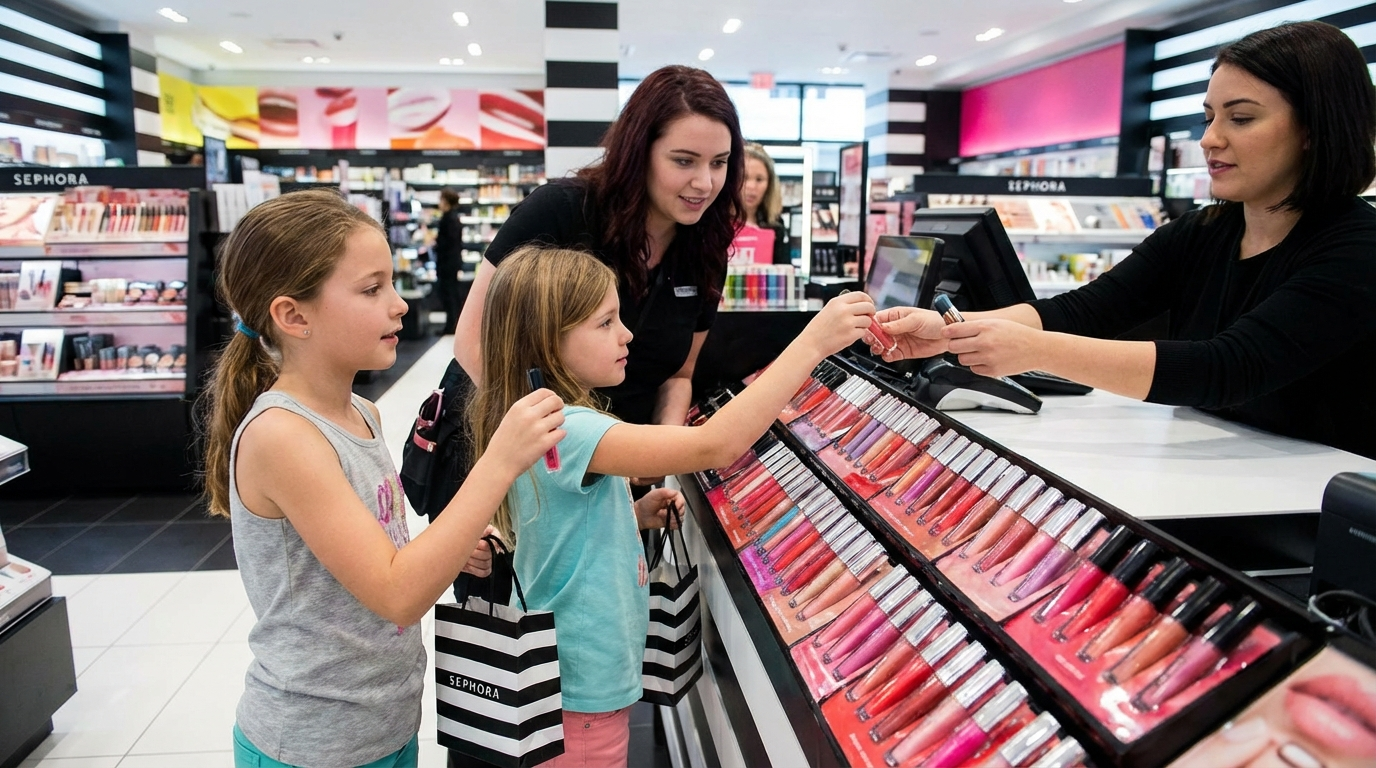
On March 27, 2026, Italy’s competition authority opened two formal investigations into LVMH-owned Sephora and Benefit Cosmetics. The charge, essentially, is this: that both brands used covert influencer marketing to push adult skincare products, including serums, face masks, and anti-ageing creams, at children as young as ten. That they omitted or obscured product warnings about items not tested on minors. That they profited from a social media trend that was always ethically dubious and is now, at least in Italy, legally actionable.
This is the first investigation of its kind by a European regulator. It will not be the last.
What actually happened
The Autorità Garante della Concorrenza e del Mercato, Italy’s competition and market authority, did not send a letter. It sent investigators. Officials from the AGCM, along with officers from Italy’s financial police, the Guardia di Finanza, physically inspected the premises of Sephora Italia, LVMH Profumi e Cosmetici Italia, and LVMH Italia on Thursday, March 26. The Friday announcement followed those raids.
The AGCM said the investigations centre on possible unfair commercial practices linked to the premature use of adult cosmetics by children and adolescents, including those under 10 to 12 years old, encouraged through the compulsive purchase of face masks, serums and anti-ageing creams. It specifically flagged the use of “very young micro-influencers” as part of what it called a “particularly insidious marketing strategy.”
LVMH confirmed in a statement that Sephora, Benefit, and LVMH P&C Italy had been notified of the proceedings. The group said all three companies affirm “strict compliance with applicable Italian regulations” and that they will fully cooperate. Beyond that, it declined to comment.
What “cosmeticorexia” actually means
The AGCM used a specific clinical term in its statement: cosmeticorexia. It describes an unhealthy, compulsive fixation on skincare among minors, a condition now documented in peer-reviewed medical literature and increasingly flagged by dermatologists treating children presenting with skin damage from products they should never have been using.
A 2025 study published in the Journal of Drugs in Dermatology specifically examined the Sephora Kids phenomenon and found that key ingredients common in the products children are purchasing, including retinol, exfoliating acids like AHAs and BHAs, and high-concentration vitamin C formulations, have not been tested on children and can cause real harm. Rashes, allergic reactions, dermatitis, heightened sun sensitivity, and in some cases lasting skin damage are the documented outcomes when children apply adult-grade actives to skin that has no business being treated with anti-ageing chemistry.
Skincare routine videos posted by teenagers on TikTok contain an average of 11 irritating ingredients. Those are not random products the children found. They are products that brands sold to them, or allowed influencers to sell on their behalf, without clear warnings that children should not be using them.
The Sephora Kids machine
To understand the investigation you have to understand the trend it is targeting. Sephora became the physical and symbolic home of Gen Alpha beauty consumption in a way that no brand strategy quite planned for and no brand did very much to slow down.
Sephora has more than 20 million Instagram followers and 2.1 million on TikTok. Its stores became a destination for children, some under ten, filling baskets with Drunk Elephant, Glow Recipe, and Sephora Collection serums while filming “Sephora kids haul” and “Get Ready With Me” videos for social media. Parents complained. Dermatologists warned. Nielsen data shows Gen Alpha households now spend billions annually on skincare and makeup. The industry took note of that spending and did not noticeably slow it down.
In 2024, Sephora North America’s CEO Artemis Patrick said in an interview that “we do not market to this audience.” The Italian investigation essentially challenges that claim directly. The AGCM is not asking whether the brand passively allowed children to shop in its stores. It is asking whether the brand actively marketed to them, used young influencers to reach them, and failed to warn them that products were not intended for minors.
Those are three separate and serious allegations.
What the legal exposure looks like
Italy’s AGCM has the authority to impose substantial fines for unfair commercial practices. Under Italian consumer protection law, aligned with the EU Unfair Commercial Practices Directive, brands can face penalties into the millions of euros if investigations conclude they misled vulnerable consumers, and children are explicitly recognised as a particularly vulnerable category.
The investigation is also notable because it sits at the intersection of two different legal frameworks. One is consumer protection, specifically the obligation to accurately label and communicate product warnings, including who a product is and is not suitable for. The other is advertising law, specifically the rules around marketing to minors through influencer content that is not clearly labelled as commercial or that targets an audience that legally cannot give meaningful commercial consent.
Italy’s AGCM called this a first for European regulators. The European Union has been tightening digital marketing rules for years. The EU Digital Services Act requires additional protections for minors on major platforms. The EU’s Cosmetics Regulation sets out labelling standards. The question Italy is now asking is whether Sephora and Benefit met those standards when their products were being actively marketed to under-12s through covert influencer channels.
Other European regulators are watching this case. If AGCM finds in favour of the investigation and issues fines, expect similar proceedings in France, Germany, and Spain before the year is out.
The broader industry problem
Sephora and Benefit are not the only names that should be paying attention to this investigation. The Sephora Kids trend was powered by brands that sold products knowing children were buying them, platforms that served children the content, and influencers, many of them children themselves, who promoted adult skincare routines to audiences of peers and younger kids.
The regulatory response is still catching up. California’s proposed AB 2491, which would have restricted the sale of anti-ageing products to children under 18, was killed in committee partly because of lobbying by the skincare and retail industry, which argued social media, not the products, was the problem. That argument is becoming harder to sustain when Italy’s financial police are walking through a brand’s offices with a list of specific marketing practices they consider unlawful.
For LVMH, the timing is not ideal. The group is already managing significant brand complexity in 2026, from Saks Global’s bankruptcy affecting luxury retail in the US to the broader luxury slowdown compounded by Middle East war uncertainty. An investigation into the ethics of marketing cosmetics to children adds reputational weight to an already difficult year.
For the beauty industry more broadly, this is a question that will not stay in Italy. The “Sephora Kids” phenomenon is global. The regulation is only beginning.