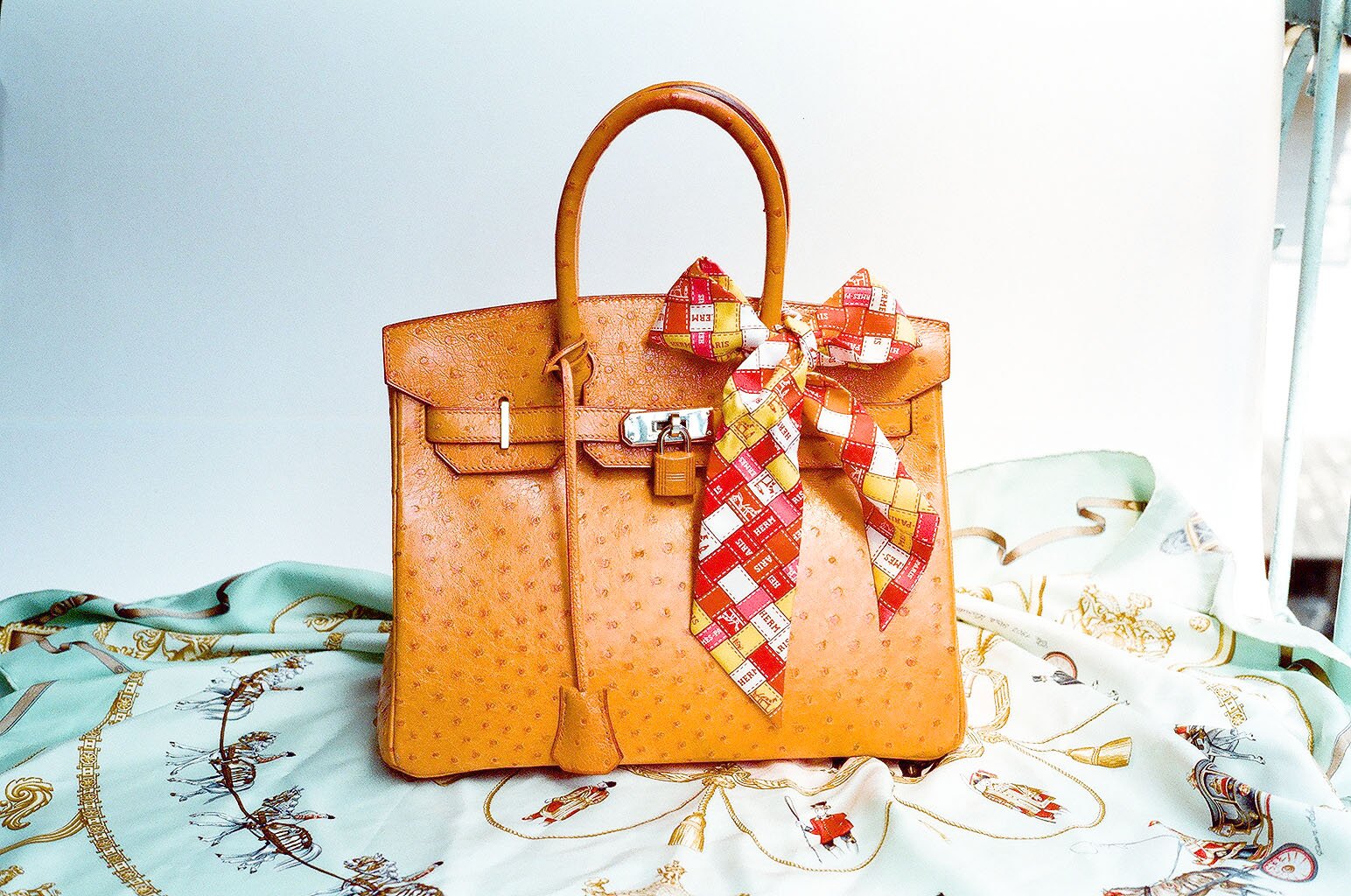
The Birkin is the rare luxury product whose price tag is the least interesting thing about it. The sticker in a Hermès boutique is high, but it is not the price most people pay, because most people cannot get through the door to pay it. That gap between the retail price and the price of access is where the money sits, where the resale market lives and where a group of Californian shoppers tried, and so far failed, to find an antitrust violation.
Short answer: In the US, a Birkin in Togo leather retailed from about $13,500 (Birkin 25) to $16,300 (Birkin 35) after Hermès raised prices in January 2026, with exotic skins far higher. On resale, pristine Birkin 25 and 30 bags commonly trade around $28,000 to $30,000. Prices vary by size, leather, hardware and country.
Key takeaways
- Hermès lifted US Birkin prices by roughly 6 to 8 per cent in January 2026, according to price trackers and Sotheby’s.
- The resale market prices a pristine Birkin 25 or 30 at roughly double retail, which tells you how far demand outruns supply.
- A federal judge dismissed the Cavalleri tying class action with prejudice in September 2025. The plaintiffs’ appeal to the Ninth Circuit was fully briefed by July 2026.
- Tying claims fail at the first hurdle when plaintiffs cannot define a credible market and show real market power within it.
How much is a Birkin bag in 2026?
Hermès does not publish a Birkin price list, so retail figures come from clients and specialist trackers. Two sources broadly agree on the US numbers after the January 2026 increase: PurseBop’s January 2026 price table and Sotheby’s guide to higher Hermès prices, published on 27 January 2026.
| Model (US, 2026) | Leather | Before (late 2025) | After (January 2026) | Change |
|---|---|---|---|---|
| Birkin 25 | Togo | $12,700 | $13,500 | +6.3% |
| Birkin 30 | Togo | $13,900 | $14,900 | +7.2% |
| Birkin 35 | Togo | $15,100 | $16,300 | +7.9% |
| Birkin 40 | Togo | n/a | $20,300 | n/a |
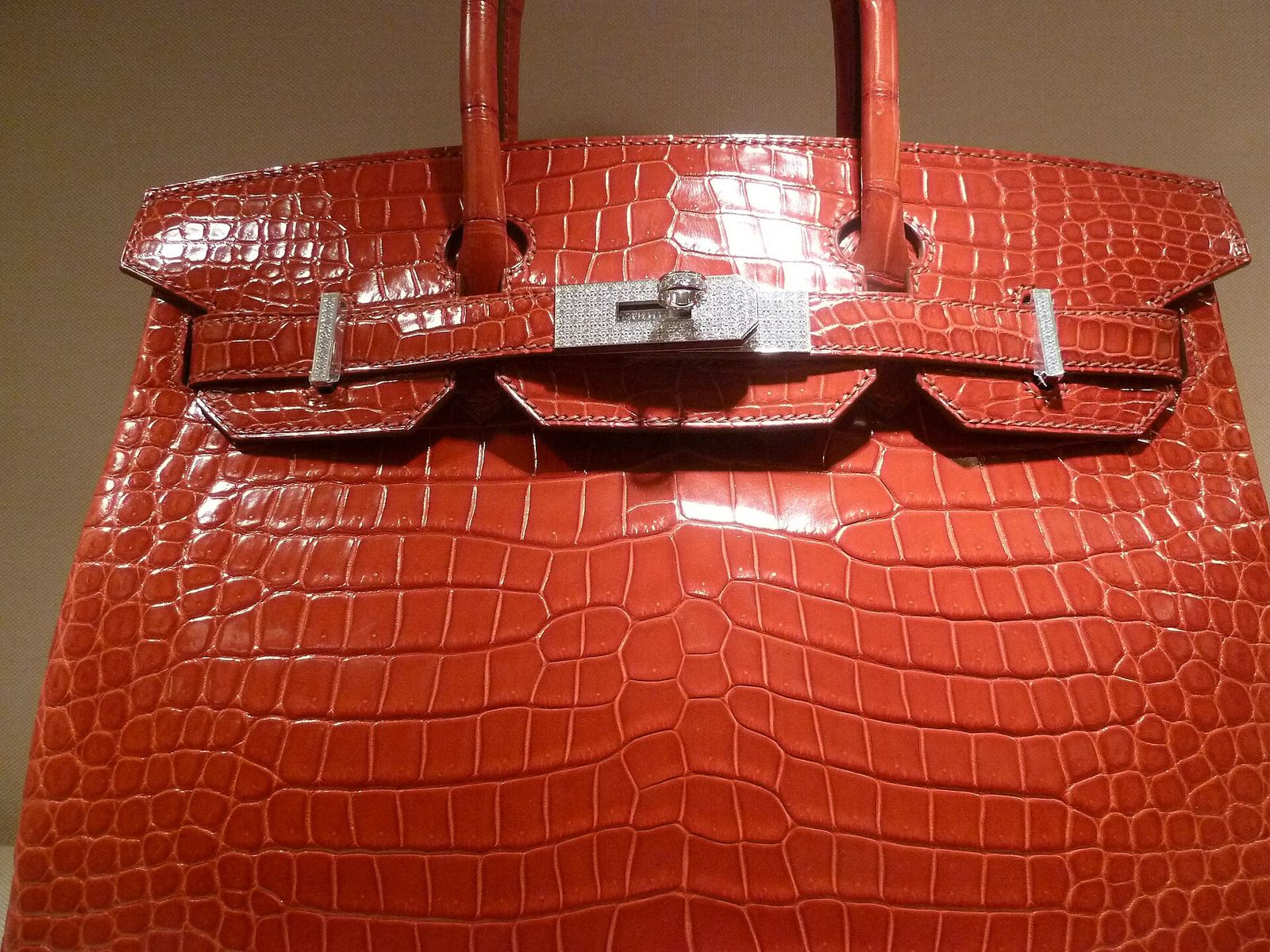
| Birkin 25 | Matte alligator | n/a | $57,900 | n/a |
| Birkin 25 | Shiny porosus crocodile | n/a | $66,400 | n/a |
Sources: PurseBop (published 7 January 2026) and Sotheby’s (27 January 2026). Treat these as indicative US boutique prices before sales tax. European, Middle Eastern and Asian boutiques price differently, and special editions, diamond hardware and rare colours sit in their own universe.
Resale is a different market. Sotheby’s reported in January 2026 that pristine Birkin 25 and 30 bags commonly trade at around $28,000 to $30,000, roughly twice their boutique price. At the very top, the original bag made for Jane Birkin sold at Sotheby’s Paris on 10 July 2025 for €8.6 million, about $10 million, as CNN reported. We unpacked what that sale says about fashion as an asset in From Bag to Bank.
Why can Hermès charge so much for a Birkin?
The short version is that Hermès sells fewer Birkins than people want to buy, and it has decided to keep it that way. Production is limited by craftsmanship and by the company’s insistence on making leather goods in its own French workshops. In its first-half 2026 results, published on 29 July 2026, Hermès reported group revenue of €8.2 billion, up 6 per cent at constant exchange rates, with Leather Goods and Saddlery up 10 per cent. It opened its twenty-fifth leather goods workshop, in Loupes in Gironde, in early April 2026, and has three more planned for 2027, 2028 and by 2030.
That is slow, deliberate growth for a product that most boutiques do not simply put on the shelf. When the resale price sits at double the retail price, a 6 to 8 per cent annual increase barely dents demand. In economic terms, the boutique price is below the price that would clear the market, and access does the rationing. Our piece on the luxury pricing pyramid explains how cheaper categories fund that scarcity at the top, and Birkinonomics looks at why investors started treating handbags like art.
What is the Cavalleri v. Hermès antitrust lawsuit?
On 19 March 2024, Californian shoppers Tina Cavalleri and Mark Glinoga filed a proposed class action against Hermès International and Hermès of Paris in the US District Court for the Northern District of California (case 3:24-cv-01707, before Judge James Donato). A third plaintiff, Mengyao Yang, joined later. Their theory was tying: Hermès allegedly refuses to sell a Birkin unless a customer is “deemed worthy” by first buying other Hermès products, such as shoes, scarves, jewellery, ready-to-wear and homeware. The complaint relied on the Sherman Act and several California laws.
The procedural history, from the public district court docket, runs like this:
| Date | Event |
|---|---|
| 19 March 2024 | Class action filed in the Northern District of California |
| 2024 | First amended complaint dismissed with leave to amend |
| 11 October 2024 | Second amended complaint filed |
| 17 September 2025 | Federal claims dismissed with prejudice; judgment entered and case closed |
| 7 October 2025 | Notice of appeal filed; Ninth Circuit case no. 25-6587 opened on 20 October 2025 |
| 17 February 2026 | Plaintiffs’ opening brief filed |
| 20 May 2026 | Hermès’ answering brief filed |
| July 2026 | Plaintiffs’ reply brief filed (due 10 July 2026) |
On appeal, the plaintiffs argue that the question is whether they plausibly alleged a tying claim, not whether they can prove one. Hermès, according to a PYMNTS report on its May 2026 brief, asks the court to affirm, arguing that the plaintiffs showed no harm to competition and that its allocation approach is a legitimate way to manage its brand. When we checked the Ninth Circuit docket in October 2026, we found no published decision. FLJ covered the earlier stages in Hermès vs. The People.
Why did the court throw out the tying claim?
Judge Donato’s second order re dismissal is short and pointed. Even assuming, as Hermès agreed to for the purposes of the motion, that the stricter per se rule applied, the complaint still had to plead three things: two distinct products tied together, enough economic power in the tying market to coerce buyers, and an effect on a not insubstantial volume of commerce in the tied market. It failed on the essentials.
- No credible market. The plaintiffs defined the tying market as “elitist luxury handbags in the United States”, supported mainly by a 2010 investor paper and a 2014 academic article. The court called that “a far cry” from a properly defined antitrust market.
- Share is not power. The claim that Birkins make up 60 to 75 per cent of that market did not, by itself, show market power.
- A “kaleidoscope” of tied products. The alleged tied market lumped together scarves, watches, fragrances, furniture and vases with no facts showing they were one market or that competition for them had been restrained.
The judge added a line that sums up the problem for anyone hoping to sue over exclusivity: it may be that Hermès reserves the Birkin for its highest-paying customers, “but that in itself is not an antitrust violation.” After three attempts, he dismissed the federal claims with prejudice and declined to keep the California state claims.
Why are tying claims so hard to win against luxury brands?
Tying law was built for firms that dominate a market and use that grip to force customers into buying something else, such as a patented machine sold only with the seller’s supplies. Luxury does not fit the mould easily. A Birkin buyer can walk next door and buy a Chanel, Dior or Louis Vuitton bag, so the plaintiff has to show why those are not substitutes. Courts have also grown wary of condemning ties automatically: the US Supreme Court has said its strong disapproval of tying has “substantially diminished”, and the Ninth Circuit has noted that ties can promote competition as well as harm it.
There is a cultural problem too. Purchase history as a route to scarce products is common across luxury, from watches to sports cars. Calling it anticompetitive requires evidence that rivals in the tied markets, such as scarf or shoe makers, lost business because of it. That is a hard factual case to build from the outside, and the Ninth Circuit appeal will test whether it can at least be pleaded.
What should Birkin buyers know about resale and authenticity?
Because the boutique route is rationed, the secondary market is where many Birkins change hands, and where counterfeits concentrate. Buy from established resellers or auction houses that authenticate in-house and offer a clear return policy if a bag is later found to be fake. Ask for the full condition report, check that hardware, stitching and blind stamps are consistent with the stated year, and keep every document. For the wider legal picture, read our analysis of how the luxury resale boom is reshaping brand control.
Hermès defends the Birkin name hard, even in the digital world. In February 2023 a New York jury found that artist Mason Rothschild’s “MetaBirkins” NFTs infringed and diluted Hermès’ trademarks and awarded the company $133,000. Rothschild appealed, and the Second Circuit heard argument on 23 October 2024, as its public docket shows. FLJ’s full analysis is in Hermès v. Rothschild: Can a Luxury Icon Survive the Metaverse?
Frequently asked questions
How much is a Birkin bag in 2026?
In the US, a Togo leather Birkin retailed at about $13,500 for the Birkin 25, $14,900 for the 30 and $16,300 for the 35 after the January 2026 increase, according to PurseBop and Sotheby’s. Exotic skins can exceed $60,000 at retail.
How much did Hermès raise Birkin prices in 2026?
US price trackers recorded increases of roughly 6 to 8 per cent in January 2026: the Togo Birkin 25 rose 6.3 per cent, the Birkin 30 rose 7.2 per cent and the Birkin 35 rose 7.9 per cent.
Why is a Birkin more expensive on resale than in the store?
Because buying one in a boutique depends on access, not just money. Supply is limited and buyers who cannot get an offer from Hermès pay a premium to resellers. Sotheby’s put pristine Birkin 25 and 30 bags at around $28,000 to $30,000 in January 2026.
Is the Hermès Birkin antitrust lawsuit still going?
Yes, on appeal. The district court dismissed the federal claims with prejudice on 17 September 2025. The plaintiffs appealed to the Ninth Circuit (no. 25-6587), and briefing was completed in July 2026. We found no published decision as of October 2026.
Do you have to buy other Hermès products to get a Birkin?
Hermès does not say so publicly, and the Cavalleri plaintiffs’ allegation that it requires a purchase history has not been proven. The court held that, even if Hermès favours its best customers, that alone is not an antitrust violation.
What was the most expensive Birkin ever sold?
The original Birkin made for Jane Birkin sold at Sotheby’s Paris on 10 July 2025 for €8.6 million, about $10 million, a record for a handbag at auction.
FASHION LAW JOURNAL INSIDER
Join designers, brand founders and fashion lawyers who get the biggest brand battles, IP fights and career moves in fashion law, straight to their inbox.