

Black Friday falls on 27 November 2026, and by now most fashion sites are already showing struck-through prices, “up to 70% off” banners and countdown clocks. Most are lawful. Some are not, and regulators have spent the past two years making examples of retailers whose “was” prices were never charged. Black Friday fake discounts are now one of the clearest legal risks of the shopping season, because the rules on reference prices are specific, the evidence sits in a retailer’s own pricing history, and in the UK the competition regulator can now fine directly. This guide compares the pricing laws fashion brands must follow in the US, the UK and the EU, with a checklist for brands and tips for shoppers.
Short answer: A discount is fake if the “was” price was not a real price. The EU requires the lowest price of the previous 30 days as the reference. The FTC requires a former price offered openly for a reasonably substantial period, and California the prevailing price within three months. The UK bans misleading reference prices and fake countdowns, with fines up to 10% of turnover.
Key takeaways
- EU law (Article 6a of the Price Indication Directive) requires every announced reduction to show the lowest price of the previous 30 days, and the Court of Justice ruled in Aldi Süd (C-330/23) that percentage discounts must be calculated from that price.
- In the US, the FTC’s Guides Against Deceptive Pricing (16 CFR Part 233) and state laws such as California Business and Professions Code section 17501 drive reference-price class actions, including a 2026 case against Brooks Brothers that survived a motion to dismiss.
- In the UK, the CMA has fined businesses directly since April 2025, up to 10% of global turnover; its first fine, £4.2 million against the AA’s driving schools in April 2026, was for drip pricing.
- France fined Shein €40 million in July 2025 after finding that 57% of advertised deals offered no lower price, a reminder that fashion is a target.
What counts as a fake discount?
Every discount claim compares today’s price with another price, usually called the reference price. The discount is fake when that other price is not real: the item was never sold at it, was sold at it only briefly, or was marked up just before the sale so it could be “cut”. Common forms in fashion include:
- Was/now prices and struck-through prices that the retailer rarely or never charged;
- “Compare at” or RRP prices that no one in the market actually charges;
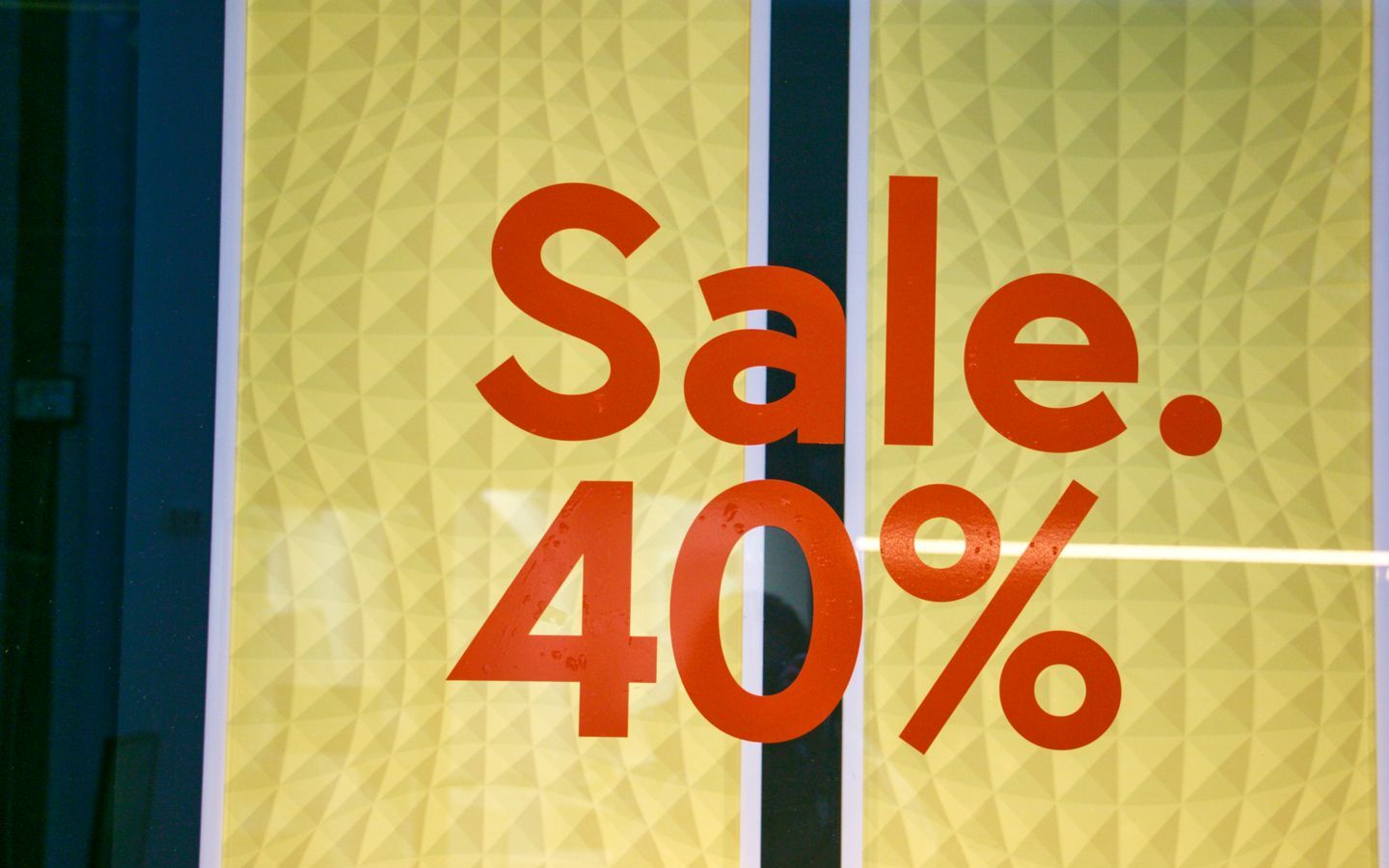
- Percentage claims such as “40% off” calculated from an inflated starting point;
- Permanent sales, where the “sale” price is the normal price all year; and
- Fake urgency, such as countdown clocks that reset or “today only” offers that return the next week.
FLJ’s explainer on fake discounts and the anchor-pricing lawsuits covers the US case history in more detail. This guide focuses on the rules a brand must meet this Black Friday in each market.
FLJ Insider Pro is open: live fashion law jobs and internships, five career guides and two roadmaps. Early bird USD 12/month. See what's inside
What does US law say about Black Friday discounts?
The federal starting point is Section 5 of the FTC Act, which bans deceptive practices, and the FTC’s Guides Against Deceptive Pricing in 16 CFR Part 233. Section 233.1 says a former price is a legitimate basis for a comparison if it is “the actual, bona fide price at which the article was offered to the public on a regular basis for a reasonably substantial period of time”. A price is not fictitious just because nothing sold at it, but it must have been openly and actively offered in good faith, and a retailer should not imply that the old price was a selling price unless substantial sales were made at it. Later sections cover “compare at” prices and manufacturers’ suggested prices. The Guides explain what the FTC treats as deceptive; they are not a rule in themselves.
Most reference-price litigation is private and runs under state law. California’s section 17501 says no price may be advertised as a former price unless it was the prevailing market price within the three months immediately before the advertisement, or the date it last prevailed is clearly stated. In Hinojos v Kohl’s (9th Cir., 21 May 2013) the Ninth Circuit held that a shopper who bought because of a false “original” price had lost money for standing purposes, even though he received the item he paid for.
The cases are still coming. On 22 October 2026 a federal judge in Los Angeles refused to dismiss Martin v BB OpCo, a proposed class action over a Brooks Brothers polo bought online for $39.99 next to a struck-through price of $89.50. It also refused to send the claim to arbitration, because the guest buyer was not bound by the website’s terms links. The court made no finding that the price was misleading; it decided only that the claims could proceed.
The FTC’s Rule on Unfair or Deceptive Fees (16 CFR Part 464), in force since 12 May 2025, covers only live-event tickets and short-term lodging, so fashion checkout fees are judged under the general FTC Act and state law.
What does EU law require for price reductions?
The EU has the most precise rule. Article 6a of the Price Indication Directive 98/6/EC, added by the Omnibus Directive (EU) 2019/2161 and applied since 28 May 2022, says any announcement of a price reduction must show the “prior price”, defined as the lowest price the trader applied in a period of at least 30 days before the reduction. Member states may set different rules for perishable goods, a shorter period for products on the market less than 30 days, and a rule that keeps the original prior price when a reduction is increased in stages.
In Aldi Süd (C-330/23), decided on 26 September 2024, the consumer association Verbraucherzentrale Baden-Württemberg challenged an Aldi leaflet that showed bananas at €1.29 against a struck-through €1.69, even though the lowest price in the previous 30 days had also been €1.29. The Court of Justice ruled that a reduction announced as a percentage, or through a promotional statement highlighting the price, must be calculated from the 30-day prior price. Showing the 30-day price in small print does not save a headline discount calculated from a higher price.
The Black Friday consequence: a brand that ran an early November promotion cannot then show a Black Friday “reduction” from full price, because the lowest price in the last 30 days is the promotional one, unless the staged-reduction option applies.
Enforcement is national, coordinated through the Consumer Protection Cooperation (CPC) network. In May 2025 the network and the Commission notified Shein of practices it said broke EU law, starting with “fake discounts” not based on the actual prior price. Separately, on 3 July 2025, France’s consumer authority, the DGCCRF, fined Infinite Styles Ecommerce, the company that handles sales for the Shein brand, €40 million. Reuters reported that, across thousands of products checked between October 2022 and August 2023, 57% of advertised deals offered no lower price, 19% offered a smaller discount than advertised and 11% were price increases. FLJ tracks that and later penalties in its explainer on the Shein France fines. For coordinated cross-border actions, the Omnibus Directive requires maximum fines of at least 4% of the trader’s annual turnover in the member states concerned.
What are the UK rules after the DMCC Act?
Since 6 April 2025 UK consumer protection law sits in Part 4 of the Digital Markets, Competition and Consumers Act 2024. A misleading reference price is a “misleading action” under section 226 if it gives false or misleading information, or an overall presentation that is likely to deceive the average consumer. Schedule 20 lists 32 practices that are always banned, including falsely saying an offer is available only for a limited time to pressure a quick decision. Separately, the Act’s material information rules require the total price, including mandatory fees, to be shown upfront, which is how drip pricing is prohibited. The UK has no fixed 30-day test; the question is whether the comparison misleads.
The bigger change is enforcement. The CMA can now decide for itself that the law has been broken, order compensation and fine companies up to 10% of global turnover. On 18 November 2025 it opened its first eight investigations, published its price transparency guidance (CMA209) and wrote to 100 businesses in 14 sectors, with fashion on the list. On 15 April 2026 it fined the AA £4.2 million and ordered refunds of more than £760,000 because a mandatory £3 booking fee was left out of the upfront price.
The courts have also said where the line sits on reference prices. In CMA v Emma Matratzen [2026] EWHC 1995 (Ch), decided on 30 July 2026 under the older court-based procedure, the online mattress seller admitted some misleading uses of struck-through prices. The judge, however, refused to impose the CMA’s proposed fixed ratio of one sale at the reference price for every two at the lower price, finding that a low share of sales at the reference price does not always mean consumers are misled, and that the seller’s honest belief that the price was realistic is relevant.
How do US, UK and EU pricing rules compare?
| Issue | US | UK | EU |
|---|---|---|---|
| Main source | FTC Act s.5; 16 CFR Part 233; state laws such as Cal. Bus. & Prof. Code s.17501 | DMCC Act 2024, s.226 and Schedule 20 | Price Indication Directive Art 6a; Unfair Commercial Practices Directive |
| Reference price test | Actual price offered openly for a reasonably substantial period; California: prevailing price in the previous three months | No fixed period; must not mislead the average consumer | Lowest price in at least the previous 30 days |
| Percentage discounts | Must reflect a real former price; trivial reductions mislead | Judged on overall impression | Must be calculated from the 30-day prior price (Aldi Süd) |
| Fake countdowns | Deceptive under the FTC Act | Banned outright (Schedule 20) | Banned under the UCPD blacklist |
| Who enforces | FTC, state attorneys general, private class actions | CMA directly, plus Trading Standards | National authorities, coordinated via the CPC network |
| Maximum penalty | Varies by statute and court remedy | Up to 10% of global turnover | Set nationally; at least 4% of turnover for coordinated cross-border cases |
| Recent example | Brooks Brothers claim allowed to proceed (October 2026) | AA fined £4.2m (April 2026); Emma judgment (July 2026) | Shein fined €40m in France (July 2025) |
Sources: eCFR, US District Court for the Central District of California, legislation.gov.uk, CMA, EUR-Lex, European Commission, Reuters.
What should fashion brands check before Black Friday?
- Pull the price history. For every discounted product, record what it sold for in the previous 30 days (EU), three months (California) and over its normal selling period.
- Set the reference price by market. One global “was” price rarely works; an EU site needs the 30-day lowest price.
- Recalculate the percentages. “Up to” claims must be true for a fair share of the range, and EU percentages must use the prior price.
- Check “compare at” prices. Only use them if substantial sales happen at that price in the market.
- Make countdowns real. If the offer comes back next week, do not say it ends at midnight.
- Put mandatory fees in the headline price. UK drip pricing is banned outright.
- Keep the pricing logs. Regulators and plaintiffs will ask for them.
- Check marketplace listings and influencer codes. Brands are responsible for discount claims made on their behalf; see FLJ’s guide to the FTC influencer guidelines.
How can shoppers spot a fake Black Friday discount?
- Check the price before the sale. A price tracker or an early November screenshot shows whether the “was” price was real.
- In the EU, read the 30-day price. If the lowest recent price is the same as the “deal” price, there is no deal.
- Be wary of “compare at” and RRP. They often describe a price no one charges.
- Ignore the clock. If a timer resets when you reload the page, the urgency is fake.
- Look at the total at checkout. Delivery and other mandatory fees should not appear only at the end.
- Know your returns rights. FLJ’s guide to online returns law in the US, EU and UK explains them, and its warning on why fake luxury peaks every December applies to “designer” deals that look too cheap.
This article is general information on US, UK and EU law as of 20 November 2026. It is not legal advice. State and national rules differ, and the cases mentioned involve allegations or rulings at particular stages; take advice from a qualified lawyer on a specific promotion.
Frequently asked questions
Are fake Black Friday discounts illegal?
Yes. In the US, UK and EU, advertising a reduction from a price that was never really charged is a misleading practice. The EU and California also set specific time periods for the reference price.
What is the 30-day rule for discounts in the EU?
Article 6a of Directive 98/6/EC requires any announced price reduction to show the prior price, meaning the lowest price the trader charged in at least the 30 days before the reduction. Percentage discounts must be calculated from that price.
Can a retailer raise prices before Black Friday and then discount them?
Not to create a fake saving. In the EU, the 30-day lowest price rule stops it. In the US, the FTC treats inflated former prices as fictitious, and in the UK the CMA can treat the practice as a misleading action.
What are the fines for fake discounts in the UK?
Since 6 April 2025 the CMA can fine businesses up to 10% of global turnover for consumer law breaches and order compensation. Its first fine under these powers was £4.2 million against the AA in April 2026.
Can I sue a retailer for a fake discount in the US?
Often, yes, through state consumer laws. California’s section 17501 and false advertising law support class actions, and courts have held that a shopper misled by a false former price can have standing even after receiving the item.
Was Shein fined for fake discounts?
Yes. France’s DGCCRF fined Shein’s sales entity €40 million on 3 July 2025 over misleading price reductions and environmental claims. EU consumer authorities also notified Shein in May 2025 of fake discount practices.
FASHION LAW JOURNAL INSIDER
Join designers, brand founders and fashion lawyers who get the biggest brand battles, IP fights and career moves in fashion law, straight to their inbox.