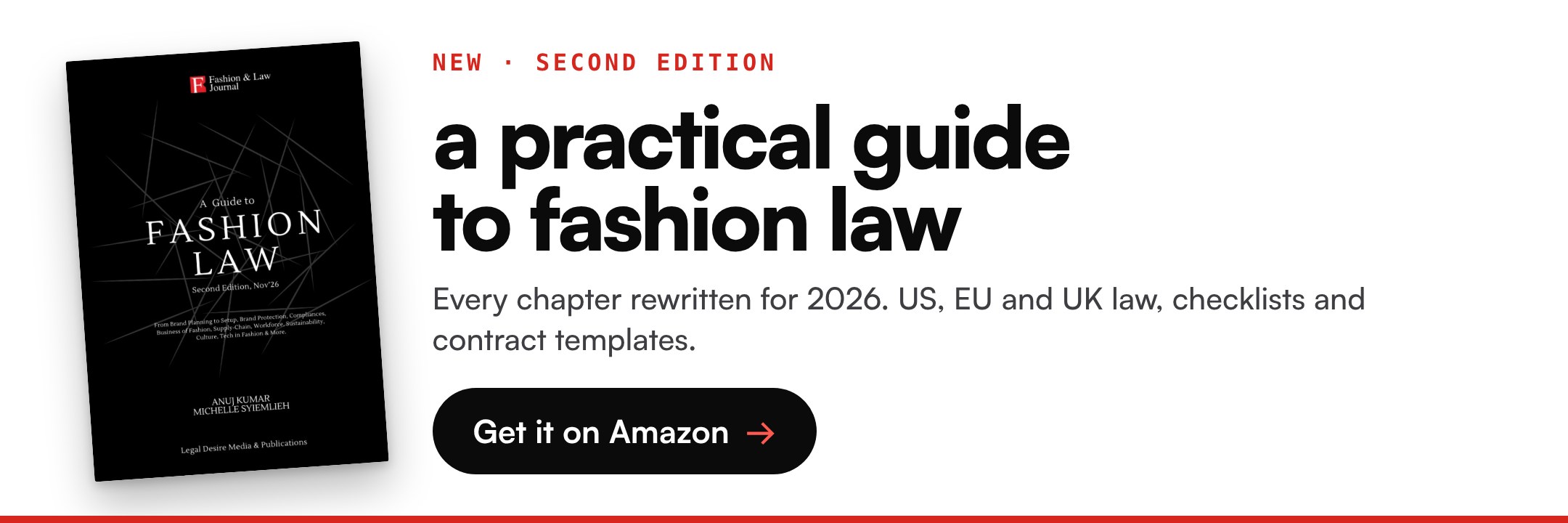


If you want to become a fashion lawyer, the hardest part is not the work. It is knowing where to start. Fashion law is not a single subject you can pick from a syllabus. It is trade marks, copyright and design law, contracts, employment, customs, consumer protection, sustainability rules, advertising law and, now, a growing pile of tech regulation, all applied to one fast-moving industry.
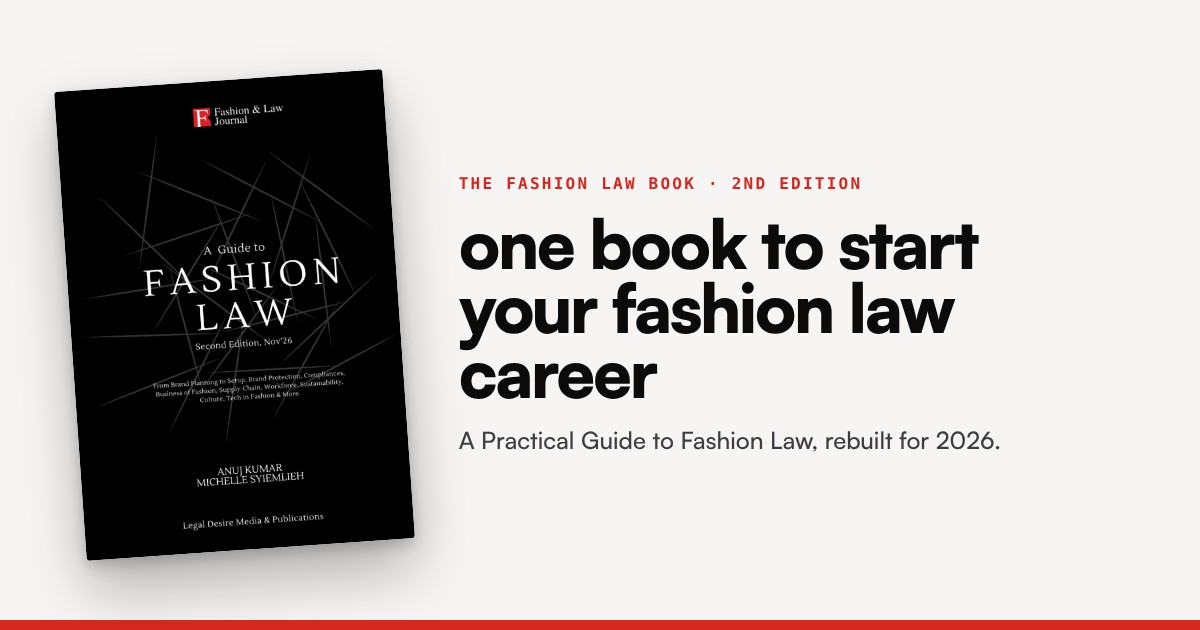
Most students piece it together from scattered articles, a module or two at law school and whatever an internship happens to throw at them. That is why we rebuilt our book. A Practical Guide to Fashion Law, Second Edition is out now, and it was written to be the one book that gives you the whole map.
What a fashion lawyer actually needs to know
Ask anyone who works in-house at a fashion house or in a firm’s fashion and retail team what their week looks like, and you will hear a mix of these:
- Protecting the brand. Registering and enforcing trade marks, trade dress, designs and copyright, and dealing with lookalikes and counterfeits.
- Making the deals work. Licensing, distribution, manufacturing, influencer, model and collaboration agreements.
- Keeping the supply chain clean. Forced labour import bans, due diligence laws and the workers behind every garment.
- Getting green claims and marketing right. Regulators in the US, EU and UK now fine brands for vague sustainability claims and manipulative checkout designs.
- Handling new tech. AI-generated designs, digital fashion, a model’s face or a singer’s voice used without consent.
The second edition is organised around exactly these areas, so reading it end to end gives you a working picture of the job.
FLJ Insider Pro is open: live fashion law jobs and internships, five career guides and two roadmaps. Early bird USD 12/month. See what's inside
What is inside the second edition
Every chapter has been rewritten, and the law is stated as at November 2026. The book runs to seven sections and 16 chapters:
- Foundations: the fashion landscape and what the practice of fashion law looks like.
- Intellectual property and brand protection: trade marks, trade dress, copyright, designs and patents, plus counterfeiting, enforcement and platform takedowns.
- The business of fashion: setting up a brand, finance, and the contracts that hold a fashion business together.
- Ethics, sustainability and human rights: employment and the workforce, circular fashion, cultural appropriation and animal welfare.
- Marketing, media and innovation: advertising, influencer and media law, and fashion and technology.
- Compliance and specialised law: regulatory frameworks, and beauty, health and safety law.
- Practical toolkits: checklists, e-commerce policies and an agreement template library you can adapt.
Each chapter sets out the law of the United States, the European Union and the United Kingdom first, draws on other systems where they lead the way, and then explains the position in India. Fashion is global, and the people advising on it need to see the whole picture.
Why it works if you are trying to break in
It is written from first principles. You do not need an IP background to follow it. Each area is explained from the ground up before it gets technical.
It is built for study. Every chapter ends with case briefs and discussion questions, and the back of the book has tables of cases and legislation, so you can use it alongside a course or to prepare for interviews.
It gives you something to show. Interviewers for fashion law internships and in-house roles want to know you understand the industry, not just the law. Being able to talk through a licensing agreement, a greenwashing fine or a counterfeiting takedown is what sets candidates apart.
It stays useful once you are in. The checklists, comparative tables and template library are the parts practitioners, in-house counsel and founders reach for when they are working on a real matter.
Who wrote it
The book is written by Anuj Kumar, Founder and Editor-in-Chief of Fashion Law Journal, and edited by Michelle Syiemlieh, FLJ’s Managing Editor. Dr. Kata Zsófia Prém, Vanshika Tuteja and Aastha Kastiya contributed research, case studies, checklists and memory aids throughout. The first edition came out in 2022; this edition was rebuilt around how much the field has changed since.
Keep going
If you are planning your route into the field, these FLJ guides pair well with the book:
- How to become a fashion lawyer
- Where to study fashion law
- Fashion law internships
- Fashion lawyer salary
- What a fashion brand protection lawyer does
Note: the Amazon links on this page are affiliate links, and Fashion Law Journal may earn a small commission on qualifying purchases at no extra cost to you. The book is published by Fashion Law Journal.
FASHION LAW JOURNAL INSIDER
Join designers, brand founders and fashion lawyers who get the biggest brand battles, IP fights and career moves in fashion law, straight to their inbox.