
California became the first state in the country to ban piece-rate pay for garment workers when Governor Gavin Newsom signed Senate Bill 62 in September 2021. The law took effect on January 1, 2022, and four years later it still works as the clearest example of what happens when a state decides a brand cannot outsource its way out of responsibility for how a garment actually gets made. Other states have since floated similar bills, which makes understanding exactly how SB 62 works less a California-specific curiosity and more a preview of where garment industry compliance is headed nationally.
What SB 62 Actually Changed
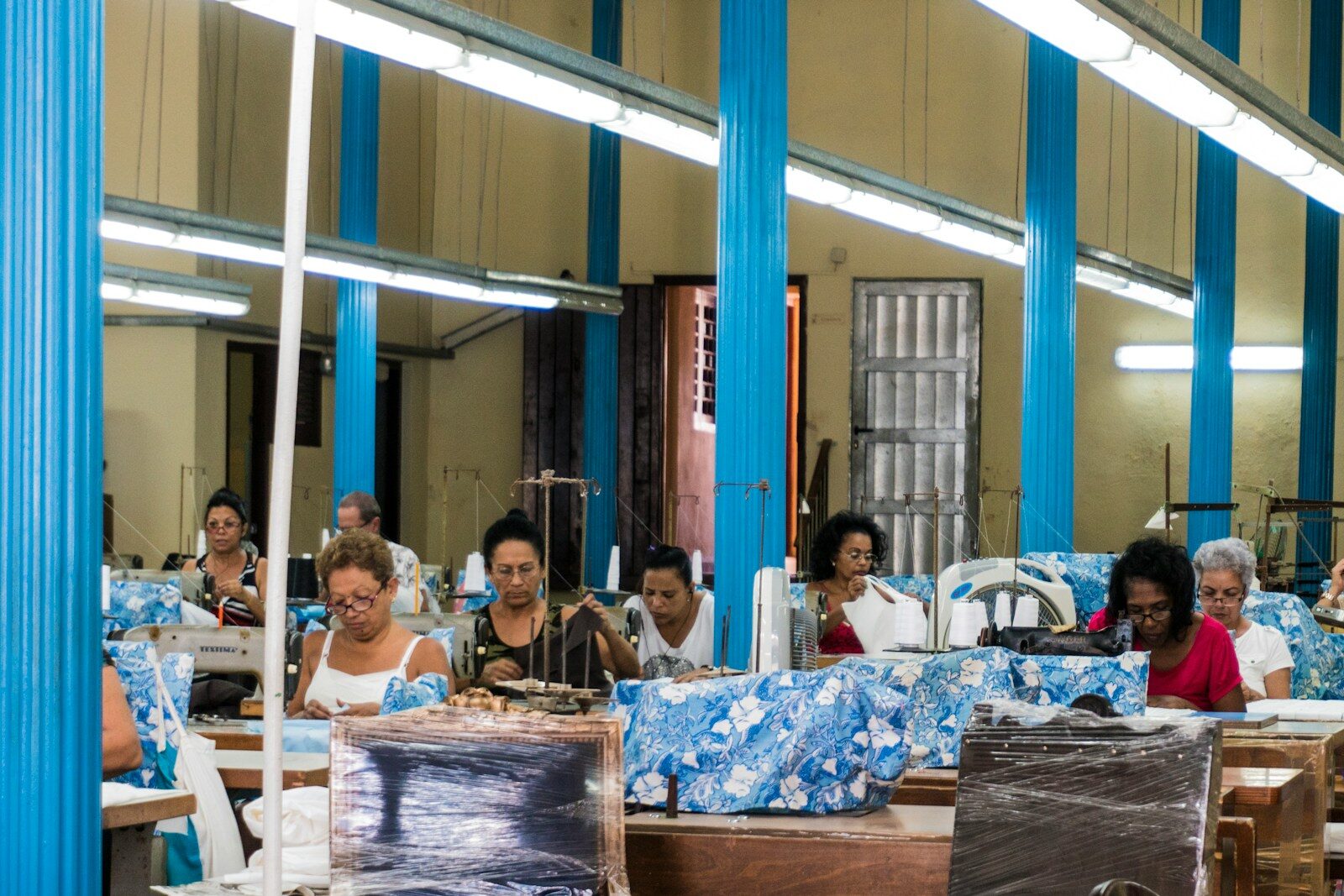
Before SB 62, factories in California could pay garment workers by the piece, a system where a worker earns a fixed amount per unit sewn rather than an hourly wage. SB 62 banned that practice outright, except for workplaces covered by a qualifying collective bargaining agreement, and requires garment workers to earn at least the state minimum wage for every hour worked. Employers who still pay by the piece face a $200 fine per employee for every pay period the violation continues, paid directly to the worker rather than the state.
The bigger change sits in who the law reaches. SB 62 created the term brand guarantor, defined as any person or company that contracts for garment manufacturing, including a company that simply licenses its name to a manufacturer. Brand guarantors, manufacturers and contractors all become jointly and severally liable for unpaid wages, meaning a worker can recover the full amount owed from whichever party actually has the money, regardless of how many layers of subcontracting sit between the factory floor and the brand’s corporate office.
How a Worker Actually Proves a Claim
The law does not ask a garment worker to untangle a complicated supply chain before getting paid. A worker can establish a rebuttable presumption of liability against a brand guarantor with something as simple as a label sewn into the garment or other credible information about the brand’s identity. Once that presumption attaches, the burden shifts to the brand to prove it does not owe the money. The Labor Commissioner must issue a decision within 90 to 120 days of receiving a claim, a fast turnaround compared to standard civil litigation, and every party in the chain must keep contracts, invoices and work orders for four years so investigators have something to check the claim against. A portion of every garment registration fee also flows into a dedicated Garment Manufacturers Special Account, which pays out on claims the Labor Commissioner accepts, giving workers a funded path to recovery even when a specific employer cannot pay.
Why California Passed a Law This Aggressive
The numbers behind SB 62 explain why lawmakers went straight to joint liability instead of another round of guidance documents. When the US Department of Labor swept 77 randomly selected garment contractors in Southern California between 2015 and 2016, it found that 85 percent of them owed a combined $1.3 million in back wages to 865 workers. Los Angeles alone is home to roughly 2,000 garment manufacturers and 45,000 workers producing $5 billion worth of clothing and footwear a year, which meant the old system of holding only the contractor accountable was never going to catch violations happening at that scale.
The law started proving its teeth almost immediately. Weeks before SB 62 even took effect, the Labor Commissioner’s Office revoked a Los Angeles manufacturer’s license after an inspection found employees sewing garments despite the owner’s license application claiming the business had no workers at all, and after the owner failed to provide proof of workers’ compensation coverage.
Other States Are Watching the Same Model
California is no longer alone in trying joint liability as the fix for garment supply chain accountability. New York’s own proposed legislation borrows the same structure. The New York Fashion Act and Fashion Workers Act would make fashion companies collectively liable for lost wages owed to garment workers, backed by Attorney General enforcement and fines reaching 2 percent of annual revenue. The mechanism differs in the details, but the underlying idea, that a brand’s name carries legal responsibility even when a subcontractor did the actual hiring, traces directly back to what California built first.
What This Means for Brands Sourcing From California
A brand does not need to own a factory to inherit its labor problems anymore. Licensing a name, placing a purchase order, or contracting for manufacturing all count as the kind of relationship that triggers brand guarantor liability under SB 62, and a single garment label can be enough evidence to start a claim. Brands sourcing from California factories now have a direct financial incentive to actually verify how workers get paid, since the law removed the option of treating a contractor’s wage practices as someone else’s problem.
FASHION LAW JOURNAL INSIDER
Join designers, brand founders and fashion lawyers who get the biggest brand battles, IP fights and career moves in fashion law, straight to their inbox.