
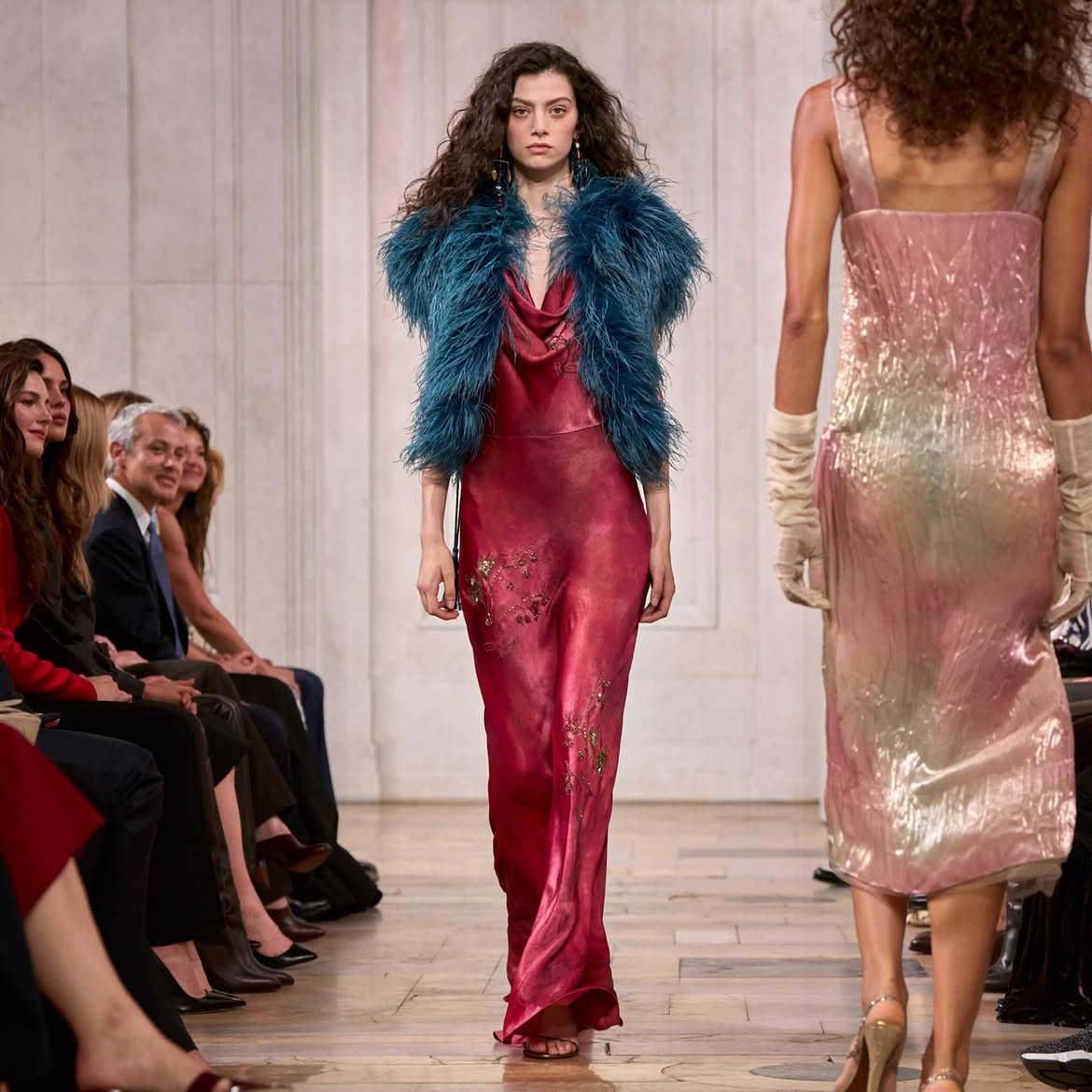
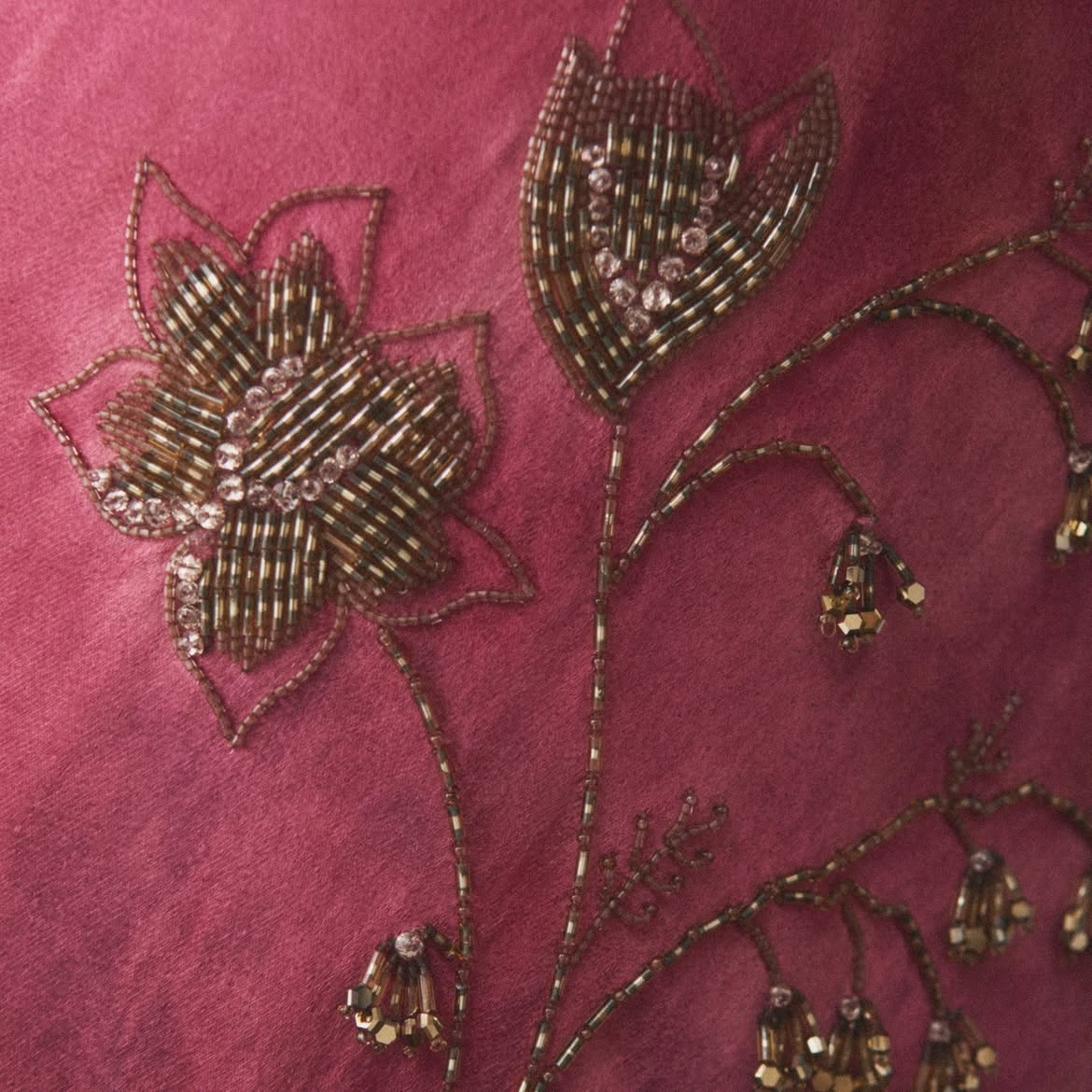
Ralph Lauren’s Spring 2027 collection, shown in New York on September 9 ahead of New York Fashion Week, drew online criticism this week over a deep pink evening gown featuring dense metallic embroidery that resembles zardozi, a centuries-old embellishment technique associated with India. The brand posted images of the gown to Instagram on September 12, and the caption did not name India or the zardozi technique specifically. The post has since drawn comments from social media users and at least one fashion designer questioning why the specific craft was not identified.
What the Post Said
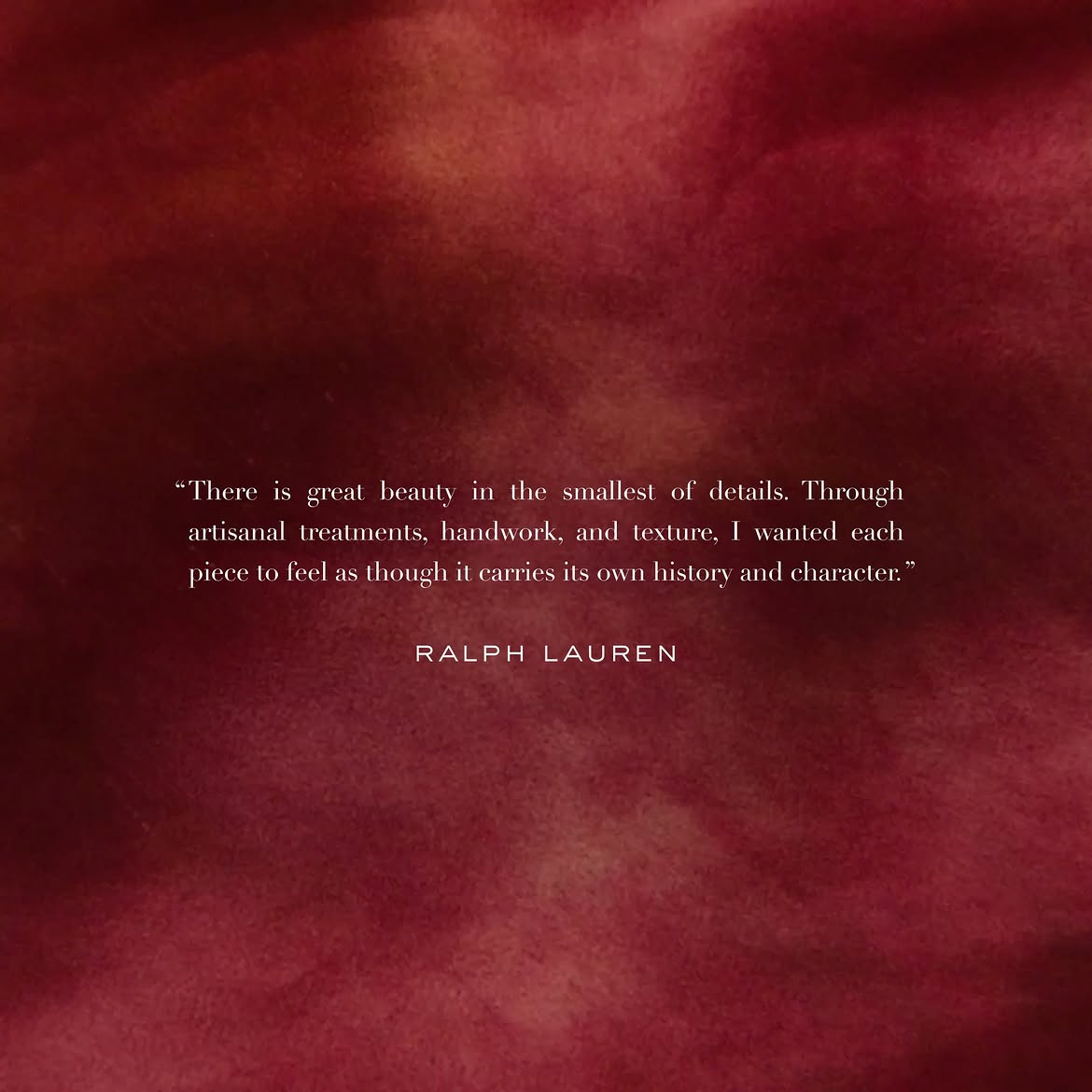
Ralph Lauren’s Instagram caption described the gown as “draped with shimmering silk-viscose and scattered with hand-applied embellishments,” calling it a “cinematic statement” from the Spring 2027 collection. The post included a close-up image of the embroidery itself but made no reference to the craft’s name or geographic origin. The same post reportedly included a separate quote attributed to Ralph Lauren about wanting each garment in the collection to carry its own sense of history and character, a line that later became part of the criticism directed at the post.
What Zardozi Actually Is
Zardozi is a raised, metal-thread embroidery technique using gold and silver wire, sequins, beads and semi-precious stones stitched onto fabric to build dense, dimensional patterns. According to the Embroiderers’ Guild of America, the technique traces to Persia, where “zar” means gold and “dozi” means sewing or embroidery, and it reached the Indian subcontinent in the 17th century, rising to prominence under the patronage of the Mughal empire. Some textile historians place its Persian roots even earlier, tracing the specific technique to around the 14th century, and separate traditions of gold-thread embroidery also existed in ancient India before the Mughal period arrived. The craft later spread across several Indian regions, with Lucknow, Delhi, Agra, Hyderabad and Bhopal each developing distinct regional variations over subsequent centuries. Lucknow’s specific zardozi cluster received Geographical Indication registration in India in 2013, a designation covering several surrounding districts and, according to reporting on the current controversy, close to 175,000 artisans working within that cluster alone.
How the Criticism Developed
Fashion designer Prakhar Rao Singh Chandel raised the issue in an Instagram post, arguing that Ralph Lauren’s caption described the gown’s fabric in detail while reducing the handwork itself to the word “embellishments.”
FLJ Insider Pro is open: live fashion law jobs and internships, five career guides and two roadmaps. Early bird USD 12/month. See what's inside
Chandel also referenced a quote attributed to Ralph Lauren elsewhere in the same post, about wanting each garment to carry its own history and character, and asked whose history the caption was referring to. Other Instagram users commented on the original post asking the brand to name the craft and credit Indian artisans directly, with comments including requests to acknowledge Indian art and craftsmanship and objections to the technique being described only as an embellishment rather than by name.
A Comparison to Prada’s 2025 Kolhapuri Controversy
Commentary around the Ralph Lauren gown repeatedly referenced a similar controversy involving Prada in June 2025, when the Italian house showed sandals resembling Kolhapuri chappals, a footwear style native to Maharashtra, and described them in show notes only as leather sandals. Prada acknowledged the design’s Indian roots after the Maharashtra Chamber of Commerce sent a formal letter to the company, with the acknowledgment following roughly two days after that letter. That dispute later reached India’s legal system. The Bombay High Court dismissed a Public Interest Litigation challenging Prada’s use of the design in July 2025, ruling that claims under India’s Geographical Indications of Goods Act can only be brought by the GI’s registered proprietors, in that case two government-linked leather development corporations, rather than through a public interest filing. The court did not rule on whether the design itself infringed the GI tag, and left the door open for the registered proprietors to pursue their own claim separately. Zardozi carries a comparable GI registration through the Lucknow cluster, which would place any formal legal claim over the Ralph Lauren gown in a similar position, open only to the registration’s specific holders rather than to individual designers or commentators raising the issue online.
Where Things Stand
As of this writing, Ralph Lauren has not issued a public statement addressing the criticism or clarifying the embroidery technique used on the gown, and the brand’s original Instagram post remains published without an edit or follow-up caption identifying the craft. The discussion continues primarily on social media, with commentary focused on whether the craft behind an embellishment should be named at the time a brand uses it, rather than afterward in response to criticism. Fashion Law Journal has previously covered the limited legal protection available to traditional crafts like Kolhapuri chappals and zardozi outside of a registered Geographical Indication, a gap that leaves most disputes over uncredited craftsmanship to play out in public commentary rather than in court.
FASHION LAW JOURNAL INSIDER
Join designers, brand founders and fashion lawyers who get the biggest brand battles, IP fights and career moves in fashion law, straight to their inbox.