
7-Eleven has taken Nike to court over a pair of trainers, arguing that the sportswear giant built its upcoming Air Max 95 “Big Bubble” around the convenience store chain’s signature orange, green and red stripes and then timed the release for maximum effect. The complaint, filed on 1 July 2026 in the US District Court for the Northern District of Texas, Dallas Division, and docketed as 7-Eleven, Inc. v. Nike, Inc., Civil Action No. 3:26-cv-02201-X, sets out seven separate causes of action under federal and Texas trademark law and asks the court to block the shoe before it ever reaches shelves. Court docket records and Bloomberg Law both list Judge Brantley Starr as assigned to the case.

The Design at the Centre of the Dispute
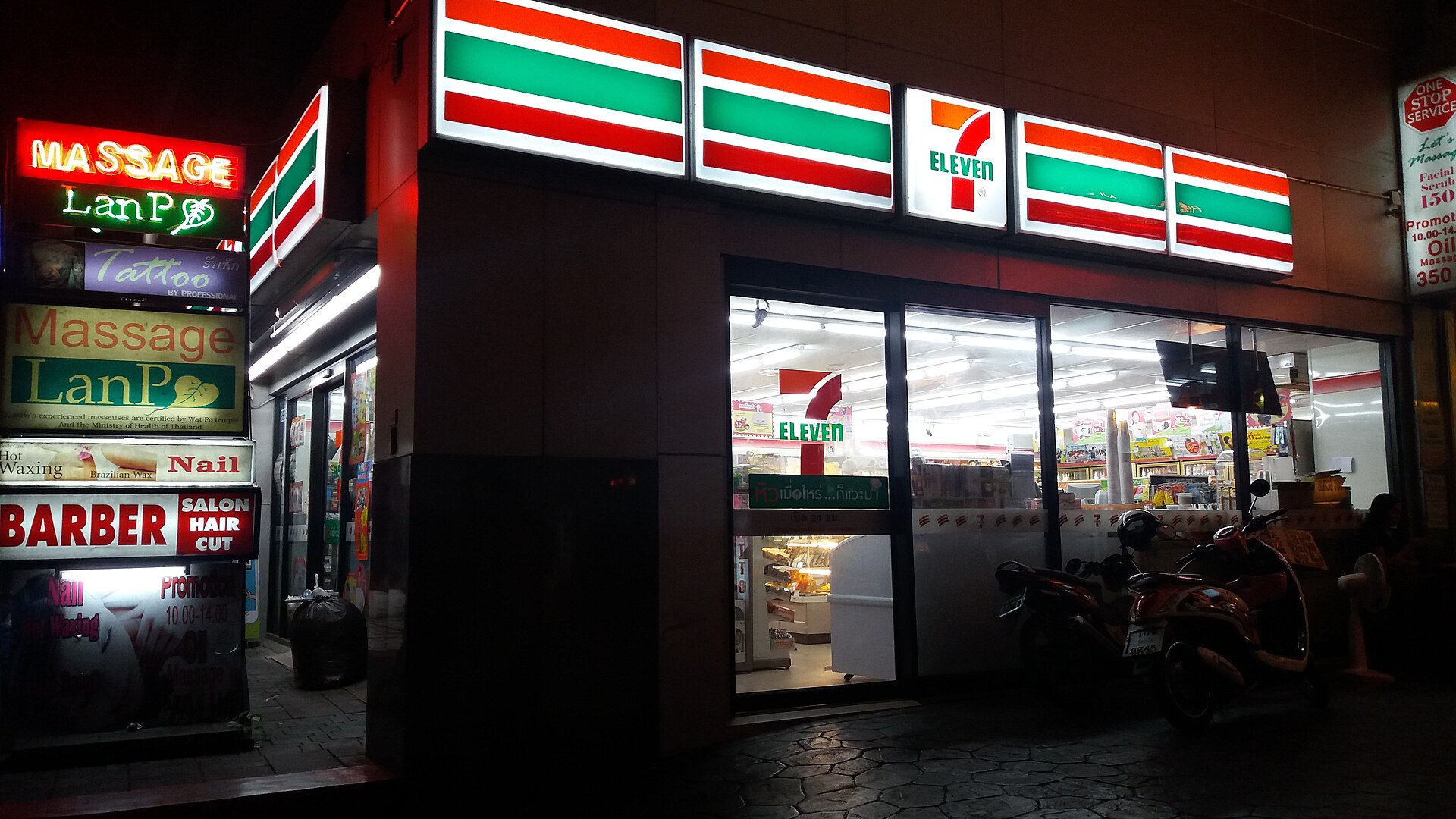
According to the complaint, 7-Eleven has used its “7-ELEVEN” name and logo in commerce since at least 1946, and has specifically used the combination of orange, green and red stripes, which it calls the “Tri-Color Mark,” for nearly forty years, with the complaint citing a first use date of January 1987 for one of the underlying registrations. The filing lists five federal trademark registrations said to cover the Tri-Color Mark and the wider 7-ELEVEN branding, with registration dates running from 1998 to 2016, and notes that several additional registrations also protect the brand’s colour scheme across categories including clothing, footwear, headwear and golf balls. The complaint states that these registrations are incontestable, meaning they carry a heightened legal presumption of validity that would be difficult for Nike to challenge on its merits. 7-Eleven also points to its own history of licensed apparel and footwear collaborations, including with Crocs, Sunday Golf, Breezy Golf and skate brand DGK, as evidence that consumers already associate the tri-colour palette with officially sanctioned 7-Eleven products.

The shoe at issue is the Air Max 95 “Big Bubble” in the “Sport Green and Safety Orange” colourway, priced at $200 and, according to a screenshot of Nike’s SNKRS app included as an exhibit to the complaint, scheduled for release on 11 July 2026 at 10 a.m., a date that falls on what 7-Eleven calls “7-Eleven Day,” the retailer’s annual free Slurpee promotion built around the 7/11 date. 7-Eleven says it first became aware of the shoe in mid-June 2026, and the complaint attaches several pieces of unsolicited sneaker press coverage from outlets including Sole Retriever, Sneaker News, Women’s Wear Daily, Complex, Style Rave and Highsnobiety, which had already described the design using terms such as “instantly recognizable,” “unmistakable,” “signature” and “iconic.”
A Highsnobiety headline reproduced in the complaint runs “Nike’s 7-Eleven Air Max Is a 24/7 Textural Treat,” and a Sneaker News headline reads “7-Eleven Inspires This Upcoming Nike Air Max 95.” Separately, the complaint alleges that third-party product listings referred to the sneaker outright as “the ‘7-Eleven’ shoe,” and that at least one consumer had already purchased a pair through a third-party website before the official launch.
FLJ Insider Pro is open: live fashion law jobs and internships, five career guides and two roadmaps. Early bird USD 12/month. See what's inside


7-Eleven’s Legal Claims, in Plain English
The complaint pleads seven counts in total, but they really come down to two ideas repeated across federal and Texas law. The first idea is confusion: would an ordinary shopper browsing the Air Max 95 assume that 7-Eleven made it, licensed it, or signed off on it in some way? That question sits behind the complaint’s federal claims for unfair competition and false designation of origin under Lanham Act Section 43(a) (15 U.S.C. § 1125(a)) and for trademark infringement under Section 32(1) (15 U.S.C. § 1114(1)), and behind its Texas-law equivalents, common law trademark infringement and unfair competition, and statutory infringement under Texas Business and Commerce Code Section 16.102(b).
The second idea is dilution, which works differently and does not require anyone to be confused about who actually made the shoe. Instead, it asks whether Nike has cheapened the specialness of 7-Eleven’s colours simply by putting them on an unrelated product, loosening the tight, decades-built link in shoppers’ minds between orange, green and red stripes and 7-Eleven specifically. That theory underpins the complaint’s federal dilution claim under Section 43(c) (15 U.S.C. § 1125(c)) and its Texas-law counterpart under Section 16.103, along with a related Texas claim for unfair competition by misappropriation, which argues Nike is unfairly benefiting from the time and money 7-Eleven spent building that association in the first place.
Throughout the complaint, 7-Eleven’s lawyers describe Nike’s conduct in unusually strong terms, calling it “a callous and malicious disregard for 7-Eleven’s rights” and alleging that Nike acted “knowingly, willfully, intentionally, and maliciously.” That is not just colourful language for the reader’s benefit; it is doing legal work. If a court agrees that Nike knew what it was doing, 7-Eleven can ask for its damages to be trebled and Nike’s profits enhanced under the Lanham Act, rather than being limited to whatever losses it can actually prove.
Prior Negotiations and Nike’s Position
The complaint states that 7-Eleven “repeatedly contacted Nike to attempt to resolve this dispute” before filing suit, and that despite multiple communications between the parties, Nike indicated it intended to continue advertising the shoe and to proceed with the 7/11 launch. Nike had not filed a public response as of this writing. Some sneaker and trade outlets have separately reported that Nike pulled the Air Max 95 listing from its SNKRS app following the lawsuit, though Fashion Law Journal has not independently verified that action against Nike’s own statements and treats it as a developing detail worth confirming as the case progresses.
What 7-Eleven Wants the Court to Do
What 7-Eleven is asking for breaks down into two clusters. The first is about stopping the shoe altogether: a permanent injunction barring Nike from advertising, marketing or selling the Air Max 95 or anything else carrying a confusingly similar imitation of the Tri-Color Mark, plus an order forcing Nike to recall whatever has already reached stores and destroy any remaining shoes, signage or promotional material. The second is about paying for the harm already done: an accounting of whatever profit Nike made on the shoe, 7-Eleven’s actual damages, and, because the complaint argues Nike knew exactly what it was doing, damages trebled and profits enhanced under the Lanham Act, on top of exemplary damages under Texas law, attorneys’ fees, costs and interest. 7-Eleven has also demanded a jury trial, so if the case runs its full course, these questions would ultimately be decided by a jury rather than a judge alone.

Can a Colour Combination Really Function as a Trademark?
The case turns on a principle that often surprises people outside fashion and IP law, which is that trademark protection is not limited to names and logos and can, in the right circumstances, extend to colour itself. The foundational authority is the US Supreme Court’s 1995 decision in Qualitex Co. v. Jacobson Products Co., 514 U.S. 159, which held that a single colour can serve as a valid trademark once it has acquired what lawyers call secondary meaning, meaning that consumers have come to associate that colour specifically with one company’s goods, and provided the colour is not functional, that is, it does not serve some practical purpose that competitors need to be free to use. Fashion has its own well-known example in Christian Louboutin S.A. v. Yves Saint Laurent America Holdings, Inc., in which the Second Circuit Court of Appeals ruled in September 2012 that Louboutin’s red-lacquered outsole was a valid and enforceable trademark, though the court limited that protection to soles that contrast with a shoe’s upper, denying Louboutin the ability to stop a monochrome red YSL shoe.
7-Eleven’s case follows the same logic but applies it to a combination of three colours arranged in a specific stripe pattern rather than a single hue. The complaint leans heavily on the fact that several of the underlying registrations are incontestable, a status available under the Lanham Act once a mark has been in continuous use for five years after registration and the required affidavits have been filed, and one that limits the grounds on which a defendant can challenge the mark’s validity. Whether 7-Eleven can show the kind of consumer recognition and non-functionality that colour-based marks require will likely be a central battleground if the case proceeds past the pleading stage, alongside the more conventional question of whether an ordinary sneaker buyer would actually mistake an Air Max 95 for a 7-Eleven-branded product.
What Comes Next
With the shoe’s planned release date falling just days after the complaint was filed, the practical stakes for both companies are immediate, and 7-Eleven’s request for a preliminary injunction, if it presses for one, would likely be the first substantive hearing in the case. Fashion Law Journal will continue to follow the docket in 7-Eleven, Inc. v. Nike, Inc., for developments including Nike’s answer or any motion to dismiss.
FASHION LAW JOURNAL INSIDER
Join designers, brand founders and fashion lawyers who get the biggest brand battles, IP fights and career moves in fashion law, straight to their inbox.