
Last updated: July 2026
Does Vogue use AI models? Vogue has not replaced its editorial models with AI. The controversy began when its US August 2025 issue carried a Guess advertisement featuring AI-generated models, disclosed in small print as artificial. The ad was paid placement, not Vogue editorial, but it made the magazine the center of a debate that is still reshaping fashion law in 2026.
What Happened With the Guess AI Ad in Vogue?
Picture a page of Vogue showcasing a stunning model. Now imagine that model is not real, not in the traditional sense anyway. That is exactly what readers of the August 2025 US issue encountered. A Guess advertisement featured a photorealistic woman generated by artificial intelligence, created for the brand by Seraphinne Vallora, an agency that specialises in AI-generated campaign imagery. A small caption disclosed that the image was produced with AI.
The backlash was immediate and loud. Models, agents, and readers criticised both Guess for using a synthetic woman to sell clothes and Vogue for carrying the ad, arguing that it normalised the replacement of working models and pushed an unattainable, machine-made beauty ideal. Vogue’s position was that this was an advertisement, not editorial content, and that the magazine does not control the creative inside paid placements. That distinction mattered legally, but it did little to calm the public reaction. The episode became the reference point for every conversation about AI-generated models in fashion advertising that followed.
How Do AI-Generated Models Actually Work?
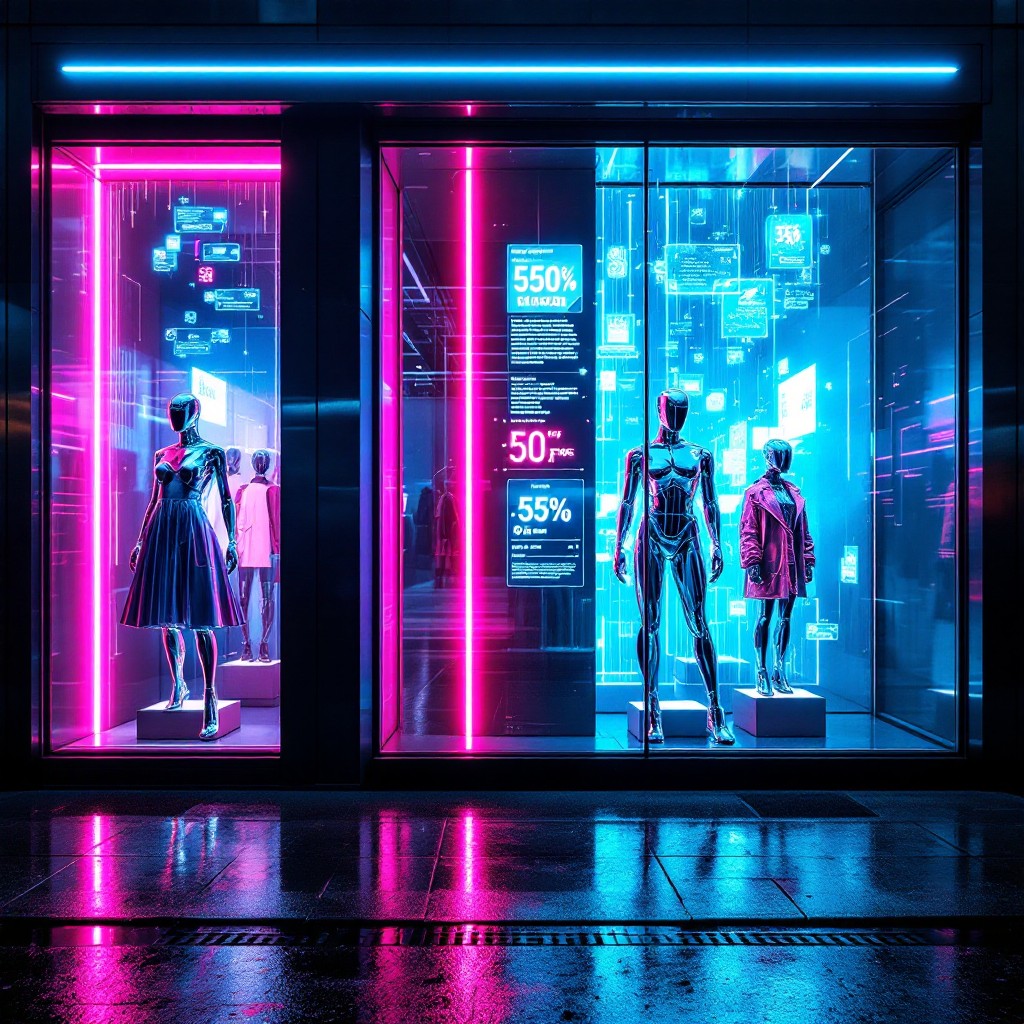
AI models are not just fancy mannequins. They are outputs of image-generation systems capable of producing photorealistic pictures of people, clothes, and entire scenes. The specific tools individual brands use are generally closely guarded, but these systems are typically trained on massive datasets of images: millions of photos from fashion shows, editorial spreads, e-commerce catalogues, and everyday snapshots.
Those datasets feed algorithms that learn patterns, textures, lighting, and composition. The result is the ability to create entirely new images featuring people who do not exist, wearing garments that may not have been physically produced yet, in locations that are digitally rendered. For brands this offers unprecedented control. A company can dictate precise body types, skin tones, and poses, eliminating casting calls, travel, and extensive photo shoots.
A cottage industry has grown around this capability. Alongside creative agencies like the one behind the Guess campaign, so-called AI modelling agencies license ready-made virtual models to brands, and some traditional agencies now offer digital twin services, scanning real models so their likenesses can be reused in computer-generated campaigns. That last model, where a real person licenses a digital replica of herself, is where much of the legal action now sits.
Is AI a Threat to Human Models and Fashion Jobs?
The promise of efficiency is alluring, but the potential impact on human models, photographers, makeup artists, stylists, and set designers is causing serious and justified concern. Exact figures on job displacement directly attributable to AI remain difficult to pinpoint, but by 2026 the anxiety has moved from hypothetical to contractual: models and their agents now routinely negotiate over whether a client may scan, replicate, or synthetically extend a model’s image beyond the original shoot.
Imagine a young model just starting out, dreaming of a Vogue page. She now competes not only with other talented people but with an algorithm that can generate a “perfect” model on demand, at any hour, for a fraction of a day rate. The economics ripple outward, because every cancelled shoot also removes work for the photographer, the hair and makeup team, and the studio.
There is also an environmental dimension. Training and running large image-generation systems consumes substantial computing power, which carries a real carbon footprint. An industry already under scrutiny for sustainability claims should weigh that cost before treating AI imagery as the automatically greener option.
What Are the Benefits and Drawbacks of AI Models in Fashion?
The picture is not one-sided. Brands can reduce production costs, visualise garments before sampling, localise campaigns for different markets, and experiment with bolder creative concepts. Publications could use AI to visualise future trends, build interactive experiences, and let readers virtually try on clothes.
The drawbacks are equally significant. The absence of human emotion and lived experience in AI-generated imagery can produce sterile, uninspired content. The industry risks losing the artistry and spontaneity that come from collaborating with real people. Over-reliance on AI can also homogenise beauty standards: if the training data skews toward particular demographics, the outputs will perpetuate those biases, narrowing rather than widening representation of body types, skin tones, and ethnicities. Creating genuinely inclusive AI imagery requires deliberate dataset curation and ongoing human oversight, and even then a disclosed synthetic “diverse” model is no substitute for hiring diverse real ones.
What Has Changed Legally Since the Vogue Backlash?
The most important development between 2025 and 2026 is that the question moved from “is this creepy” to “is this compliant”. Several legal threads now shape how brands, magazines, and agencies handle AI-generated models. As of mid-2026, the key ones are:
- Digital replica laws in the United States. Tennessee’s ELVIS Act, in force since 2024, updated the state’s right of publicity to cover unauthorised AI simulations of a person’s voice and likeness. Other states have adopted or expanded right of publicity statutes to address AI-generated replicas, and momentum for federal protection continues, though as of mid-2026 there is still no single nationwide digital replica statute. The practical effect: generating an image that imitates an identifiable real model without consent is increasingly actionable.
- New York’s protections for fashion workers. New York, the center of the US modelling industry, enacted the Fashion Workers Act, which took effect in 2025. Among its provisions, it regulates model management companies and requires clear written consent before a model’s digital replica is created or used, addressing exactly the scanning and reuse practices that alarmed the industry after the Guess ad.
- The EU AI Act’s transparency obligations. The EU AI Act entered into force in 2024 with obligations phasing in over several years. Its transparency rules require that AI-generated or manipulated content be disclosed, meaning synthetic imagery presented to the public in the EU must be identifiable as such. For global fashion advertisers, EU-facing campaigns using AI models effectively require labelling.
- Advertising self-regulation. Advertising standards bodies and platforms have moved toward requiring disclosure of synthetic humans in ads, and several large brands have adopted internal policies mandating labels on AI-generated campaign imagery. Disclosure in some form, following the small-print approach of the Guess ad, is hardening into an industry norm.
Who Bears the Risk? Models, Brands, Magazines, and Agencies
Each stakeholder in the AI model debate faces a distinct legal and commercial exposure, and distinct emerging protections.
| Stakeholder | Key legal or commercial concern | Emerging protection |
|---|---|---|
| Models | Unauthorised digital replicas, lost bookings, likeness scraped into training data | State digital replica and right of publicity laws, consent requirements such as New York’s fashion worker protections, replica clauses in contracts |
| Brands | Backlash, false advertising exposure, infringement claims if outputs resemble real people | Documented consent and licensing, disclosure labels, indemnities from AI vendors |
| Magazines | Reputational damage from AI ads, blurred line between editorial and advertising | Ad acceptance policies requiring disclosure of synthetic imagery |
| Agencies | Losing talent revenue, liability for licensing digital twins without proper authority | Regulation of management companies, written consent and compensation terms for replica use |
What Should Brands Do Before Using AI Models in Advertising?
For brands and their counsel, a defensible AI model campaign as of mid-2026 rests on three pillars.
- Consent. If the imagery is based on, scanned from, or intended to resemble a real person, obtain specific written consent that covers digital replica creation, the media and territories of use, the duration, and compensation. Silence or a general image release is not enough, and in some jurisdictions it is legally insufficient.
- Disclosure. Label AI-generated models clearly, not in barely legible small print. Disclosure is legally required in a growing number of contexts and, just as importantly, undisclosed synthetic imagery is now a reputational landmine.
- Contract clauses. Update model agreements, agency terms, and AI vendor contracts. Model contracts should say whether replicas may be created at all. Vendor contracts should include warranties that outputs do not imitate identifiable real people, and indemnities if they do. Media placement contracts should allocate responsibility for labelling.
Can AI and Human Models Coexist?
The fashion industry does not have to treat this as a zero-sum game. AI can be a tool that enhances human work rather than replacing it: assisting with retouching, virtual backdrops, fit visualisation, and pre-production, while paid, consenting humans front the campaigns. Publications can commission collaborations with AI artists that are framed as digital art rather than passed off as photography, and campaigns can blend disclosed AI imagery with real models.
The likely future is a hybrid one, where AI plays a growing role but human talent, and now human legal rights, remain at the center. Vogue and its peers have a responsibility to lead the responsible adoption of these tools: prioritising ethics, demanding disclosure from advertisers, and promoting genuine diversity. The panic of 2025 was not irrational, but the more productive response, and the one the law is now encouraging, is consent, transparency, and fair contracts.
Frequently Asked Questions
Did Vogue create the AI models in the Guess ad?
No. The AI imagery was created for Guess by an external agency, Seraphinne Vallora. Vogue carried the campaign as a paid advertisement in its US August 2025 issue and did not produce the images editorially.
Is it legal to use AI-generated models in advertising?
Generally yes, provided the images do not imitate an identifiable real person without consent and any applicable disclosure rules are followed. As of mid-2026, US state digital replica laws, New York’s fashion worker protections, and the EU AI Act’s transparency obligations all constrain how such imagery can be made and shown.
Do AI models have to be labelled as AI?
Increasingly, yes. The EU AI Act requires transparency about AI-generated content shown to the public, several advertising standards regimes expect disclosure, and industry practice is converging on clear labelling even where no statute strictly requires it.
Can a brand make a digital replica of a real model?
Only with proper authorisation. Right of publicity and digital replica laws, including Tennessee’s ELVIS Act, and consent requirements such as those in New York’s Fashion Workers Act, mean brands need specific written consent covering the replica’s creation, scope of use, and compensation.
Will AI models replace human models entirely?
It is unlikely in the foreseeable future. Legal consent requirements, disclosure obligations, consumer backlash, and the creative value of real people all push toward a hybrid model, where AI handles some production tasks while human models continue to front major campaigns.
FASHION LAW JOURNAL INSIDER
Join designers, brand founders and fashion lawyers who get the biggest brand battles, IP fights and career moves in fashion law, straight to their inbox.