


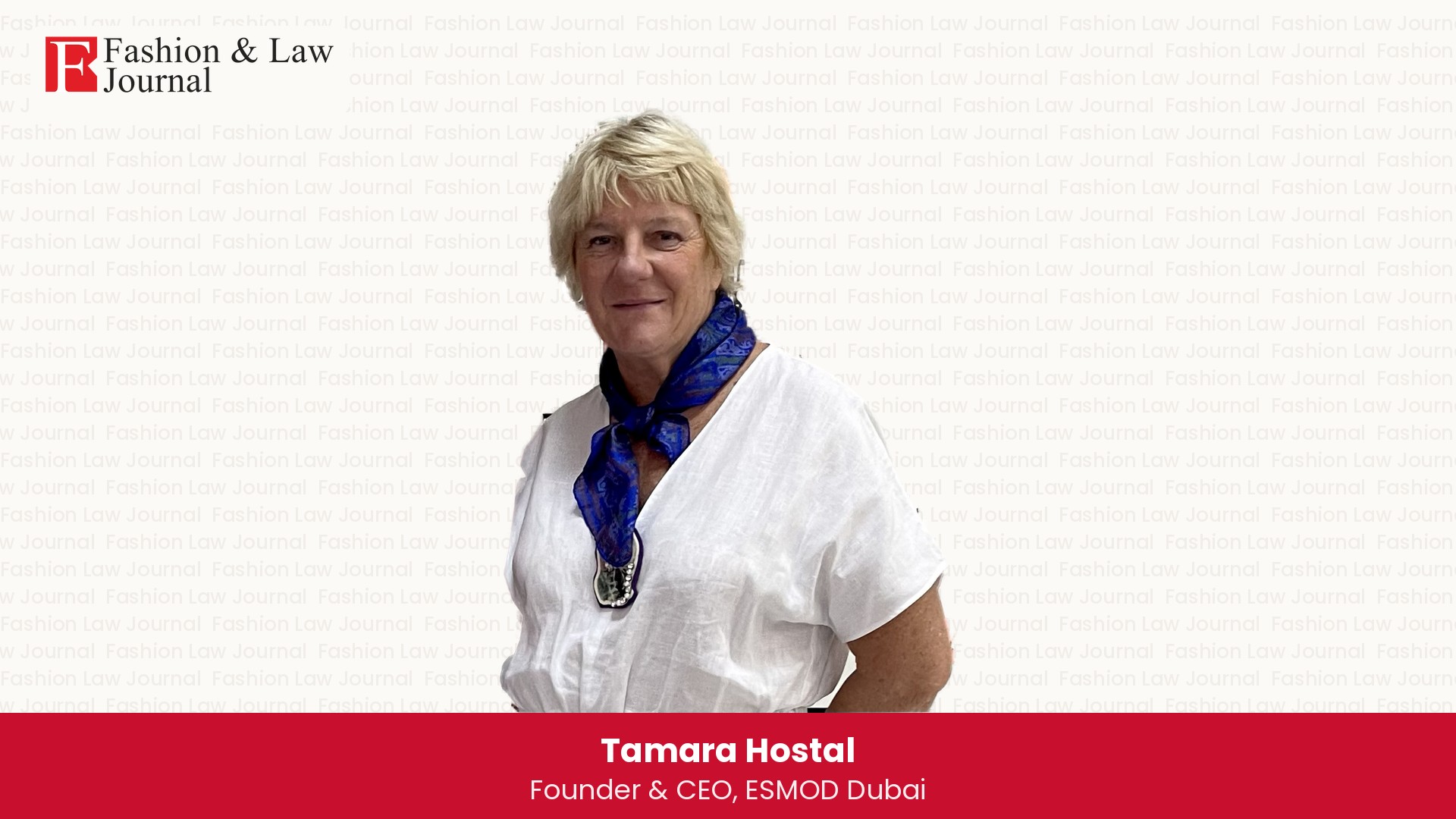
ESMOD Dubai, the French Fashion Institute, opened in 2006 when Dubai had no other fashion school. Fashion Law Journal asked its Founder and CEO, Tamara Hostal, how a school builds talent where an industry is still forming, where her graduates go, and what Dubai still needs to become a fashion capital. Read the conversation here:
ESMOD Dubai opened when there was no other fashion school here. What did you have to build from scratch that a school in Paris would take for granted?
We opened ESMOD DUBAI in 2006, and I have to say the first challenge was to teach the basics in terms of Art and Fashion, bringing books, and textiles other than silk or satin. Teaching Art before starting to talk about Fashion was, at that time, an important step.
How has the profile of your students changed since the early years?
Thanks to all the Malls in Dubai bringing famous brands and fashion houses here, the level of fashion, the level of trends and the merchandising of our students immediately rose. Here in this region, Malls like Dubai Mall or Mall of the Emirates are giving the fashion impulse.
Where do your graduates actually end up: their own labels, regional brands, global houses?
In this region most of them like to launch their own brand; this is why we have put in place a coaching program in marketing and business. Anyway, to validate their ESMOD Degree Program they have to do an internship in the fashion industry, and often they stay in the company, becoming product managers, junior assistant designers, creators, sales associates, or creating fashion content in fashion magazines. Or they are hired by famous brands and groups such as Gucci, Chalhoub, Apparel Group, Kering Group, and others.
FLJ Insider Pro is open: live fashion law jobs and internships, five career guides and two roadmaps. Early bird USD 12/month. See what's inside
When brands and fashion houses in this region hire your graduates, what skills or knowledge do they ask for that a fashion school in Paris or London would not think to teach?
I have to say what they highly appreciate is their high level of creativity, and the global knowledge of the fashion industry they gain during their three-year degree programme at ESMOD Dubai. Another criterion that adds value for newly graduated ESMOD Dubai students is their ability to work with 3D software, and their excellent technical skill in producing any garment. The ESMOD methodology is, we can say, unique. It includes, for example, the “tech pack chart”. Our students are known for being leaders in that.
How much do students learn about the business and legal side, things like contracts, trademarks, licensing and who owns a design?
We sensitise them to protect their brand and register for copyrights, but we don’t have a legal course to protect their creations. There are specialists for that, like La Sorbonne in Abu Dhabi.
Dubai is positioning itself as a fashion capital. What is genuinely in place now, and what is still missing?
Dubai is positive in terms of dynamism to organise events, fashion weeks, etc.
But still missing is the support from the government to really start to consider a fashion council with fashion experts who have a fashion background. The level of fashion has to increase if we want to keep our talented new creators. An exceptionally good point for Dubai is the mix of cultures. Our yearly fashion shows are always an explosion of creativity and technicity, coming from the students’ personal universes.
What do you tell a student who wants to launch a label straight out of school?
Very good. Thanks to the ESMOD methodology, you are one of the best on the market. Thanks also to access to social media, which is an easier way to showcase, sell, and create a network for your new brand. There was a time when the only way was to be able to open a shop! That time has ended, so the investment needed to start today is nothing compared to the past!
What should the next ten years of fashion education in the Gulf look like?
- Having a strong and professional level in fashion design and production, so we do not only hear “I am a designer” just because someone is making a few large dresses.
- Developing the image of DUBAI internationally as a fashion hub, with not only Arabic fashion. Dubai is a city where 250 different nationalities are exchanging, meeting and sharing. Dubai can be proud of it; it is a unique concept, and it should take advantage of this in terms of fashion. This is what we do at ESMOD DUBAI: we capitalise on worldwide creativity.
- I remember when the “Summer Shopping Festival” and “Global Village” were created. I was living here already. It was an exceptional and unique idea, and the fundamental aim was to bring people from everywhere in the world to shop in Dubai. It has been an enormous success and, as usual in Dubai, an incredible vision for the future! The city should consider doing this kind of operation again. It was a success at a time when nobody was even able to locate Dubai on the map.
About the interviewee
Tamara Hostal is the Founder and CEO of ESMOD Dubai, the French Fashion Institute, which she opened in 2006 in Dubai Academic City. She is a Knight of the Order of Arts and Letters, appointed by the French Ministry of Culture. esmod-dubai.com
For more conversations with the people shaping the business of fashion, read our interviews.
FASHION LAW JOURNAL INSIDER
Join designers, brand founders and fashion lawyers who get the biggest brand battles, IP fights and career moves in fashion law, straight to their inbox.