

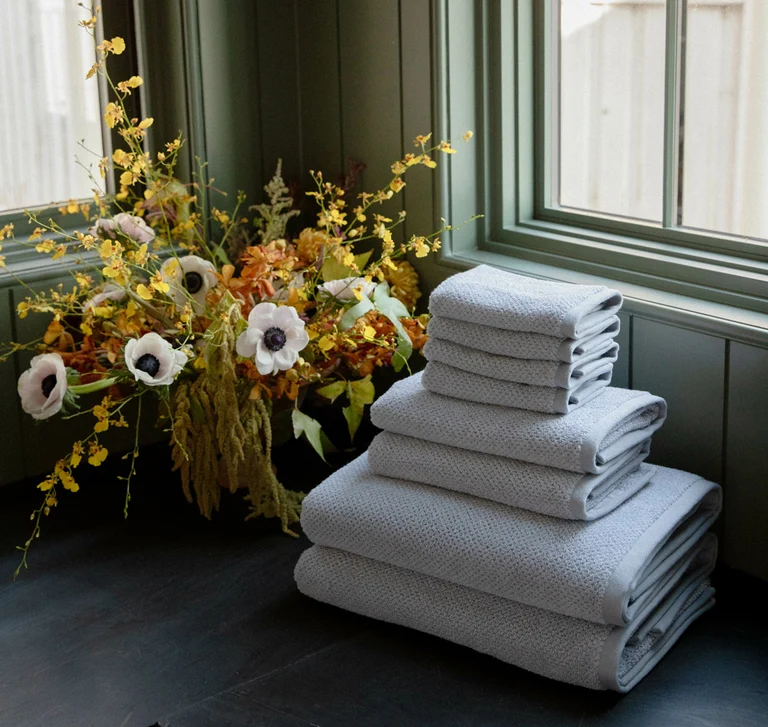
Most bathrooms are engineered for speed: get in, get clean, get out. Relaxation is treated as something that happens elsewhere, in a spa you pay for or a vacation you wait for. That is a waste of the one room in the house with hot water, privacy, and a lock on the door. The steps below set the room up so that unwinding becomes its default function, not a special occasion that takes an hour of staging.
This guide covers:
• Why texture is the fastest route to a relaxed state
• How to strip the room back to a calm baseline
• The light, scent, and sound settings that change the room’s character
• A research-backed evening ritual, with the timing that makes it work
Begin With What Touches Your Skin
Relaxation is a body state before it is a mental one, and the body reads a room through its skin. In a bathroom, that reading happens at very specific moments: the mat under wet feet, the towel after a shower, the robe afterward. Those few seconds of contact repeat every single day, which makes textiles the highest-return upgrade in the room. A tense shoulder does not care about the tile pattern, but it registers the difference between a stiff, thin towel and a heavy soft one immediately.
Start with the towels, because they deliver the longest skin contact of anything in the room. Look for weight, absorbency, and softness that survives repeated hot washing; ultra-soft bathroom towels for a spa-like experience built from cotton and bamboo viscose blends have become a popular route because the blend stays plush without the waxy softener coating that reduces absorbency in cheaper towels. Cozy Earth weaves its towel range from that blend using a low-twist yarn, which is one of several construction methods that keep loft high wash after wash. Whatever towels you choose, buy the full-size bath sheet rather than the standard cut, and retire anything that scratches. The mat and a robe complete the trio; together they mean the two minutes after every shower feel like the end of something rather than a rush toward the next task.
Texture is also the step people skip because it feels indulgent. It is not. The towels get used roughly seven hundred times a year, which makes them, per use, among the cheapest comfort in the house.
Strip the Room to Its Calm State
A relaxing room is one the eye can rest in, and eyes cannot rest on clutter. Sleep and comfort brands like CozyEarth photograph their bath products in nearly empty rooms for a reason: calm reads as space, and space is free. Clear every surface completely, then return only the daily items, grouped on one tray. Everything else moves into drawers, a cabinet, or out of the room entirely. The bathroom counter is not storage; it is the first thing you see when you walk in, and it sets the register for the whole room.
Then subtract the noise you have stopped noticing. The crowd of near-empty bottles in the shower, the products bought for routines you no longer follow, and the frayed towels behind the door all leave. If the room doubles as a laundry stop, give the hamper a lid or move it. What remains after an honest clear-out is usually a room that already looks close to the calm baseline you were planning to buy your way toward.
The last part of this step is a rule rather than a task: one in, one out. Bathrooms recollect clutter faster than any room in the house because products enter it weekly. The rule costs nothing and protects everything else in this guide.
Tune the Atmosphere
With the surfaces calm and the textiles soft, the room’s remaining character comes from light, scent, and sound. Light does the heaviest lifting. Most bathrooms run a single cool-white overhead that flattens everything and reads as clinical, so swap the bulbs to a warm 2700K and, if possible, add a dimmer or a small secondary source such as a plug-in sconce or even a candle. The goal is two settings: bright for the morning tasks, low for the evening wind-down. The same room under those two lights is effectively two rooms.
Scent should be singular and consistent. One candle, one diffuser, or a eucalyptus bundle hung from the shower head gives the room a signature that the brain starts associating with switching off. Rotating a shelf of competing fragrances does the opposite. Sound is the most personal setting: some people want a small speaker with something quiet, others want the fan’s white noise, others want silence. Decide once, set it up so it takes one tap or zero, and the room stops requiring decisions at the exact hour of the day when decisions are the last thing you want.
Warmth ties the atmosphere together. A bathroom that runs cold undoes everything else, so close the window before evening, let the shower steam the room ahead of a bath, and keep the robe within arm’s reach of the towel rail.
Build the Evening Wind-Down Ritual
A relaxing bathroom earns its keep through routine, and the routine has real science behind its timing. According to researchers at the University of Texas at Austin, whose analysis of thousands of sleep studies was published in Sleep Medicine Reviews, a warm bath or shower taken one to two hours before bed, ideally around 90 minutes, helps people fall asleep faster and sleep better. The warm water pulls blood flow toward the hands and feet, which speeds up the natural drop in core body temperature that signals the brain toward sleep. The bath is not just pleasant; it is a lever on your own physiology.
The ritual barely needs willpower once the room is set up for it. The sequence looks like this:
| When | Step | Why it works |
| 2 hours before bed | Switch to the low light setting | Dim light starts the wind-down signal |
| 90 minutes before bed | Warm bath or shower, 10 to 15 minutes | Triggers the core temperature drop |
| Right after | Pat dry, moisturize, robe on | Locks in the relaxed body state |
| Last | Phone stays outside the room | Protects the ritual from interruption |
Run it three or four evenings and the room starts doing the work for you; the low light and the familiar scent become cues, and the body begins its wind-down on arrival. That is the difference between a bathroom that looks relaxing and one that reliably relaxes you.
A relaxing bathroom is not a renovation project. It is soft textiles where skin makes contact, a room stripped to its calm baseline, an atmosphere tuned once, and a short evening ritual with the timing science on its side. Set it up over one weekend and it pays you back nightly.
Key Takeaways
• Upgrade what touches skin first: towels, mat, and robe deliver more relaxation per dollar than anything decorative.
• Strip the room to a calm baseline and hold it with a one-in, one-out rule, since clutter returns to bathrooms faster than to any other room.
• Time the ritual: a warm bath or shower about 90 minutes before bed works with your body’s temperature drop, not against it.
Frequently Asked Questions
What is a good self-care bath routine?
Prepare the room first: low warm light, one scent, phone outside. Run the water comfortably warm, soak for 10 to 20 minutes, and keep water nearby to stay hydrated. Afterward, pat dry rather than rubbing, moisturize while skin is damp, and change into a robe or loungewear so the relaxed state carries past the bathroom door.
What temperature should a relaxing bath be?
Comfortably warm rather than scalding: research on sleep and bathing points to roughly 104 to 109 degrees Fahrenheit as the range that relaxes muscles and supports the body’s natural cooling afterward. Hotter water can leave you dizzy or dehydrated, and it dries skin faster. If you have no thermometer, aim for warm enough to relax into within a few seconds.
Is it better to shower at night or in the morning?
It depends on the goal. Morning showers help with alertness and a fresh start, while evening showers support relaxation and sleep, especially taken one to two hours before bed. Night showers also remove the day’s pollen and grime before it reaches your sheets. Many people settle on a quick morning rinse and a longer, warmer evening wind-down.
Why does a warm bath make you sleepy?
Warm water draws blood circulation toward the skin, hands, and feet, which helps the body shed heat once you step out. That accelerates the natural drop in core temperature that precedes sleep, and the brain reads the drop as a signal to begin winding down. Timed about 90 minutes before bed, the effect helps people fall asleep faster.
How long should you soak in a bath?
Ten to twenty minutes covers most benefits: muscles relax, stress eases, and the warm-then-cool cycle that supports sleep gets triggered. Much longer than that, especially in hot water, starts to dehydrate you and strip the skin’s natural oils. If your fingers have gone deeply pruned and the water has gone cool, the useful part of the soak is over.
FASHION LAW JOURNAL INSIDER
Join designers, brand founders and fashion lawyers who get the biggest brand battles, IP fights and career moves in fashion law, straight to their inbox.