
Joash Teo, by his own admission, is married to fashion.
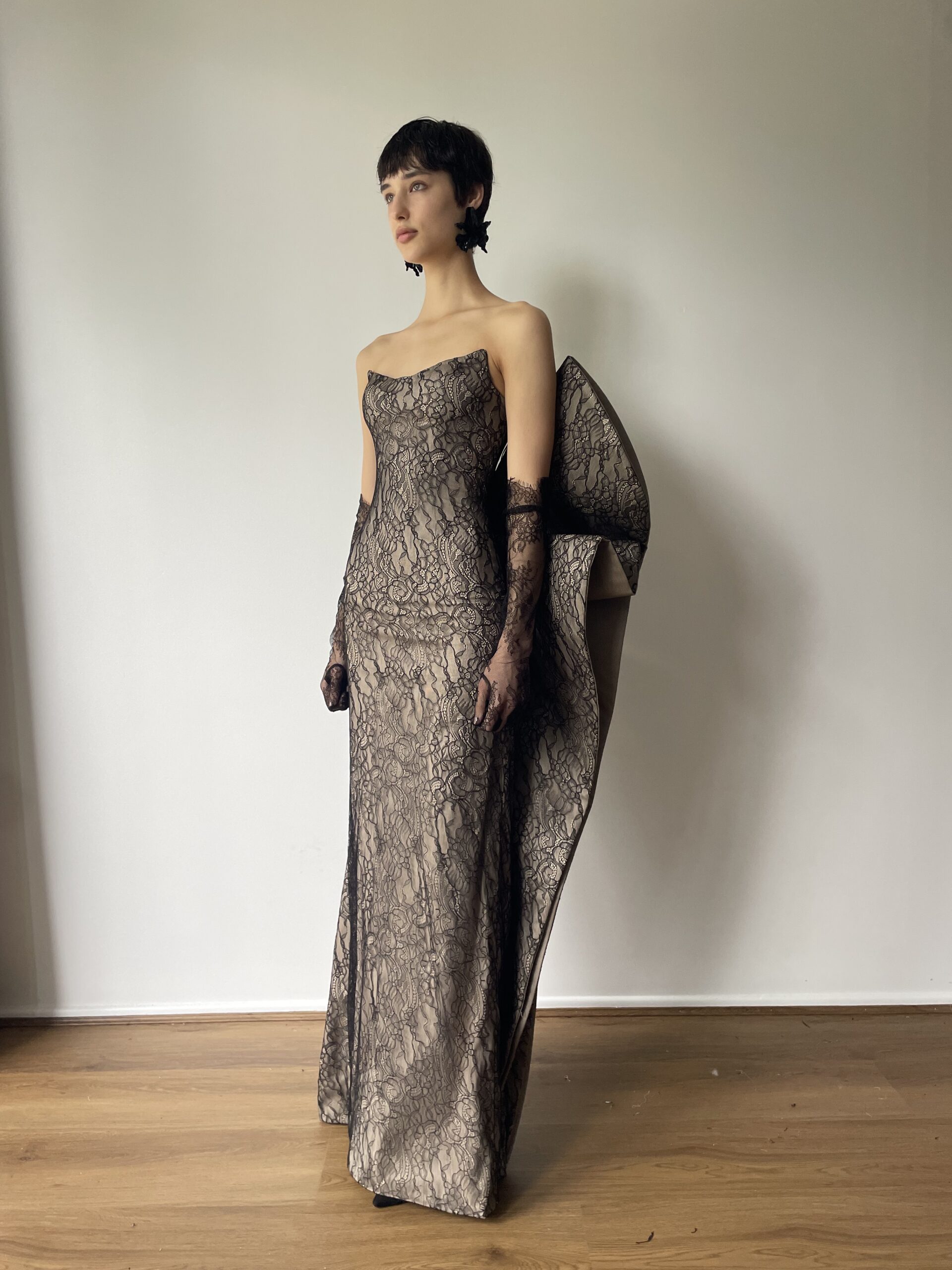
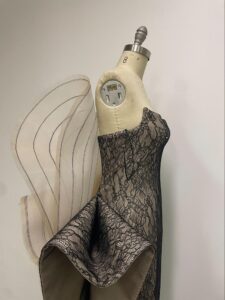
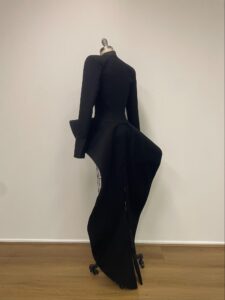
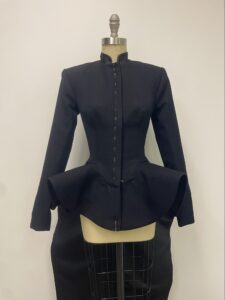
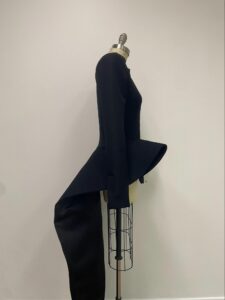
This emerging Australian-Singaporean designer’s Vampire of the Vanities Couture 2025 collection suggests that he is well-versed in designing the wedding gowns of vampires.
But in speaking with Teo, it becomes clear that something far more immortal lies at the heart of JOTÉO, the internationally recognised couture house he has built from a small studio nestled in Bowen Hills, Brisbane: craft.
“In my early career, particularly before I became a professional dressmaker, I hit many roadblocks and failed at several things,” Teo tells me. “I had to build endurance, get back up and choose fashion again and again. No one tells you that you have to keep choosing it. I am simply lucky that fashion chose me back. It is my first marriage.”
He laughs. “Sometimes, I think, ‘Wow, I’m married to fashion, not an actual person.’ But I am very happy with this marriage.”
Before JOTÉO was a couture house, with gowns crossing international borders and finding their way to the Cannes Film Festival, Teo was a Year 12 student in Brisbane, studying fashion at the Queensland University of Technology and taking his first tentative steps in what would become a lifelong dance with couture.
Before JOTÉO, There Was the Dressmaker
You were born in Singapore and moved to Australia when you were young. Take me back to the beginning. How did fashion enter your life?
Once upon a time, I suppose. I was born in Singapore, and my whole family is from Singapore, originally from China.
When I was about eight or nine, my brother had already gone abroad to Australia for boarding school. We travelled back and forth to visit him and bring him home to Singapore. One day, my mum and dad looked at me and realised that some of the reasons my brother wanted to attend school in Australia could also be seen in me. They asked whether I would like to join him. Of course, I said yes.
Coming to Australia, into an environment that was not as meritocracy-based or as intensely competitive from a formal scholastic point of view, allowed me to see my creative ambitions as more than hobbies or flights of fancy. I could think of them as a career.
It was not the same pathway as becoming a doctor, lawyer or engineer, which are more stereotypically aligned with an Asian or Asian-diaspora identity, and I was elated by that possibility.
Little by little, I explored those interests throughout school. I was fortunate to find teachers at St. Peter’s who really nurtured them. I was also incredibly lucky that my parents became supportive. There was a moment of, “Oh my God, you’re creative too.”
They were not dismissive, even though my friends had warned me they might be. I remember being anxious about telling my father I wanted to pursue this.
When did designing become making for you?
My passion for dressmaking kept growing.
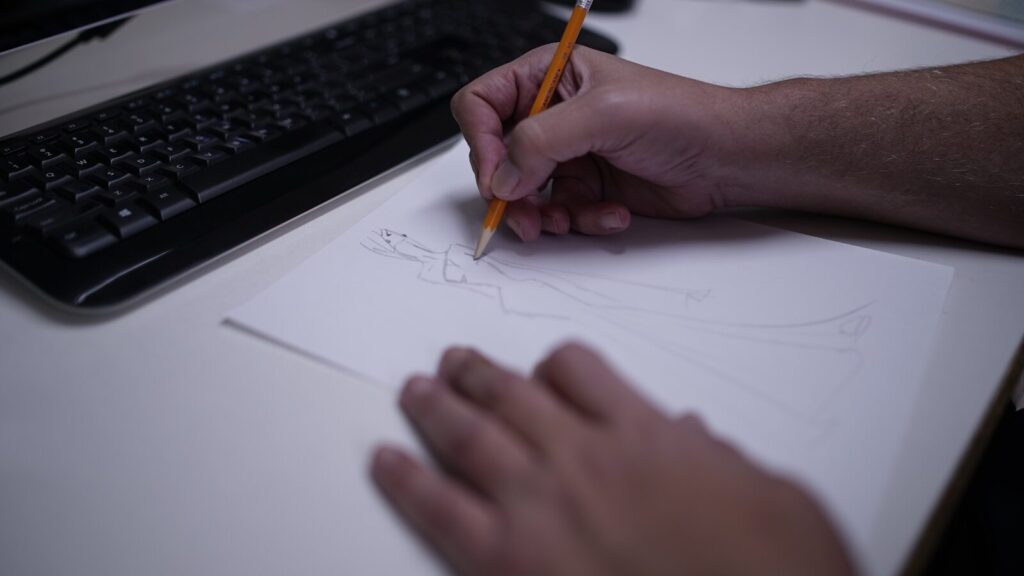
Originally, I did not think I would be the hands-on person sewing, cutting and draping. I imagined design as a two-dimensional process where I would draw something, hand it to someone else in the office and say, “Make it, and make it quickly, please.”
But I gravitated towards making more than designing.
Making is how I formulate the design. I do not begin from a purely conceptual base. I use a very technical perspective to build and construct the fantasy world I have for myself.
You eventually studied fashion at QUT, although you have said your path into fashion was not as seamless as people might assume.
I actually began at QUT during Year 12 through a program called Start QUT. I had a lot of spare periods and was motivated, so I thought, “Why not? Let’s see what happens.”
I was fortunate to be accepted into the Bachelor of Design in Fashion Design, which at the time involved a portfolio and interview. I did not get in on my first try. That is a little-known fact.
People sometimes apply an almost mythical lens to my story, as though I entered and conquered every obstacle I faced. That was not the case.
In my early career, particularly before I became a professional dressmaker, I hit many roadblocks and failed at several things. I had to build endurance, get back up and choose fashion again and again. No one tells you that you have to keep choosing it.
I am simply lucky that fashion chose me back.
Choosing Couture Over the Fashion Label
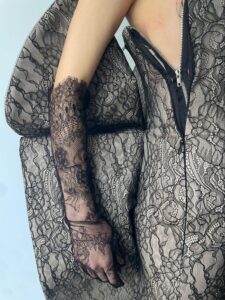
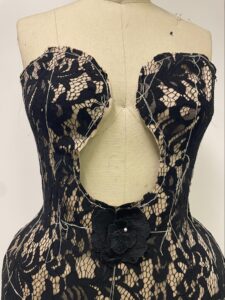
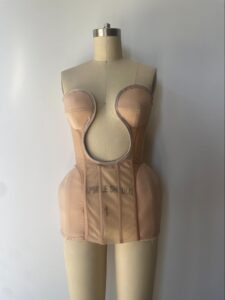
The distinction between a designer and a dressmaker is important to Teo.
JOTÉO did not begin with a plan to produce collections at scale, secure wholesale accounts and become another name hanging from the racks of Australian department stores. When the pandemic interrupted a potential move to New York and forced Teo to reconsider what he actually wanted from fashion, his answer was simple: he wanted to keep making clothes.
You graduated into an incredibly uncertain period for fashion. How did you bridge the gap between being a fashion student and actually building a professional practice?
It was an omnidirectional approach.
I was lucky to complete my graduate collection in 2019. While I was finishing the minors I had neglected in the interest of producing a strong debut collection, the pandemic hit. That changed my trajectory entirely.
Before the pandemic, I had been exploring employment opportunities in New York with Loeffler Randall. It was becoming a very real conversation, but the pandemic changed everything.
There was a period when I thought it might be the end of my career. We did not know whether there would be an industry to return to, or what it would look like.
What helped me was almost counterintuitive. I withdrew into my fantasy, not as escapism, but to interrogate what I actually wanted.
The world we had imagined was not going to return in the same form, if it returned at all. I had to find a way to translate what I wanted to do.
When I stripped it back, I realised I wanted to keep sewing, patternmaking and dressmaking.
From there, people began to come to me. I put myself out there and said I did not necessarily want to be a fashion brand in the conventional sense. I wanted to be a maker-based fashion designer and practitioner.
Australian fashion is overwhelmingly retail. What would you tell a young designer who wants to build a couture house instead, like yourself?
The first thing I would tell any young designer considering it is almost spiritual. You have to sit down and ask yourself whether this is really what you want.
It is fine to change your mind. You can explore it and later decide otherwise. But if you want to build a long-term career in couture, you need to analyse your likes, your wants and your non-negotiables as a designer, and decide whether a life of making and hands-on, face-to-face interaction with clients is what you truly desire.
Young designers often fall out of the field quickly because they do not understand what the life entails.
On Instagram or TikTok, the major houses such as Valentino, Balenciaga and Chanel present a fantasy of immediate adoration, fashion shows, glamour, tulle and sequins.
They do not tell you that you must be a people person.
You need relationships with clients. You need to understand their lives and find a bridge between your perspective and theirs so you can understand what they want from your craft and help them realise it.
The Business Behind the Fantasy
Every marriage, no matter how romantic at the start, eventually encounters the topic of money.
For a young couturier, this meant Teo had to learn that knowing how to construct a beautiful dress and knowing how to build a viable business around that dress were two entirely different skills. Fashion school had taught him the former. The latter came through wholesale invoices, underpriced gowns and what he describes as a few “hard lashings”.
You have said fashion education did not necessarily teach you how to turn design into a professional practice. What did you have to learn once JOTÉO became a business?
The beginning was rough.
Fashion education, particularly at that time, did not really teach students how to translate a career as a student designer into a professional practice. That involves pricing, sourcing and day-to-day operations.
How do you build a brand rather than simply declare that you are one?
With social media, anybody can call themselves a luxury brand or a couture house on the rise.
What helped me bridge the gap was being technically well-versed. I could not only talk about the vision. I could make the vision and sell the vision.
Because I could make it, I could explain every factor: what it would look like from every angle, how it would be cut, and how a hem could be finished invisibly.
That fed directly into my relationships with clients. They did not have to wonder whether I knew how to execute the work. They thought, “That sounds good. You sound like you know what you’re doing.”
Sometimes that was more true than others. Sometimes you fake it until you make it, and eventually I began to make a little way for myself.
What were some of the expensive lessons?
I spent a fortune buying formal fabrics such as mikado, silk satin and satin duchess at retail.
Coming from a dressmaker’s perspective, it felt normal. I thought, “Of course I buy it here. It is the best quality.”
I had not done the hard work of emailing and building relationships with wholesalers in Australia and overseas.
When I finally compared the costs after moving to wholesale, I felt like donkey ears were growing out of my head. I felt like the biggest idiot in the world. I could have redirected so much of that money into other parts of the business.
If you want to work in couture, search for Australian, Chinese, Indian and global wholesalers. We source fabrics from all over the world because no single supplier has everything. It is specialised.
Even in an age of convenience, you still need to do the hard yards. The savings are worth it.
And then there is the notoriously difficult question for any young designer: how much is your work actually worth?
It was trial and error.
In building JOTÉO, I wanted it to be seen first as dressmaking: skilled, technical and reputational. Beyond that, I wanted to build it from a luxury perspective.
In the beginning, while I was still learning, I operated at a substantial deficit. I was underpricing.
We have a La Femme LBD, affectionately called the “devil horns” or “thumbs-up” dress. I sold it for about $600 when it cost almost $500 to make because I was purchasing fabric at retail.
I told myself I was getting the product and my name out there. But a piece that unique, using so much couture technique, did not need to have such a low margin.
You have to learn through a few hard lashings.
Ideally, you start with a perfect operation, but in couture there are not many people available to instruct you, and very few business models are publicly examinable. Sometimes you bang your head against the wall until you realise you should stop.
We increased prices incrementally and tested what was too much and what was too little.
One of JOTÉO’s unique selling points was that it offered couture without the astronomical price point associated with major houses.
The business still has to feed you while you learn on the job.
If I am selling one of our signature couture gowns, bustled, corseted and built around a distinctive graphic neckline, I know better now than to underprice it.
Underpricing does a disservice to the business and to me, because I am the person making the garment. It jeopardises my health, drives overwork and creates imbalance in the business.
There is also something unusually intimate about the business model. You are not simply selling a dress to a customer. Who is the JOTÉO woman to you?
Right now, I want the woman to feel augmented.
Although our fantasy can be heightened, I want to create couture that does not erase the wearer.
Some couture gowns are incredibly striking, but when the client puts them on, she disappears. The garment might technically fit her, but it says nothing about the fact that she stands with one hip cocked, or that she is going to a dinner where she will gesture, shake hands and hug people. The couture must make room for the whole of our client’s personality and unique way of moving through the world.
I want the wearer and the garment to feel balanced.
How the World Found a Couture House in Brisbane
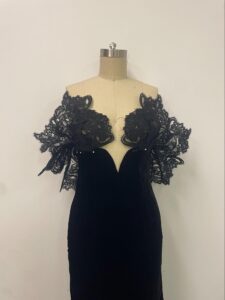
There is a strange contradiction in building couture in the digital age. The making remains stubbornly physical: fabric must be sourced, bodies measured, patterns cut, corsets constructed. But the finished garment can now travel around the world before the designer does.
For JOTÉO, that has collapsed the distance between a small studio in Bowen Hills and an international fashion industry that once required physical proximity to Paris, London, Milan or New York.
You have dressed public figures, appeared in editorials and now receive enquiries from overseas. How are people finding a couture house in Brisbane?
I can only make an educated guess.
When publications, stylists or celebrities reach out, it can feel like anybody’s game. We are interconnected through Instagram, Red Book and TikTok.
You fire work into a massive void and initially have no idea how anyone found you. Sometimes the algorithm is kind, and sometimes it is not.
Over time, I realised people were finding JOTÉO because it stood out.
For better and worse, particularly in the Australian market, we are insular in the sense that our creative vision and output are completely of our own, undiluted by the undulating trends around us.
We were so much of our own world that people wanted to know what that world was and how it could be implemented within other creative visions.
The most astonishing enquiries come from Europe or the Middle East. I sometimes have to sit there and think, “How did you find us?” while keeping my cool and being professional.
Recently, we dressed an Indian actress attending the Cannes Film Festival. I was told the gowns had crossed her stylist’s desk, but even then I wondered how someone in India found us. It is mind-boggling.
It makes me wonder about fashion before the algorithm. Chanel and Yves Saint Laurent built international mythology without being able to put a dress online and have somebody discover it on the other side of the world. Do you ever think about that?
I am a history buff and I think about that often.
Without easy access to visibility, you would have had to do something incredible.
Instead of quietly humming along in your own little symphony, you would have needed to present couture as a fully realised orchestra, playing the most perfect music.
Sometimes I wonder whether, if I were placed back into the era of the original great designers, I would have stood out.
I honestly do not know.
For all that international attention, JOTÉO has remained deliberately couture-led. Could you ever see it becoming something I could walk into a department store and buy?
Funnily enough, although nobody asks me, we actually do have ready-to-wear silhouettes and samples in the office.
They are a carryover from a time when we were preparing JOTÉO to become a more readily purchasable entity, perhaps stocked in designer boutiques or available online.
As the business evolved, and in response to what clients came to us for, being a couture house and couture maker has suited us more. It suits our narrative better than becoming a retail-ready brand would.
That said, I am not ruling it out.
One day I could release an entire line of slip dresses, and it would be a fabulous party to throw.
I like the idea that making JOTÉO more accessible does not necessarily mean making the clothes less special. Could couture ever become something we treat more casually?
What I would love is for someone to have something we designed, keep it in her wardrobe and wear it throughout her life. Then perhaps she has a daughter, or someone else in the next generation who identifies as a woman, and passes it down.
That next generation might not have the same direct reverence for JOTÉO. She might treat it more casually and say, “It’s just this cute dress or corset my mum had made a while ago. It is from this couture brand from way back when.”
I think that would be fabulous: couture treated with casual reverence and paired with jeans.
I always think of Anna Wintour’s first Vogue cover, with the embellished Christian Lacroix jacket and jeans. I would not be offended if someone wore a sculptural JOTÉO corset on a night out with a mini skirt and heels.
Go for your life. Have fun.
Couture does not have to be completely disconnected from people.
Couture is given due respect in fashion and global conversations, but sometimes that respect creates distance. I almost want to hand someone a corset and say, “See? It’s not scary. It is not radiating some poisonous aura (unless it’s what you want).”
The magic is in the couture itself, but you can wear it and have a relationship with it.
The Next Chapter of the Marriage
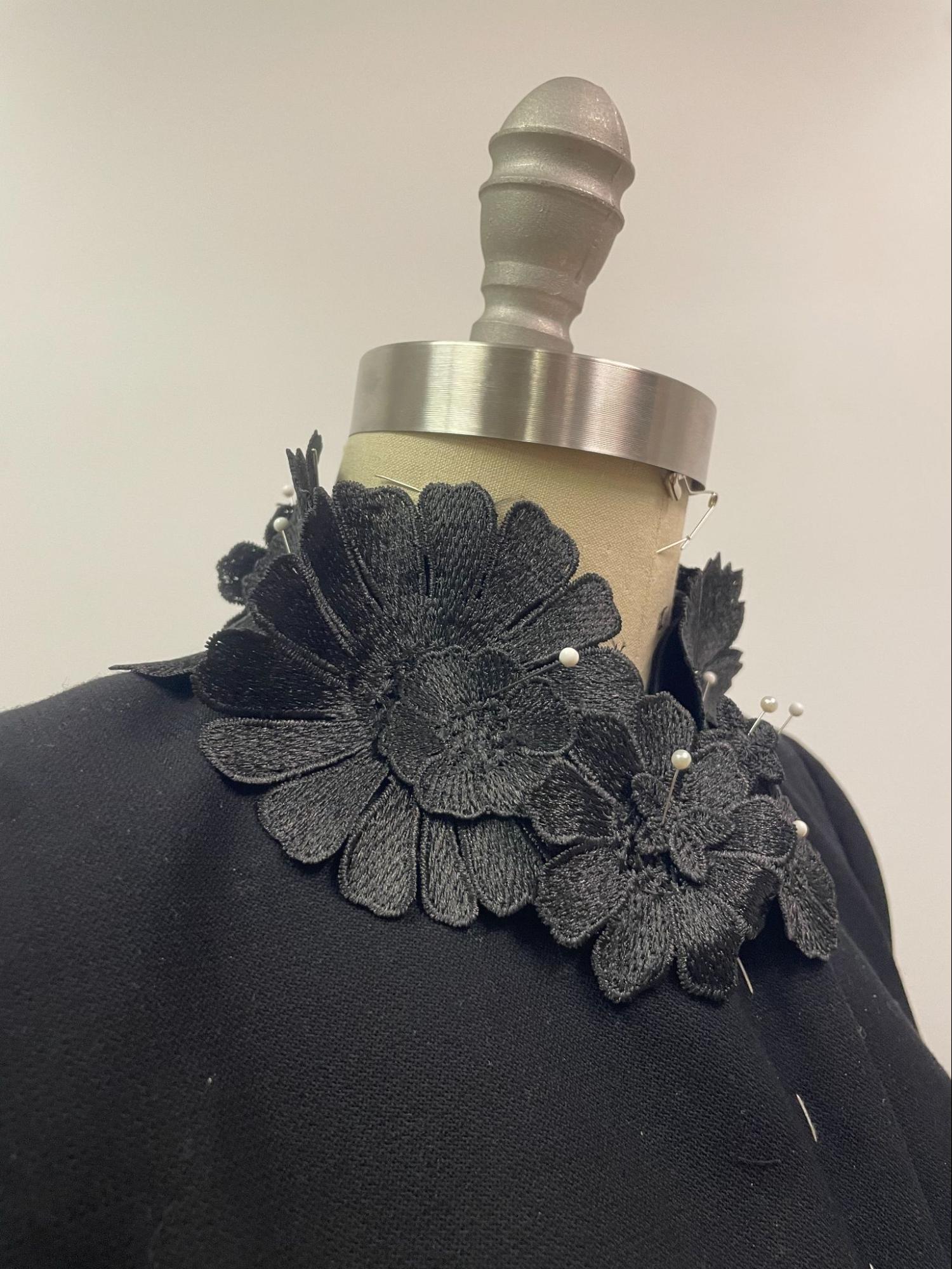
There is something revealing in Teo’s phrase “casual reverence”. It could just as easily describe his own relationship with fashion.
For all the grandeur of couture, Teo talks about it without treating it as sacred and untouchable. He reveres the craft, certainly, but he is equally willing to discuss margins, wholesalers and the algorithm, or to concede that sometimes creativity must bend to the requirements of weather, season and price point.
It is perhaps the difference between being infatuated with fashion and building a life with it.
You have described the importance of being a business-minded designer rather than purely creatively led. Does commerciality ever constrain creativity?
One way we challenge that distance is by being strategic in our designs. It comes back to being a business-minded designer rather than only a creatively led designer.
There can be a balance. The two do not have to clash. But with certain styles or commercial situations, one may have to take a back seat.
Imagine doing back-to-back shows at Melbourne Fashion Festival and Australian Fashion Week, with two different collections.
After the initial 30-minute panic, you sit down and write an objective list.
Designing is often problem-solving.
You say, “This collection is for this season, this weather and this price point.”
You would be surprised how quickly those constraints generate designs, particularly if you are creative. You place yourself into the hypothetical life of the person wearing the collection and the designs follow.
So, your next collection. What can you tell me without giving too much away?
What we are evolving into with the new collection is elegance.
Previously, JOTÉO presented a form of elegance that, in retrospect, was showier than I intended. It was more brazen and loud when I thought it was a quiet, elegant whisper.
Now, we are presenting something more mature, with a diverse mix of influences. It can be sexy and dramatic, but it returns to that balanced approach and to couture that leaves room for the client.
This season, the silhouettes offer an elegance that does not scream.
It talks to you.
It is not singing the highest coloratura note. It is serenading you with gentle jazz, or moving like a light breeze.
There is flow, but it is a flow that is entirely JOTÉO’s own.
Behind the Seams is a series by Chloe Lei that explores the paths of those who began in law before finding their way into fashion.
Through conversations with fashion founders, designers and creatives, the series offers a glimpse into what it really takes to step away from the conventional path and follow the pull of fashion.
FASHION LAW JOURNAL INSIDER
Join designers, brand founders and fashion lawyers who get the biggest brand battles, IP fights and career moves in fashion law, straight to their inbox.