Bonjour Mesdames et Messieurs, bienvenue dans la période baroque et au début de l’ère rococo de l’histoire de la mode française.
In other words: welcome to the Baroque period and the early Rococo era of the history of French fashion. More specifically, the fashion of the French Bourbon consorts.
The House of Bourbon descended from Louis I, 1st Duke of Bourbon, grandson of the French king Louis IX. They ruled France from the 16th through the 18th century, through the French Revolution, and again in the 19th century, when they were restored after Napoleon’s fall. The Bourbon name did not just rule the French territory. Their rule extended to the Spanish throne, the House of Bourbon-Anjou, from the 17th century to the present day. Henry IV was the first Bourbon king, followed by Louis XIII and then his son, the Sun King, Louis XIV. Louis XV and Louis XVI were the last two kings before the French Revolution.
The queens consort of these magnificent kings were just as regal and powerful as their husbands. Draped in jewels and prestige wherever they walked. They also commanded attention with their fashion statement.
The Baroque Period and the Rococo Era
The reign of the six queen consorts of the French Bourbon kings falls between the Baroque and Rococo eras, so it is only right to get a brief glimpse of what these eras offered the fashion world.
The Baroque period spanned the 17th and 18th centuries, with its origins in Italy. This era was marked by astonishing architecture and art. Music flourished during this era. The Rococo era (1715-1780) followed the Baroque period. It was an architectural and artistic revival that originated in France. Each era brought about a different perspective to the world of fashion. The Baroque period brought in extravagant fabrics, embroidery, lace, and wigs, a more theatrical approach. The Rococo era, on the other hand, took a subtler approach to colour, incorporating silks, elaborate embroidery, and eye-catching ornaments.
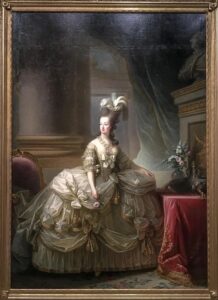
The French Bourbon Consorts
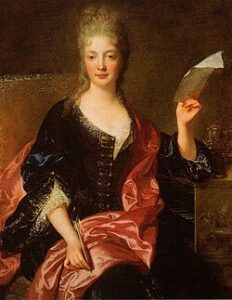
Margaret of Valois was King Henry IV’s first wife, but the marriage was annulled in 1599. The second wife of Henry IV was Marie de’ Medici, a member of the infamous House of Medici. She served as the regent of France from 1610 to 1617. Marie was the daughter of Francesco I, Grand Duke of Tuscany and Joanna of Austria.
Anne of Austria was the wife of King Louis XIII. She was of Spanish blood from the House of Habsburg. She also served as regent for her son, the future King Louis XIV, until 1651. She was the daughter of Philip III of Spain and Margaret of Austria.
Louis XIV’s wife was Maria Theresa of Spain. She was the daughter of King Philip IV and Elisabeth of France. She was also a member of the House of Habsburg and was the Archduchess of Austria.
Marie Leszczyńska was the daughter of the deposed king of Poland, Stanislaus Leszczyński I, and Catherine Opalińska. She served as Louis XV’s wife for 42 years and 9 months, making her the longest-serving queen consort.
Last but not least, Marie Antoinette. She was the youngest child of Francis I, the Holy Roman Emperor, and Maria Theresa. She was queen until the onset of the French Revolution.
Each of these queens was well known for their exquisite style and fabulous gowns. They left their mark on history.
The Fashion Lookbook of the Queens Consorts
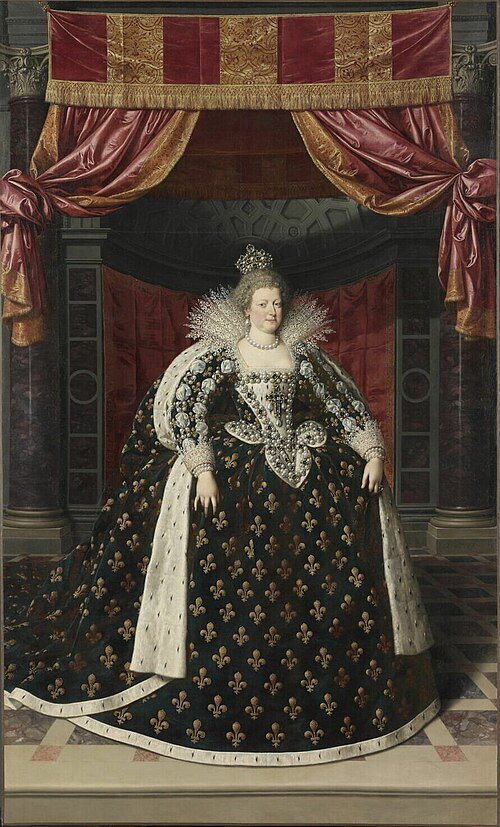
Marie de’ Medici
Marie de’ Medici’s fashion era fell during the developing years of the Baroque period, which was often seen as theatrical. Portraits of her were depicted as expensive, a status befitting a deserving queen. It is also safe to call her a trendsetter of her day.
The one thing Marie popularised in her time was the fan-shaped collar, also known as the Medici Collar. It is carefully laced around the collar of the neck with an opening in the front. The lace is incredibly detailed, with various patterns along with ruffed edging.
Marie de’ Medici was often seen in lavish, robust gowns of velvet and silk, heavily embellished with precious stones. He gowns had beautiful prints which included Fleur de lis. She preferred a French farthingale for a more lavish, extended look rather than a Spanish farthingale. The French farthingale added dimension to her extensive gowns, giving her a majestic, attention-worthy look.
She draped herself in luxury and prestige, befitting the Queen of France.
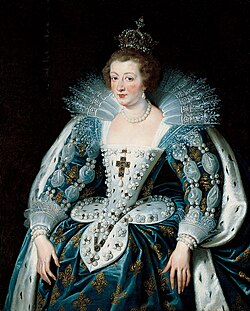
Anne of Austria
Anne of Austria had a different approach at the beginning of her life as queen. She preferred the Spanish lifestyle, as one would expect, as she was born in Spain. She preferred the Spanish fashion, which included a Spanish farthingale, a higher neckline with lace collars and stiffened sleeves.
However, she slowly transitioned to the Baroque French style, honouring her new home and kingdom. Her fashion style was similar to that of her predecessor, Marie de’ Medici.
She draped herself in heavily embroidered gowns of pearls and jewels. Another highlight is her Medici collar with noticeable ruff edgings, along with a beautifully elongated French farthingale. Off-the-shoulder bodices were also very common during this era in France. In some of Anne of Austria’s portraits, she is shown to have worn off-the-shoulder gowns with a lace finishing at the wide neck design that encircles the shoulders.
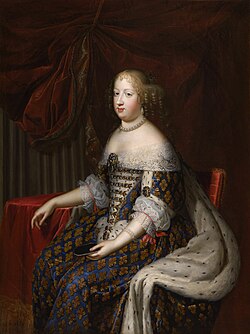
Maria Theresa of Spain
Maria Theresa, wife and Queen of the Sun King, Louis XIV, was another Baroque-period idol. In other portraits, the young Maria, like Diego Velázquez’s The Infanta Maria Theresa, was shown in an elongated, wide gown. Wide enough not to fit through our modern doors.
After her marriage to the French throne, people can see the transformation in her style. Though subtle, she set the tone among her ladies at the Versailles Court. She adorned herself in luxurious gowns of various designs, jewels and other embellishments. She embraced her French kingdom through her style and appearance. Her use of corsets was also distinguishable. Like her predecessor, Anne of Austria, Maria Theresa of Spain also wore off-the-shoulder gowns with lace finishing at the wide neckline, abandoning the rigid neckline of the Spanish style.
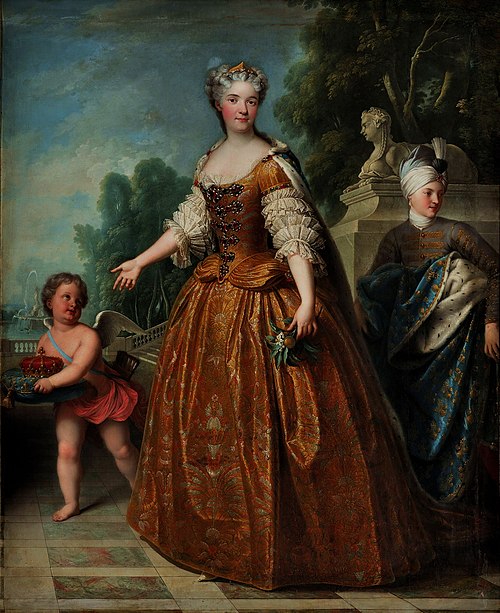
Marie Leszczyńska
Marie Leszczyńska became queen at the height of the Rococo era. She lived in an era of bright colours, with fabrics that were lighter but fuller, and lavish details. Mantua was worn during this era, and Marie Leszczyńska was also seen wearing it in some of her portraits. The mantua brought back the roundness of the skirt, giving it life and dimension, which was highly desirable among women of the time. The Medici collar had been done away with by this period. The low neckline remained highly fashionable. Her gowns were still largely and elaborately designed with various patterns. Frill sleeves were very popular during this period. They were tiered, detachable and made of lace or sometimes beautifully embroidered linen.
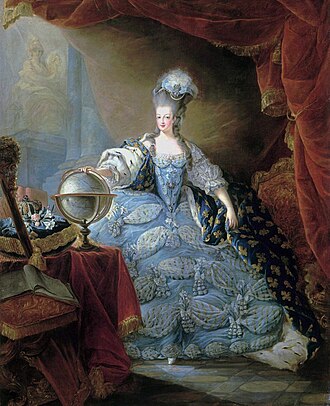
Marie Antoinette
Marie Antoinette is famous for the legendary quote “Let them eat cake”, but she never said it, of course. But most importantly, she was the reigning queen consort during the rise of the French Revolution and was also guillotined along with her husband, King Louis XVI.
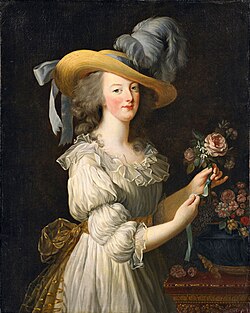
Despite her terrible fate, she had impeccable fashion taste. She embraced the use of printed cottons like the toile de Jouy, ribbons, florals, and pastels, taking inspiration from thinkers like Jean Jacques Rousseau; she popularised the “French country” aesthetic. Scholars regarded her as a trendsetter of her period, lavishing spending on her wardrobe.
In the 1780s, her dressmaker, Marie-Jeanne Rose Bertin, called her the “Minister of Fashion” and “Minister of Trinkets.” In 1787, she was called “Madame Deficit” because her wardrobe spending declined.
When it comes to her overall fashion, she loved her extravagant and large gowns. Each one had intricate floral embroidery. The most scandalous of her wardrobe was the chemise dress that was worn at Trianon, which disregarded heavy gowns for breathable cotton fabric. Another notable gown, known even today, is the robe à la francaise featuring Watteau pleats: flat pleats falling from the shoulders and flowing freely to the floor. This wide-shaped gown is truly an attention-seeking beauty. She adopted the pouffe, which set a stage for all women at court.
French fashion ran from era to era, from queen to queen, and it is safe to say the French had style, and they still own it. These women perfected the word ‘influencer’, and heaven knows what they would do if they had phones of the 21st century. Their ‘GRWM’ would surely earn them millions and millions of views. Who wouldn’t like to be dressed as a ‘Queen’?
FASHION LAW JOURNAL INSIDER
Join designers, brand founders and fashion lawyers who get the biggest brand battles, IP fights and career moves in fashion law, straight to their inbox.