
The Tudor period was one for the history books. This period marked the end of the Civil War between the House of Lancaster and the House of York that led to the unification of both houses under Henry Tudor, or King Henry VII. After the shift in rule from the Plantagenets to the Tudors in the 15th century, the kingdom underwent major changes, especially the English Reformation, which still has a strong hold today.
But what made the Tudors the Kardashians of their time was King Henry VIII, the son of King Henry VII. Known for his wife, correction, six wives, which gave the world the famous tagline: “divorced, beheaded, died, divorced, beheaded, survived.’ Well, that’s enough about Henry.
Despite the obvious, that is, the political, economic, and religious changes, the aristocratic noblemen and women knew exactly how to present themselves, and it is without a doubt that the attire of the time made a notable impact, marking the supremacy of the Tudors and their people.
To be a Tudor woman is to proceed with grace, especially at Hampton Court. Manners, genteel; language, polite; and walk, graceful. But what is it really like to walk in court draped in luxury and prestige and to be noticed, not just by noblemen, but by the king himself?
What’s in a Tudor dress?
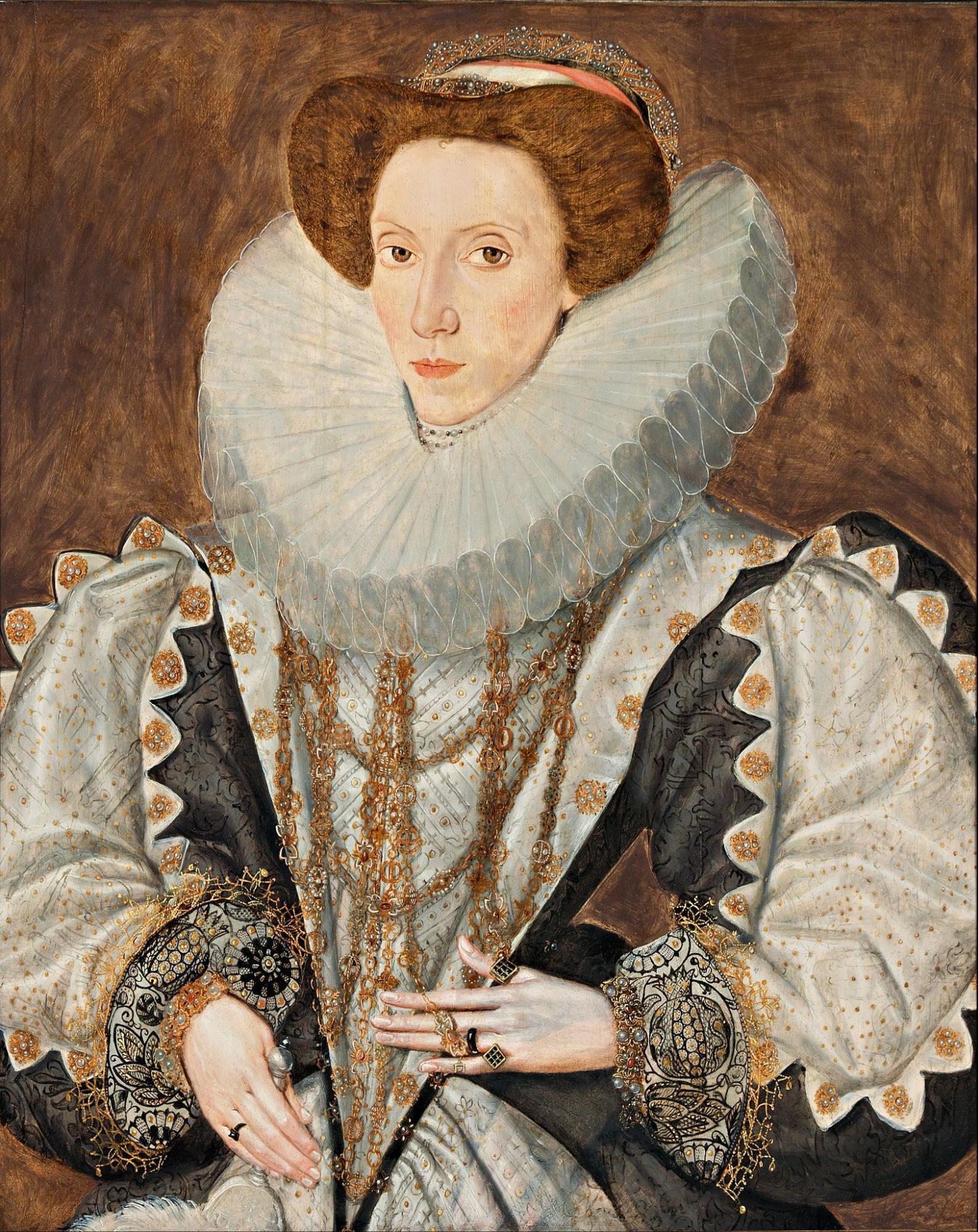
Tudor fashion would be a head-turner if worn today. Their attire was striking and bold. The dresses worn by these women were distinctively over the top, which made them easier to spot, maybe not in their crowd, but definitely in ours. Their dresses featured whimsical shapes and designs, making them eye-catching and captivating.
For a Tudor woman, layering was part of completing the necessary ensemble. Each layer of clothing put on by the lady’s maid for their lady is in itself a ritual for the roles and responsibilities at court.
The basic layers of their attire during this era included the Smock, a Petticoat, the Kirtle, and a Gown.
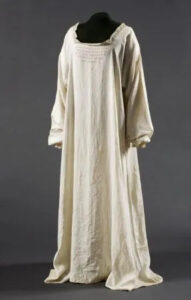
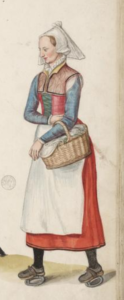
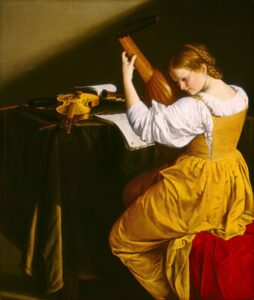
Embroidered in black, red, or white on the cuffs and neckline, the Smock or the Chemise is an undergarment for women and men, made of fine linen. Women preferred a square neckline. Its main purpose was to absorb sweat, and it was the only item that was washed regularly.
The Petticoat, or little coat in French, for women was basically a skirt, with a front- lacing bodice. Sometimes it was a separate skirt tied to a bodice. Red was usually the colour for a woman’s petticoat.
The Kirtle was worn over the petticoat. It was a garment that supported the bust to accentuate the figure, not in any way similar to a Victorian corset.
The most exquisite piece of the entire ensemble was the Gown. Women of higher ranks wore expensive fabrics to display their status and wealth. The gowns are often portrayed with embellished embroidery, pearls and silk ribbons.
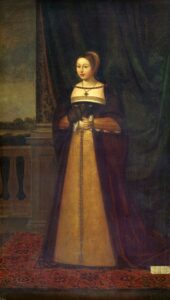
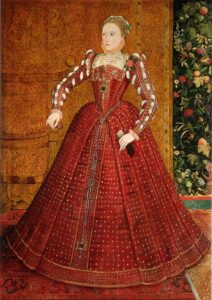
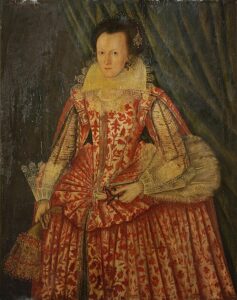
Other pieces included the Farthingale, a stiffened hoop structure worn beneath the skirt to hold its shape. The Spanish farthingale and the French or Drum farthingale were the most used at the time. The Spanish farthingale was conical, whereas the French or the Drum farthingale was horizontal, wheel-shaped.
Headwear was another piece that the women wore regularly. The Gable hood and French hood were the most common. The Gable hood, popularised by Catherine of Aragon, Henry VIII’s first wife, has a distinctive triangular framing, whereas the French hood has a rounded crescent shape that sits further back on the head, which was popularised by Henry VIII’s second wife, Anne Boleyn.
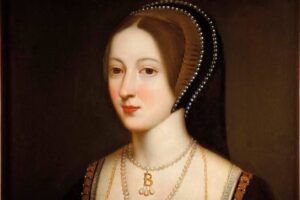
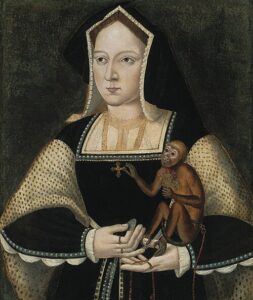
The Royal Tudor Women in Fashion
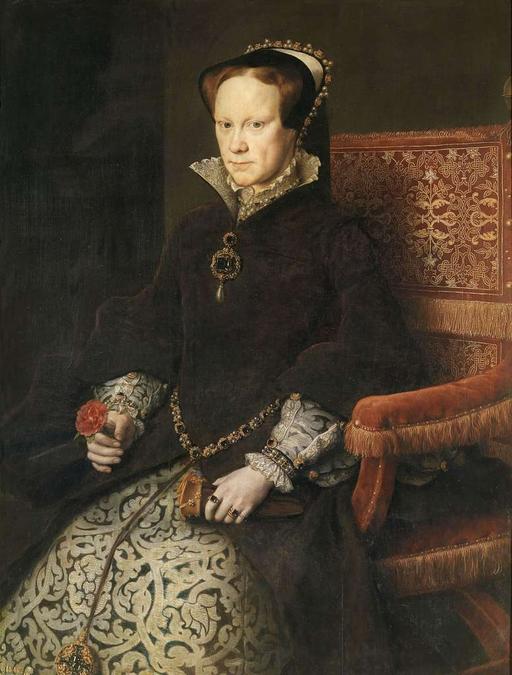
Queen Mary I (1516- 1558)
Because her husband, Philip II, was Spanish, Henry VIII’s eldest daughter, Mary, drew on the Spanish legacy for inspiration in her attire. However, during her younger days, she was often seen in the French style. The 16th century also saw the popularity of Spanish rule, so it was only fitting to keep up with the trend of dressing in a proper Spanish style.
In portraits of her, she often wore a stiff, conical farthingale, heavily designed gowns with an extended fan-shaped collar, and exceptional jewellery to show her royal and legitimate status. Her attire conveyed severity and modesty. The only ‘non-Spanish’ piece of her attire was the French hood.
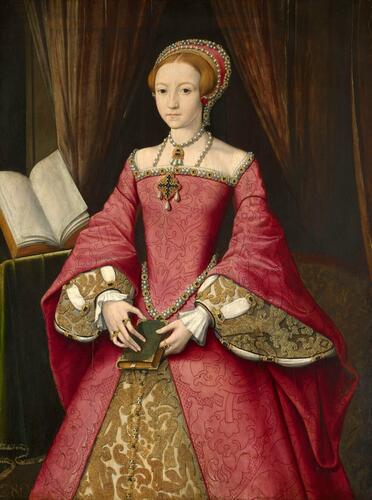
Queen Elizabeth I (1533- 1603)
The Virgin Queen was one of the most famous Tudors and also the last of the Tudors. She ruled for over 44 years from 1558 to 1603. Not only did she reshape her kingdom, but she also elevated it. Despite her success, she was known to have the most elaborate fashion sense. The evolution of her style was painted with strokes by various painters of the time.
Young Elizabeth was often dressed in a modest Tudor court square- necked, conical-shaped dress embellished with designs fit for a princess, an opening split at the front of the gown and wide sleeves showing off the embellished gold designs on a silver cloth, a French hood with pearls on it, and precious jewellery draped around her neck.
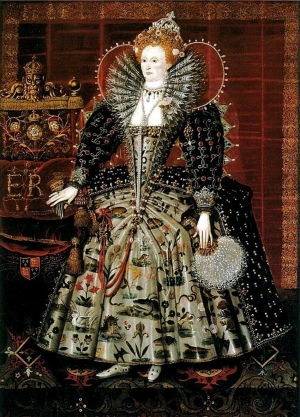
That was young Elizabeth. The older Elizabeth, well, was a trendsetter and the centre of attention. Elaborate puffed sleeves with a tightened cuff at the wrist, a tiny, narrow waist, and whimsical patterns, designs, and jewels on all her gowns were what she chose to make her fashion statement as the reigning monarch.
She swapped the Spanish conical-shaped farthingale for a French-style farthingale, a wide, horizontal, wheel-shaped, or drum farthingale. She also dressed herself in elaborate ruffled- neck collars or a whisk. The exaggerated neckpiece was meant to display power and wealth. Elizabeth I also wore a conch, a cape-like veil over the shoulders. To match her bold fashion statements, her makeup also had to stay on point. To achieve her pale complexion, Elizabeth I used white lead and vinegar called Venetian ceruse. However, this substance was considered toxic, but as the saying goes, “beauty is sacrifice”.
The Tudor Era was the height of lavish and grandiose fashion. The women in court did not just wear their pieces; they breathed them, and it became their ritual. It was their way of showing the world their power, their wealth and their standing at court. Countess of Shrewsbury, better known as Bess of Hardwick, was one example, with exemplary taste in fashion for the era. These women were bold and vocal about their appearance, and let’s agree they really knew how to command attention.
References:
- https://www.rmg.co.uk/stories/royal-history/tudor-fashion
- https://blue-stocking.org.uk/2024/02/16/mary-tudor-fashion-and-influence-the-political-implications-inherent-in-portrait-of-queen-mary-i/
- https://www.rmg.co.uk/stories/royal-history/elizabeth-i-fashion-beauty
- https://www.theanneboleynfiles.com/resources/tudor-life/tudor-clothes/
FASHION LAW JOURNAL INSIDER
Join designers, brand founders and fashion lawyers who get the biggest brand battles, IP fights and career moves in fashion law, straight to their inbox.