
The merchants of Edo Japan were forbidden from showing their wealth, so they put it where only they could see it.
In museum collections around the world, there are Japanese coats displayed the wrong way round. The curator has deliberately turned the garment inside out, or opened it and pinned it flat, because the exterior is a plain expanse of dark silk and the interior is a painting. A dragon coiled across the shoulder blades. A landscape with a river running down the wearer’s spine. A scene from a story that every literate person in the city would have recognised at a glance.
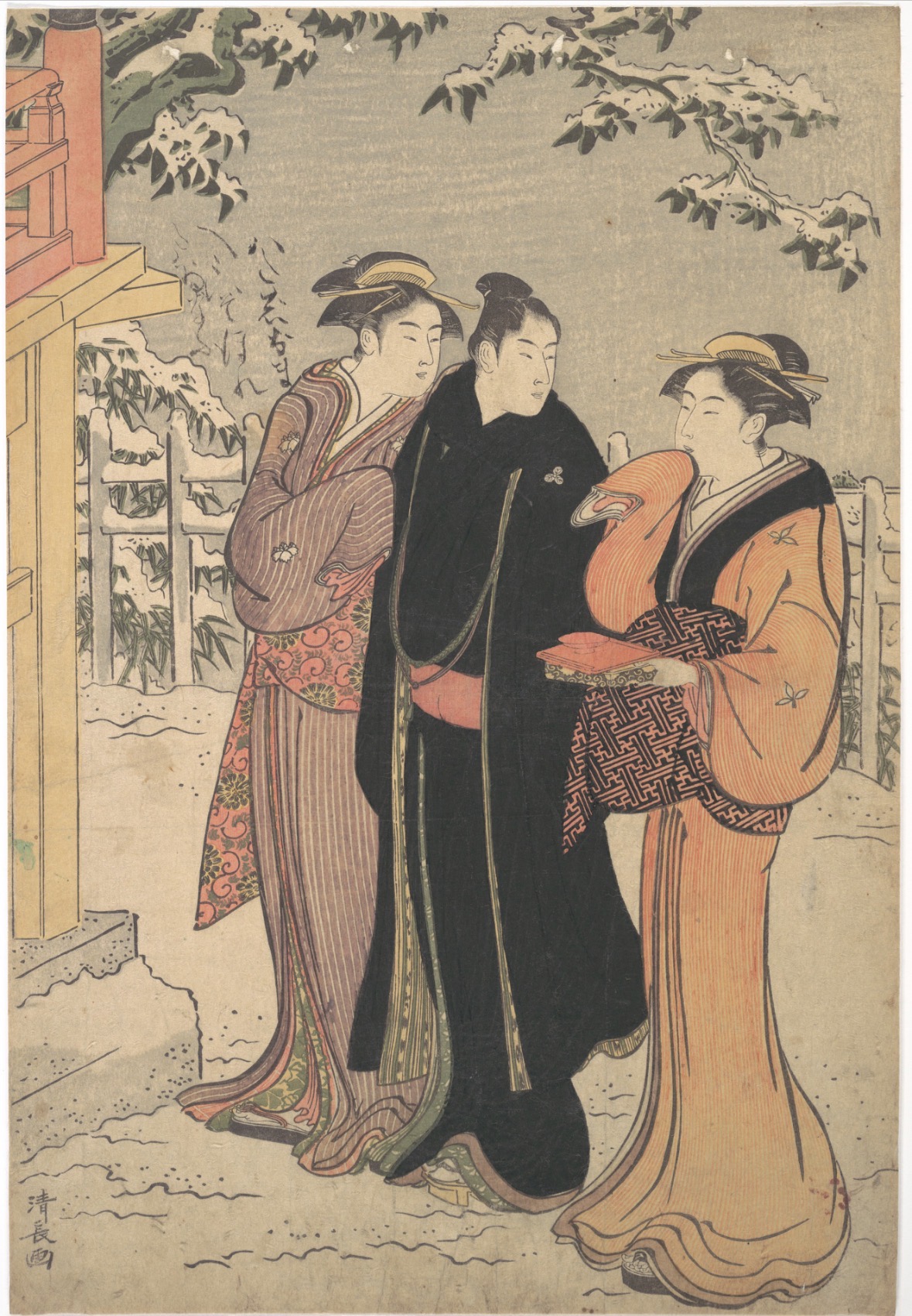
These are haori, the short coats worn by merchant men in Tokugawa Japan, and the reason the museums hang them inverted is that the front of the coat is not where the coat happens. The front was for the magistrate. The back of the lining was for everyone else, and by everyone else the wearer meant a very small and very specific group of people.
The arrangement had a cause, and the cause was the law.
A rule that had to be written again and again
Tokugawa society was organised as a ladder with merchants at the bottom, beneath samurai, farmers and artisans, on the reasoning that trade produced nothing of its own. Then the cities grew, commerce boomed, and within a few generations the men at the bottom of the ladder were financing the men at the top.
The shogunate’s response was to legislate against how new money looked. Edicts prohibited townspeople from using expensive fabrics, gold and silver, ornate embroidery and certain colours. The Minneapolis Institute of Art, describing the period, notes that the government imposed these laws expressly to preserve the social order, and that the merchants proved highly inventive at finding their way around them.
The most revealing feature of these edicts is how often they were reissued. A law that works is passed once. A law repeated across decades is a law being ignored in plain sight by people who can afford the fine.
The most expensive plain coat in the room
What the merchants worked out is that the edicts regulated appearance and had almost nothing to say about cost.
The Kent State University Museum, in its study of men’s haori, describes the mechanism precisely: the restrictions pushed wealthy urban families to camouflage their coloured silks by using them as linings, beneath outer garments that were plain, dark and expensive. Compliance and extravagance turned out to be entirely compatible. A magistrate could see only permitted colour and permitted plainness. He could not see the price.
Inside, nothing applied. Wealthy patrons commissioned full silk paintings for the interior of a jacket, and Kyoto’s weaving districts supplied linings carrying landscapes and mythical creatures that were visible only when the garment moved or was taken off. A man could wear a fortune to dinner and remain, to any official eye, a modestly dressed member of the merchant class.
The performance had an audience of perhaps a dozen people, all of whom could price the lining to the yen.
What a dyer does with only grey to work with
The second response was slower, subtler and left a longer mark on Japanese design.
Restricted to muted colour, the dyers of Edo did not accept muted colour as a limitation. They multiplied it. Over the period they developed an enormous vocabulary of permitted browns, greys and indigos, in gradations fine enough that recognising them became its own form of literacy. The era left behind a phrase about forty-eight browns and one hundred greys, which was less a count than a boast.
This is the part of the story that undercuts any simple reading of sumptuary law as repression. Told they could not have colour, an entire industry went further into the colours it was allowed than it would ever have gone otherwise. Constraint did not diminish the craft. It relocated the difficulty.
A language addressed to peers
Eventually the whole apparatus acquired a name.
Iki is usually translated as chic, which undersells it. It describes a subdued display of taste and wealth, with the effort taken to achieve it deliberately concealed, and it emerged among exactly the merchant class the edicts had targeted. The most useful description of it holds that iki subverted class restriction by building an aesthetic language aimed specifically at one’s peers.
That is the sentence to sit with, because it defines the entire logic of hidden luxury two centuries before anyone needed the term. A language aimed at peers. Not at the street, not at the authorities, not at the class above.
Its opposite, yabo, covers the unrefined and the obvious, and visible expense falls squarely into it. The working principles of iki read like a contemporary style guide written by someone with much better sources: conceal the luxury, let a plain coat with a fine lining defeat a visible mark of status, allow real quality to be glimpsed rather than announced, and use one accent rather than ten.
The Kent State curators go further, observing that the aesthetic produced was one of connoisseurship and of the cognoscenti, and that indirection and discretion spread outward from dress into manners and speech. A national habit of understatement, grown from a legal restriction on cloth.
The beige coat
Which brings us to the present, and to a wardrobe that has spent the last few years insisting it has nothing to prove.
No logos. No seasonal spectacle. Cashmere identifiable only if you know the mill, tailoring legible only if you know the cutter, a watch small enough that recognition is the whole reward. The genre presents itself as a retreat from vulgarity, a maturing, a turn away from showing off.
Edo suggests otherwise. A monogram announces money to an entire street. An unbranded coat that costs four times as much announces it to eleven people and leaves everyone else with no information at all. Both are signals. One simply has a much smaller and much better qualified readership.
There is one difference, and it is not decorative. The Edo merchant concealed his silk because being seen in it could cost him his goods and his standing. That concealment was compelled by a state that had placed him beneath men who owed him money. Nobody today risks confiscation over a beige coat. The restraint is elective, and it is elected for the reason the merchants would have grasped instantly, which is that a signal everyone can read sorts nobody.
The coats hang inside out
So the garments sit in their glass cases with their secrets turned outward, and the inversion is doing something the curators may not have intended.
The edicts are gone. The shogunate is gone. The class order that made a wealthy man dress like a poor one has not existed for a century and a half. What survived all of it is the lining, and the fact that we now display it to the public is the final, quiet defeat of the law that made it necessary.
Everything the shogunate tried to keep out of sight is the only reason anyone still looks.
FASHION LAW JOURNAL INSIDER
Join designers, brand founders and fashion lawyers who get the biggest brand battles, IP fights and career moves in fashion law, straight to their inbox.