The FTC’s Green Guides date from 2012, the agency opened a review in December 2022, and as of November 2026 no new version has appeared. That leaves US fashion brands working from a 14-year-old document that does not define “sustainable” at all. The word is not banned, but it is not safe either. This guide explains what the Green Guides say, how far they bind anyone, which claims a clothing brand can still make and how courts have treated them.
Short answer: The FTC Green Guides do not ban the word “sustainable”, and they are not law. They set out how the FTC reads environmental claims under its power to stop deceptive marketing. Fashion brands can still make specific, provable claims, such as a stated percentage of recycled fibre by weight. Broad, unqualified claims like “eco-friendly” remain the riskiest.
Key takeaways
- The Green Guides, at 16 CFR Part 260, were last revised in October 2012. A review began on 14 December 2022, and FLJ found no revised text as of 4 November 2026.
- The Guides do not address “sustainable”, “natural” or “organic”, but the FTC warns against any unqualified general environmental claim.
- Third-party certification is not a defence. A brand must still be able to prove what the seal communicates to shoppers.
- California writes the Guides into its own statute, and the FTC’s $5.5 million bamboo case against Kohl’s and Walmart shows that clothing claims do attract penalties.
What are the FTC Green Guides?
They are the Federal Trade Commission’s published views on environmental marketing. First issued in 1992, they were revised in 1996, 1998 and 2012. The current text sets out general principles, then covers specific claims, including general benefits, certifications, carbon offsets, recycled content, “free-of” claims and renewable materials.
The Guides are not a statute or a rule. Section 260.1 says they set out the FTC’s current views and do not bind the agency or the public. Their force comes from Section 5 of the FTC Act, which prohibits unfair or deceptive practices. In short, if a claim falls outside the Guides, that is not automatically a violation, but the FTC can still act if it finds the claim deceptive.
FLJ Insider Pro is open: live fashion law jobs and internships, five career guides and two roadmaps. Early bird USD 12/month. See what's inside
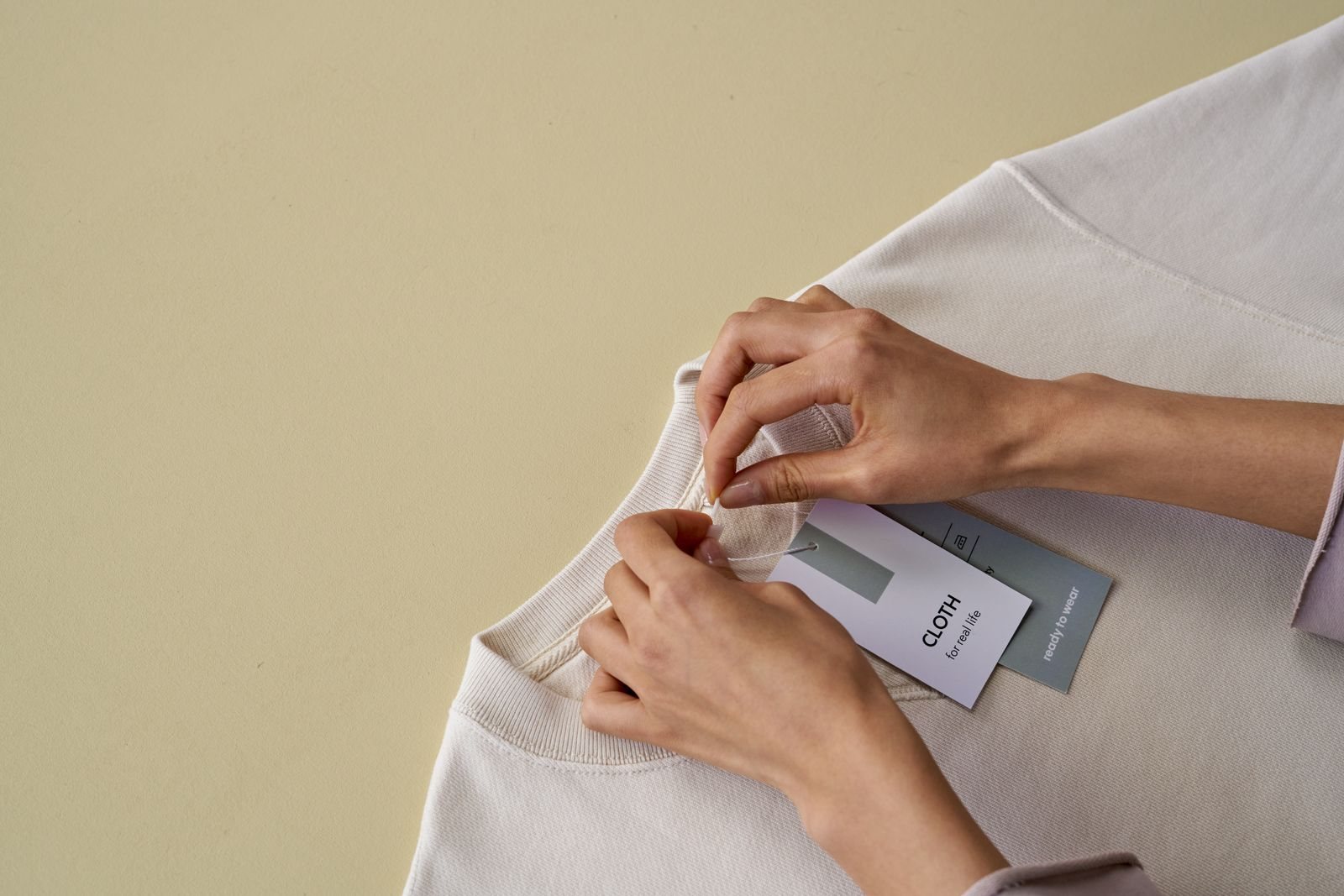
The reach is wide. The Guides apply to labels, advertising, promotional materials and “all other forms of marketing in any medium”, and to business-to-business sales. They cover claims made directly or implied through words, logos and brand names. A swing tag, a product page, a wholesale deck and an Instagram caption all count.
Are the Green Guides being updated?
Not yet, as far as the public record shows. On 14 December 2022, the Commission voted 4-0 to seek comment on potential updates, including possible guidance on “organic” and “sustainable” and on carbon offsets. The comment period was extended to 24 April 2023, and a workshop on “recyclable” claims followed on 23 May 2023.
That is where the trail stops. The FTC’s Green Guides page lists nothing later, the newest Green Guides notice FLJ could find in the Federal Register is the one for that workshop, and the eCFR text still rests on the October 2012 publication. Speaking in February 2025, Commissioner Melissa Holyoak backed an update but stressed that the Guides are not law, according to a report by the law firm Kelley Drye. Treat the 2012 text as the working standard, and do not plan around a revision date that nobody has announced.
Can a fashion brand still say “sustainable”?
Yes, but it carries real risk if the word stands alone. When the FTC revised the Guides, it said they did not address “sustainable”, “natural” or “organic”, because it either lacked a sufficient basis for meaningful guidance or wanted to avoid overlapping with other agencies’ rules. For organic textiles and agricultural products, it pointed to the US Department of Agriculture’s National Organic Program.
Silence is not permission. Section 260.4 warns that unqualified general environmental claims are hard to interpret and rarely capable of proof, and the FTC’s own summary tells marketers not to make broad claims like “green” or “eco-friendly”. A shopper may read “sustainable” the same way, which is why FLJ’s guide on whether sustainable fashion claims hold up legally starts with the evidence, not the adjective. The safe course is to say which part of the garment is better, and how you know.
What can fashion brands still say about sustainability?
The Guides reward specifics. Their examples rarely mention clothing, and none of the recycled content examples involves apparel, so a brand has to reason by analogy. This table sets out the main claim types, with suggested wording based on the Guides.
| Claim | What the Guides say | Lower-risk approach |
|---|---|---|
| “Eco-friendly”, “green” | Avoid unqualified use (260.4) | Tie it to one clear, proven benefit that covers the whole product, minor parts aside |
| “Sustainable” | Not addressed, but the general claim warning is the obvious risk | Name the attribute: fibre, process or supplier |
| “Recycled” | Only material diverted from the waste stream; give percentages by weight (260.13) | “Contains 50% recycled polyester”, if that is true of the garment |
| “More sustainable” | Comparisons must be clear and proven (260.3) | State the comparison, such as “20% more recycled content than our previous style” |
| “Free of” a chemical | Deceptive if a substance with similar risks remains (260.9) | State what was reduced and by how much |
| “Non-toxic” | Needs evidence of safety for people and the environment (260.10) | Use only with test data, or qualify it |
| “Renewable” | Unqualified use can imply recycled or biodegradable (260.16) | Name the material and explain why it is renewable |
| Eco seal or certification | Certification does not remove the duty to substantiate (260.6) | Name the standard and what it measures; disclose any material connection |
| “Carbon neutral” | Offset claims need proper accounting (260.5) | Explain any offsets; check California’s disclosure law |
One of the few clothing examples is worth knowing. Under section 260.9, a package labelled “Shirts made with a chlorine-free bleaching process” overstates the benefit if the process still releases a meaningful amount of the same harmful byproducts. A claim that the shirts were bleached with a process that releases 50% less of those byproducts would not be deceptive. The same logic applies to “PFAS-free”, which must also survive the state and EU limits covered in FLJ’s guide to PFAS in clothing.
How has the FTC enforced green claims in clothing?
The clearest fashion case is about bamboo. In April 2022, the FTC alleged that Kohl’s and Walmart had marketed rayon textiles as bamboo and had made environmental claims about some of them, such as that they were produced “free of harmful chemicals”. The FTC said rayon manufacturing uses toxic chemicals and emits hazardous pollutants. Proposed orders filed with the complaints required $2.5 million from Kohl’s and $3 million from Walmart.
Two points matter here. First, the complaints relied on the FTC Act and the Textile Act, not on breach of the Guides as such. Second, the money came from the FTC’s penalty offense authority, which depends on a company knowing that the conduct had already been found deceptive. FLJ explains the labelling side in why “bamboo” labels get brands fined.
Do the Green Guides matter in fashion lawsuits?
Yes, especially in California. Business and Professions Code section 17580.5 makes untruthful, deceptive or misleading environmental marketing claims unlawful, defines those claims by reference to the Green Guides, and gives a defence where a claim conforms to them. So non-binding federal guidance becomes state law in the most populous US state. California also requires companies operating there that buy or use voluntary carbon offsets and make “carbon neutral” or net zero claims to post details of those offsets on their websites.
Private class actions against fashion brands have mostly failed at an early stage, but for reasons that give little comfort:
- Dwyer v Allbirds (S.D.N.Y., April 2022): the court treated complaints about the life cycle tool and the Higg index as criticism of methodology, and noted that Allbirds had said what its carbon figure included.
- Lizama v H&M (E.D. Mo., May 2023): H&M never used “environmentally friendly” for its Conscious Choice line, and the court found that its website disclosures and qualified wording took it outside the Guides’ unqualified claim category.
- Ellis v Nike (E.D. Mo., 2024): the plaintiff alleged that more than 2,000 products in Nike’s Sustainability Collection were not sustainable, but did not say what she actually read before buying.
- Gyani v Lululemon (S.D. Fla., February 2025): the case over the “Be Planet” campaign failed for lack of standing, because claiming a price premium was not enough to show injury.
None of these rulings approves the marketing. Most turned on how the complaint was pleaded. The useful lesson comes from Allbirds and H&M: precise wording with clear disclosures helped both win.
How do US rules compare with the UK and EU?
A brand selling internationally cannot write its copy to the FTC standard alone, because Europe is now tougher. The EU’s ban on generic green claims has applied since 27 September 2026, as explained in FLJ’s guide to what fashion brands must stop saying.
In the UK, ASOS, Boohoo and George at Asda gave undertakings to the Competition and Markets Authority in March 2024, without any admission of wrongdoing, covering how they describe materials and green ranges. The CMA’s September 2024 guide warns against broad terms such as “sustainable”. Since April 2025, it can fine businesses up to 10% of global turnover for consumer law breaches without going to court first.
How should a brand check its green claims?
- List every claim: include tags, product pages, filters, emails, wholesale decks, influencer briefs and brand names.
- Ask what a shopper would take from it: the Guides require proof for every reasonable reading, including implied ones.
- Hold the evidence first: keep test reports, fibre certificates and supplier declarations for each style.
- Replace adjectives with facts: give the material, the percentage and the part of the product.
- Set rules for green collections: publish the criteria and check that each item meets them.
- Write to the strictest market: if you sell in the EU or UK, draft for those rules first.
Frequently asked questions
Are the FTC Green Guides law?
No. They are guidance, and section 260.1 says they do not bind the FTC or the public. But the FTC can still pursue deceptive claims under Section 5 of the FTC Act, and California has written the Guides into its own statute, so ignoring them is a poor strategy.
When were the Green Guides last updated?
October 2012. The FTC began a review on 14 December 2022, took comments until 24 April 2023 and held a workshop on recyclable claims in May 2023. FLJ found no revised version as of 4 November 2026, and the FTC has not published a date for one.
Can I call my clothing brand sustainable?
The Guides do not forbid it, but they do not protect it either. On its own, the word may be read as a broad environmental promise that is close to impossible to prove. It is safer to say exactly what is better, such as the recycled fibre content by weight, and to hold the evidence.
What do the Green Guides say about recycled polyester?
They do not mention it by name. The recycled content rules in section 260.13 apply generally: the material must have been recovered or diverted from the waste stream, you need proof, and percentages should be stated by weight. If only part of a garment is recycled, the claim should say so.
Can a consumer sue a brand under the Green Guides?
The Guides are not binding rules in themselves. Consumers usually sue under state consumer protection laws, and a claimant in California can rely on a statute that incorporates the Guides. Several fashion class actions have been dismissed, but those rulings turned on the facts and pleadings, so they offer no general protection.
Do the Green Guides apply to social media and influencers?
Yes. The Guides cover marketing in any medium and claims implied through words, logos and brand names, so a caption, a hashtag or an “eco” product name can all count. Brands should brief influencers on approved wording and treat their posts as part of the same claim review.
This article is general information, not legal advice. The status of the Green Guides is stated as of 4 November 2026. Allegations in the cases mentioned are allegations only, and brands should take advice from a qualified lawyer on specific claims.
FASHION LAW JOURNAL INSIDER
Join designers, brand founders and fashion lawyers who get the biggest brand battles, IP fights and career moves in fashion law, straight to their inbox.