Bamboo fabric sells itself: soft, breathable and, the label implies, grown sustainably from a plant that needs little help to thrive. The trouble is that most of what is sold as bamboo fabric contains no bamboo fibre at all. It is rayon, also called viscose, made by dissolving bamboo pulp in chemicals and spinning the result into new fibres. US regulators have been fining retailers over that gap for more than fifteen years, and the penalties have grown each time. Here is what bamboo fabric really is, how it must be labelled in the US, the EU and the UK, and what the enforcement record tells brands today.
Short answer: Most bamboo fabric is rayon or viscose made from bamboo pulp, not bamboo fibre. Under the FTC’s textile rules it can be labelled “rayon made from bamboo” or “viscose made from bamboo”, but never simply “bamboo”. The FTC has fined retailers repeatedly, culminating in $2.5 million for Kohl’s and $3 million for Walmart in 2022.
Key takeaways
- A textile can be called bamboo only if it is made directly from actual bamboo fibre. Bamboo-sourced rayon must say “rayon (or viscose) made from bamboo”.
- The FTC has acted against bamboo labelling in 2009, 2010, 2013, 2015 and 2022, with civil penalties rising from $1.26 million to $5.5 million per round.
- In April 2022 the FTC used its Penalty Offense Authority to seek $2.5 million from Kohl’s and $3 million from Walmart for “bamboo” rayon and unsupported green claims.
- In the EU and UK, “bamboo” is not an approved fibre name, so the composition label must use a listed name such as viscose.
What is bamboo fabric actually made of?
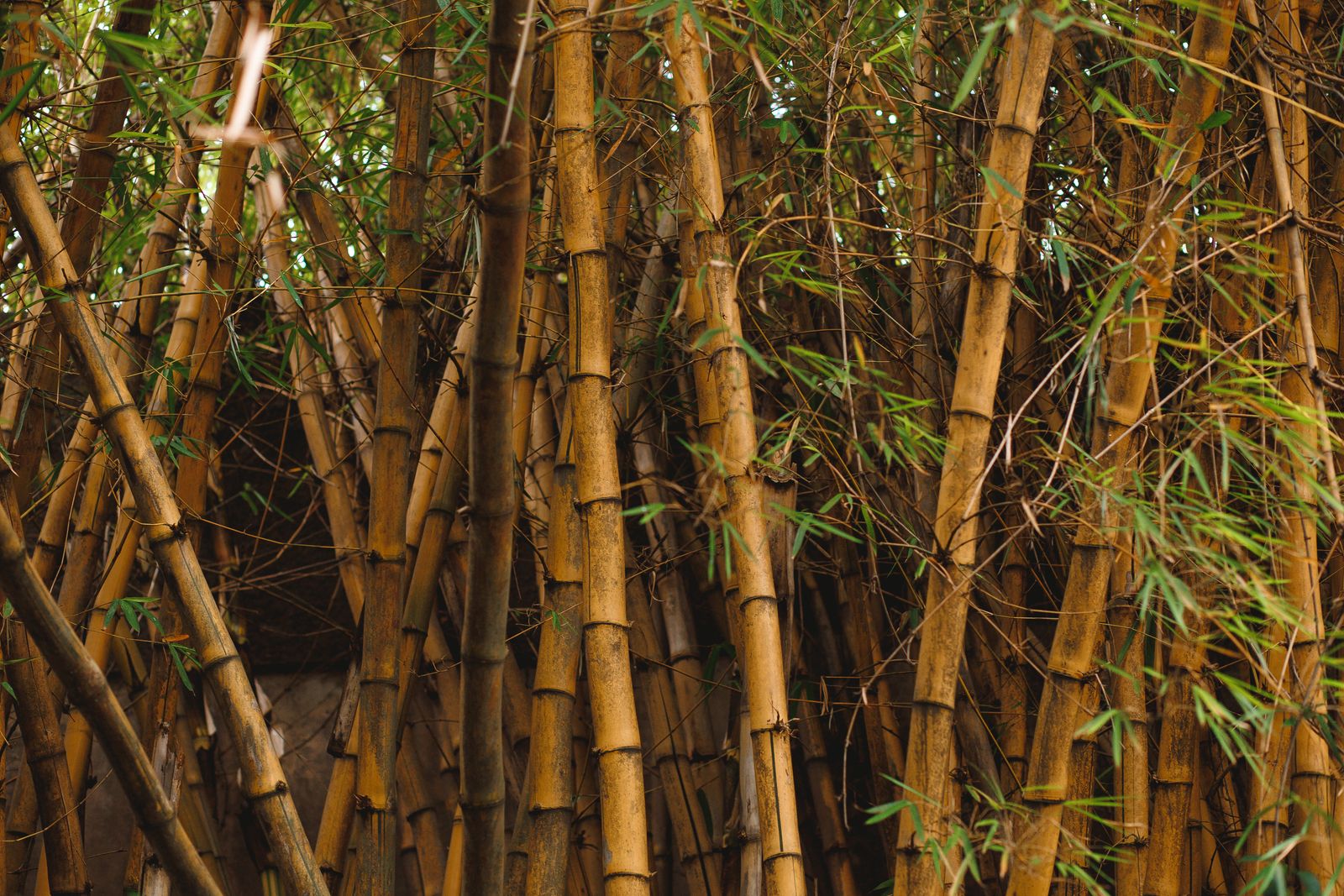
There are two very different products behind the same word. A small amount of fabric is made by mechanically processing bamboo stalks into fibre, much as flax becomes linen. It is coarse, costly and rare. The FTC put it bluntly in a 2015 business guidance post: “There is virtually no actual bamboo fiber out there.”
Almost everything else is regenerated cellulose. The bamboo is broken down into pulp, dissolved with chemicals and pushed through spinnerets to form new filaments. The plant is only the raw material: the finished fibre is chemically the same rayon you would get from wood pulp. The US Textile Rules define rayon as “a manufactured fiber composed of regenerated cellulose”, and the EU’s list of fibre names describes viscose as regenerated cellulose fibre obtained by the viscose process. Where the cellulose is dissolved in an organic solvent instead, the fibre is lyocell. In each case, the correct legal name is the fibre’s generic name, not the plant it came from. FLJ’s explainer on what a textile is, from fibre to fabric covers why labelling law works at the fibre level.
FLJ Insider Pro is open: live fashion law jobs and internships, five career guides and two roadmaps. Early bird USD 12/month. See what's inside
How must bamboo fabric be labelled in the US?
Fibre content labels in the US are governed by the Textile Fiber Products Identification Act and the FTC’s Textile Rules. The rules require generic fibre names and percentages by weight, and 16 CFR 303.7 adopts the generic names and definitions in the international standard ISO 2076:2013. Those names include rayon, viscose and lyocell. Bamboo is not one of them.
The FTC’s position is set out on its bamboo textiles page. A textile can be called “bamboo” only if it is made directly from actual bamboo fibre. Rayon or viscose made from bamboo as a plant source may be labelled “rayon (or viscose) made from bamboo”. Sellers, not just manufacturers, are responsible for getting it right, which is why retailers rather than mills have paid most of the penalties. The FTC’s 2015 guidance added that the rule applies everywhere the product is described: “If it’s not made directly of bamboo fiber, don’t call it bamboo. Not anywhere, not any way.” That covers product titles, search keywords and marketing copy as well as the sewn-in label. The separate FTC Care Labeling Rule still applies to the same garment.
What enforcement has the FTC taken over bamboo labels?
The FTC first charged sellers in August 2009, bringing cases against four companies: Sami Designs (trading as Jonäno), CSE (trading as Mad Mod), Pure Bamboo and The M Group (trading as Bamboosa). On 3 February 2010 it sent warning letters to 78 retailers, including Wal-Mart, Target and Kmart, about labelling and advertising rayon as bamboo. Those letters mattered: they put the recipients on notice, which made civil penalties available if they did it again.
They did. On 3 January 2013, four national retailers agreed to pay $1.26 million: Sears $475,000, Amazon $455,000, Macy’s $250,000 and Leon Max (Max Studio) $80,000. In December 2015, four more paid $1.3 million: Bed Bath & Beyond $500,000, Nordstrom $360,000, J.C. Penney $290,000 and Backcountry.com $150,000. The complaints against J.C. Penney and Backcountry.com also challenged antimicrobial claims.
The largest action came on 8 April 2022. The Department of Justice, acting for the FTC, filed complaints in federal court in Washington DC seeking a $2.5 million civil penalty from Kohl’s and $3 million from Walmart, which the FTC called the largest ever in this area. Both companies had sold rayon textiles as bamboo since at least 2015, and some products were promoted as made “free of harmful chemicals, using clean, non-toxic materials”. The FTC said that converting bamboo into rayon “requires the use of toxic chemicals and results in hazardous pollutants”. It relied on its Penalty Offense Authority, which allows penalties where a company knew conduct was unlawful and the FTC had already issued a written decision finding that conduct deceptive. Stipulated orders were filed on 4 May 2022. Samuel Levine, then Director of the Bureau of Consumer Protection, said: “False environmental claims harm both consumers and honest businesses, and companies that greenwash can expect to pay a price.”
| Date | FTC action | Companies | Penalty |
|---|---|---|---|
| August 2009 | First bamboo cases | Sami Designs (Jonäno), CSE (Mad Mod), Pure Bamboo, The M Group (Bamboosa) | Settlements, no civil penalty reported |
| 3 February 2010 | Warning letters | 78 retailers | None |
| 3 January 2013 | Settlements | Sears, Amazon, Macy’s, Leon Max | $1.26 million in total |
| December 2015 | Settlements | Bed Bath & Beyond, Nordstrom, J.C. Penney, Backcountry.com | $1.3 million in total |
| 8 April 2022 | Penalty Offense Authority complaints | Kohl’s, Walmart | $2.5 million and $3 million |
Why are eco and antimicrobial bamboo claims risky?
Because the qualities that make bamboo appealing as a plant do not survive the rayon process. The 2013 announcement noted that the process for manufacturing rayon is far from green, even when the source is bamboo, and the 2015 and 2022 complaints targeted antimicrobial and “non-toxic” claims as well as the fibre name. A brand that writes “eco-friendly bamboo” on a viscose product can face two problems at once: a wrong fibre name and an unsupported environmental claim.
The UK’s advertising regulator takes the same approach to green claims. On 4 February 2026 the ASA upheld complaints against The Cheeky Panda over “sustainable bamboo” and “biodegradable” claims for nappies and baby wipes made with bamboo viscose fibre. The ASA treated “sustainable” as an absolute claim that needed full life cycle evidence, and found that the evidence did not show the wipes as a whole would biodegrade in real conditions. In the EU, rules applying from 27 September 2026 ban generic environmental claims that cannot be substantiated, as FLJ explains in the EU greenwashing ban, and the UK’s CMA can now fine up to 10% of global turnover, covered in the CMA’s new fining power.
How do the EU and UK treat bamboo labels?
The EU’s Textile Regulation 1007/2011 is stricter on names than the US. Article 5 says only the fibre names listed in Annex I may be used to describe fibre composition, and that those names may not be used for other fibres. Bamboo does not appear in Annex I. A bamboo-derived viscose must therefore be described on the composition label as viscose, or lyocell if made by that process. Any reference to bamboo as a source elsewhere on the product or in marketing must not mislead consumers about what the product contains, under the EU’s unfair commercial practices rules. The UK kept the same system after Brexit through the Textile Products (Labelling and Fibre Composition) Regulations 2012 and the retained version of the EU regulation.
Canada has taken the same line. Its Competition Bureau has told sellers to label these products as rayon or viscose, with a bureau official telling CBC News that “rayon from bamboo” or “viscose from bamboo” tells shoppers what they are buying. For brands, the result is one consistent rule across major markets: the fibre name comes first, and the plant is at most a qualifier.
How should brands label bamboo products today?
Start by asking the supplier for the fibre and the process. If the fibre is viscose or lyocell, label it that way, with “made from bamboo” only as a qualifier where the market allows it. Remove “bamboo” from product titles, filters and search tags unless the fibre is genuine mechanically processed bamboo, and keep evidence that it is. Drop claims such as natural, chemical free, antibacterial or biodegradable unless you hold test results for the finished product. Check marketplace listings and third party sellers, since the FTC has held retailers responsible for what they sell. And align labels across markets: a single composition reading “viscose” with an accurate “from bamboo” qualifier in the US works far better than three versions. FLJ’s guides to misleading “organic cotton” and origin claims, enforcing truth in eco-claims and checking sustainability claims apply the same discipline to other fibres.
Frequently asked questions
Is bamboo fabric really made from bamboo?
The raw material usually is, but the fibre is not. Most bamboo fabric is rayon or viscose made by chemically dissolving bamboo pulp and spinning new fibres. Genuine mechanically processed bamboo fibre is rare.
How should bamboo rayon be labelled in the US?
According to the FTC, as “rayon (or viscose) made from bamboo”. A product can be called bamboo only if it is made directly from actual bamboo fibre, and that applies to titles and advertising as well as the label.
Why were Kohl’s and Walmart fined over bamboo?
In April 2022 the FTC sought $2.5 million from Kohl’s and $3 million from Walmart for selling rayon textiles as bamboo and making unsupported environmental claims, using its Penalty Offense Authority after earlier warnings to retailers.
Is bamboo viscose eco-friendly?
Not automatically. The FTC says converting bamboo into rayon requires toxic chemicals and produces hazardous pollutants, so any environmental claim needs evidence about the finished product and its process, not just the plant.
Can I use the word bamboo on a label in the EU?
Not as a fibre name. The Textile Regulation allows only the fibre names listed in Annex I, and bamboo is not one of them, so the composition must read viscose or lyocell. Other mentions must not mislead.
What is the difference between bamboo viscose and bamboo lyocell?
Both are regenerated cellulose fibres. Viscose is made by the viscose process, while lyocell is made by dissolving cellulose in an organic solvent. Each must be labelled by its own generic name.
This article is general information on bamboo textile labelling in the US, EU, UK and Canada as of October 2026, based on FTC actions, regulations and regulator rulings. It is not legal advice; labelling duties depend on the product’s fibre content and the markets where it is sold.
FASHION LAW JOURNAL INSIDER
Join designers, brand founders and fashion lawyers who get the biggest brand battles, IP fights and career moves in fashion law, straight to their inbox.