
A textile is any material made from fibres, whether those fibres are woven, knitted, felted or otherwise formed into a flexible structure. That sounds simple until a label actually has to describe one accurately, at which point fibre, yarn, fabric and textile stop being casual synonyms and start being the specific legal terms a regulator actually checks.
Fibre, Yarn, Fabric and Textile Are Not Interchangeable Terms
A fibre is the raw material itself, whether a natural fibre like cotton, wool, silk or linen, or a manufactured fibre like polyester, nylon or rayon, built from polymers rather than grown or sheared. Spinning fibres together produces yarn, and weaving, knitting or otherwise constructing that yarn produces fabric. Textile sits above all three as the umbrella term, covering fibre, yarn, fabric and finished non-woven materials alike. The distinction matters because labelling law regulates fibre content specifically, meaning the actual legal disclosure obligation sits at the fibre level even though a shopper is holding a finished fabric item. Getting the terminology right is the first step towards understanding why a single garment tag can trigger two or three separate regulatory regimes at once.
The US Law That Defines What Goes on a Label
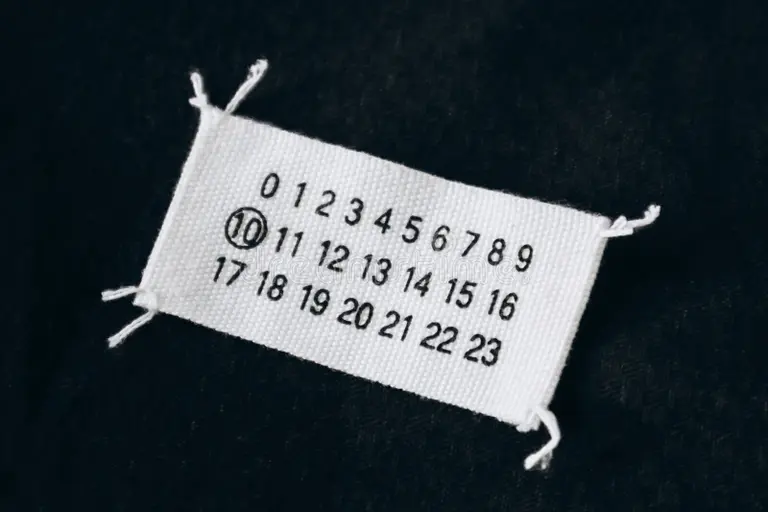
In the United States, the Textile Fiber Products Identification Act, passed in 1958 and enforced by the FTC, requires a label on nearly every textile product disclosing three things: the generic names and percentages by weight of every constituent fibre present at five per cent or more, the name of the manufacturer or its registered identification number, and the country where the product was processed or manufactured. Fibres making up less than five per cent generally get grouped as “other fibre”, with one functional exception: elastane and similar fibres added specifically for stretch can be named individually even below that threshold, because their functional role makes the disclosure meaningful to a buyer regardless of quantity.
Why Brand Names Cannot Replace Generic Names
A manufacturer cannot simply print a trademark on a label and call the disclosure complete. The Act requires the generic fibre name itself, polyester rather than Dacron, lyocell rather than Tencel, spandex rather than Lycra, because a trademark tells a shopper who made the fibre, not what the fibre actually is. A brand name can still appear on a label, but only directly beside the generic name it describes, in comparable size and prominence, so a garment might read “Lycra® spandex” rather than “Lycra®” alone. The FTC maintains the official list of generic fibre names manufacturers must choose from, and updated that list in 2020 to incorporate several newer ISO-recognised names, including chitin and ceramic, as manufactured fibre technology kept expanding past the categories the original 1958 Act anticipated.
FLJ Insider Pro is open: live fashion law jobs and internships, five career guides and two roadmaps. Early bird USD 12/month. See what's inside
Why Wool Gets Its Own Separate Law
Wool sits outside the Textile Fiber Products Identification Act entirely, governed instead by the earlier Wool Products Labeling Act, passed specifically to stop wool substitutes from being sold without disclosure. The wool law applies a stricter rule than the general textile rule: any amount of wool in a product must be disclosed by exact percentage, with no five per cent exemption, and cashmere or mohair must be named specifically rather than folded into a generic “wool” line. That stricter standard exists because wool quality and type vary enormously, and a buyer paying for cashmere has a materially different product in hand than one buying ordinary wool, a distinction the general textile rule was never built to protect on its own.
The EU and UK Take a Similar but Distinct Approach
Europe regulates the same underlying problem through a different structure. The EU’s Textile Labelling Regulation, Regulation (EU) No 1007/2011, mandates full fibre composition disclosure on virtually every textile product sold in the bloc, along with a requirement to flag any non-textile parts of animal origin, a disclosure the US framework has no direct equivalent for. Country of origin marking works differently too. Where US law requires it on essentially every covered product, the EU only requires origin disclosure where leaving it off would actually mislead a consumer, or where separate customs rules independently require it. A textile fully compliant in one market can therefore still need label changes before it legally enters the other, since the two systems agree on what information matters while disagreeing on exactly when each piece becomes mandatory.
A Technical Term With Real Consequences
Calling something a textile sounds like the least legally interesting word in fashion, right up until a mislabelled fibre percentage or a trademark standing in for a generic name turns a simple garment tag into a regulatory problem. Fibre, yarn and fabric describe what something physically is. Textile law describes what a brand is actually required to tell the person buying it, and the gap between those two things is exactly where enforcement happens.
FASHION LAW JOURNAL INSIDER
Join designers, brand founders and fashion lawyers who get the biggest brand battles, IP fights and career moves in fashion law, straight to their inbox.