INSIS does not call itself a luxury house.
Founded in China in 2015 on the idea that a wardrobe should be built to last rather than replaced each season, the brand has built its identity around a deliberately narrower promise: pieces that stay useful beyond a season, made with care, and priced without the markup that traditional luxury houses typically attach to a name.
We put that framing to INSIS directly, on pricing, sourcing, and what “accessible luxury” is actually supposed to mean structurally, alongside more reflective questions about what it costs to design for permanence in an industry built on speed. INSIS’s Brand Director, Sonia Xie, answered on the brand’s behalf. What follows is INSIS, in its own words.
Where “Time, Nature, Body” Began


INSIS was founded in 2015 on the idea that clothes shouldn’t have to be left behind each time fashion moves on. What was the moment or realisation that led you to build the brand around Time, Nature and Body instead of the industry’s usual rhythm of speed and iteration?
INSIS did not begin with the words Time, Nature and Body. It began with a simpler observation: wardrobes kept growing, but the clothes women relied on were often only a small part of them. We wanted to make those dependable pieces, the ones that feel right on the body, hold up over time and are reasonably priced, the centre of the brand. The language of Time, Nature and Body came later. It now helps us test decisions: will this still be useful beyond a season, are we using the material with care, and does the garment work with the person wearing it?
The Cost, and the Discipline, of Designing for Permanence


You’ve spoken about “rooting” as a radical choice. In an industry largely driven by constant newness, what does it actually cost, commercially and creatively, to design for permanence instead? And what does it give back?
Designing for permanence costs us some short-term opportunities. We sometimes leave aside ideas that may read quickly on social media but have little life beyond the season. Better fibres and more developed construction cost more, and we absorb that in the brand’s own margin rather than in the retail price. Creatively, the challenge is to keep refining familiar forms without producing difference for its own sake.
“The benefit is discipline. Every change must improve fit, use or durability.”
This does not mean INSIS moves slowly in every part of the business; it means speed alone cannot justify a product decision.
Compressing the Brand Markup, Not the Fabric

INSIS describes itself through “high value for price” rather than the language of traditional luxury. Can you walk us through how that plays out operationally, what specifically changes in your supply chain or margin structure to put more value back into the product itself?
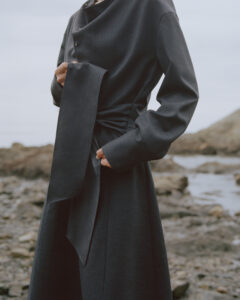
Our pricing is built from the bottom up. We start from what a garment actually costs, fibre, fabric, development, making, finishing, and price upward from there, keeping the multiple attached to the brand name deliberately low. Traditional luxury houses are, by INSIS’s own account, commonly reported to price at ten to fifteen times cost; INSIS says it prices at a fraction of that. Margins vary by category and the brand says it cannot disclose exact figures or supplier terms, but the direction of the policy, in its words, is not confidential: the markup on the brand is what gets compressed, not the fabric.
By way of example, INSIS points to its long coat in Peruvian alpaca blended with fine wool, which retails at around USD 500. Coats built on comparable alpaca compositions, the brand notes, commonly sit at USD 1,200 or above elsewhere. The difference, according to INSIS, is not in the fibre or the making, but in how much brand is added on top of the garment.The example, according to INSIS, reflects its aim to keep the brand premium restrained while investing in fibre and making.
Where INSIS manufactures is the other structural choice it points to. The brand works mainly with large, established manufacturers, most of them in and around Shanghai, rather than with small workshops in lower-cost regions. That costs more per garment, and INSIS says it accepts that trade-off because the two things it is buying are connected: factories that treat and pay their workers properly keep them, and a stable, skilled workforce is what produces a stable garment. Consistency, in the brand’s words, is decided at the factory level; it cannot be inspected in afterwards.
“We would not want our price advantage to come out of the people who make the clothes.”
Because INSIS began in textiles, its product team works close to yarn mills, fabric suppliers and manufacturers, and keeps refining proven patterns instead of treating every season as a full reset. True to value, the brand is careful to note, does not mean the lowest possible price. It says it needs enough margin to fund development, production, inventory and service, and that international pricing takes market-specific duties and logistics costs into account. The aim, as INSIS puts it, is a price that stays in proportion to the garment, and a structure it can explain when asked.
Natural Materials Are Not a Synonym for Harmless


Natural materials like alpaca, merino wool, and yak down sit at the centre of your collections. How do you think about the responsibility that comes with sourcing them, particularly as demand for “natural” and “sustainable” fashion grows and scrutiny of those claims grows with it?
We do not use natural as a synonym for harmless. Wool, alpaca and yak fibres each carry questions of land, animal welfare, processing, transport and end of life. We choose them when their performance and durability justify their use, not because the word natural provides an environmental halo.
“Our responsibility is to be specific.”
We ask suppliers for information on fibre origin, composition, processing and relevant certifications, and we disclose those details only where they apply. A 17.5-micron merino yarn, for example, says something precise about feel and performance; it does not make the entire garment or brand sustainable by default. Kind to nature guides decisions on material, making and packaging. It is a working commitment, not a claim that we have removed every impact.
Earning “Accessible Luxury” Rather Than Claiming It


Accessible luxury is often treated as a marketing category. What is INSIS doing differently, structurally, that you believe earns that description rather than simply claiming it?
We do not think a brand can award itself the term accessible luxury. If the description is useful, it should be the conclusion a customer or editor reaches after comparing product, experience and price.
Structurally, our approach is the same one behind True to value: control the markup attached to the brand name, invest in the garment, and design for frequent use. What we are trying to make accessible is also a particular kind of luxury, what we think of as natural ease. It is the feel of a natural fibre worn directly against the skin, a cut that moves with the body rather than disciplining it, a garment you can put on and then stop thinking about. Because that ease comes from the material and the pattern, not from styling, it survives ordinary days, commuting, sitting, working, instead of waiting for an occasion.
“Access is therefore about more than a lower threshold of purchase. Quality should be able to enter ordinary life and remain there.”
If a wardrobe ends up giving someone more ease, more time and more freedom to dress as herself, that, rather than the label, is the luxury INSIS says it means.
From Philosophy to Specification
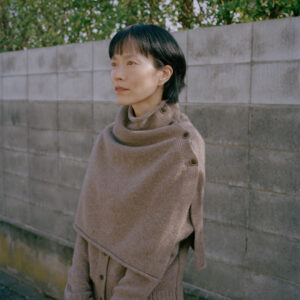
Your four principles, True to value, Made to last, Ease of being, Kind to nature, read almost like a set of internal commitments. Are any of these formalised in how you work with suppliers or manufacturers, or are they more of a design philosophy that guides decisions case by case?
These are internal commitments, and more of them are now written into how INSIS operates rather than left as philosophy. True to value is formalised in the brand’s pricing policy: prices are built bottom-up from actual cost, with a deliberately compressed brand multiple, reviewed style by style. Made to last and Kind to nature are formalised in specification: fibre content, construction requirements, sample-fitting rounds, material documentation and the certifications the brand says it can actually show.
Its choice of manufacturers is itself a formalised commitment: large, established factories with stable employment and decent working conditions, rather than whichever workshop is cheapest, a standard it says it holds to although it costs more, for the reasons set out above.
“We would rather say clearly what we can document and where work remains.”
Ease of being remains the hardest to codify, in INSIS’s telling. Bodily comfort, and whether a new style answers a real need, still require decisions on real bodies and real cases. The brand says it is turning more of that judgement into repeatable standards, but does not present the four principles as a certification system.
Designing for the Body, Not the Trend
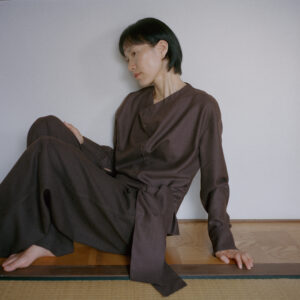


Design choices like seamless knitting, multiway designs, and adjustable silhouettes are framed around bodily ease rather than trend. How do these decisions get made, is comfort tested and iterated on, or is it something built into the pattern from the start?
It has to be both. Ease is part of the initial brief, but it can only be confirmed on a body. The pattern is developed with movement, layering and different proportions in mind, then adjusted through fittings and wear. The technique is never the point by itself: seamless knitting matters when it reduces bulk or friction against the skin, a multiway garment has to sit properly in each intended configuration, an adjustable silhouette should respond intuitively to different bodies and situations.
“If a construction makes the garment more complicated without making it better to wear, we remove it.”
Comfort, for INSIS, includes weight, balance, range of movement and the freedom not to think about the garment all day.
Growth, Pressure, and Staying Distinct



The wider luxury market has seen real contraction, while accessible luxury has emerged as one of its few genuinely dynamic segments. Does that shift feel like validation of INSIS’s model, or does it bring new pressure, competitively, or in terms of maintaining what makes the brand distinct?
The shift does not prove that INSIS’s model is right, but it does show that more people are questioning the gap between price and product. It also brings pressure. Accessible luxury and quiet luxury are now used so broadly that very different brands can sound alike. INSIS says it does not want to enter a price race or copy the appearance of established luxury. The distinction, in its words, has to remain concrete: material specifications, pattern, construction, fit and how a piece wears over time. The market will judge the brand on the garment, which is where it says it prefers the comparison to happen.
As INSIS grows internationally, how do you protect the idea of rooting, slowness, permanence, material integrity, from being diluted by the pressures of scale, new markets, and faster growth expectations?
We are not outside the commercial system. INSIS makes seasonal collections, enters new markets and has growth targets. Protecting the brand does not mean pretending those pressures do not exist; it means deciding what they are allowed to change. We can move faster in operations, adapt sizing and service to local needs, and communicate differently across markets.
“We should not use scale as a reason to weaken material specifications, force a design into a trend, or make our cultural identity more literal for easier recognition.”
The centre, INSIS says, remains a long-term wardrobe shaped by Time, Nature and Body. Growth is useful only if those standards remain clear in the product.
What INSIS Is Asking You to Believe
If you had to describe what INSIS is asking its customers to believe about time, ownership, and value, in a single idea, what would it be?
Time should add value to clothing, not make it obsolete. A garment proves its worth through wear: how often it is chosen, how well it holds up, and whether it continues to feel right as the person wearing it changes.
“Time should add value to clothing, not make it obsolete.”
Thank you to Sonia Xie and the INSIS team, and to Sylvie, for their generosity and care throughout this interview.
FASHION LAW JOURNAL INSIDER
Join designers, brand founders and fashion lawyers who get the biggest brand battles, IP fights and career moves in fashion law, straight to their inbox.