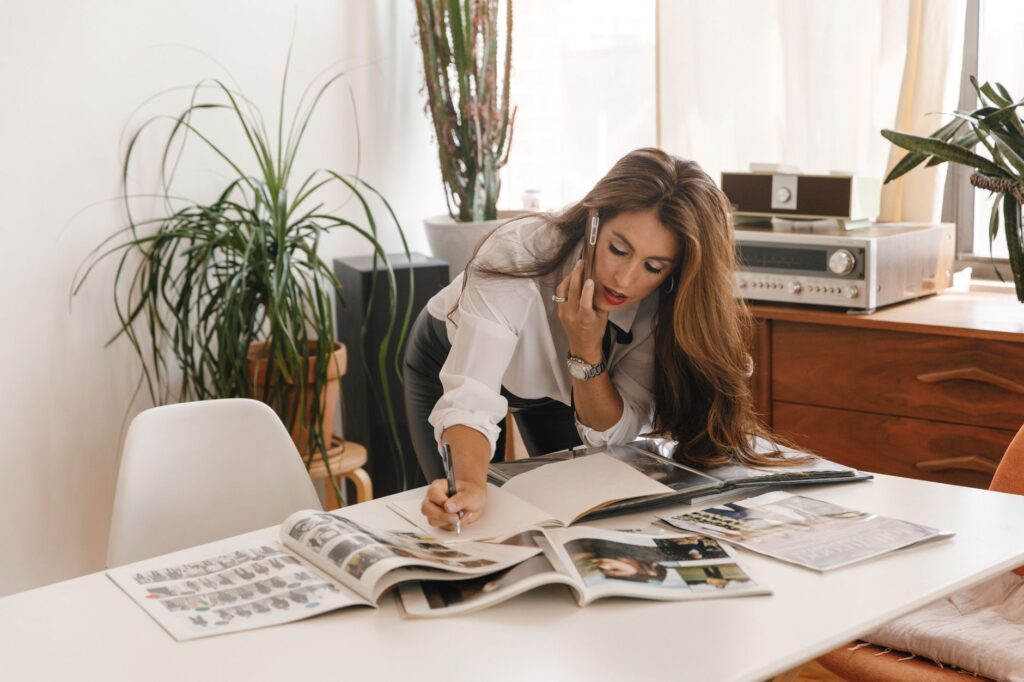

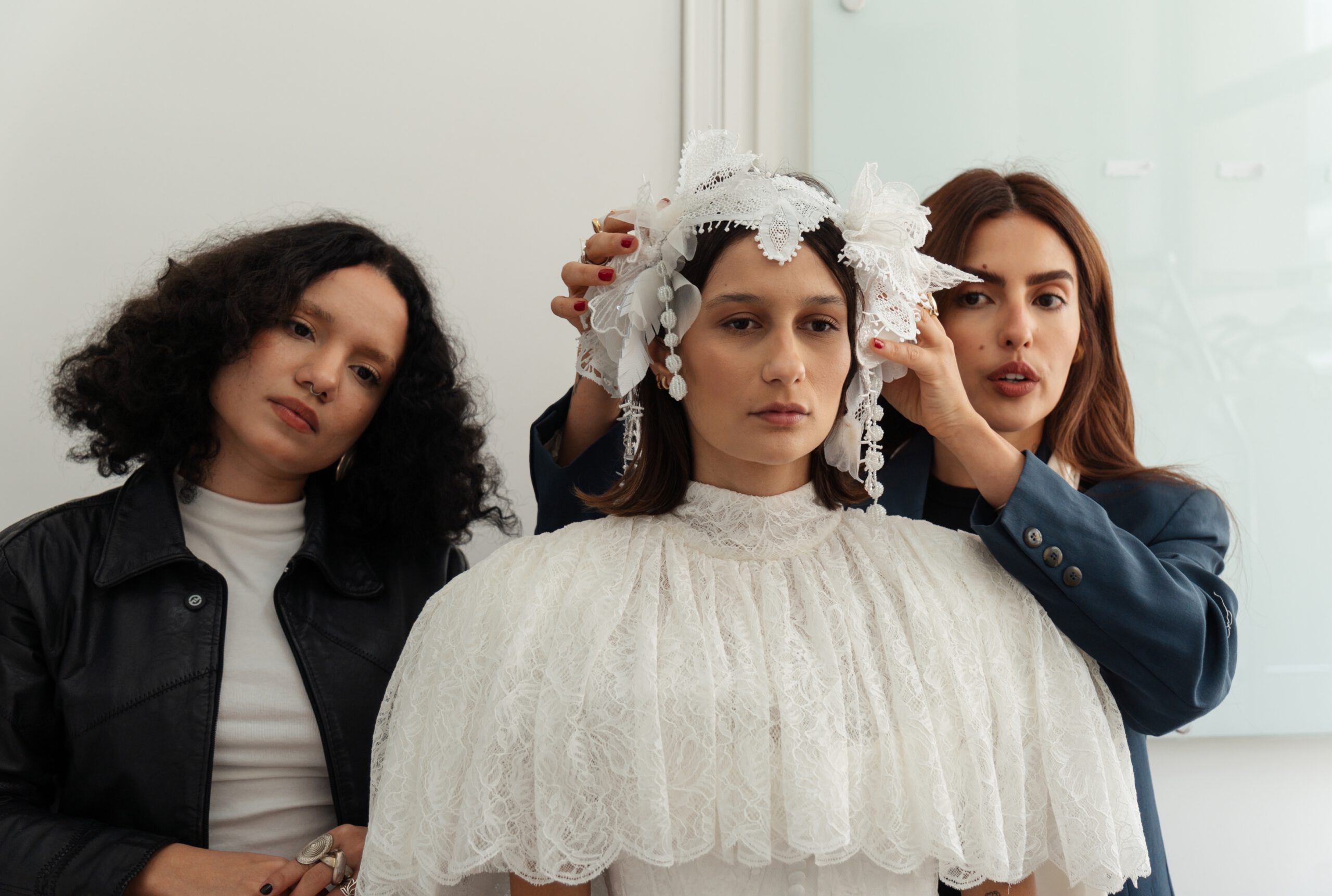
Rebeca Nepomuceno has spent thirteen years building something increasingly rare in fashion: an independent couture house that has grown from a twenty-square-meter atelier above her mother’s store in João Pessoa into a name recognized in New York and Barcelona, without ever handing over creative or financial control to a larger house. We spoke with her about the accidental beginning of her atelier, the Northeastern craftsmanship that shaped her from childhood, and Roliúde Nordestina, her newest collection, which draws on Ariano Suassuna’s literature and months of field research in Cabaceiras to bring an unexpected lightness to bridal wear.
We also talked candidly about Bohemia de Rebeca, the label’s departure from bridal into freer, bolder occasionwear, and about what it has actually taken to expand internationally while staying fully self-funded, including the outside investment offers she has turned down along the way.
A small personal note here: I’m from Meghalaya, a state in the Northeast of India, and something about the way Rebeca speaks of Brazil’s Nordeste, not as a theme she borrows from, but as something already present in the people around her and the way she sees the world, felt warmly familiar to me. It’s rare to come across a designer who carries regional identity this specifically, and this, honestly, while building something genuinely global. What follows is our conversation.
From a Wedding Dress to an Atelier
We started at the very beginning, with how a favour for a friend turned into a career neither of them quite saw coming.
Could you tell us the story behind founding Rebeca Nepomuceno Atelier in 2013, and what drew you specifically to bridal haute couture rather than another category of fashion?
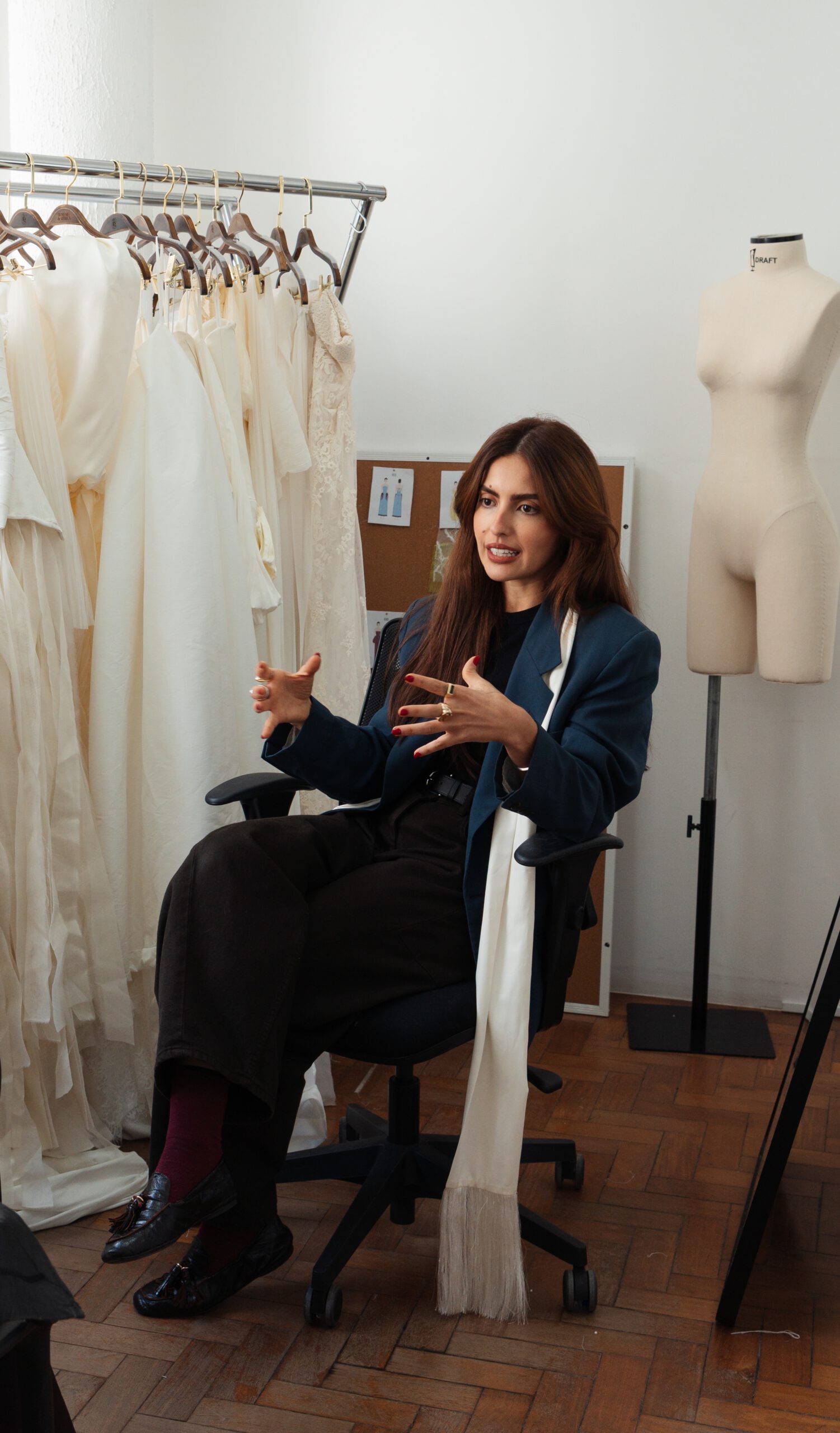
I had dreamed of becoming a fashion designer since I was a child; by the age of ten, I already knew that was what I wanted to do. But the story of the atelier itself began very spontaneously, almost by chance. When I graduated from university, I had no connection to bridal or eveningwear. A friend invited me to create a dress for a wedding, and even though I had very little idea of how I was going to make it happen, I said yes. The dress had a strong impact; I shared it on Instagram, and the response made my family and me realize there might be something there. Soon after, I opened a tiny 20-square-meter atelier above my mother’s store in João Pessoa, in Brazil’s Northeast.
Bridal came into my life later, when I moved to Australia to study fashion business. There, I discovered a completely different way of looking at weddings. In Brazil, especially at that time, bridal was still surrounded by a lot of tradition and formality. Australians had a much more easygoing approach, and that naturally extended to weddings and to the way women dressed for them. I fell in love with the idea that bridal could feel freer, more personal, and less attached to rules. That was when I understood this was the universe I wanted to explore, and decided to make it the focus of the atelier.
Craft as Inheritance
One thing that came up again and again in our conversation was how much of her work traces directly back to where she’s from, so I asked her about it outright.
You’ve built the atelier’s identity around handmade craftsmanship from the very beginning. Why has that artisanal foundation remained non-negotiable as the brand has grown over the past thirteen years?
I grew up surrounded by handmade things. I come from João Pessoa, in Paraíba, a coastal city in Brazil’s Northeast where tourism and beach culture are deeply connected to local craftsmanship. Growing up, crochet, straw work, and other handmade techniques were everywhere, part of the landscape of the city, something I would encounter constantly in the work of local artisans and in the pieces made for people visiting our beaches. Craftsmanship has always felt intrinsic to me, and I am fortunate to come from a place that is incredibly inspiring in that sense.
Of course, when you work with haute couture, the handmade is already inherent to what you do. But for me, it goes beyond technique; it is part of where I come from. I cannot imagine a version of my work where craftsmanship is not present in some form. As we grow, our goal will always be to keep looking back at what built us in the first place, because that foundation is what allows us to move forward.
I pushed a little further, curious how much of that identity was hers personally versus something shared across the whole studio.
In one of the press materials sent over, it’s mentioned that your work draws heavily on the cultural heritage of Brazil’s Nordeste region. How does growing up in João Pessoa, Paraíba, continue to shape your design language, even now that the atelier is based in São Paulo?
And it is not only about me. Today, in São Paulo, I work alongside people who come from that same context. Paloma Fidélis, the designer who works closely with me on the creative development of the collections, is also from João Pessoa. Luara, who leads much of the atelier’s hand embroidery and artisanal work, is from João Pessoa as well, along with others within the brand.
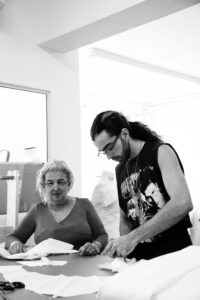
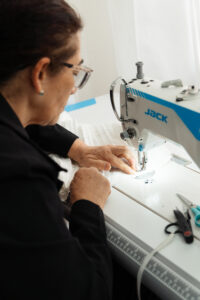
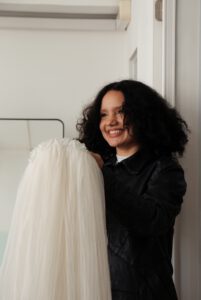
“I don’t think of our Northeastern identity as something we consciously add to the work. It is already there.”
Having people around me who share those references keeps that connection incredibly alive. It is something we value deeply. So I don’t think of our Northeastern identity as something we consciously add to the work. It is already there, in the people creating it, in the references we grew up with, and naturally, in the way we see the world.
From Collection to Client
We spoke about how a single idea actually moves from a runway collection into a bride’s own gown, and what that process looks like from the inside.
You’ve said that every collection piece carries the same artisanal origin as a made-to-measure gown. Can you walk us through what that process actually looks like, from initial concept to final stitch?
All of our textures, embroidery, and handmade techniques are developed and executed in-house, by the same artisans who work on our made-to-measure pieces. This is where much of the identity of each collection is really created.
There’s an important distinction in the way we work. Our made-to-measure process actually draws from the collections, not the other way around. The collections are where we allow ourselves to push everything further, to experiment with textures, embroidery, silhouettes, fabrics and techniques, and to explore the most unexpected possibilities. A made-to-measure client first enters that universe and then, together with us, extracts from it what makes sense for her, translating those ideas into something entirely personal. So creatively, everything really begins with the collections.
Roliúde Nordestina: Bringing Levity to Bridal
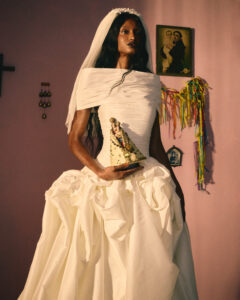
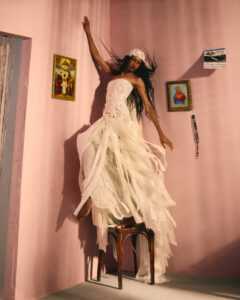
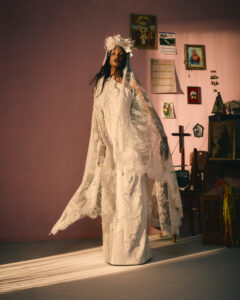
This is where the conversation slowed down the most: her newest collection, and the very personal reasons behind it. I’ll admit I was especially curious here, being from Meghalaya myself and knowing how much a specific regional identity can shape creative work.
Your new collection, Roliúde Nordestina, draws directly from Ariano Suassuna’s work and the tradition of Northeastern folk theatre. What was it about his legacy, and the idea of the auto as performed in the backlands, that felt right to translate into bridal wear?
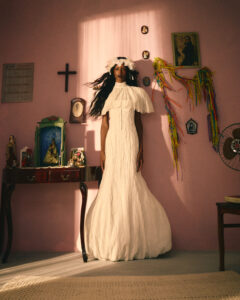
That is what led me to Ariano Suassuna, O Auto da Compadecida, and Cabaceiras. I was not interested in translating that universe literally; I am never interested in the obvious. What fascinated me was the humor, the irony, and a certain Northeastern lightness in the way we approach life, something so present in Ariano’s storytelling and in O Auto da Compadecida.
“I am never interested in the obvious.”
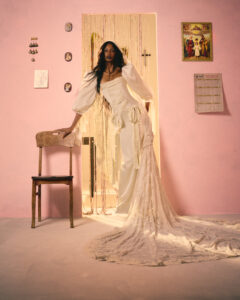
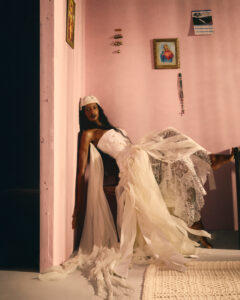
Bringing comedy and irony into bridal felt almost disruptive to me. I wanted to imagine a bride who approaches marriage with that same sense of lightness, without being constrained by all the rigid codes traditionally associated with it. Looking at Brazilian cinema, at Ariano’s literature and storytelling, and at the cinematic landscape of Cabaceiras became a way of bringing that freedom into the collection. There could not have been a better universe for what I wanted to say.
Naturally, that lightness came with new technical choices too, so I asked what pushed her to experiment after more than a decade of working within fairly traditional bridal materials.
This collection marks your first use of leather in a bridal gown and your first hand-pleated lace. What pushed you to introduce these techniques now, after thirteen years of working primarily within more traditional bridal materials?
Hand pleating was already part of our vocabulary, a technique we use quite often because hand-pleated fabric behaves very differently from machine pleating and creates a much more particular, organic result. For this collection, the challenge wasn’t introducing pleating for the first time, but finding new ways to explore something we already knew, applying that handmade technique to different materials, including leather and taffeta. Both choices came from the same desire: to take craftsmanship we deeply believe in and keep pushing it somewhere new.
We also talked about what the research behind the collection actually involved, beyond the studio itself.
The collection was developed from field research in Cabaceiras. What did that research process actually involve, and were there specific objects, places, or traditions you encountered there that made their way directly into the gowns?
We also spent time with a local guide at Lajedo do Pai Mateus, an extraordinary rock formation surrounded by local legends and mysticism. Having someone from the region guide us through that landscape allowed us to understand it beyond what we could simply see, through the stories, beliefs, and memories connected to the place.
I am from Paraíba, so I already have a deep connection with the state and much of its culture, but I had never been to Cabaceiras before. It was important for me to dedicate time not only to researching the city as a source of inspiration, but to actually experience it. That immersion, being there, listening to local people and understanding the landscape through them, became fundamental to the collection.
Bohemia de Rebeca: A Different Kind of Milestone
From there, we moved to Bohemia de Rebeca, the label’s louder, freer line, and what it took to build something so different from the atelier’s bridal identity.
Bohemia de Rebeca feels like a deliberate departure in tone from the Atelier’s bridal work, freer, bolder, more unpredictable. How did you approach designing for a woman celebrating a different kind of milestone, rather than her wedding day?
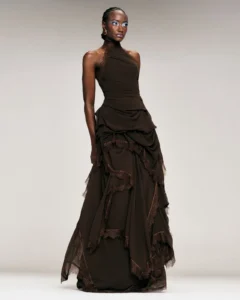
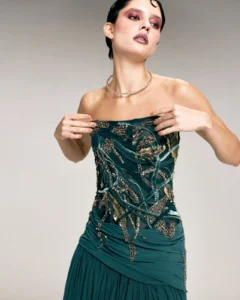
We felt there was a space missing within our universe, a brand that could be part of this woman’s life beyond her wedding day. Bohemia was created to fill that space, allowing us to explore the same woman with much more freedom, excess, and unpredictability, at completely different moments in her life.
I was curious whether that freedom came at the cost of the craftsmanship the atelier is known for.
Despite that looser spirit, you’ve maintained the same artisanal foundation across both lines. Was it difficult to translate that handmade discipline into a line built around a different kind of energy and occasion?
Bohemia has a different rhythm. The clothes need to be produced and sold more quickly, so I had to learn a new way of designing. But I realized very quickly that I could not abandon craftsmanship. The level of complexity is obviously different from bridal, but every Bohemia piece still needs to carry that artisanal language of the atelier.
Interestingly, our clients confirmed that for us. We experimented with simpler pieces in Bohemia, and they simply did not perform as well. The more complex pieces, which naturally tend to be more expensive, are consistently our bestsellers. That taught us something very important about the brand: our clients come to us precisely because they are looking for that complexity.
Building an International Presence, Independently
We spoke at length about what it actually took to expand into markets like the U.S. and Spain without the backing of a major fashion house, and whether outside investment was ever seriously on the table.
Entering markets like the U.S. and Spain usually favours brands with major fashion house infrastructure already in place. What did actually building that entry point look like on your end, practically speaking, and did you ever consider outside investment or a larger partner to make that expansion easier, or was staying fully independent always the priority?
We intentionally began approaching retailers that we felt could understand our work, and eventually we found Liza Ray in New York, a retailer interested in designers like us, with a strong emphasis on craftsmanship and complexity. We reached out; they quickly connected with the brand, and that first step into the international market happened very organically.
The possibility of outside investment has always existed in the background, but it has never been a priority. Remaining independent was more important to us. We are a self-made company, built with our own resources, so growing this way has always felt natural. I am not closed to investment in the future, particularly if it comes from people who genuinely believe in the brand and can add value to what we are building. But today, after coming this far independently, we feel very confident in what we are capable of building with our own tools.
Carrying Culture Across Borders
Given how specific her cultural references are, I wanted to know how that translates for clients who don’t share that context at all.
As you introduce your Nordeste heritage to clients in New York or Barcelona who may not share that cultural context, how do you communicate it, and does anything about the work itself adapt for those audiences, or does it travel exactly as it is?
Our focus now is very much on education, first helping international clients understand the value of the handmade and the level of craftsmanship behind each piece, but also gradually inviting them to go deeper into the cultural context of each collection.
I don’t think this happens overnight. It requires consistent storytelling and communication, and it has become an absolute focus for our team. We want the client to understand the work in layers. First, you are buying a dress. Then, you understand that you are buying a dress made by hand. And eventually, you understand that you are buying a handmade dress that also carries cultural references, stories, and a very specific point of view.
“We want to give people the tools to understand what is already there.”
That is the journey we want to take our international clients on. We don’t want to simplify or remove the cultural context to make the work easier to understand. We want to give people the tools to understand what is already there.
What Comes Next
We closed the conversation the way we usually do, by looking ahead.
Looking ahead, what does the next chapter look like for Rebeca Nepomuceno Atelier, both in terms of creative direction and international presence?
Internationally, you can expect to see Rebeca Nepomuceno in more markets beyond New York and Barcelona. We are already working toward entering Australia, a market I have a personal connection to and understand very well.
More than anything, I want our international presence to be built around a product that feels truly unique. I don’t want us to become less specific as we become more global. I want the opposite. I want someone to encounter a Rebeca Nepomuceno dress anywhere in the world and recognize that it carries a cultural perspective, a craftsmanship, and a story that they simply cannot find somewhere else.
“I don’t want us to become less specific as we become more global. I want the opposite.”
Thank you to Rebeca Nepomuceno for sharing her story with us, and to Luisa for coordinating this interview from start to finish.
FASHION LAW JOURNAL INSIDER
Join designers, brand founders and fashion lawyers who get the biggest brand battles, IP fights and career moves in fashion law, straight to their inbox.