
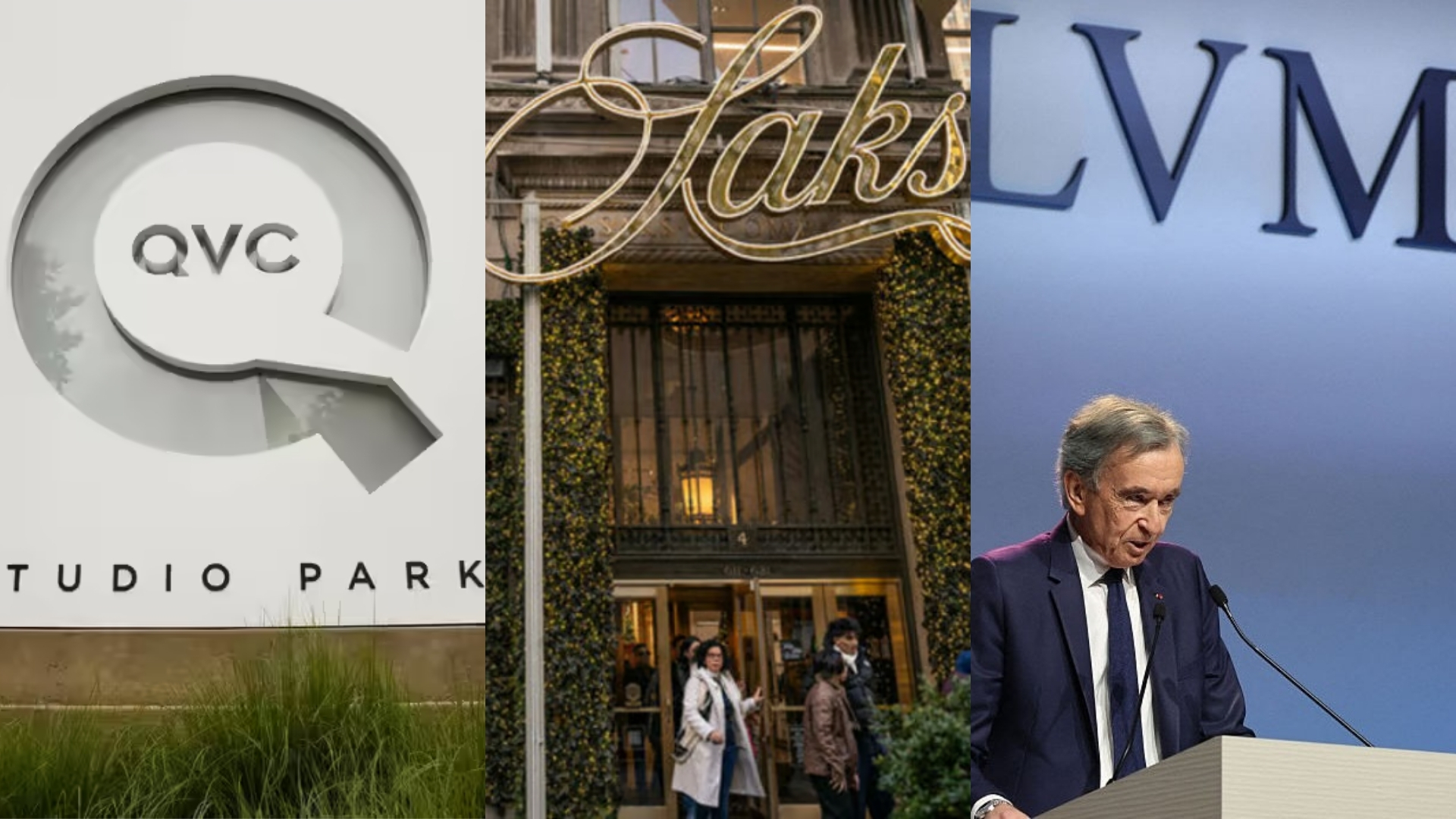
On April 17, QVC filed for Chapter 11 bankruptcy to cut more than $5 billion in debt. Earlier in the week, LVMH reported its worst quarterly results in years, with fashion and leather goods down 9% on a reported basis. And Saks Global is still working its way through Chapter 11 bankruptcy proceedings, selling its Gulfstream jet, closing discount stores, and trying to repair relationships with vendors it left unpaid for months.
Three separate stories. Three separate headlines. But if you read them together, they are describing the same thing: the American fashion retail infrastructure is under serious and sustained pressure, and the brands that depend on it are caught in the middle.
QVC: the end of a 38-year experiment
QVC launched in 1986. For almost four decades it sold fashion, beauty, and home goods to Americans through their television screens. At its peak it was genuinely powerful. Brands paid for airtime, celebrity partnerships moved product, and the model worked because it reached consumers who were not shopping in malls or boutiques.
FLJ Insider Pro is open: live fashion law jobs and internships, five career guides and two roadmaps. Early bird USD 12/month. See what's inside
That model did not survive the internet, and it especially did not survive TikTok. The company had more than $5 billion in debt at the end of 2025, nearly $1.5 billion in cash, and a viewer base that had been steadily disappearing for years. It tried to adapt. It launched 24/7 livestream programming on TikTok Shop in 2025 and picked up around one million new US customers through the platform. It was not enough. The debt load was simply too heavy for a business whose core audience had moved on.
For fashion brands that sold through QVC, this is a direct problem. The company’s bankruptcy documents list fashion labels among its creditors. The restructuring plan says it will pay vendors in full, but that is the plan. Bankruptcy proceedings have a way of producing different outcomes than plans suggest.
US fashion prices are expected to rise 17% in 2026 because of tariffs. A mid-market shopping network going bankrupt in the same year that consumers are already facing higher prices for imported clothing is not good timing for anyone.
LVMH: the luxury barometer is not reading well
LVMH is the largest luxury conglomerate in the world. When it reports, the entire industry pays attention, because its results tend to predict what is coming for everyone else. This week’s Q1 numbers were not encouraging.
Revenue came in at €19.1 billion, down 6% on a reported basis. On an organic basis, the group managed 1% growth, which tells you the underlying business is holding but currency headwinds are significant. The fashion and leather goods division, which includes Louis Vuitton and Dior and represents 48% of LVMH’s total revenue, fell 9% on a reported basis and 2% organically. Shares dropped more than 4% after the announcement.
The Middle East war knocked approximately one percentage point off organic growth. Luxury brands reported sales drops of between 30 and 50% at the Mall of the Emirates in March. The region accounts for around 6% of LVMH’s total revenue, but that is a meaningful number when you’re already dealing with a sluggish recovery in China and tariff uncertainty in the US.
There are brighter spots inside the results. Asia, excluding Japan, grew 7% organically, the best quarterly performance since late 2023. American clients shifted from slightly negative in Q4 2025 to low-to-mid single-digit positive in Q1 2026. Sephora continues to perform. But fashion, the division that LVMH is supposed to be built around, is where the pressure is most visible.
LVMH’s share price is down about 25% year to date. That is not a minor fluctuation. That is a significant erosion in market confidence in the world’s most valuable luxury company.
Saks: the ongoing mess that the industry has not finished processing
Saks Global filed for Chapter 11 in January 2026, and the proceedings are still very much in progress. This week, a court approved the sale of the company’s Gulfstream jet for $6 million. Bankruptcy lenders are expected to take full ownership, wipe away billions in debt, and exit Chapter 11 by summer. Bergdorf Goodman is staying. The Saks Fifth Avenue flagship in New York is staying. The Off 5th discount stores are largely going.
What is not resolved yet is what the Saks collapse means for the brands it left unpaid.
Chanel is owed $136 million. Kering is owed $60 million. LVMH is owed approximately $26 million. Capri Holdings, home to Michael Kors and Jimmy Choo, is owed $33 million. These are the 30 largest creditors. Behind them are smaller independent brands owed amounts that may represent a much larger share of their total revenue, with far less capacity to absorb the loss.
The restructuring plan says all vendors will be paid in full. The court-approved financing gives the company $1.75 billion to work with. But smaller vendors are being told they may need to set their own terms going forward — minimum payments before shipment, shorter payment windows — because Saks may not agree to pay them upfront. That is a fundamental change in the commercial relationship between a major department store and the brands that supply it. It shifts financial risk onto the brands, not the retailer.
What these three things have in common
QVC, Saks, and LVMH’s struggling quarter are all symptoms of the same underlying pressure. American consumers are spending differently. The middle of the market is being squeezed from both directions. Value players and true luxury houses are relatively fine. Everything in between is having a very difficult time.
QVC was the middle. Saks was the high end of the middle, pushed upmarket by the Neiman Marcus acquisition and then unable to sustain the debt that acquisition created. LVMH’s fashion division is not in the middle, but it is affected by the same geopolitical and economic conditions that are making consumers cautious.
There is also a legal dimension to all of this that the industry has not fully worked through. Vendor contracts written before the Saks bankruptcy did not account for the possibility of a $136 million unpaid bill. Wholesale agreements with major department stores rarely include the kind of credit protection clauses that would have helped brands here. This is going to change. Lawyers who work with fashion brands on wholesale contracts are already having different conversations about payment terms, credit insurance, and what happens when the retailer collapses.
The US luxury retail infrastructure looked very different five years ago. It is going to look different again five years from now. The question is how much pain happens in between.
FASHION LAW JOURNAL INSIDER
Join designers, brand founders and fashion lawyers who get the biggest brand battles, IP fights and career moves in fashion law, straight to their inbox.