

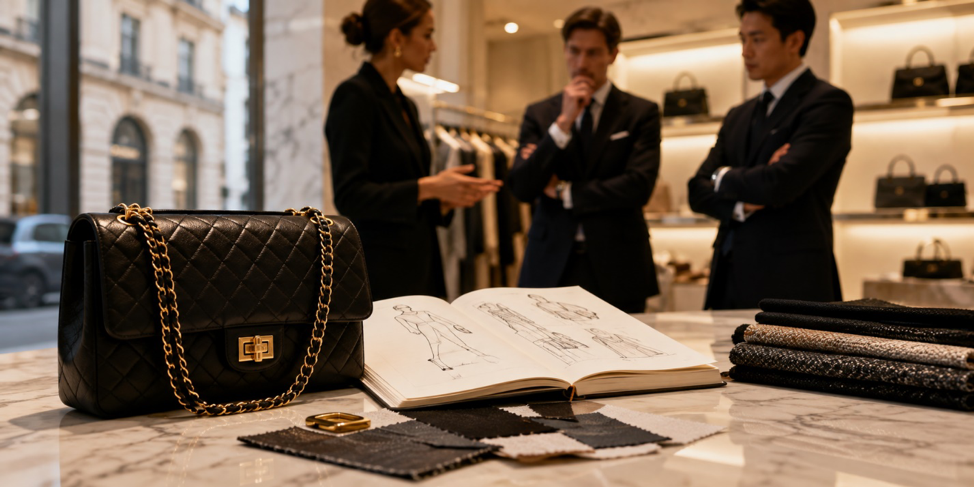
What exactly are you buying when you pay a billion dollars for a fashion brand?
The trademark? The archives? The stores? The customer base? The designer? The licensing business? The social-media following? Or the cultural relevance that makes consumers willing to pay a premium simply because a particular name appears on the product?
The question is no longer theoretical. Luxury fashion is increasingly being shaped by transactions in which brand ownership, creative direction, licensing, manufacturing and distribution can sit with different parties.
Prada’s acquisition of Versace for an enterprise value of €1.25 billion, completed in December 2025, was presented not simply as the purchase of a name but as the addition of a distinctive luxury asset with significant growth potential and opportunities to leverage Prada’s industrial, retail and operational platform.
The Tom Ford transaction offers an even more revealing example. Estée Lauder acquired the Tom Ford brand, trademarks and other intellectual property, while Zegna acquired and operated the Tom Ford fashion business under a long-term licence.
And in 2026, LVMH agreed to sell Marc Jacobs to a joint venture between WHP Global and G-III, with the structure separating IP ownership, licensing and global operations while Marc Jacobs remains creative director.
These transactions expose a fundamental question for fashion law:
When a luxury brand changes hands, what exactly is being acquired and who really controls the value behind it?
The Brand Is More Than Its Trademark
A trademark may be one of the most recognisable assets of a fashion house, but it is rarely the whole reason consumers pay a premium.
The commercial value of a luxury brand is better understood as an interconnected ecosystem.
The Fashion Value Stack
Brand Identity
Trademarks • designs • trade dress • visual language
Creative Capital
Designers • archives • aesthetic • craftsmanship • know-how
Customer Capital
Goodwill • loyalty • community • consumer relationships
Commercial Capital
Retail • distribution • licensing • collaborations • sponsorships
Cultural Capital
Heritage • reputation • celebrity • cultural relevance
→ Enterprise Value
The difficulty is that these layers do not necessarily have the same owner.
A company may own the trademark while another party controls a critical licence. A fashion house may own its designs while its creative identity depends heavily on a particular designer. A brand may possess decades of goodwill but rely on third-party distributors, manufacturers or licensing partners to convert that goodwill into revenue.
This leads to an important distinction:
Ownership ≠ Control ≠ Value.
A legal right can be owned without every commercial consequence of that right being controlled. And control of an asset does not necessarily guarantee that its underlying value will survive a change in circumstances.
The Creative Director Problem
Luxury fashion makes this particularly complicated because people can become part of the asset.
Creative directors do more than design collections. They can shape a house’s aesthetic language, cultural relevance, collaboration and relationship with consumers.
That creates an unusual transactional question:
Can a buyer acquire a fashion brand without acquiring the person who makes the brand commercially meaningful?
The answer is often found partly in contract employment arrangements, consultancy agreements, confidentiality obligations, IP ownership, licensing and succession provisions.
But contracts have limits.
A creative identity cannot always be transferred in the same way as a trademark registration. A buyer may acquire the legal rights to a brand while discovering that some of its commercial momentum was dependent upon relationships, talent or cultural relevance that cannot simply be assigned.
This is one reason the Marc Jacobs transaction is particularly interesting. The proposed structure allows the brand’s ownership, licensing and operational functions to be separated while Marc Jacobs remains creative director.
The transaction therefore illustrates something increasingly important in fashion: the person, the brand and the business can be distinct assets, even when consumers experience them as one.
The Due-Diligence Question Needs to Change
Fashion transactions traditionally require lawyers to examine familiar questions:
Are the trademarks registered?
Are the designs protected?
Are there infringement disputes?
Are licences documented?
Are assignments valid?
These questions remain essential. But they may not be enough when the commercial thesis behind an acquisition depends on intangible value.
If the buyer is paying for international growth, are the relevant rights protected in the markets that matter?
If licensing is central to the business model, can those licences survive a change of control?
If the brand’s value depends on creative leadership, what contractual arrangements preserve that relationship?
If archives are commercially significant, who owns the underlying intellectual property?
If digital engagement is central to the brand, who controls the relevant content, accounts and contractual relationships?
And perhaps most importantly:
Does the legal architecture support the assumptions that underpin the valuation?
This is where IP due diligence should evolve from a rights checklist into something closer to value due diligence.
The question is not merely what the target owns.
The question is whether the rights, contracts and relationships being acquired are sufficient to generate the economic value the buyer believes it is purchasing.
The Tom Ford Lesson
The Tom Ford transaction demonstrates how dramatically these components can be separated.
Estée Lauder acquired the Tom Ford brand and its related intellectual property, while Zegna acquired the company operating the Tom Ford fashion business and became a long-term licensee for fashion and related categories.
In other words, brand ownership and business operation did not have to reside in the same hands.
That model challenges a traditional assumption in fashion law: that a “brand” is a single commercial asset.
Increasingly, it may be more accurate to view a fashion brand as a portfolio of interconnected rights, relationships and capabilities.
The legal ownership of those components may be divided.
Their commercial value, however, remains interconnected.
From Brand Ownership to Value Ownership
This distinction matters beyond acquisitions.
It affects:
- licensing;
- joint ventures;
- investments;
- restructuring;
- succession planning;
- brand extensions;
- collaborations;
- franchising;
- international expansion.
For fashion businesses, the lesson is straightforward: protecting a trademark is essential, but protecting the ecosystem that makes the trademark valuable may be even more important.
For investors and buyers, the lesson is sharper.
The most important question during diligence may not be:
“What IP does this fashion house own?”
It may be:
“What economic value depends upon that IP, and do we actually acquire the rights and relationships necessary to preserve it?”
The Next Question for Fashion Law
Fashion law has traditionally focused on questions of ownership and infringement: who owns the trademark, who owns the design and who can stop the counterfeit.
Those questions remain fundamental.
But luxury fashion is increasingly demonstrating that legal ownership and economic value are not interchangeable concepts.
A trademark can survive a transaction. A design can survive a change in ownership. A licence can be assigned. Yet the cultural relevance, creative identity, customer loyalty and commercial relationships that made those assets valuable may not transfer with the same certainty.
That is why the next generation of fashion transactions may be less about buying brands and more about acquiring ecosystems of intangible value.
For fashion lawyers, this changes the question.
We should still ask who owns the brand.
But we should also ask who controls the creativity, relationships, contracts, distribution and cultural relevance that make the brand valuable.
Because in luxury fashion, the most valuable asset may not be the brand itself.
It may be everything that makes the brand worth buying.
FASHION LAW JOURNAL INSIDER
Join designers, brand founders and fashion lawyers who get the biggest brand battles, IP fights and career moves in fashion law, straight to their inbox.