
Every spring, the Met Gala theme tells us something even before a single celebrity walks across the carpet, before the camera flashes and before we see fashion as art. It tells us what fashion wants to talk about, what it wants us to admire, and sometimes… what it hopes we’ve forgotten.
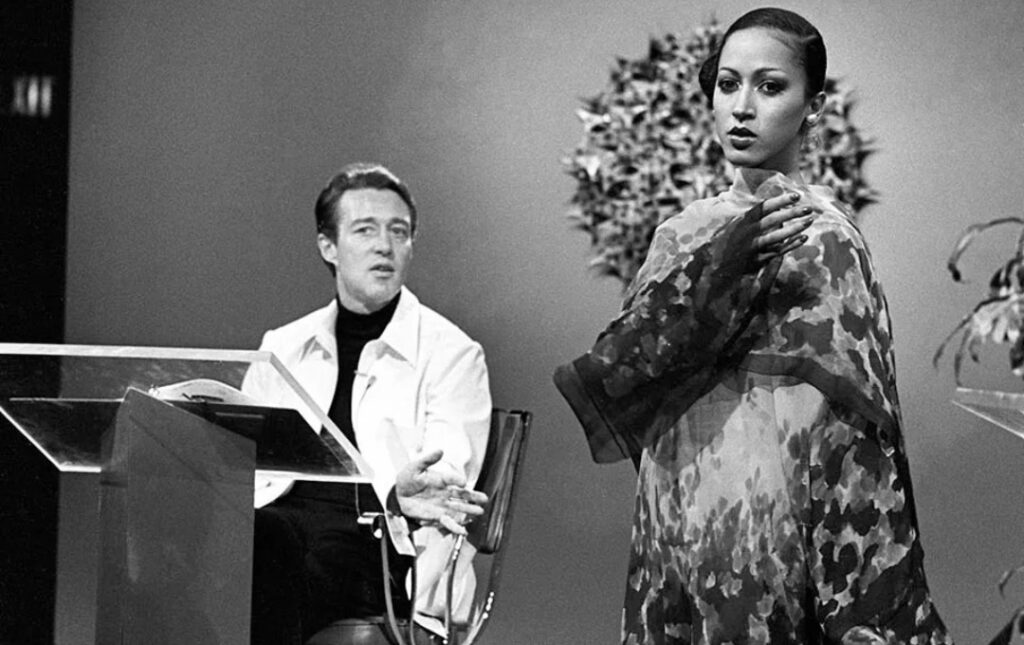
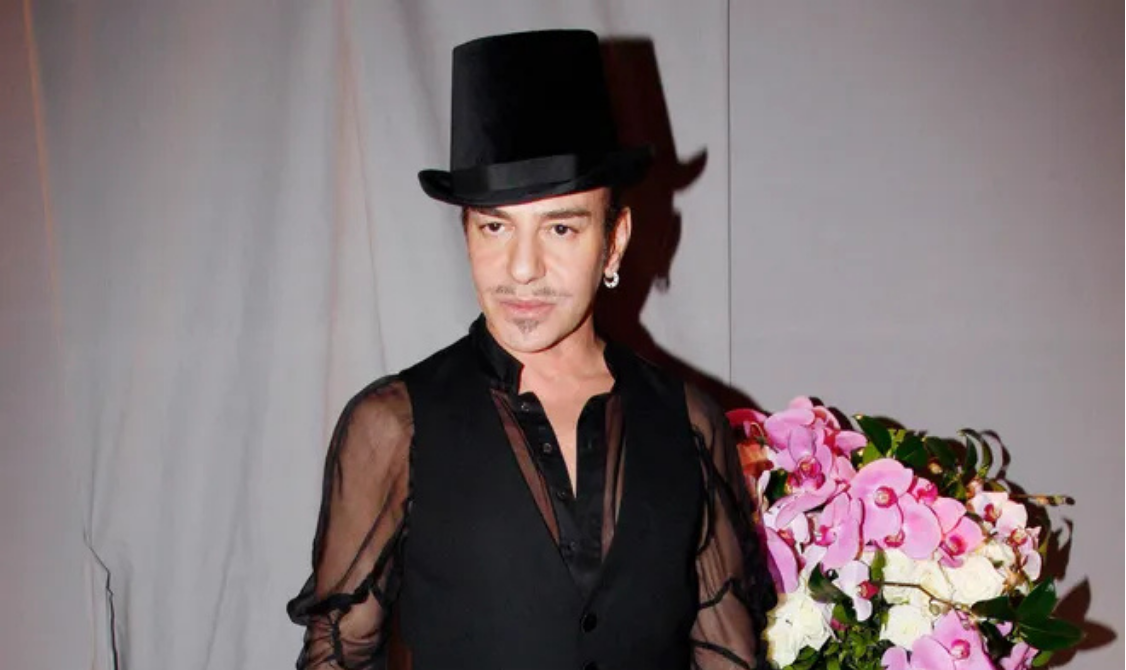
This year, the announcement for the Met Gala’s 2027 theme landed differently. On 31st July, the Costume Institute revealed that its spring 2027 exhibition will be “John Galliano: Horizons,” a full-career retrospective of the British designer whose talent once defined an era of fashion, and unfortunately, whose fall from grace nearly ended it. Only two other living designers have received this honour: Yves Saint Laurent in 1983 and Rei Kawakubo in 2017. Galliano now joins that rarefied list, and the internet has questions.
For those who need a refresher, or perhaps have simply tried to forget, or it’s just breaking news: in 2011, footage surfaced of Galliano, then creative director of Dior, launching into antisemitic and racist tirades at a Paris café. He professed his love for Hitler and targeted fellow patrons with slurs. After that incident, Dior swiftly fired him. He was then dropped by his own eponymous label. His punishment extended beyond the fashion industry. In September of 2011, Galliano was convicted of hate crimes by a French court. He was then fined €6,000, which would be about a whopping $8,300 today. His career, which was once seemingly untouchable, collapsed within days.
Now, sixteen years later, the Met wants to give him a solo show… let’s talk about that doozy.
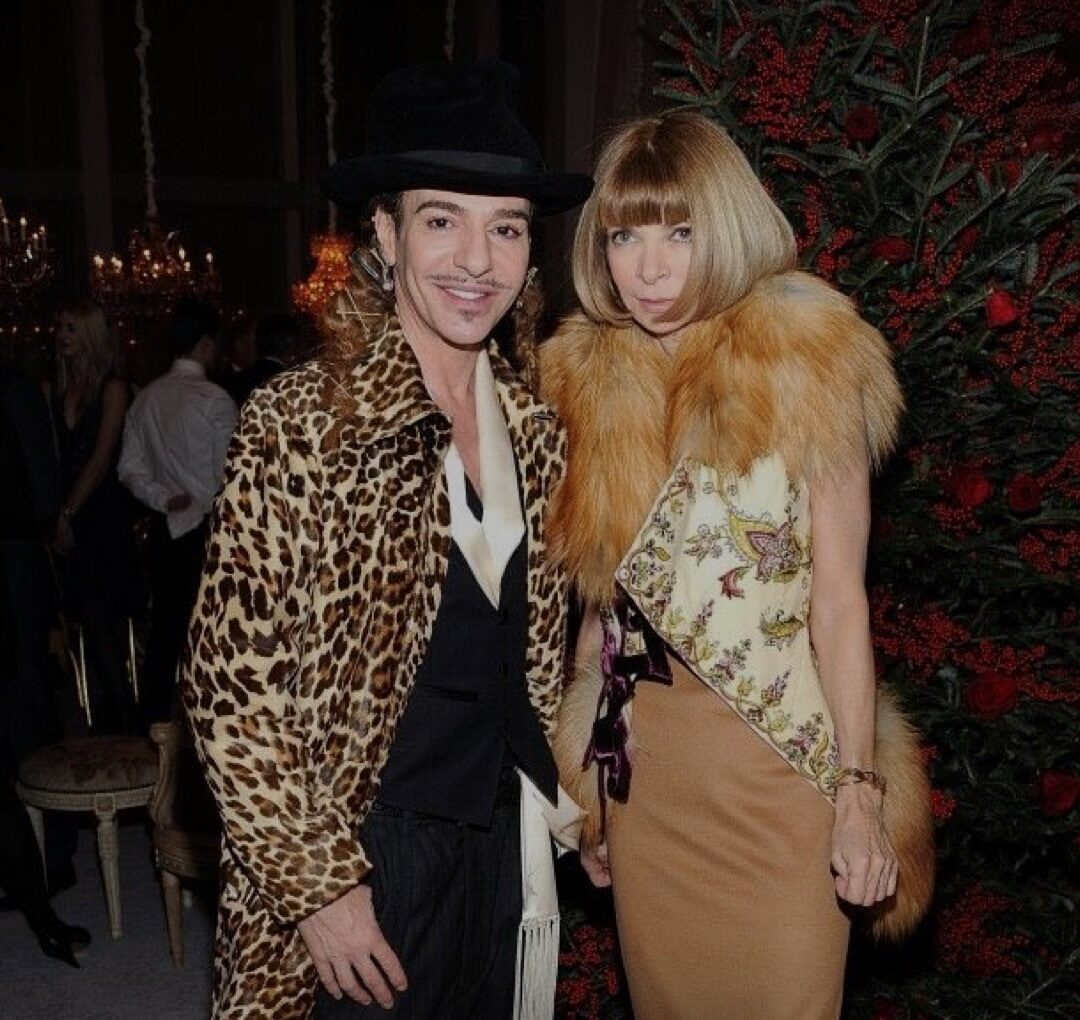
Anna Wintour, never one to dodge a headline, addressed the decision directly. “He’s a great designer and his career isn’t defined by a moment,” she said, “something that he will live with for the rest of his life.” The Met has promised the exhibition “won’t shy away from any of the darkness in John’s past” and will “grapple with all of it,” including what the museum itself has termed the “rupture caused by his antisemitic, racist, and anti-Asian conduct.” Wintour stated, “There is no one more deserving of an exhibition of this scale than John Galliano.”
It’s a careful choice of words. Rupture, not redemption. Reckoning, not rehabilitation. The Met seems to understand it is walking a tightrope, and the backlash suggests plenty of people think it’s already lost its footing; and rightly so.
I find myself thinking less about whether Galliano deserves this moment, and more about what our reaction reveals about how selectively we extend grace within fashion. This industry has never struggled to forgive talent. It has simply been very particular about whose talent earns forgiveness, and on what or whose timeline.
Consider how quickly fashion rehabilitates the men behind the clothes when the clothes are beautiful enough. Consider how differently that grace flows when the person seeking it holds less power, less prestige, fewer decades of genius already banked in the cultural ledger. Galliano gets a Costume Institute retrospective. A young designer caught in a single controversial tweet might never work again (cancel culture, amiright?). Basically, the industry’s memory isn’t short; it’s just selective. And it tends to remember loyalty to talent far more vividly than it remembers harm to the people that talent targeted.
There is also something particularly fashion about the framing itself: horizons. Forward movement. A gaze fixed determinedly ahead rather than on what’s directly behind. It’s a word chosen, I suspect, to signal growth without quite requiring the discomfort of dwelling. Whether an exhibition can hold both artistic celebration and honest reckoning within the same walls, without the reckoning becoming mere décor around the real spectacle, remains to be seen.
What strikes me most is the confidence (and audacity) of doing this at the Met Gala: an event built entirely on spectacle, celebrity, and carefully engineered desirability. This is not a quiet academic symposium on accountability in fashion. It is the industry’s most photographed night, livestreamed to millions, where a designer’s darkest chapter will share the same room as sequins, champagne, and the year’s most-discussed red carpet looks. Whatever reckoning the Met promises will have to compete with flashbulbs.
Perhaps that tension is precisely the point. Fashion has always been an uneasy vessel for moral clarity. It sells artistic transformation and reinvention as its core products, so of course it would eventually be drawn to the ultimate reinvention story:
a genius who fell, and now, apparently, rises again.
The industry loves nothing more than a comeback narrative; especially one it gets to beautifully script, curate, and light.
But redemption arcs work best between the pages of a fiction novel, where the writer controls every variable and every lens, including how much the audience is allowed to forget. In reality, redemption is messier, and in the real world, people notice well-placed Mandela Effects. Redemption requires the people who were harmed to have a voice in the process, and not just the institution doing the honouring. It requires consequences that meaningfully preceded the comeback, not simply time passing while talent waited quietly in the wings. Whether Galliano’s sixteen years since 2011 constitute genuine accountability, or simply a long enough pause for public memory to soften, is a question the exhibition itself will have to answer, and one no press release can settle in advance.
What the 2027 Met Gala theme ultimately reveals isn’t really about Galliano at all. It’s about us, and what we’re willing to overlook when genius is on offer.
Fashion has always been a mirror for the values, anxieties, and contradictions of its moment. And this choice reflects one of the industry’s oldest, most uncomfortable truths: talent has always bought forgiveness faster than character ever could.
Whether that’s a truth we’re finally ready to sit with, or one we’ll simply admire from the red carpet, we’ll find out come May.
FASHION LAW JOURNAL INSIDER
Join designers, brand founders and fashion lawyers who get the biggest brand battles, IP fights and career moves in fashion law, straight to their inbox.