
The Name Remains. The House is Gone.
What bankruptcy law protects in a fashion house, and what it quietly lets die.
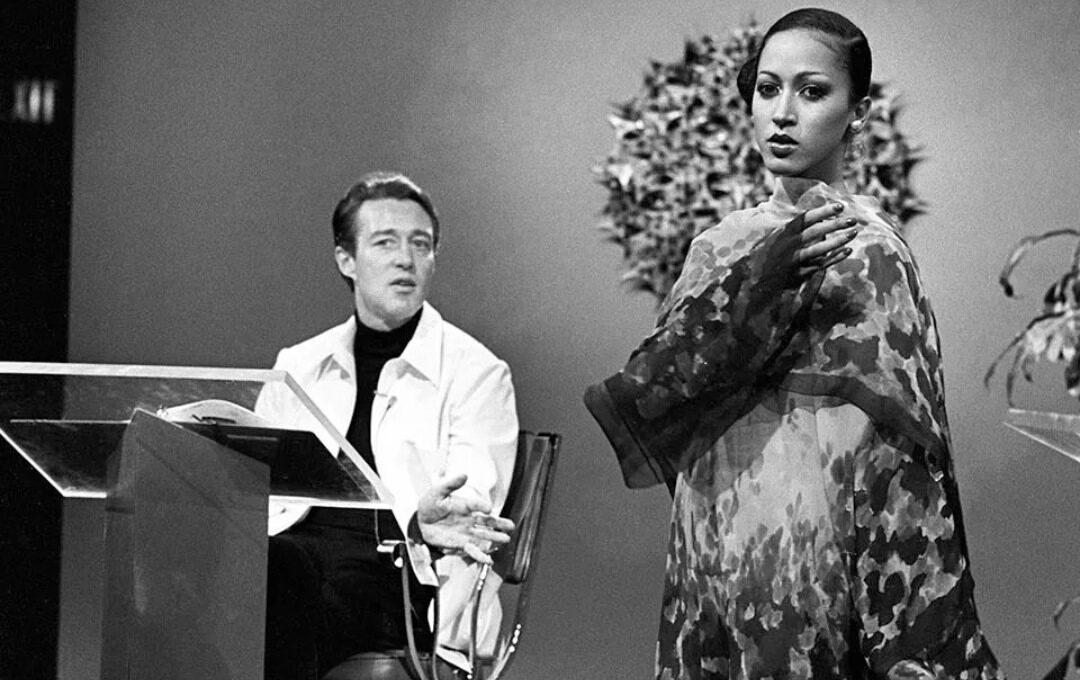
In 1984, Roy Halston Frowick — the man who had dressed Jackie Kennedy, Liza Minnelli, and roughly the entire population of Studio 54- was banned from entering his own offices. Not by a court injunction. Not by a restraining order. By a conglomerate. The brand bore his name. The building bore his aesthetic. The clothes, arguably, bore his soul. And yet, under the perfectly sensible, perfectly legal mechanics of a corporate acquisition, Halston the person had become entirely separable from Halston the trademark. He tried to buy back his name. He was unsuccessful. He spent the last years of his life designing costumes for a dance company, legally prohibited from signing his name to anything else. He died in 1990. The brand continued, cheerfully, without him.
This is not a cautionary tale about the perils of signing bad contracts, though Halston did sign a bad contract. It is a story about a legal system that looked at one of the most culturally significant fashion brands in American history and saw, with complete accuracy, a portfolio of transferable intellectual property assets. Trademarks. Licensing agreements. Fragrance rights. Everything measurable. Everything is movable. The law was not wrong. It just had absolutely nothing to say about everything else.
What the Law Actually Buys When It Buys a Fashion House
Let us be precise about what transfers in a distress acquisition or bankruptcy sale, because precision is where the interesting problems live. Intellectual property law hands over the trademark — the word, the logo, the trade dress, the signature silhouette if it has been registered. Insolvency law adds the physical archive, the supplier contracts, the real estate leases, the inventory. A thorough acquirer might also pick up the creative director’s employment agreement, the atelier’s equipment, and whatever remains of the goodwill on the balance sheet.
What does not transfer, because there is no legal instrument designed to transfer it: the point of view. The aesthetic sensibility that made the house worth acquiring in the first place. The relationship between a creative vision and the cultural moment it was in conversation with. These things are not intangible in the poetic sense. They are intangible in the very specific legal sense that no existing IP framework has a category for them. You cannot trademark a philosophy. You cannot file a design patent on a way of seeing. You cannot list “irreplaceable creative DNA” as a recoverable asset in Chapter 11 proceedings, however strongly you might feel about its value.
The gap between what the law transfers and what actually constitutes a fashion house is not a small gap. It is, in many cases, the entire point of the house.
Ghost Brands, or: The Trademark That Outlived the Idea
There is a particular species of fashion tragedy that deserves its own taxonomy. Call it the ghost brand: a house that survived every legal test and failed every creative one. The trademark is registered. The website is live. The collections arrive on schedule. And yet something that everyone in the room can feel but nobody can legally name has departed, quietly, through a side door, during one of the corporate restructurings.
Halston is the archetype, but the genus is wide. The mechanisms vary — sometimes it is a private equity acquisition that demands margin expansion above all else, sometimes a conglomerate that bought the name as a licensing vehicle and never intended to steward the vision, sometimes simply a founder forced out by the very investors who needed their cachet to justify the valuation. The outcome is recognisably similar: a brand whose name carries cultural memory that the current product cannot honour. Consumers feel it before analysts report it. Critics write elegies while the press releases announce exciting new chapters.
The cruel efficiency of this process is that it is entirely legal. No fraud was committed. No rights were violated. The trademark was properly maintained, the collections properly produced, the filing deadlines met. The law performed exactly as designed. It is just that nobody designed the law with a fashion house in mind.
The Rescue, or: When One Man’s Instincts Did What the Law Could Not
In 2006, Diego Della Valle — the Italian industrialist behind Tod’s, a man whose primary business is making extremely well-constructed shoes — quietly purchased the rights to the house of Schiaparelli. Elsa Schiaparelli had closed her Paris atelier in 1954. The name had spent fifty-two years in a kind of legal limbo: owned, filed, renewed, but creatively inert. It was intellectual property in the purest and most melancholy sense of the term.
What Della Valle did next is instructive precisely because it was not legally required of him. He reopened the original atelier at Place Vendôme. He spoke publicly — and at some length — about heritage, preservation, and cultural responsibility. He did not immediately announce a diffusion line, a fragrance deal, or a collaboration with a fast-fashion retailer. He took his time. He cycled through creative directors with the patience of someone who understood that getting the appointment wrong was more expensive than getting it late. When Daniel Roseberry arrived in 2019, the house found a voice that was recognisably descended from Elsa’s surrealist provocation without being imprisoned by it.
Schiaparelli is, by most measures, a successful rescue. It is also a rescue that succeeded because one individual happened to have both the capital and the cultural instincts to treat a dormant fashion house as something other than an asset to be optimised. The law had nothing to do with it. There is no legal instrument that required Della Valle to reopen Place Vendôme, or to think carefully about creative succession, or to resist the temptation of immediate commercial scale. He did these things because he wanted to. The framework that should have encouraged or protected these choices simply does not exist.
The Question Nobody in Law Has Bothered to Ask
Here is the doctrinal problem, stated plainly: every legal framework that touches a fashion house in distress — trademark law, copyright law, insolvency law, M&A regulation — was designed for something else. Trademark law was designed to prevent consumer confusion. Copyright law was designed to protect expression, not vision. Insolvency law was designed to satisfy creditors in an orderly hierarchy. None of them was designed to ask whether the thing being transferred, dissolved, or restructured has a cultural dimension that the transaction cannot adequately account for.
Some jurisdictions gesture at this problem without solving it. France has the concept of droit moral — a set of moral rights that attach to the creator of a work and cannot be transferred even when the economic rights are sold. An artist retains the right to object to distortion or mutilation of their work. In theory, a designer might invoke this to protest what a new owner does to their archive or their aesthetic legacy. In practice, droit moral has never been robustly applied to the ongoing creative direction of a fashion house, and it would be a significant stretch to read it that way. French cultural heritage law protects buildings, objects, and artisanal techniques with far more specificity than it protects the living creative identity of a maison.
The closest analogy that actually has legal teeth is the Geographical Indication, which protects products whose character is inseparably linked to their place of origin. A Champagne house cannot move to Ohio and continue calling its product Champagne. The geography is legally protected because the product is understood to be an expression of that geography. One could construct a parallel argument for the creative identity of a fashion house: that a Schiaparelli without surrealism is not, in any meaningful sense, Schiaparelli. But no court has been asked to make that argument, and no legislature has codified it.
The gap is real. The problem is real. And the fact that it has not been addressed is not because it is too small to matter, but because the people who could address it have not yet decided it is their problem to solve.
A Modest Provocation in Closing
Fashion has always been better than law at knowing when something is over. The industry felt what happened to Halston before any court could have articulated the cause of action. It recognised the Schiaparelli revival as genuine before any regulatory framework had a category for genuine. It mourns its lost houses with a fidelity that the legal system, which continues to consider their trademarks very much alive, does not share.
What is needed is not a grand new statute, though a grand new statute would be welcome. What is needed, first, is vocabulary. A way of naming what is lost when a fashion house is legally preserved but creatively extinguished. A recognition, within whatever framework one prefers, that the asset being acquired is not only what can be registered, valued, and transferred — but also what can be felt, grieved, and, on rare occasions, revived.
Halston designed costumes for a dance company in the last years of his life because it was the only creative work his own name could not be taken from him on. That is, in the most precise sense of the term, a legal problem.
The law has not noticed yet. It should.
FASHION LAW JOURNAL INSIDER
Join designers, brand founders and fashion lawyers who get the biggest brand battles, IP fights and career moves in fashion law, straight to their inbox.