
Imagine you are scrolling Instagram when your favourite fashion creator posts the perfect pair of shoes for your next Friday night out.
You trust her taste, so you tap her link and add them to your cart.
She made the sale. Her affiliate link should earn her the commission.
But as you check out, Phia allegedly opens a background tab and swaps the affiliate credit for its own. You never saw it. You never clicked it.
FLJ Insider Pro is open: live fashion law jobs and internships, five career guides and two roadmaps. Early bird USD 12/month. See what's inside
By the time you press “pay now”, the retailer’s system may no longer see the creator as the person who referred the sale. It sees Phia.
Phia can then receive the commission for a purchase it played no meaningful role in generating, while the creator who actually influenced you receives nothing. Nada.
Brooke Moody, retail and AI strategist at Amazon Web Services (AWS), describes it perfectly: “The industry calls it cookie stuffing. Any girl who’s worked a commission retail floor knows it by another name: the assistant who never served you leaning over the register to punch her staff number into your sale.”
The Phia scandal, explained.
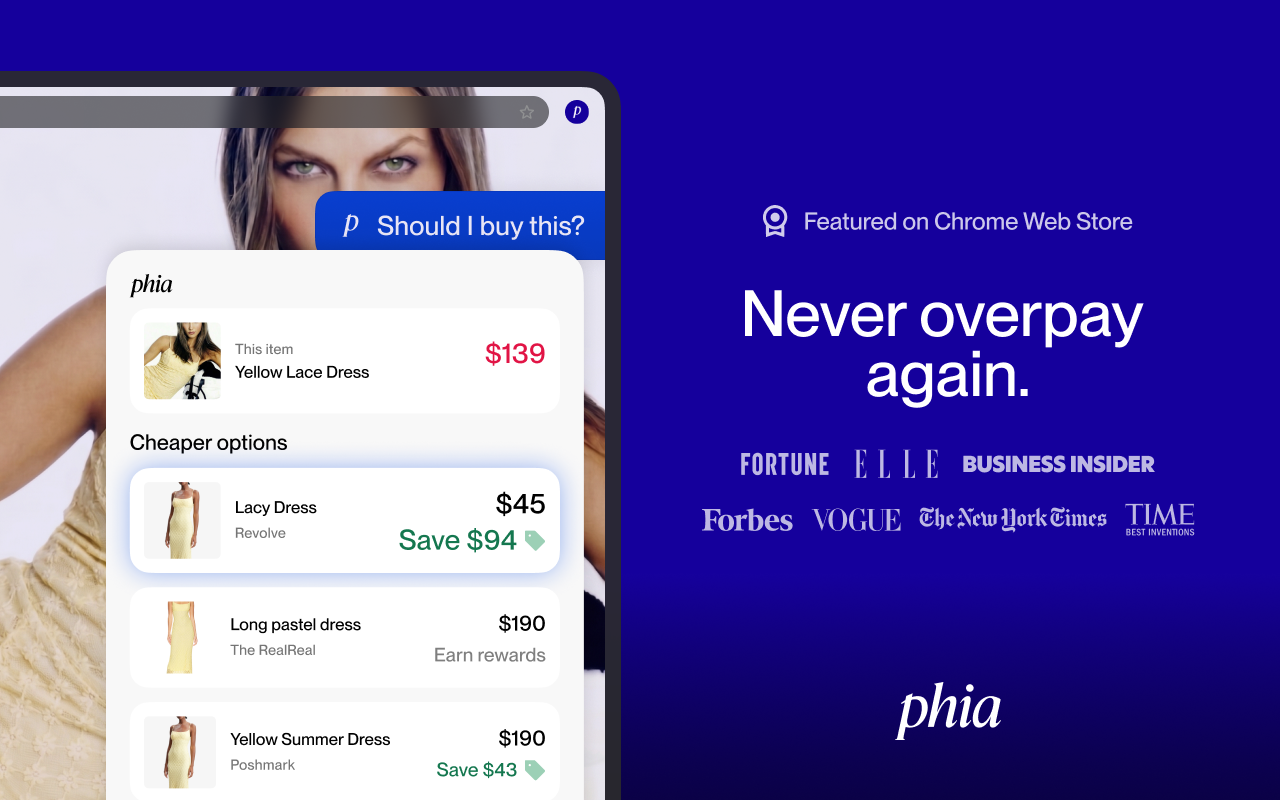
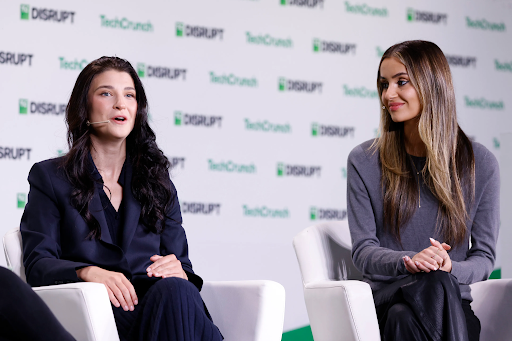
Founded by Phoebe Gates and Sophia Kianni, Phia is an AI-powered shopping app and browser extension marketed as “Google Flights for fashion”. It helps shoppers compare prices across retailers and resale platforms, find cheaper alternatives and apply discount codes.
In July 2026, Bloomberg reported that Phia was claiming affiliate credit for sales it had not driven. Tests across more than 50 retail websites reportedly showed its extension triggering Phia’s affiliate code at checkout, including where another publisher had referred the shopper.
Independent researcher and lawyer Ben Edelman reported similar “forced clicks” and failures to stand down when another affiliate had already referred the shopper. Phia told Bloomberg that code in a recent release caused misattributions for a subset of users and had been fixed. Bloomberg later found the reported behaviour had stopped. Impact.com, a leading affiliate and influencer platform, suspended Phia following the allegations.
The immediate dispute concerns affiliate attribution. Retailers may pay commission for sales a platform did not generate, while creators who genuinely influenced those purchases lose out on the credit.
But its wider significance lies in the question raised by one of the first major scandals of the agentic shopping era: who is my AI shopper really working for?
The trust problem
Phia promised to be your next best friend.
The friend who would come shopping with you, compare prices and make sure you never overpaid.
Instead, users describe something closer to an annoying distant aunt hovering over your shoulder: pop-over after pop-over, interrupting your shopping and offering little value in return. Moody described its search as rudimentary, and its price comparisons were often wrong. In her words, the bad user experience was the tell.
If Phia’s priority was receiving affiliate credit, its search did not need to be exceptional, and its price comparisons did not need to be perfect. The extension only needed to be useful enough for you to install it and leave it running until checkout.
Put another way, your ‘friend’ only needed to stay close enough to you to get paid.
This matters because consumers now discover fashion through resale marketplaces, influencers, browser extensions, personalised rankings and AI shopping assistants. These services determine which products are visible and which option is presented as the best.
As digital shopping moves towards agentic AI, that influence will only grow.
Australia’s consumer watchdog, the Australian Competition and Consumer Commission (ACCC), has been preparing for this moment.
The ACCC’s Digital Platform Services Inquiry found that consumers often do not understand why certain products appear at the top of their search results. Only 29 per cent of surveyed online marketplace users believed platforms clearly explained how products were ranked and displayed.
The ACCC also warned that marketplaces may have the ability and incentive to favour their own products through algorithms, rankings or badges. Consumers, however, may assume those results are based on what they searched for or what best meets their needs.
That concern becomes more significant with AI shopping. In Australia, THE ICONIC has begun integrating with Google’s Universal Commerce Protocol. Selected products from AERE, Atmos&Here and Dazie can be discovered through Google Search and Gemini, with shoppers able to complete a single-item purchase through Google’s checkout. Adore Beauty, Bunnings, Kogan and Petbarn were also announced as early Australian launch partners.
The ACCC found that recommender systems can use consumer data and behaviour to personalise, package and present choices, while their underlying operation remains difficult for consumers and regulators to understand. It also noted that AI was already being integrated into online shopping through AI-generated shopping guides, conversational search and AI-assisted ranking.
In agentic shopping, the shelf disappears. You may see one recommendation and one “buy” button, but not what was excluded, how the result was ranked or whether commercial incentives shaped it. When your AI shopper chooses one product over another, is it working for you or answering to a hidden boss?
What fashion tech startups should learn from Phia?
The lesson from Phia is not that affiliate marketing is incompatible with AI shopping. It is that commercial incentives cannot remain invisible when a platform presents itself as acting for the consumer.
Fashion tech startups should be able to explain how products are ranked, what retailers are included in a comparison and whether commissions influence recommendations. Claims such as “best price” or “best pick” must be capable of substantiation.
Affiliate tracking should only be activated by genuine consumer action, while data collection should be limited to what the service actually needs.
As AI shopping moves from tools that help consumers choose to agents that can choose and purchase for them, consumer trust will become a competitive advantage.
Your AI shopper has a boss. Consumers deserve to know who.
Disclaimer: This article reflects the author’s views and does not represent Fashion Law Journal’s position. Nothing herein constitutes legal advice. Readers should consult qualified counsel for advice specific to their circumstances.
FASHION LAW JOURNAL INSIDER
Join designers, brand founders and fashion lawyers who get the biggest brand battles, IP fights and career moves in fashion law, straight to their inbox.