
When an “affordable AP” turns out to be a pocket watch, the resale market moves first, and the legal questions follow.
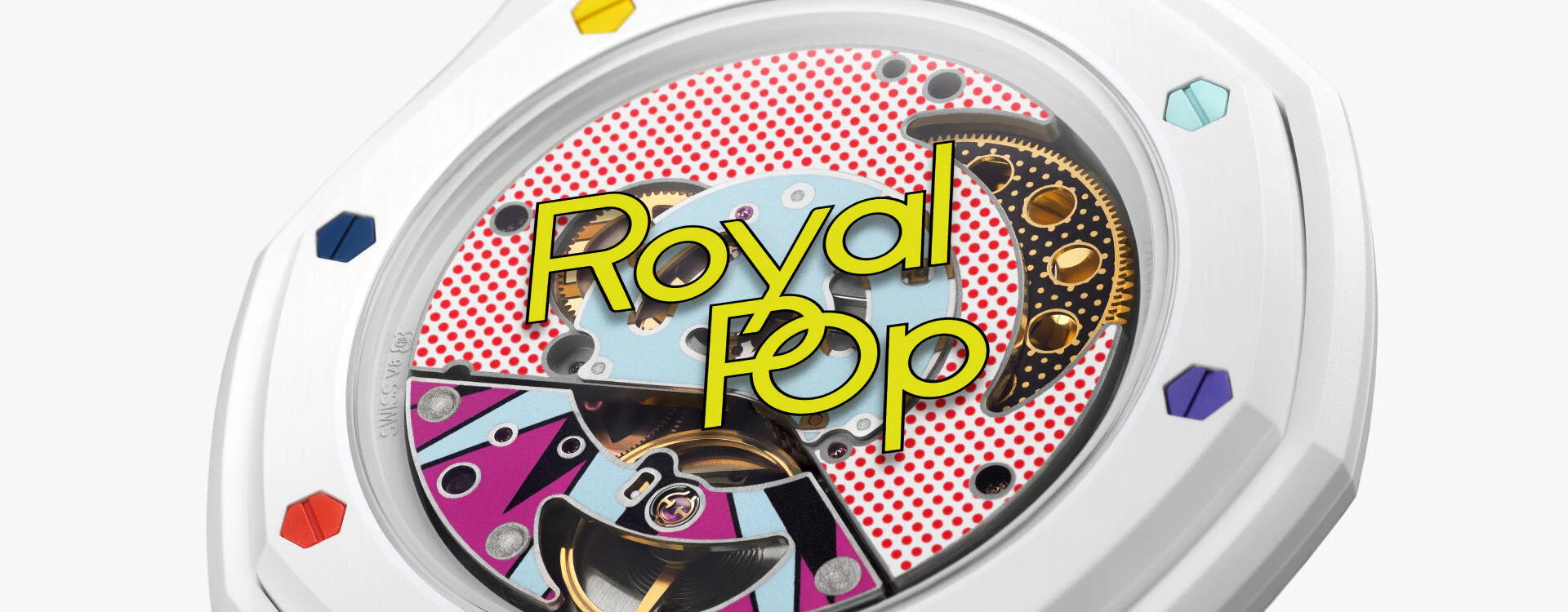
The Swatch x Audemars Piguet collaboration was never going to land quietly. The second those two names appeared in the same sentence, the internet did what it always does with luxury-adjacent drops: it projected desire, inflated expectations, and converted anticipation into a market before most people had even seen the product in person. Swatch x Ap’s Royal Pop collection launched on May 16 as a set of eight bioceramic pocket watches combining Audemars Piguet’s Royal Oak design language with Swatch’s vintage POP concept, complete with hand-wound SISTEM51 movements, lanyards, and styling accessories.
That should have settled the matter.
It did not.
For a large part of the audience, “AP x Swatch” still read as shorthand for one thing: a relatively accessible gateway into Royal Oak symbolism. That expectation, even if not fully grounded in the product description, was powerful enough to create queues, panic, and immediate resale behaviour around a release that was expressly framed as a pocket-watch-style object rather than a standard wristwatch.

Swatch itself warned of crowd management issues, capped purchases at one watch per person per store per day, and noted that in some markets, queues beyond a certain size might not be accepted.
And that is where this stops being merely a watch story and becomes a fashion law story.
Because the most interesting part of Royal Pop is what people tried to do with the product once they got close to it: flip it, reframe it, upgrade it, and in some cases, imagine turning it into something commercially more desirable than what Swatch had actually sold.
That afterlife matters. In legal terms, the line between legitimate resale and problematic remarketing is often much thinner than consumers assume.
The Misunderstanding was Cultural
On paper, the product was clearly described. Swatch called the collection a run of “statement-making pocket watches designed for endless creative styling,” available only at selected stores, with accessories sold online. The watches came in Lépine and Savonnette formats, were designed to be worn or displayed in different ways, and were positioned as a playful collision of Pop Art, Royal Oak references, and Swatch’s own archive.

But product descriptions do not operate in a vacuum.
In the luxury and fashion ecosystem, consumers often respond not to what a product technically is, but to what the brand pairing culturally signifies.
“Audemars Piguet x Swatch” circulated online less as a nuanced design proposition and more as a fantasy of access.
That is what made the reaction so intense. The object may have been a pocket watch, but the desire around it was wristwatch desire: recognisability, status, scarcity, and proximity to an otherwise unreachable icon.
That gap between product reality and consumer expectation is important because it explains why the resale market kicked in so quickly. When a product disappoints a practical use case but still carries symbolic value, it often becomes even more attractive as a collectible or speculative asset. It no longer needs to function in the way people originally imagined. It only needs to retain enough brand heat to command a premium.
Hype is not separate from the resale economy. It feeds it.
That is exactly what happened here. Reports following the launch described significant secondary-market activity, with pieces and even full sets appearing quickly on resale platforms at prices far above retail. Reuters reported that the launch triggered a consumer frenzy as resale prices climbed, while other coverage noted that a full set of eight Royal Pop models sold for more than five times on the secondary market. Other reports said people lined up in major cities, and some aftermarket accessories were already being sold to turn the pocket-watch-style pieces into wristwatches.
This exposes a basic truth about contemporary drop culture: hype is emotional energy, but it is also infrastructure for profit.
Scarcity, real or perceived, creates a chain reaction. First come the fans, then the flippers, then the content creators, then the aftermarket sellers offering ways to “improve” or reinterpret the product. The object enters circulation almost immediately as both a cultural sign and a monetisable asset.
So asking whether Royal Pop is “real hype” or just “money-making” misses the point. In modern fashion and luxury drops, those two things are often inseparable.
Hype is what gives the resale economy its speed. The resale economy is what gives hype its measurable price. One legitimises the other.
From a legal standpoint, simple resale of a genuine product is usually not the problem. Once a branded good is lawfully sold, the buyer can generally resell it. That is the logic underlying the principle of exhaustion, also known in some systems as the first sale. The trademark owner’s control over distribution is not limitless after an authorised sale. But exhaustion is not a blank cheque. It protects resale, not every commercial reinvention of the product.
Reselling is one thing. Re-engineering brand meaning is another.
This is where fashion law starts to get much more interesting.
The moment a reseller or customiser goes beyond simply selling the original item and begins altering it, repackaging it, or presenting it as a commercially enhanced version, the legal analysis shifts.
The question is no longer only whether the underlying product is authentic. The question becomes whether the altered product is being marketed in a way that creates confusion, false association, or unfair commercial advantage built on the original brand’s goodwill.
That distinction has been tested directly in the watch industry. In a landmark 2024 decision, the Swiss Federal Supreme Court addressed a dispute involving Rolex and Artisans de Genève, a company known for customising luxury watches. The Court drew a careful line: customisation carried out at the request of an owner for the owner’s personal use could continue, but marketing or advertising modified branded watches in commerce without the trademark owner’s consent was treated as legally problematic.
The principle behind that ruling is not difficult to understand. A customer may have broad freedom to alter a product already owned, and a service provider may, in some cases, help facilitate that alteration. But when a business acquires branded products, modifies them, and then puts them back on the market while still trading on the original brand identity, the conduct starts to look less like private personalisation and more like unauthorised commercial exploitation of a trademark.
That is precisely why Royal Pop is such a useful case study. If an individual buyer chooses to experiment with straps, housings, or alternative ways to wear the watch for personal use, that is one category of conduct. If aftermarket sellers begin buying units, adapting them into wristwatch-style products, and marketing them in a way that leans heavily on “AP x Swatch” cachet, that is another.
The first sits closer to personal use. The second edges toward remarketing.
Customisation is where resale culture enters the legal grey zone
The appeal of customisation is easy to understand. It promises individuality in a market built on mass desire. It lets consumers believe they are not merely buying a hyped object but finishing it, elevating it, or making it more truly their own.
In fashion terms, it sounds creative. In commercial terms, it sounds like value addition. In legal terms, it can become messy very quickly.
The law does not treat all customisation equally. A private one-off service requested by a product owner is very different from a repeat commercial model built around modified branded goods. Courts and trademark owners are especially sensitive to the second model because it risks creating confusion over source, approval, collaboration, or sponsorship. Even where no one literally claims that the original brand authorised the modification, the overall presentation can still suggest endorsement.
That is why language matters so much in resale and aftermarket spaces. A seller may think it is harmless to market a modified Royal Pop as a more wearable, more functional, or more desirable version of the original. But if the marketing leans on Audemars Piguet prestige, Royal Oak associations, or the aura of the official collaboration while simultaneously changing the product’s form, it begins to extract commercial value from the trademark in a new way. That is still resale, but it also becomes the creation of a downstream product identity using someone else’s brand equity as fuel.
And this is exactly the kind of behaviour that fashion law has to watch closely.
In sectors driven by visual codes and symbolic value, infringement disputes rarely arise only from direct copying. They often arise from proximity; being close enough to a famous mark to borrow its cultural force while insisting the use is technically independent.
The real lesson of The Royal Pop
The Swatch x Audemars Piguet release says something larger about where fashion, watches, and culture are now. Ownership is no longer always the endpoint of desire. For a growing part of the market, acquiring the object is simply the first step in a longer chain of monetisation: resale, content, collecting, modification, or conversion into something else. The product is valuable not only for what it is, but for what it allows people to do next.

That is why Royal Pop became bigger than its own design brief almost immediately. Swatch introduced a playful pocket-watch-style collaboration with strong archival references and strict purchase controls. The market responded by treating it as a scarcity event, a status object, and a possible raw material for further commercial creativity.
And that is where the law draws its line. Buyers can generally resell what they lawfully own. They may, in some circumstances, customise it for personal use. But once the product is pushed back into commerce in modified form, supported by branding cues that trade on the original mark’s reputation, the legal comfort disappears.
In that sense, Royal Pop is a reminder that the most valuable thing in fashion and luxury is rarely the object alone. It is the brand meaning attached to it.
And in the resale economy, everyone wants a share of that meaning; fans, flippers, customisers, and platforms alike.
The law’s job is to decide how far they can go before enthusiasm becomes exploitation.
FASHION LAW JOURNAL INSIDER
Join designers, brand founders and fashion lawyers who get the biggest brand battles, IP fights and career moves in fashion law, straight to their inbox.