
The Festival de Cannes is the most-watched cultural event on earth. It is also, quietly, one of the most governed. This is the story of what happens when glamour meets jurisdiction — and glamour, mostly, complies.
On the Croisette, every sequin is a statement — but it is the law, quietly backstage, that decides who steps forward and who steps aside.
Nobody tells you, the first time you go to Cannes, that glamour is a regulated industry.
You find out the way most people find out things in France — not through an announcement, but through an encounter with a very polite, very firm official who informs you that your bag is too large, your dress is too sheer, or your phone is pointed in the wrong direction. Welcome to the Festival. Please enjoy the cinema. And kindly put that away.
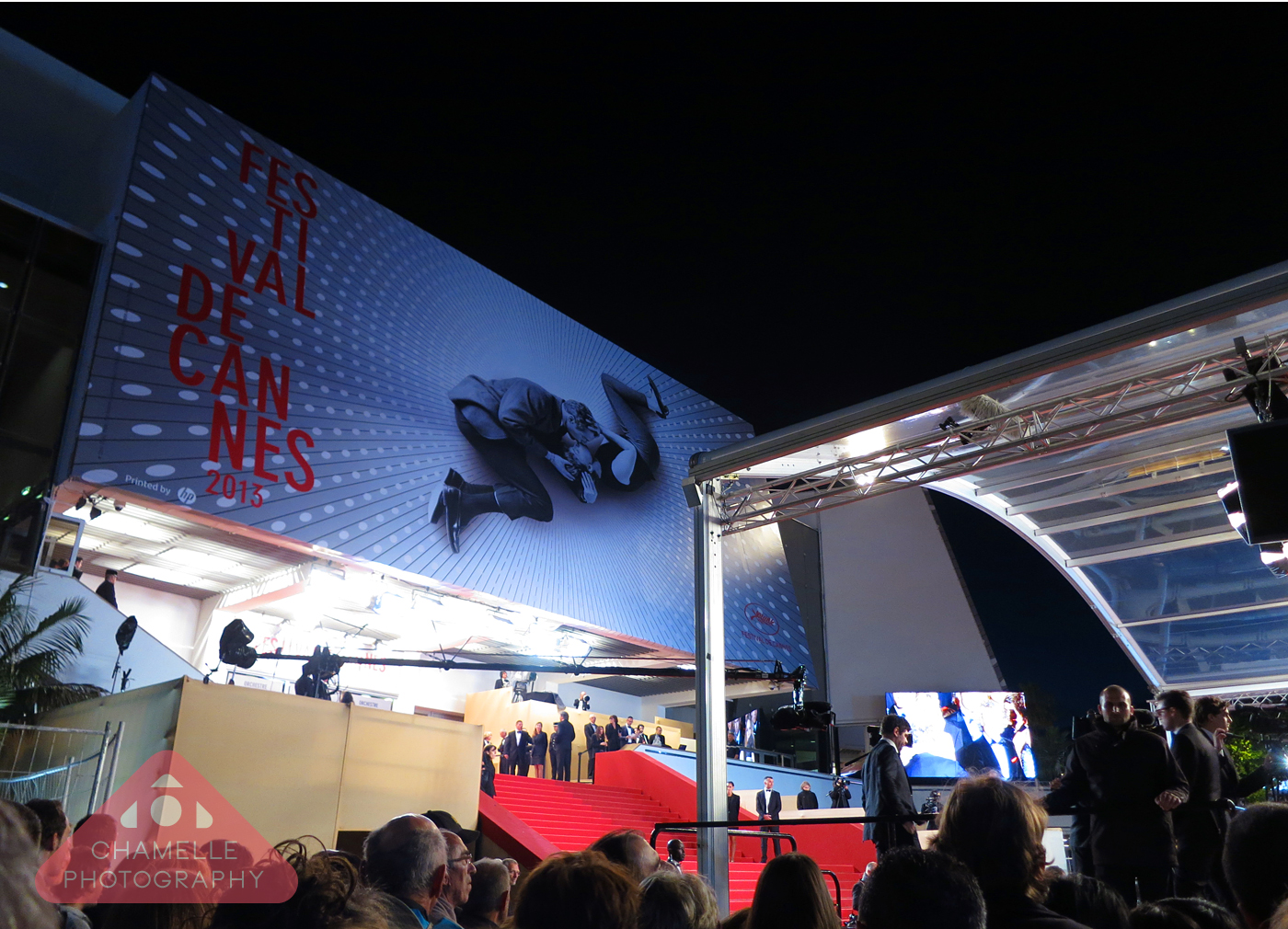
The red carpet at the Festival de Cannes is not simply a strip of crimson fabric laid down for photographs. It is, in the truest legal sense, a controlled zone, and France, a country that has never once been shy about its love of both haute couture and highly codified civil law, makes absolutely certain that everyone who walks it understands the terms. Think of it as the Napoleonic Code in a tuxedo. Or, for those who prefer their analogies with a splash of Riviera brine: the EU in evening wear.
The Red Carpet as Legal Instrument
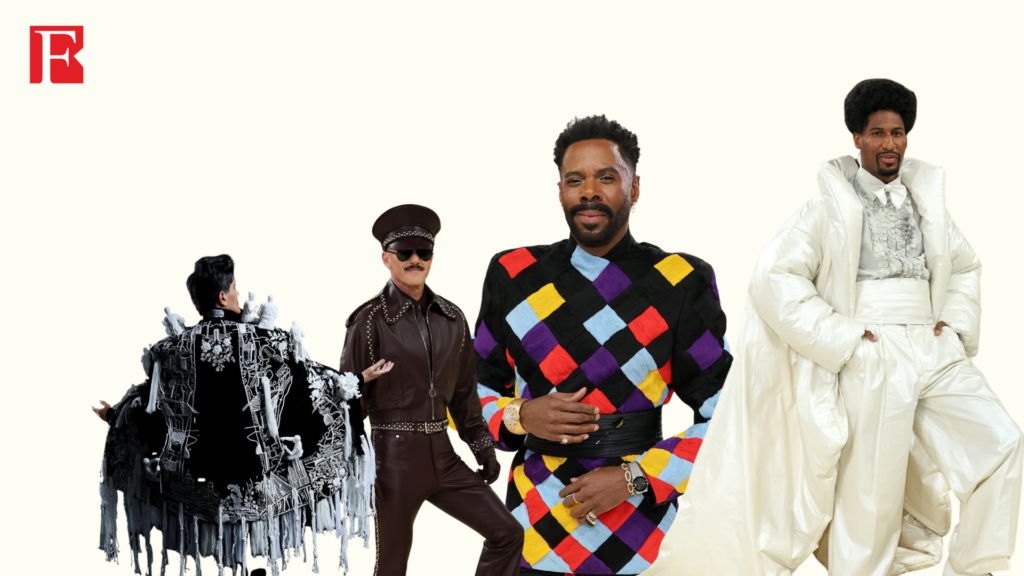
The festival’s dress code is not a suggestion whispered by a harried PR assistant somewhere in the lobby of the Martinez. It is an enforced standard, and the prohibitions are specific enough to make a regulatory lawyer feel quietly at home: sheer fabrics that expose the body, visible nudity, illusion mesh designed to simulate nudity, long trains that impede passage, and, perhaps most deliciously, overt brand insignia that redirects the audience’s attention from cinema to commerce.
That last one deserves a moment’s pause. The Palais steps are not a billboard. The Festival, in its institutional wisdom, has decided that the logo, that is the sacred totem of the modern fashion house, the thing around which entire brand identities and six-figure licensing agreements are constructed, is simply not welcome here. One can almost hear the quiet horror of a chief marketing officer in Milan receiving that particular memo. But France has always been clear about its hierarchy of values. Art, first. Commerce, later. Preferably much later.
Legally, the authority to enforce all of this flows from the festival’s status as a private event operating under a public licence. Under French administrative law,droit administratif — the organisers, working alongside the municipality of Cannes and the Direction Régionale des Affaires Culturelles, hold the power to set the conditions of entry. Refusing someone at the door for non-compliance is not, therefore, a violation of their rights. It is the exercise of a contractual and administrative prerogative that is as French as a well-timed shrug. Your gown may be couture. Your entry, however, is conditional.
The Selfie Prohibition & Media Law
Then there is the selfie. The ban on personal filming and photography on the Palais steps might look, on the surface, like a question of decorum; a civilised pushback against the modern compulsion to document everything rather than experience it. And it is that. But beneath the surface, it is also a question of image rights, press accreditation, and the carefully controlled economy of official photography.
Under French personality rights law — specifically the droit à l’image enshrined in Article 9 of the Civil Code — every individual retains a right over the commercial use of their own image. What this means at Cannes, in practice, is that the Festival holds curatorial rights over the visual narrative of its own event. Accredited wire photographers operate under specific licensing frameworks. The unofficial iPhone, held aloft by a well-meaning attendee, operates outside that framework entirely. The footage, once posted to Instagram or TikTok, potentially constitutes an unauthorised reproduction of a controlled image environment. The law, unfortunately, does not care that your angle was magnificent.
The same logic extends into the screening venues, where oversized bags and backpacks are now prohibited — less a comment on fashion sensibility than a consequence of post-2015 French emergency legislation and subsequent amendments to the Code de la sécurité intérieure. Running a major international cultural event in modern Europe is no longer a purely logistical exercise. It is a legislative one.
Cannes as Commercial Law Capital
Pull back from the red carpet, walk a few hundred metres down the Croisette, and you find a different Cannes entirely. The Marché du Film, which runs concurrently with the Festival and is, by some measures, the largest film market in the world, operates with the energy of a financial exchange floor that happens to smell of sunscreen and espresso. Here, the glamour is paperwork. The drama is a distribution clause. The tension is in the deadline.
The legal terrain of the Marché is shaped, above all, by two great forces: contract negotiation and piracy. On the contractual side, the governing instrument is the Rome I Regulation — a piece of EU law that determines which country’s legal framework applies when, say, a South Korean producer, a French distributor, and a British sales agent are closing a deal in a suite at the Carlton. In practice, most serious international film contracts settle this question early, usually opting for English law (with a certain post-Brexit irony that nobody in the room is fully over), French law, or New York law for American co-productions. The Marché is, in this sense, a living comparative law seminar. Except the stakes are real, the timelines are brutal, and the minibar is included.
Piracy is Cannes’ oldest legal nemesis. Screeners leak onto the dark web within hours of a premiere — sometimes minutes — and the industry has been fighting this reality for longer than streaming has existed. France’s HADOPI framework was born from this particular anxiety: a graduated response mechanism designed to identify, warn, and ultimately penalise persistent infringers. The EU’s Digital Single Market Directive, transposed into French law in 2021, reinforced the scaffolding further, extending platform liability and tightening obligations on hosting services that drag their feet on takedowns. The lawyers at Cannes are not merely there for the champagne receptions. They are there because the work requires it.
The AI Question & The European Regulatory Horizon
If the Marché is Cannes’ commercial conscience, the panel forums have become its philosophical one. And in recent years, especially, with particular urgency at Cannes 2026, that philosophy has been dominated by a single subject: artificial intelligence, more specifically, by the deeply uncomfortable question of what European law is going to do about it, and whether the law is moving quickly enough to matter.
The EU Artificial Intelligence Act, which entered its operational phases across 2024 and 2025, is the world’s first comprehensive attempt to regulate AI by risk category. For the creative industries, the implications are significant and, in several areas, still genuinely unresolved. The Act imposes transparency obligations on providers of general-purpose AI models, which have direct downstream consequences for studios, platforms, and production companies using AI tools to write scripts, generate visual effects, compose scores, or match talent to projects. At a festival where the question of whether AI-generated work should be eligible for competition has already generated more heat than light, the Act lands less as a resolution than as a new set of fault lines.
The copyright question is the sharpest edge of all of this. Under the current EU copyright doctrine, a protected work requires a human author. An entirely AI-generated film — should one arrive at the Palais in a competitive capacity — would, at present, have no rights holder. No one to sue, no one to license, no one to credit. This is not a hypothetical problem sitting safely in the future. It is arriving now, and the legal and curatorial communities at Cannes are only beginning to work out what it means. Who owns the creative output of a machine trained, often without consent, on the accumulated work of thousands of human artists? That question does not have a clean answer yet. But Cannes, characteristically, appropriately, is one of the places where the argument is loudest.
The City Beneath the Festival
It would be easy, writing about Cannes, to forget that there is an actual city here — population approximately 75,000, tucked into the Alpes-Maritimes with a perfectly reasonable life that continues for eleven and a half months of the year. During the Festival, that city is temporarily reorganised: traffic rerouted, public spaces reallocated, commercial licences redistributed, noise ordinances quietly suspended. Local event decrees issued by the municipality govern all of this, and the economic logic is not hard to follow; the Festival generates over €200 million in direct economic impact annually. The city tolerates its annual disruption because the annual disruption is, in fact, the point.
But Cannes, the city, is not merely a backdrop or a beneficiary. It is a legal participant. It negotiates the terms of its own transformation each spring with a combination of civic pragmatism and carefully drafted bylaws. The“cité” has, one imagines, a very good municipal solicitor.
What strikes you, stepping back from all of it, is how much invisible labour holds this spectacle together. The red carpet does not unroll itself. The rights’ packages do not self-assemble. The pirated screeners do not go quietly. The AI-generated script does not sit uncontested in the producer’s inbox.
Cannes is a festival of human creativity in ongoing negotiation with the systems we have built to protect, channel, and — not infrequently — constrain it. The law works best when you cannot see it. At Cannes, once you know where to look, you can see it in almost everything: in the cut of an approved gown, in the credentials around a photographer’s neck, in the fine print of a distribution agreement signed somewhere on the third floor of a hotel that charges €900 a night and is completely full.
The Croisette is many things. It is also, quietly, a jurisdiction. And it always has been.
FASHION LAW JOURNAL INSIDER
Join designers, brand founders and fashion lawyers who get the biggest brand battles, IP fights and career moves in fashion law, straight to their inbox.