
A trademark protects a name or a logo. Trade dress protects something harder to pin down and, once secured, often more valuable: the overall look and feel of a product itself, the combination of shape, color, and design that makes something recognizable before a customer ever sees the label. Fashion brands lean on trade dress constantly, and two Supreme Court cases explain both why it works and why it fails more often than people expect. A third case working through the courts right now shows exactly what that failure looks like in practice.
What Trade Dress Actually Covers
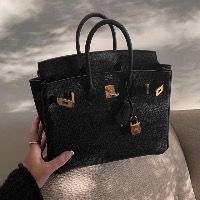
Trade dress falls under the same statute as trademark law, Section 43(a) of the Lanham Act, but protects a different kind of asset. Where a trademark covers one specific identifier, a word or a logo, trade dress covers the total visual impression a product creates, packaging, silhouette, color combinations, and design elements considered together. Fashion has run on this concept for decades. A Hermès Birkin bag or a bottle of Chanel No. 5 gets recognized on sight, no logo required, precisely because trade dress law lets a brand claim the full look rather than just the name printed on it.
Product Packaging and Product Design Are Not the Same Thing
The Supreme Court drew a critical line between two kinds of trade dress in Wal-Mart Stores v. Samara Brothers, a 2000 case that started with a children’s clothing company. Samara Brothers designed a line of kids’ outfits, and Wal-Mart’s supplier copied the designs closely enough that Samara sued for trade dress infringement. Eight years earlier, in Two Pesos v. Taco Cabana, the Court had ruled that trade dress could be inherently distinctive without any proof the public associated it with a specific source, but that case involved restaurant décor, something the Court treated as closer to packaging. Samara’s case involved the actual design of the product itself, and the Court refused to extend the same rule. Justice Scalia, writing for a unanimous Court, held that product design trade dress can never be inherently distinctive and always requires proof of secondary meaning, the same standard Qualitex had already applied to color. Design, the Court reasoned, almost always serves purposes beyond identifying a source, which makes an automatic assumption of distinctiveness too generous to the brand claiming it.
The Functionality Bar Closes the Other Door
Even a fashion brand that proves secondary meaning still has to clear a second hurdle. TrafFix Devices v. Marketing Displays, decided in 2001, involved a dual-spring mechanism that kept outdoor road signs upright in wind, not fashion at all, but the rule it produced governs every trade dress claim since. The Court held that a feature covered by an expired utility patent carries strong evidence of functionality, and a functional feature gets no trade dress protection no matter how strongly customers associate it with one company. The logic applies just as directly to a garment. A design element that exists because it makes a product work better, rather than purely to signal who made it, cannot be monopolized through trade dress, since doing so would hand one brand a permanent edge over a genuine functional improvement. The Court explicitly noted that once functionality is established, secondary meaning becomes irrelevant, since the two questions never trade off against each other. A brand cannot argue its way around a functional design by showing customers strongly associate the shape with the company.
A Live Example Working Through the Courts Right Now
UGG is testing exactly this framework today. Quince is defending itself against UGG’s trade dress claims over its Mini and Tasman boot styles, arguing the designs UGG claims as distinctive are actually generic features common across sheepskin ankle boots industry-wide, not a source identifier unique to UGG at all. The dispute sits precisely at the fault line Wal-Mart and TrafFix created: UGG has to show its silhouette carries genuine secondary meaning rather than describing a shoe category, and clear the functionality bar on top of that, before a court will treat the boot’s shape as protectable at all.
Why the Distinction Actually Matters
A fashion brand chasing trademark protection alone misses everything trade dress could cover instead, the packaging, the silhouette, the total look nobody described in words but everybody recognizes anyway. That protection comes at a real cost, though, since product design trade dress demands proof of secondary meaning that a word mark never has to establish, and functionality can kill even a strong claim outright. Knowing which fight a brand is actually walking into, packaging or product design, distinctive or functional, decides whether a trade dress claim was ever worth filing in the first place. Fashion brands that understand this distinction early spend their trademark budget on the identifiers that actually qualify, rather than discovering years later that the silhouette they assumed was protected never cleared either bar to begin with.
FASHION LAW JOURNAL INSIDER
Join designers, brand founders and fashion lawyers who get the biggest brand battles, IP fights and career moves in fashion law, straight to their inbox.