
People use “fashion house” and “haute couture” almost interchangeably, but only one of those terms actually means something in law. A fashion house is a business built around a name. Haute couture is a legally regulated designation that a very small number of businesses have earned the right to use at all.
Haute Couture Is a Legally Protected Term, Not a Marketing Word
“Haute couture” became a legally protected designation of origin in France on January 23, 1945, established under the French Ministry of Industry in the aftermath of the Second World War, at a moment when the government wanted to rebuild and safeguard Paris’s standing as the center of high fashion. The body overseeing that designation, originally the Chambre Syndicale de la Couture Parisienne, took its current name, the Fédération de la Haute Couture et de la Mode, in 2017. A dedicated commission working under that federation reviews membership every year, and only the houses it approves may legally describe their work as haute couture in advertising or anywhere else.
The Actual Criteria a House Must Meet
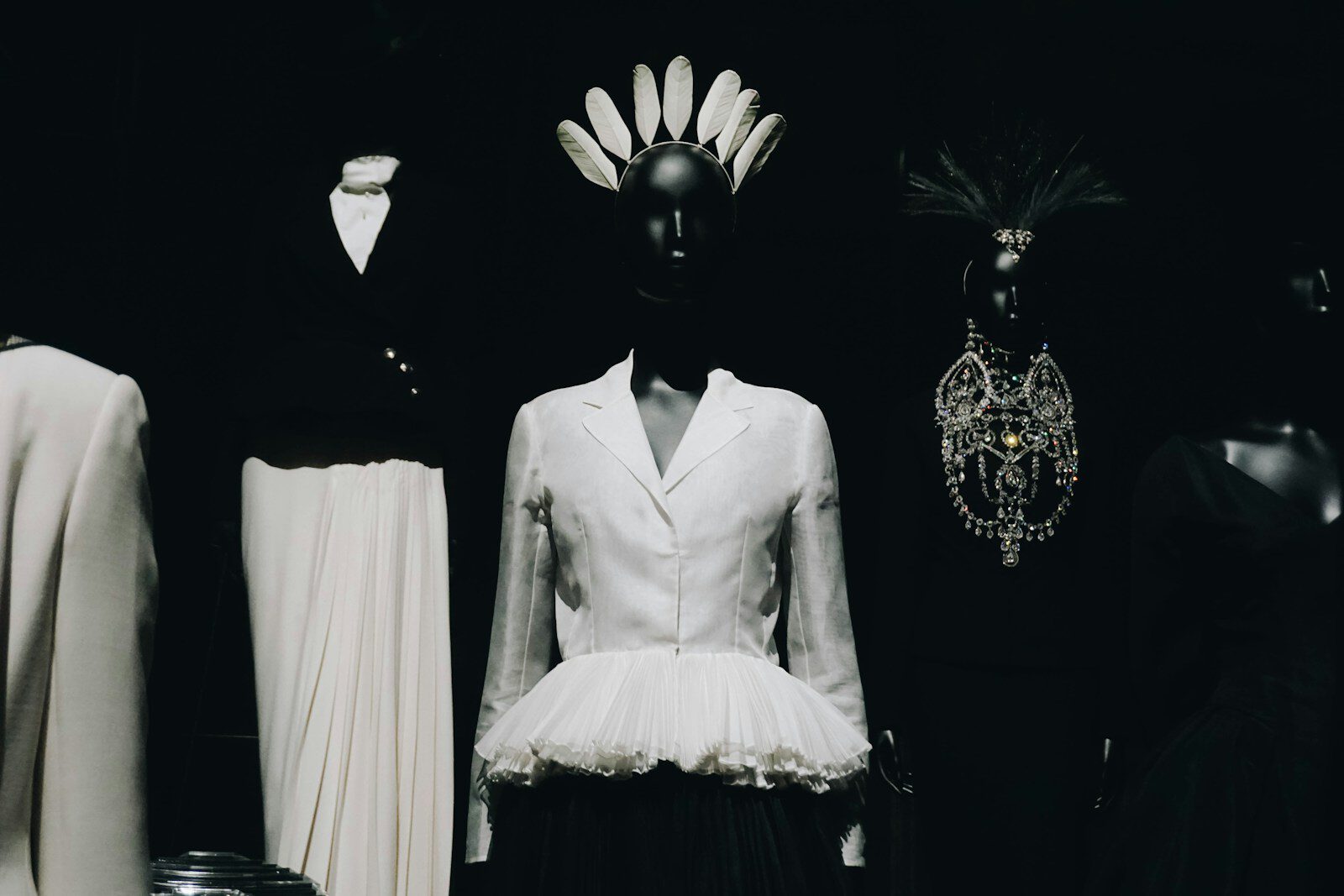
Qualifying for the designation means clearing a specific, published set of requirements rather than simply producing expensive clothing. A house must design garments made to order for private clients, involving one or more fittings rather than off the rack sales, and maintain an atelier physically located in Paris employing at least fifteen full-time staff. The house also needs at least twenty full-time technical staff across its workshops, and must present a new collection of a defined minimum number of original day and evening looks twice a year, in January and July, to the Paris press during official Haute Couture Week. Fewer than twenty houses currently hold that full official status. A brand that markets a collection as “couture inspired” or “couture quality” without ever applying for or receiving this designation is using the word descriptively rather than legally, and in France specifically, using the protected term itself without the designation can draw a real legal challenge. FLJ has traced how the discipline evolved from Charles Frederick Worth’s original Paris salon through today’s rulebook, and the throughline across that history is that the designation was always meant to separate genuine hand-made craftsmanship from anything merely marketed as luxurious.
What “Fashion House” Actually Means Legally
No equivalent gatekeeping exists for the phrase fashion house. Legally, a fashion house is simply a company, usually built around a founder’s name registered as a trademark, holding the trademark portfolio, licensing agreements, and creative direction that together make the brand function commercially. The name on the door and the legal entity behind it are not automatically the same thing, and that gap becomes very real the moment a designer’s relationship with their own company ends.
FLJ Insider Pro is open: live fashion law jobs and internships, five career guides and two roadmaps. Early bird USD 12/month. See what's inside
When the Name and the Person Split
The Second Circuit’s 2009 decision in JA Apparel Corp. v. Abboud shows exactly how far that gap can stretch. Designer Joseph Abboud sold his company and its trademarks, including “Joseph Abboud” itself, registered as a mark since 1987, to JA Apparel Corp. for roughly 65.5 million dollars in 2000. When Abboud later tried to launch a new line called Jaz, describing it in marketing as designed “by Joseph Abboud,” JA Apparel sued, arguing he had sold away the commercial right to his own name along with the trademarks. The Second Circuit sent the case back for further review of what the sale agreement actually intended, but the underlying lesson survived the litigation regardless of the final outcome: a designer’s own name can become a corporate asset separate from the person carrying it, sold once and then legally off limits to the very person who built its value.
Why This Matters for Today’s Houses
Most of the historic names people still call fashion houses are now subsidiaries inside much larger structures. LVMH owns Dior, Fendi, Givenchy, Céline and Loewe. Kering owns Gucci, Saint Laurent, Bottega Veneta and Balenciaga. Richemont owns Chloé and Alaïa. Coco Chanel died in 1971 and Christian Dior in 1957, yet both houses operate today at a scale neither founder ever oversaw personally, because the legal entity, the trademark portfolio, and the accumulated reputation attached to each name never depended on the founder’s continued presence to keep functioning. A fashion house, understood correctly, is not the person whose name it carries. It is the corporate structure built to outlast them.
Two Words, Two Very Different Legal Realities
Haute couture answers to an annual review board and a published rulebook nobody can simply opt out of. Fashion house answers to ordinary corporate and trademark law, the same rules that govern who owns a name once it stops belonging to the person who made it famous. Confusing the two terms costs nothing in casual conversation. Confusing them in a contract, a marketing claim, or a name sale agreement is exactly how a Joseph Abboud situation starts.
FASHION LAW JOURNAL INSIDER
Join designers, brand founders and fashion lawyers who get the biggest brand battles, IP fights and career moves in fashion law, straight to their inbox.