
Parody, trademark law and fashion may sound like unlikely companions, but they often share the same scarf, usually knotted around an IP lawyer’s neck. Fashion thrives on references, reinterpretation and cultural mischief.
What transforms a label around the corner into a global behemoth is rarely its marketing budget alone. A brand becomes truly valuable when it escapes the advertisement and enters culture, when people wear it, quote it, imitate it, joke about it and use it to signal who they are. Parody is often evidence that a brand has reached this rarefied position. Nobody parodies a mark that nobody recognises.
That creates an uncomfortable paradox. Brands want cultural ubiquity, but they cannot allow every admirer, critic or opportunist to monetise it. The same parody that proves the strength of a brand can also weaken its distinctiveness, confuse consumers or divert the commercial value that the brand spent years creating.
A familiar logo is twisted, a famous mascot is placed in an unfamiliar setting, and a serious brand is turned into a joke. The creative exercise may be called parody, but the moment that joke is printed on merchandise and offered for sale, trademark law enters the room, usually without laughing. Parody is cheap when it lives on the internet. Print it on a T-shirt, build inventory around it and continue selling after a cease-and-desist notice, and the joke can become very expensive.
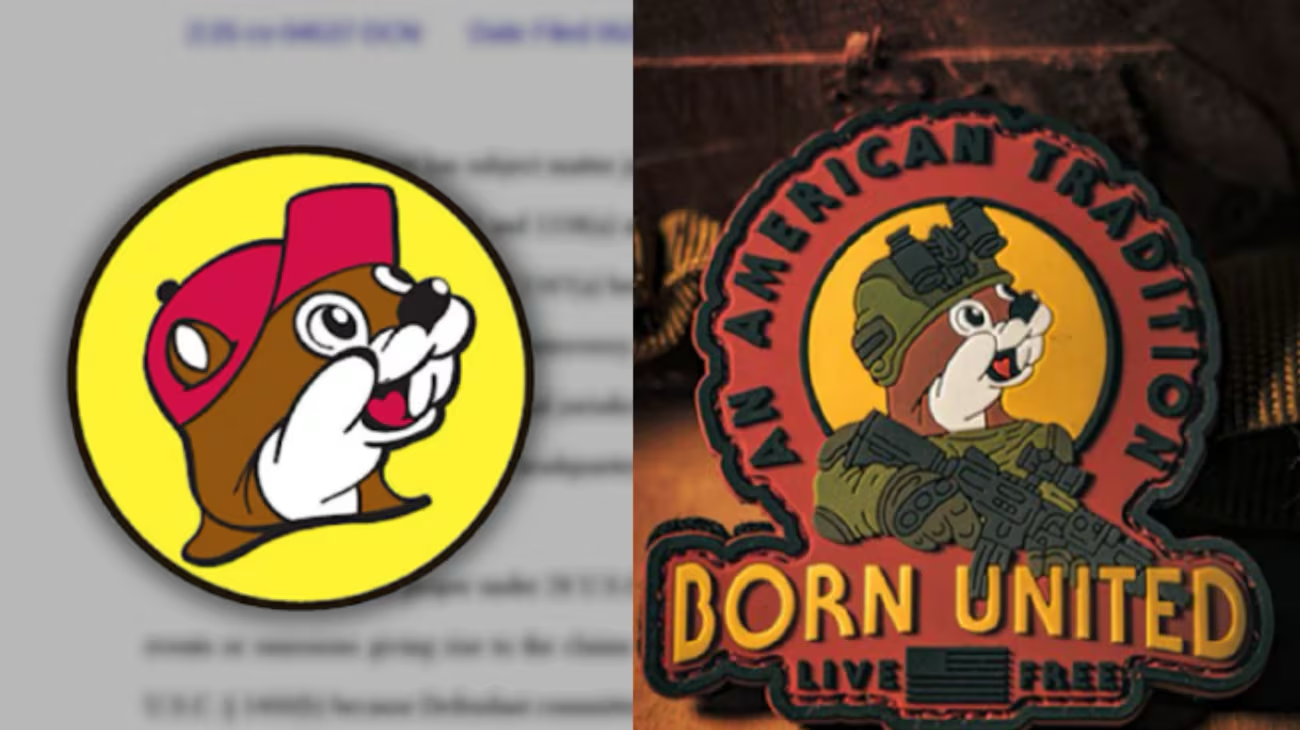
Born United, a South Carolina clothing company, learnt this after selling merchandise featuring “Tac-Bucc”, a tactical variation of Buc-ee’s famous beaver mascot. The altered beaver wore combat gear instead of its familiar red cap, but retained the recognisable face, yellow circular background and overall visual architecture of the Buc-ee’s logo.
The result was an agreed $850,000 consent judgment, destruction of the merchandise and a permanent injunction requiring Born United’s future branding to remain a “safe distance” from Buc-ee’s marks. The company was also restrained from helping others use similar marks or attempting to sidestep the order through new entities or asset transfers.
This was a settlement recorded by the court, not a contested ruling that every humorous variation of a logo amounts to infringement. But the commercial warning is difficult to miss.
A Joke Is Not a Legal Defence
Calling something a parody does not make it one in law.
A strong parody uses a mark to comment upon, criticise or ridicule the original brand. A weak parody merely borrows the mark’s fame, changes the costume and sells the result. If the commercial appeal of the merchandise comes primarily from consumers recognising the original logo, the supposed joke may simply be appropriation with better copywriting.
Trademark law is particularly suspicious when the borrowed device begins functioning as branding for the seller’s own goods. The United States Supreme Court made this clear in Jack Daniel’s Properties v. VIP Products. Humour does not displace the ordinary likelihood-of-confusion analysis when another’s mark is being used as a source identifier.
A joke can therefore be funny, obvious and still infringe.
Fashion Has a Collaboration Problem
Fashion businesses face an additional difficulty. Consumers have become accustomed to unlikely collaborations. Luxury houses collaborate with cartoons, supermarkets, musicians, video games and fast-food chains. Absurdity no longer tells the consumer that a product must be unofficial.
A tactical Buc-ee’s beaver could be understood as parody. It could also look like a limited-edition licensed collaboration. That ambiguity is precisely where trademark risk begins.
The danger increases when the design appears prominently across T-shirts, patches, packaging and online listings. At that point, the borrowed image is not merely decorating the product. It may be doing the commercial work of a trademark: attracting attention, carrying reputation and telling consumers what they are buying.
Changing a mascot’s clothes does not necessarily change its legal identity.
The Cease-and-Desist Letter Changes Everything
Buc-ee’s alleged that Born United continued selling the merchandise even after receiving a cease-and-desist notice. The consent judgment also recorded Born United’s prior knowledge of Buc-ee’s trademarks.
A demand letter does not prove infringement, and brand owners sometimes overreach. But ignoring one is not an act of creative courage. It is a commercial decision with consequences.
Once put on notice, a company should assess registrations, product overlap, consumer confusion, inventory exposure and the actual expressive content of the alleged parody. Continuing to manufacture and sell without that review can convert a manageable dispute into evidence of deliberate risk-taking.
Before launching parody merchandise, a fashion business should ask one brutally simple question: If the famous logo disappeared, would there still be a meaningful joke or a commercially desirable product?
If the answer is no, it is probably not the parody doing the selling. It is the trademark.
Memes may be free. Merchandise is not.
FASHION LAW JOURNAL INSIDER
Join designers, brand founders and fashion lawyers who get the biggest brand battles, IP fights and career moves in fashion law, straight to their inbox.