
If you’re a fashion design student, you already know the drill: final review is coming up, and it’s time to compile everything into a portfolio PDF. Sketches, technical flats, fabric swatches, final garment photography, maybe a lookbook — all of it flattened into a document that gets emailed to recruiters, printed for interviews, and uploaded to job applications.
It works, in the sense that it gets the job done. But it also quietly works against you in a few ways that are worth thinking about before your next application cycle.
A PDF is a snapshot. Your work isn’t.
The moment you finish that portfolio PDF, it’s out of date. You start a new project next semester, and now you’re either maintaining two versions or letting the old one go stale. Fashion is a field where the most recent work is often the most relevant — a hiring manager wants to see what you’re capable of right now, not what you were capable of six months ago when you exported the file.
A PDF can’t do what fashion work actually needs: show, not just tell
A resume format was built for job titles and dates. It was never built for garment construction, draping technique, or a mood board. Fashion portfolios have always tried to work around this — printing on nicer paper, adding more images, sometimes linking out to a Behance or a website. But a PDF still asks a viewer to open a file, wait for it to load, and scroll through pages in a fixed order you chose, whether or not that’s the order they want to see things in.
Recruiters don’t always open the attachment
This is the uncomfortable part. Recruiters and hiring managers reviewing dozens or hundreds of applications don’t always click through every PDF attachment, especially large image-heavy ones. A portfolio that requires a download, and then a wait, and then scrolling, loses people before they’ve seen your best work.
What a living profile changes
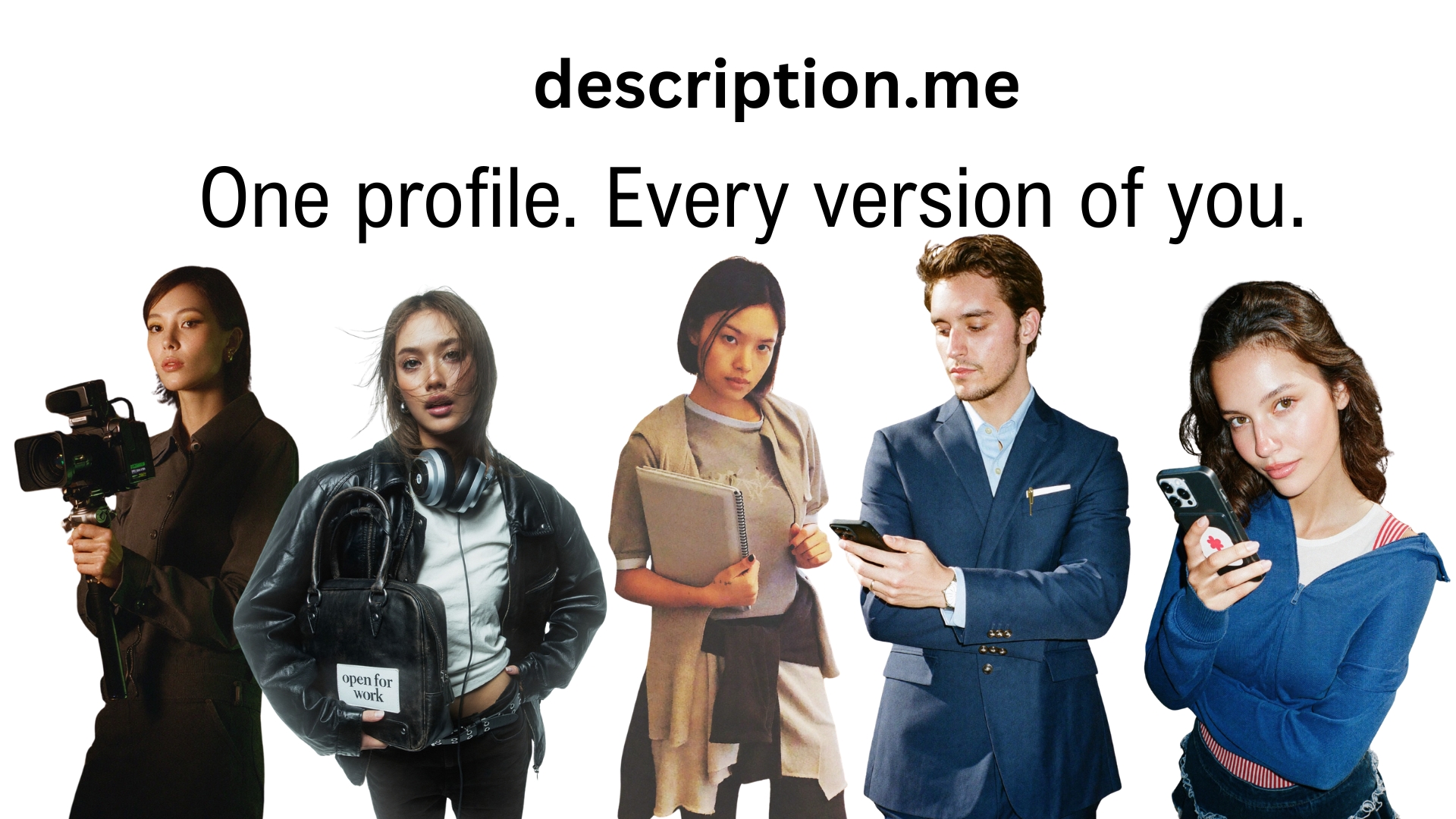
This is the idea behind Portfolio mode on description.me — instead of a file, you get one link. Each project lives as its own entry: images, a short description, and if you want, an embedded video walking through the piece. No download required — the reviewer clicks the link and it’s just there, already loaded, already in whatever order makes sense.
Because it’s a link and not a file, you can also do things a PDF genuinely can’t:
- Update a project the day after you finish it, without re-exporting or re-sending anything.
- Point to the same link across every application, every recruiter, every platform — no more “which version of my portfolio did I send this person.”
- Attach real proof beyond images: a Canva presentation, a lookbook hosted elsewhere, even a short video of a garment on the runway or a fitting session.
- See, in a private dashboard only you can access, whether someone actually opened your profile — and if you’ve turned on recruiter feedback, get a real reason if you didn’t move forward, instead of silence.
This isn’t only for job hunting
The same profile works for internship applications, competition submissions, or just having something to point to when someone asks “do you have a portfolio?” at a networking event. One link, one place to keep it current, usable for every version of “show me your work” you’ll get asked for over the next four years.
Try it
Description is free to start. If you’re a design student building out a portfolio for the first time, or tired of maintaining a PDF that’s always one project behind, you can create a Portfolio-mode profile at description.me in a few minutes — no downloads, no re-exporting, just one link that stays current.
FASHION LAW JOURNAL INSIDER
Join designers, brand founders and fashion lawyers who get the biggest brand battles, IP fights and career moves in fashion law, straight to their inbox.