
I. Introduction
The Uyghur Forced Labor Prevention Act, 2021 Entity List, which is kept up to date by the Forced Labor Enforcement Task Force (FLETF) under the Department of Homeland Security (DHS), had 144 entities on it as of November 22, 2025.[i] This was after 29 new entities were added on November 22, 2025, with the changes taking effect on November 25, 2025.[ii] According to the FLETF’s August 2025 Strategy Update, this is an increase of 78 entities in 2025 alone, from 68 at the beginning of the year.[iii] But even with this rise, Shein Group Limited, the ultra-fast-fashion giant based in Singapore with $38 billion in projected revenue for 2025, is still missing.[iv] Bloomberg News did isotopic testing in November 2025 and found Xinjiang Uyghur Autonomous Region (XUAR) cotton signatures in 90% of 42 U.S.-bound garments.[v]
That gap exposes a real contradiction in the law. Sec. 3(a) of the UFLPA presumes that goods with any link to the XUAR are barred by the forced labor import ban in 19 U.S.C. § 1307. Yet the de minimis route under 19 U.S.C. § 1321(a)(2)(C) has kept much of Shein’s trade out of routine view, with Shein and Temu accounting for a large share of the more than 1.36 billion low-value parcels that entered the U.S. in fiscal year 2024.[vi] CBP’s UFLPA dashboard, as updated in August 2025, records 16,700 shipments worth $3.7 billion stopped under the Act.[vii] Textiles made up 15.8% of that value.[viii] Since de minimis treatment for Chinese goods ended in May 2025, however, only 1,247 shipments worth $8.7 million have been restricted.[ix] This article looks at why Shein is still absent from the list despite the designation grounds in Sec. 2(d)(2)(B) of the UFLPA. Drawing on DHS and FLETF strategy documents, reports from the CECC and the House Select Committee on the CCP (2023 to 2025), the ILO’s Report XIV (February 2025) and other material, it makes the case for a legislative fix through the Import Security and Fairness Act (H.R. 322, 119th Congress). Until that happens, goods that are very likely unlawful keep reaching American shoppers, and the absolute ban in § 1307 is hollowed out.
II. Why Xinjiang Cotton Is Presumptively Inadmissible
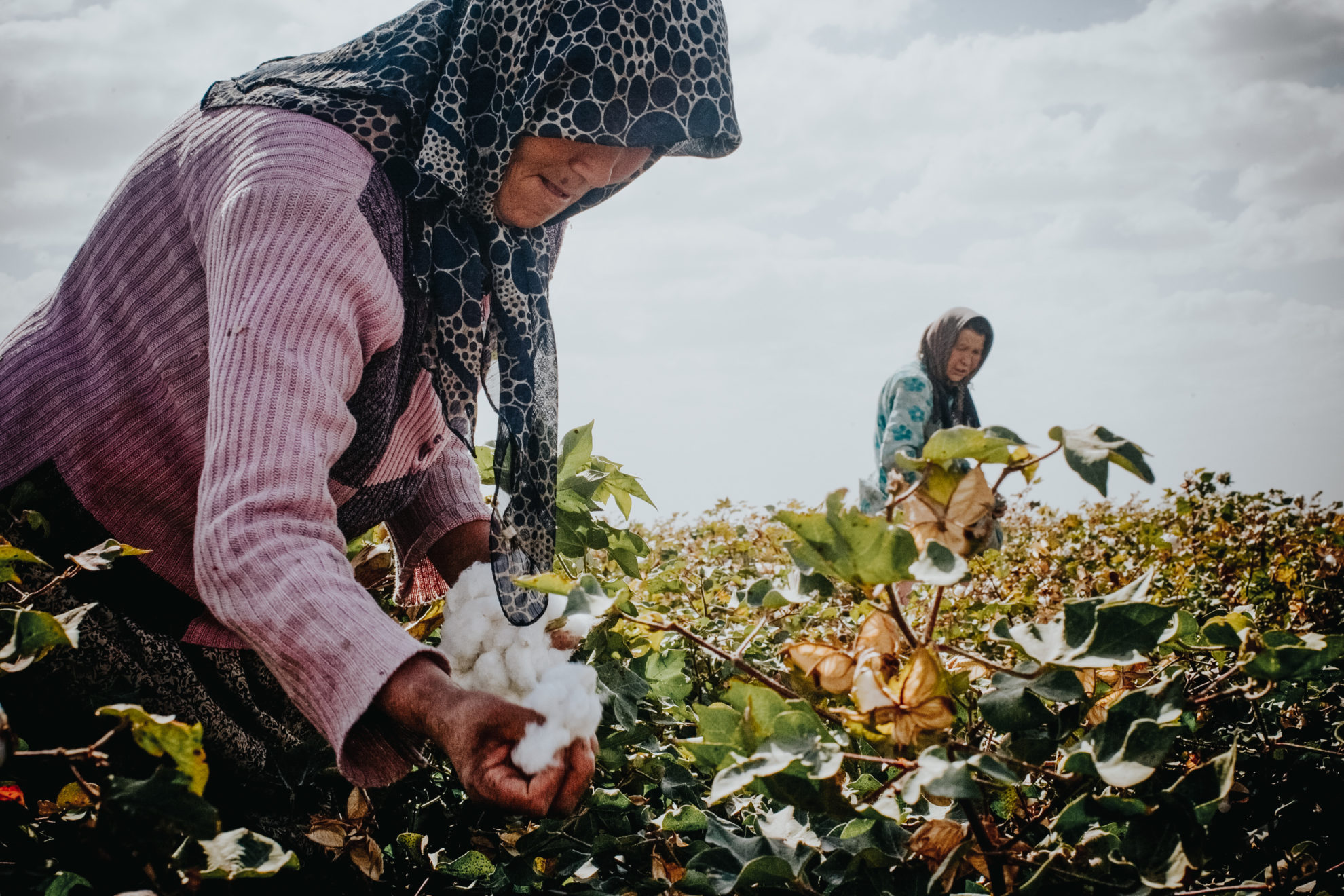
The U.S. has barred imports made with forced labor for close to a century. Under 19 U.S.C. § 1307, part of the Tariff Act of 1930, a product is shut out if forced labor touched any part of it, whether the cotton, a button or a single thread, wherever in the world that labor took place.[x] Customs may seize and destroy the goods and impose penalties that can reach the full value of the shipment. Congress enacted the provision during the Great Depression with American workers in mind.[xi] Its ‘wholly or in part’ wording extends to every input, so it reaches deep into the supply chain: a single tainted input contaminates the finished garment. In 2016, Congress closed the last escape route, the so-called consumptive demand exception, which had allowed such goods in whenever U.S. production could not meet domestic demand.[xii] From then on the ban had real teeth. The UFLPA, which took effect on June 21, 2022, went further still.[xiii] Aimed squarely at Xinjiang, it created a simple and powerful presumption: anything mined, produced or manufactured wholly or partly in the region, or by a company named on the ‘UFLPA Entity List’, is treated as a forced labor product and denied entry.[xiv] An importer can rebut that presumption only with ‘clear and convincing evidence’ that no forced labor was used at any stage. In practice that means mapping the supply chain back to the cotton field, commissioning independent third-party audits, running DNA or isotopic tests, and proving no involvement in Xinjiang’s state ‘poverty alleviation’ and labor-transfer schemes.[xv] None of this is theoretical. Xinjiang produces roughly a fifth of the world’s cotton and the vast bulk of China’s. ILO findings, satellite imagery, survivor testimony and investigative reporting all describe Uyghurs and other minorities being moved into cotton picking and factory work under state programmes, frequently overseen by the paramilitary Xinjiang Production and Construction Corps. Science has also made the origin of cotton hard to hide: stable-isotope analysis and DNA tracing allow independent labs to identify Xinjiang-grown fibre with considerable precision. Bloomberg had Shein garments tested twice in 2022 and returned to the question in later testing.[xvi] In the 2022 tests, most of the cotton samples matched Xinjiang reference material. Read plainly, the UFLPA treats a Shein dress made from Xinjiang cotton as presumptively unlawful, and it should never clear customs.[xvii] As the sections below show, though, statutory gaps, cautious agency readings and the sheer volume of parcels kept that door open until very recently.
III. UFLPA § 2(d)(2)(B): The Five Statutory Grounds for Entity List Designation
The UFLPA authorizes the Forced Labor Enforcement Task Force (FLETF) to officially designate firms engaged in five particular acts associated with forced labor in Xinjiang.[xviii] After inclusion of the name of a company in the Entity List, all its goods are prohibited from being imported, except in cases where importers demonstrate otherwise.[xix] The five criteria for inclusion on the list are:[xx]
(i) companies operating in the Xinjiang Uyghur Autonomous Region;
(ii) those partnering with the regional government to utilize Uyghurs and other minorities for coerced labor;
(iii) international companies procuring from Xinjiang or from other identified entities;
(iv) exporters of goods produced through forced labor; and
(v) companies facilitating circumvention of the ban.
Every six months, the Federal Register circulates evidence for these listings, using diverse sources including internal papers, survivor accounts, and satellite imagery.[xxi] In 2025, many new companies emerged, specifically in the apparel industry. It highlighted the extensive participation of entities like Huafu Fashion and Xinjiang Tianmian, which are associated with subsections (i) and (iii).[xxii] Significantly, the e-commerce platform Shein remains unlisted despite considerable evidence connecting its supply chain to forced labor practices in Xinjiang. The FLETF enforces rigorous criteria for evidence, necessitating confirmation that a company was the exporter or was knowingly engaged with forced-labor inputs.[xxiii] This inadequate interpretation enables Shein to function without any consequences, despite objections from congresspersons who contend that Shein promotes the export of garments manufactured through forced labor. The statutory language of ULFPA is clear and strong; yet, restrictions stem from the FLETF’s conventional interpretation and institutional disinclination to classify substantial assistance as a form of exporting.[xxiv] Unless FLETF alters its approach to tackle these issues, fashion platforms like Shein will circumvent oversight.
IV. The De Minimis Exemption as a De Facto Exclusion from UFLPA Enforcement
The de minimis exemption in Section 321(a)(2)(C) of the Tariff Act of 1930 lets low-value goods enter the US with minimal customs-entry requirements, effectively limiting the enforcement of Section 307 of Tariff Act.[xxv] It was originally designed to simplify low-value imports and reduce the burden on both businesses as well as the US Customs and Border Protection (CBP).[xxvi] However, it became a major enforcement issue later. As part of the Trade Facilitation and Trade Enforcement Act (Pub. L. 114-125), Congress raised the threshold from 200 USD to 800 USD, effective March 10, 2016.[xxvii] This made it even simpler for more of these shipments to come into the United States. According to the latest data from CBP, what was once a modest flow of 139 million parcels in fiscal year 2015 has grown to over 1.36 billion in fiscal year 2024, with more than 60% coming from the People’s Republic of China.[xxviii] This sudden rise made it impossible for CBP to inspect all of these packages, so they only physically checked about 0.04% of them. This created a virtual blind spot for possible violations of forced labor laws.
Platforms like Shein and Temu took full advantage of this exemption, making up between forty-eight and fifty-two percent of all de minimis shipments entering the United States, or about six hundred thousand packages every day.[xxix] E-commerce platforms like Shein and Temu use a direct-to-consumer-based model that breaks orders into low-value packages to qualify for the de minimis exemption, allowing them to avoid duties and bypass the detailed supply-chain disclosures required under the UFLPA.[xxx] The House Select Committee on the CCP (interim report 2023 and reaffirmed in 2025) and the Congressional-Executive Commission on China (CECC)’s ‘Corporate Complicity’ hearing warn that this system lets companies ship goods directly from Chinese suppliers with only minimal documentation, leaving CBP unable to verify whether items are linked to forced labour in Xinjiang.[xxxi] Because the UFLPA’s forced labour ban does not override the de minimis carve-out, it creates a safe space for high volume, low-value imports. The FLETF 2024 strategy update acknowledges that the original purpose of the exemption was to simplify small-value trade.[xxxii] However, now it undermines the tolerance mandate of Sec.1307 and enables what lawmakers describe as corporate complicity in human rights abuses. In response, US has suspended the de minimis for commercial shipments from China and Hong Kong, effective May 2, 2025.[xxxiii]
V. FLETF’s Interpretation of “Knowing Engagement” and “Exporting” Under § 2(d)(2)(B)(iv)–(v): Why Shein Remains Outside the List
The ULFPA gives the FLETF five different legal reasons to put an entity on the public Entity List. Subsections (iv) and (v) are the two that seem to fit Shein perfectly on paper: Section (iv) talks about companies that ‘export’ goods made with forced labor from Xinjiang or by listed companies. Section (v) talks about companies that “attempt to violate, or help others violate” the import ban.[xxxiv] More than three years after the UFLPA went into effect, Shein is still not on the list, which now has one hundred forty-four names. It’s not because there isn’t enough evidence of risk; it’s because FLETF and the Department of Homeland Security have chosen to interpret the words ‘knowing engagement’ and ‘exporting’ in a very careful way.[xxxv] FLETF has made it clear in its August 2025 Strategy Update, in every Federal Register notice adding entities, and in closed-door briefings to Congress that it will only designate a company under these two subsections when it has public, verifiable evidence that the company knowingly took part in the forced-labor supply chain.[xxxvi] That is a much higher standard than the ‘reasonable indication’ standard used for upstream producers like cotton gins, yarn spinners, and XPCC subsidiaries. FLETF requires importers, including downstream retailer, to provide clear proof to rebut the UFLPA’s presumptions that goods from high-risk sources were produced by forced labour.[xxxvii] This proof can be in the form of documents, emails, contracts, or whistle-blower testimony that show the company knew it was getting bad materials and did it anyway.
Shein has set up its business and sourcing practices in such a way that it stays on the right side of that line of evidence.[xxxviii] Shein says it sources finished garments from thousands of independent factories in China’s Guangdong and Zhejiang provinces. Although the company is headquartered in Singapore, many of its legal entities are registered in jurisdictions where disclosure of tier-2 and tier-3 suppliers isn’t required.[xxxix] As a result, Shein publicly lists only its tier-1 factories, the final cut and sew stage, while withholding information about the upstream gins, spinning mills, and yarn producers that handle cotton. When pressed by the media, the company typically responds that it doesn’t support forced labour in its supplier code of conduct and social audits. However, those audits only go as far as the factory gate and almost never go to the cotton fields or spinning mills.
This lack of clarity is not by chance. Lawyers call it ‘plausible deniability’. Shein can and does say that it had no direct contractual relationship with any Entity List spinner, that it never told anyone to use Xinjiang cotton, and that any contamination happened several tiers upstream without its knowledge, even when independent isotopic testing (Bloomberg 2022 and 2025, Oritain 2024) shows that the vast majority of Shein garments contain Xinjiang cotton signatures.[xl] Critics say that FLETF has so far accepted Shein’s self-audits’ defence as enough to keep Shein off the list because it. Another important limit is FLETF’s narrow definition of the word ‘exporting’ in subsection (iv).[xli] The task force adds a Chinese spinning mill or fabric maker because that mill physically ships yarn or greige fabric out of China. FLETF has traditionally treated the exporter as the party named on the bill of lading, the entity that directly ships the goods.[xlii] Under that view, an e-commerce platform in Singapore that merely enables a Chinese company to sell to US buyers isn’t considered the exporter of record.
Detaining shipments from a single upstream mill can disrupt a whole segment of the textile supply chain at once. Listing a downstream giant like Shein, which ships hundreds of thousands of parcels a day, would stretch CBP’s current capacity well beyond its limits and risk a sharp consumer backlash.[xliii] The August 2025 Strategy Update reflects exactly this triage: it puts upstream designations that cut off tainted inputs at the source first, while evidence on downstream players continues to be collected. Congress, meanwhile, has been vocal. Senator Rubio, the House Select Committee on the CCP and the co-chairs of the Congressional-Executive Commission on China have repeatedly urged that Shein be designated under subsection (iv) or (v).[xliv] Their letters rely on the same isotopic test results, the same overlapping listed suppliers (Huafu Fashion and Xinjiang Tianmian) and the same refusal by Shein to disclose its lower-tier factories.[xlv] The FLETF’s response has been courteous but noncommittal: the matter is under review, and any designation needs a sufficient, verifiable evidentiary basis. The result is an odd legal limbo. The UFLPA’s regional presumption suggests that much of Shein’s clothing is inadmissible, yet the company is not on the Entity List, which is what would apply the presumption to it automatically. Until the FLETF relaxes its evidentiary bar for downstream platforms, or Congress amends the statute to make clear that facilitating exports counts as “exporting”, Shein can keep operating at the edge of the law. It knows the risks in its supply chain but is shielded by corporate opacity, a narrow reading of the statute and administrative pragmatism. That shield is wearing thin. If the Import Security and Fairness Act becomes law, every de minimis parcel would need to identify its manufacturer, which would sharply limit Shein’s room to disclaim responsibility. For now, the task force’s narrow reading of ‘knowing engagement’ and ‘exporting’ remains the main reason Shein is not among the 144 names on the list.
VI. Executive Orders 14195 & 14259 and the Pending Import Security and Fairness Act: Attempts to Close the § 1321 Loophole
For years, the de minimis exemption under Sec. 1321 lets in low-value imports in the United States of America with minimal oversight.[xlvi] It was a loophole that companies like Shein rely upon to ship cheap, single-item packages directly to consumers without any customs reviews and duties. With these platforms accounting for a huge portion of US-bound shipments from China, President Trump brought up Executive Order 14195 on February 1, 2025, declaring a national emergency tied to China’s role in the fentanyl crisis and in addition to targeting precursor chemicals, suspended de minimis duty-free treatment for goods from China and Hong Kong.[xlvii] Follow-up orders (14200 and 14256) finalised the process, and the exemption officially ended on May 2, 2025. From then on, Chinese shipments had to clear CBP’s ACE system and pay duties including a 10% ad-valorem rate while postal items fee increased by 50 USD per package in June 2025[xlviii]. The impact on Shein and Temu proved to be immediate, with shipment volumes decreased by one-third. Shein’s weekly US sales dropped roughly by 25% and by October 2025, the number of active consumers also came down. Further tightening came with Executive Order 14259 enforced on April 8, 2025.[xlix] It imposed tariff rates as high as 145% and flat fees of 75 USD-200USD on low-value imports and required all formerly exempt packages to undergo full entry procedures. A global suspension of ‘de minimis exemption’ took effect on August 29,2025, with the Tax Foundation estimating an added annual cost of 10.9 billion USD to consumers, disproportionately affecting lower-income households.
VII. SEC Disclosure Obligations Under 15 U.S.C. § 78m and the De Facto Substitute for Entity Listing
While the Forced Labor Enforcement Task Force has left Shein off the UFLPA Entity List, securities law has quietly become a powerful indirect check on forced labor exposure for any company hoping to raise money from American investors.[l] Under the Securities Exchange Act of 1934 (15 U.S.C. § 78m), public companies must file an annual Form 10-K that fairly sets out the material risks to their business.[li] In practical terms, a company cannot hide from investors that a large slice of its inventory could be detained or destroyed at the border, or trigger heavy penalties, under § 1307. For a business with deep links to Xinjiang or the Chinese textile sector, generic boilerplate about ‘supply-chain risk’ is a poor fit. Investors would expect it to say whether its goods could fall under the UFLPA presumption, how far it has traced its cotton back to the farm, and whether it could actually rebut the presumption with clear and convincing evidence. Shein’s own listing plans show how much weight this carries.[lii] After it filed confidentially for a New York IPO in November 2023, the listing stalled amid regulatory hurdles and sustained pressure from U.S. lawmakers demanding answers on Xinjiang cotton, suppliers tied to listed entities and independent testing.[liii] Rather than make disclosures that could have unsettled investors, Shein turned to London, filing confidentially with the UK regulator in June 2024, and in 2025 it shifted its focus again, this time to Hong Kong.[liv] Lawmakers and state officials had staked out their positions early. In May 2023, a bipartisan group of more than two dozen members of Congress wrote to SEC Chair Gary Gensler asking that any Shein listing be conditioned on independent verification that it does not use Uyghur forced labor.[lv]
In August 2023, sixteen state attorneys general followed with a letter of their own, asking the SEC to require foreign-owned companies to certify, through a genuinely independent process, that they comply with the forced labor ban before they can list.[lvi] The House Select Committee on the CCP and the Congressional-Executive Commission on China have stuck to the same line ever since: prove compliance or forget the IPO. In effect, disclosure obligations under securities law now do much of the work that an Entity List designation would otherwise do.[lvii] The Department of Homeland Security does not have to lift a finger. The prospect of telling Wall Street that much of its clothing is made from Xinjiang cotton, a link that testing by Bloomberg, Oritain and Applied DNA Sciences has pointed to again and again, is enough on its own to keep U.S. capital markets out of reach. For a company whose growth plan rests on raising billions from public investors, that consequence bites far faster and harder than slow, parcel-by-parcel enforcement at the border. So before any court or customs officer rules on whether a single Shein dress may enter the country, the Securities Exchange Act has already placed the company under a de facto UFLPA compliance regime, one that runs on disclosure to investors rather than on CBP detention notices.
VIII. Conclusion
The ULFPA says that Shein’s apparels are made with forced labor, at least in part. Independent tests show that the cotton in its clothes comes from Xinjiang over and over again. Some of the companies that supply it are already on the Entity List. Its own audits never go to the cotton fields or spinning mills. If you read the law in a reasonable way, you should be able to see that every low-value package Shein sends to an American doorstep should be stopped at the border. But most of them still get there without any problems.
This paradox exists because three structural realities continue to outweigh the statutory presumption:
The Forced Labor Enforcement Task Force has chosen a narrow, evidence-heavy definition of ‘knowing engagement’ and ‘exporting’. This protects platforms like Shein from being put on the Entity List. Second, until very recently, the de minimis exemption in Section 1321 kept hundreds of millions of Shein packages completely out of the UFLPA’s reach. This made it so that a very small percentage of low-value shipments were held for forced labor. Third, the task force has chosen to focus on upstream producers like gins, spinners, and state-owned farms. This is because blocking tainted cotton at the source disrupts entire supply chains all at once, while chasing millions of individual envelopes would be too much for Customs and Border Protection to handle. Executive orders issued in 2025 have begun to shut the de minimis door, and SEC disclosure rules now make it impossible for any U.S.-listed company to avoid confronting Xinjiang-related risks. The Import Security and Fairness Act which is still moving forward, would finish the job by permanently ending the exemption for non-market economies and requiring every package to identify its manufacturer. However, the century-old conflict between Section 1307’s total ban on forced-labor goods and Section 1321’s push to low-value trade is still not resolved. Congress can fix the problem in one fell swoop by passing the Import Security and Fairness Act, changing the legal definition of “exporting” to include facilitation, and adding Shein itself to the Entity List. Until that happens, every Shein package that gets to an American customer is legally assumed to have been made with forced labor. Every successful delivery shows how far practice still lags behind the law.
References
[i] ‘UFLPA Entity List’ (Homeland Security) <https://www.dhs.gov/uflpa-entity-list> accessed 24 November 2025.
[ii] ‘Department of Homeland Security Adds 29 Entities to the Uyghur Forced Labor Prevention Act Entity List’ (Office of the United States Trade Representative, 22 November 2024) <https://tinyurl.com/7v52rutm > accessed 24 November 2025.
[iii] ‘Forced Labor Enforcement Task Force Release of the 2025 Update to the UFLPA Strategy’ (Office of the United States Trade Representative) <https://ustr.gov/about/policy-offices/press-office/press-releases/2025/august/forced-labor-enforcement-task-force-release-2025-update-uflpa-strategy> accessed 24 November 2025.
[iv] ‘Shein Eyes US$2 Billion Profit in 2025 despite Trump Tariffs and French Ban’ (South China Morning Post) <https://www.scmp.com/tech/big-tech/article/3331855/shein-eyes-us2-billion-profit-2025-despite-trump-tariffs-and-french-ban> accessed 24 November 2025; ‘Shein’ (Sacra Research) <https://sacra.com/c/shein/> accessed 24 November 2025.
[v] Margaret Sutherlin, ‘Shein’s Cotton Tied to Xinjiang—Where China Is Accused of Forced Labor’ (Bloomberg, 21 November 2022) <https://www.bloomberg.com/news/newsletters/2022-11-21/shein-s-cotton-tied-to-xinjiang-where-china-is-accused-of-forced-labor> accessed 24 November 2025.
[vi] ‘How Many Packages Are Sent under the de Minimis Rule?’ (Red Stag) <https://redstagfulfillment.com/how-many-packages-are-sent-under-de-minimis/> accessed 24 November 2025.
[vii] ‘Trump Administration Fights for America’s Economic and National Security, Designating New Chinese Industry Sectors as High-Priority for Enforcement under the Uyghur Forced Labor Prevention Act’ (Homeland Security, 19 August 2025) <https://www.dhs.gov/news/2025/08/19/trump-administration-fights-americas-economic-and-national-security-designating-new> accessed 24 November 2025.
[viii] Laura T. Murphy and Charlotte Tate, ‘Assessing the Impact of the Uyghur Forced Labor Prevention Act After Three Years’ (Centre for Strategic and International Studies, 29 August 2025) <https://www.csis.org/analysis/assessing-impact-uyghur-forced-labor-prevention-act-after-three-years> accessed 24 November 2025.
[ix] ‘Forced Labor Enforcement Task Force Release of the 2025 Update to the UFLPA Strategy’ (Office of the United States Trade Representative, 19 August 2025) <https://ustr.gov/about/policy-offices/press-office/press-releases/2025/august/forced-labor-enforcement-task-force-release-2025-update-uflpa-strategy> accessed 24 November 2025; [ix] ‘Presidential Actions: Suspending Duty-Free De Minimis Treatment For All Countries’ (The White House, 30 July 2025) <https://www.whitehouse.gov/presidential-actions/2025/07/suspending-duty-free-de-minimis-treatment-for-all-countries/> accessed 24 November 2025.
[x] Christopher A. Casey, Cathleen D Cimino-Isaacs, and Michael A. Weber, ‘Section 307 and Imports Produced by Forced Labor’ (Congress.Gov, 2024) <https://www.congress.gov/crs-product/IF11360> accessed 24 November 2025.
[xi] Michael H. Burchett, ‘Hawley-Smoot Tariff Act of 1930’ (EBSCO, 2022) <https://www.ebsco.com/research-starters/history/hawley-smoot-tariff-act-1930> accessed 24 November 2025.
[xii] Matthew M. Higgins, ‘Closed Loophole, Open Ports: Section 307 of the Tariff Act and the Ongoing Importation of Goods Made Using Forced Labor’ (2023) 75 Stanford Law Review 919, 974.
[xiii] ‘China: US Law Against Uyghur Forced Labor Takes Effect’ (Human Rights Watch) <https://www.hrw.org/news/2022/06/20/china-us-law-against-uyghur-forced-labor-takes-effect> accessed 24 November 2025.
[xiv] ‘Uyghur Forced Labor Prevention Act (UFLPA) Fact Sheet’ (U.S. Department of State) <https://www.state.gov/office-to-monitor-and-combat-trafficking-in-persons/releases/2025/01/uyghur-forced-labor-prevention-act-uflpa-fact-sheet> accessed 24 November 2025.
[xv] ibid.
[xvi] Sheridan Prasso, ‘Shein’s Cotton Tied to Chinese Region Accused of Forced Labor’ (Bloomberg) <https://www.bloomberg.com/news/features/2022-11-21/shein-s-cotton-clothes-tied-to-xinjiang-china-region-accused-of-forced-labor> accessed 24 November 2025.
[xvii] Uyghur Forced Labor Prevention Act 2021, Pub L No 117-78, § 3(a), 22 USC § 6903(a) (2022).
[xviii] ‘US Adds 29 Chinese Firms to Uyghur Forced Labor Prevention Act Entity List’ (The Print) <https://theprint.in/world/us-adds-29-chinese-firms-to-uyghur-forced-labor-prevention-act-entity-list/2370473/> accessed 24 November 2025.
[xix] Uyghur Forced Labor Prevention Act 2021, Pub L No 117-78, § 2(d)(2)(B), 22 USC § 6901.
[xx] Uyghur Forced Labor Prevention Act 2021, Pub L No 117-78, § 2(d)(2)(B)(i)–(v), 135 Stat 1525, 1527–1528.
[xxi] ‘Notice Regarding the Uyghur Forced Labor Prevention Act Entity List’ (Federal Register) <https://www.federalregister.gov/documents/2025/01/15/2025-00901/notice-regarding-the-uyghur-forced-labor-prevention-act-entity-list> accessed 24 November 2025.
[xxii] ‘UFLPA Entity List’ (n 1).
[xxiii] Forced Labor Enforcement Task Force, ‘UFLPA Strategy’ (Department of Homeland Security, Office of Strategy, Policy, and Plans, 17 June 2022) <https://www.dhs.gov/uflpa-strategy>.
[xxiv] ‘Uyghur Forced Labor Prevention Act (UFLPA) Fact Sheet’ (n 14).
[xxv] ‘Presidential Actions: Suspending Duty-Free De Minimis Treatment for All Countries’ (n 9).
[xxvi] Christopher A. Casey, ‘Imports and the Section 321 (De Minimis) Exemption: Origins, Evolution, and Use’ <https://www.congress.gov/crs-product/R48380> accessed 26 November 2025.
[xxvii] ‘De Minimis Value Increases to $800’ (U.S. Customs and Border Protection) <https://www.cbp.gov/newsroom/national-media-release/de-minimis-value-increases-800> accessed 26 November 2025.
[xxviii] David S. Johanson and others, ‘Economic Impact of Section 232 and 301 Tariffs on U.S. Industries’ (United States International Trade Commission Washington, DC) <https://www.usitc.gov/publications/332/pub5405.pdf> accessed 26 November 2025.
[xxix] Stephen Finan, ‘“Clothing” The De Minimis Loophole: The Story of An Exception Swallowing the Rule’ (2024) 76(2) Administrative Law Review 454.
[xxx] Nicholas Kaufman, ‘Shein, Temu, and Chinese E-Commerce: Data Risks, Sourcing Violations, and Trade Loopholes’ (USCC Issue Brief, April 2023) <https://www.uscc.gov/sites/default/files/2023-04/Issue_Brief-Shein_Temu_and_Chinese_E-Commerce.pdf> accessed 26 November 2025.
[xxxi] ‘Fast Fashion and the Uyghur Genocide: Interim Findings’ (Select Committee on the CCP) <https://selectcommitteeontheccp.house.gov/sites/evo-subsites/selectcommitteeontheccp.house.gov/files/evo-media-document/fast-fashion-and-the-uyghur-genocide-interim-findings.pdf> accessed 26 November 2025.
[xxxii] ‘2024 UFLPA Strategy Update: Forced Labor in the XUAR Remains Top Concern for U.S. Government’ (Crowell) <https://www.crowell.com/en/insights/client-alerts/the-month-in-international-trade-july-2024#ITB02> accessed 26 November 2025.
[xxxiii] ‘Presidential Actions: Suspending Duty-Free De Minimis Treatment for All Countries’ (n 9).
[xxxiv] ‘Uyghur Forced Labor Prevention Act (UFLPA) Fact Sheet’ (n 14).
[xxxv] Shawn Harwood and others, ‘Forced Labor Update & Analysis – Fresh Names for the UFLPA Entity List’ (Global Supply Chain Law Blog) <https://www.globalsupplychainlawblog.com/supply-chain/forced-labor-update-analysis-fresh-names-for-the-uflpa-entity-list/> accessed 26 November 2025.
[xxxvi] ‘Forced Labor Enforcement Task Force Release of the 2025 Update to the UFLPA Strategy’ (Office of the United States Trade Representative) <https://ustr.gov/about/policy-offices/press-office/press-releases/2025/august/forced-labor-enforcement-task-force-release-2025-update-uflpa-strategy> accessed 26 November 2025.
[xxxvii] Michael R. Littenberg and Samantha Elliott, ‘U.S. Department of Homeland Security Releases Updated UFLPA Strategy’ (Ropes & Gray) <https://www.ropesgray.com/en/insights/viewpoints/102jcif/u-s-department-of-homeland-security-releases-updated-uflpa-strategy> accessed 26 November 2025.
[xxxviii] Laura Bicker, ‘The Truth behind Your $12 Dress: Inside the Chinese Factories Fuelling Shein’s Success’ (BBC) <https://www.bbc.com/news/articles/cdrylgvr77jo> accessed 26 November 2025.
[xxxix] ‘Fast Fashion and the Uyghur Genocide: Interim Findings’ (n 31).
[xl] Michael Race, ‘Shein Lawyer Refuses to Say If It Uses Chinese Cotton’ (BBC) <https://www.bbc.com/news/articles/clyg7n1d85go> accessed 26 November 2025.
[xli] Michael R. Littenberg and Samantha Elliott (n 37).
[xlii] ‘US Adds 29 Chinese Firms to Uyghur Forced Labor Prevention Act Entity List’ (n 18).
[xliii] Shawn Harwood and others (n 35).
[xliv] ‘Bipartisan Group of Lawmakers Seeks Answers from Administration About Enforcement of Forced Labor Legislation’ (Congressional Executive Commission on China) <https://www.cecc.gov/media-center/press-releases/bipartisan-group-of-lawmakers-seeks-answers-from-administration-about> accessed 26 November 2025.
[xlv] Congress of the United States, Select Committee on the Chinese Communist Party, ‘Letter to Alejandro Mayorkas Secretary U.S. Department of Homeland Security Washington, DC’ <https://selectcommitteeontheccp.house.gov/sites/evo-subsites/selectcommitteeontheccp.house.gov/files/evo-media-document/1-19-24-dhs-letter-on-uflpa.pdf> accessed 26 November 2025.
[xlvi] Stephen Finan (n 29).
[xlvii] ‘Imposing Duties to Address the Synthetic Opioid Supply Chain in the People’s Republic of China’ (The White House) <https://www.whitehouse.gov/presidential-actions/2025/02/imposing-duties-to-address-the-synthetic-opioid-supply-chain-in-the-peoples-republic-of-china/> accessed 26 November 2025.
[xlviii] ‘Further Amendment to Duties Addressing the Synthetic Opioid Supply Chain in the People’s Republic of China as Applied to Low-Value Imports’ (The White House) <https://www.whitehouse.gov/presidential-actions/2025/04/further-amendment-to-duties-addressing-the-synthetic-opioid-supply-chain-in-the-peoples-republic-of-china-as-applied-to-low-value-imports/> accessed 26 November 2025.
[xlix] Bloomberg, ‘Shein’s Robust US Growth Evaporates After Trump Tariff Hit’ (The Business Of Fashion) <https://www.businessoffashion.com/news/retail/sheins-robust-us-growth-evaporates-after-trump-tariff-hit/> accessed 26 November 2025.
[l] Aaron Nicodemus, ‘Lawmakers Pressure SEC to Examine Shein’s Sourcing Practices before IPO’ (Compliance Week, 2023) <https://www.complianceweek.com/supply-chain/lawmakers-pressure-sec-to-examine-sheins-sourcing-practices-before-ipo/33026.article> accessed 26 November 2025.
[li] ‘Securities Exchange Act of 1934’ (Legal information Institute, Cornell Law School) <https://www.law.cornell.edu/wex/securities_exchange_act_of_1934> accessed 26 November 2025.
[lii] ‘Sample Letter to Companies Regarding China-Specific Disclosures’ (U.S. Securities and Exchange Commission) <https://www.sec.gov/rules-regulations/staff-guidance/disclosure-guidance/sample-letter-companies-regarding-china> accessed 26 November 2025.
[liii] Lauren Hirsch and Jordyn Holman, ‘Shein, the Fast-Fashion Giant, Is Said to Have Filed for an I.P.O.’ (The New York Times) <https://www.nytimes.com/2023/11/27/business/shein-ipo.html> accessed 26 November 2025.
[liv] ‘Shein’s Pursuit of an IPO: From New York to London to Hong Kong’ (Reuters, 2025) <https://www.reuters.com/business/finance/sheins-pursuit-an-ipo-new-york-london-hong-kong-2025-05-28/> accessed 26 November 2025.
[lv] Aaron Nicodemus (n 50).
[lvi] Gabrielle Fonrouge, ‘State Officials Want Shein to Prove It Doesn’t Use Forced Labor before It Goes Public’ (CNBC) <https://www.cnbc.com/2023/08/30/shein-faces-scrutiny-over-forced-labor-before-ipo.html> accessed 26 November 2025.
[lvii] Aaron Nicodemus (n 50).
Author: Saumya Verma

Saumya Verma is a doctoral researcher at Rajiv Gandhi National University of Law, Punjab, India. Her research takes a critical socio-legal approach to India’s Geographical Indications law, with a focus on protecting Kashmir Pashmina, the vulnerabilities of artisans and the fight against infringement of handloom geographical indications. She combines substantial litigation experience with scholarship published by leading academic presses. Recently admitted to a Fashion Law course at the Italian Institute of Fashion Management, Milan, she brings this expertise to advocating for stronger intellectual property protection and the rights of garment workers.
FASHION LAW JOURNAL INSIDER
Join designers, brand founders and fashion lawyers who get the biggest brand battles, IP fights and career moves in fashion law, straight to their inbox.