adidas has opened a new stripe fight, this time with an electric scooter company. On 12 October 2026 the sportswear group filed a partial opposition at the US Trademark Trial and Appeal Board against Infinite Machine Technologies, the Queens-based maker of the P1 scooter and the Olto e-bike, over a logo made of three vertical rectangles. adidas says the mark is confusingly similar to its Three-Stripe Mark and would dilute it.
Short answer: adidas AG and adidas International Marketing BV filed Opposition No. 91311059 against US application Serial No. 99222945, owned by Infinite Machine Technologies, Inc. The opposition relies on likelihood of confusion under Section 2(d) of the Lanham Act and dilution by blurring under Section 43(c). It targets helmets, sunglasses, jewellery and watches, stationery, and bags, but not the scooters themselves. Infinite Machine’s answer is due on 11 December 2026.
Key takeaways
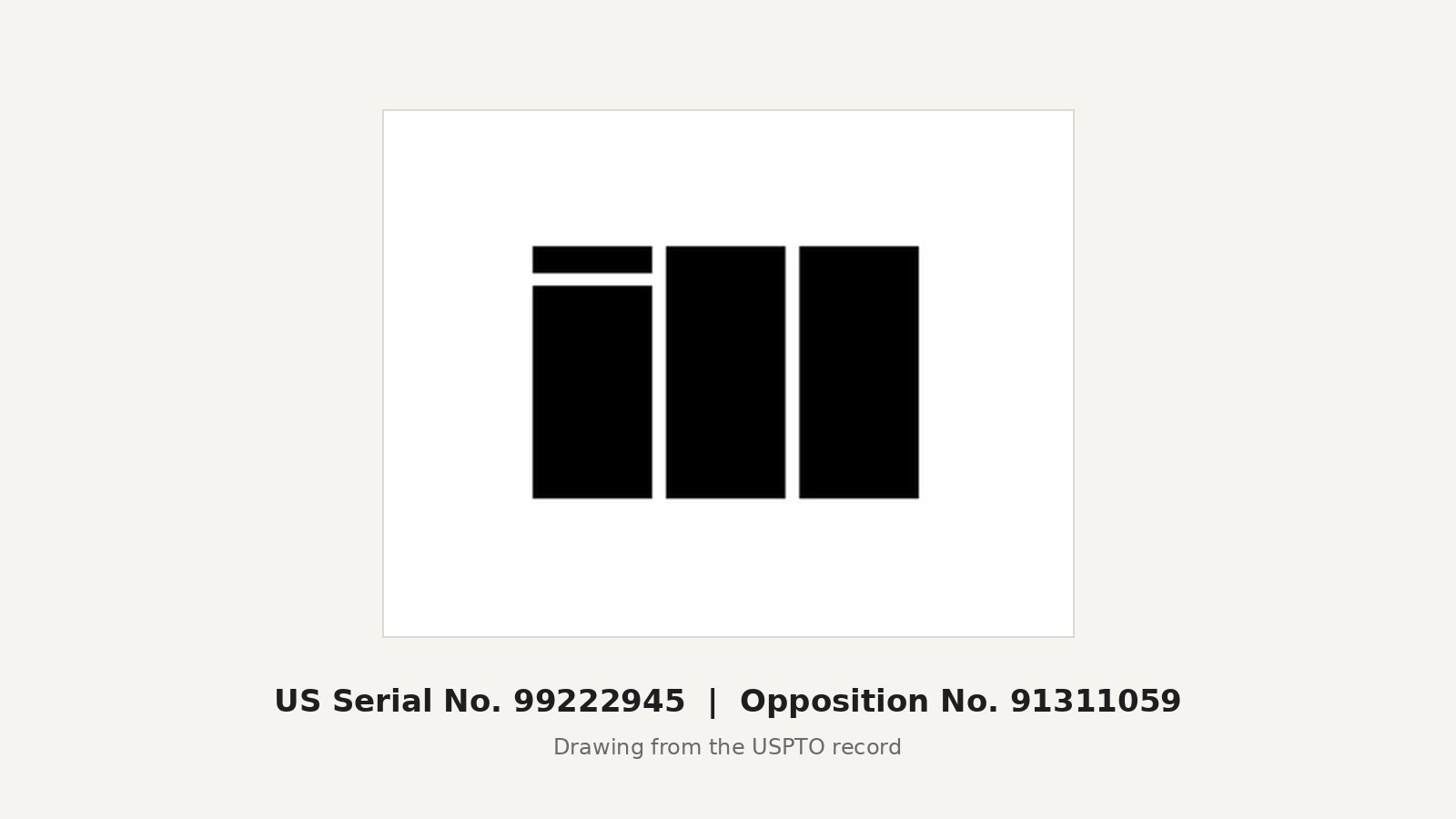
- The opposed mark is three vertical rectangles side by side, with a small horizontal bar sitting above the left one.
- The opposition is partial: it covers Classes 9, 14, 16 and 18. Class 12, the electric scooters, mopeds and other vehicles, is left alone.
- adidas pleads more than 25 US registrations for its stripe and logo marks, some dating back decades, and says it tried to settle before filing.
- The case is at the very start. The Board instituted it on 12 October 2026 and set the answer deadline for 11 December 2026.
What is the mark adidas is opposing?
Infinite Machine filed application Serial No. 99222945 on 7 June 2025, claiming priority from a Chinese application filed on 3 June 2025. According to the USPTO record, the mark “consists of three vertical rectangles arranged side-by-side. The left rectangle contains a smaller horizontal rectangle above the larger rectangle. The other two rectangles are vertical bars of equal height and width.” It has no words in it.
The application covers five classes. Class 12 carries the core business: electric mopeds, electrically powered motor scooters, motorised skateboards and even “flying cars, namely, vehicles for use on land and in air.” The other four classes are the merchandise a hardware brand usually wants: motorcycle helmets and sunglasses in Class 9; key rings, watches, clocks, jewellery and lanyards in Class 14; pens, notebooks and posters in Class 16; and backpacks, travel bags, luggage, briefcases, fanny packs and tote bags in Class 18. The USPTO approved the application and published it for opposition on 14 April 2026.
FLJ Insider Pro is open: live fashion law jobs and internships, five career guides and two roadmaps. Early bird USD 12/month. See what's inside
Infinite Machine is a New York company. Fortune reported in April 2026 that it has raised $14.2 million, including from Andreessen Horowitz’s American Dynamism fund, and that it runs from an office in Long Island City with assembly in Shenzhen.
What does adidas argue?
The notice of opposition on TTABVue, filed by Kilpatrick Townsend & Stockton, makes two claims.
- Likelihood of confusion under Section 2(d) of the Lanham Act. adidas says the mark “incorporates three stripes in a manner that is confusingly similar to the adidas Marks in appearance and overall commercial impression,” and that the goods are identical or highly related to goods it has long sold, especially bags, eyewear and accessories.
- Dilution by blurring under Section 43(c). adidas says registration would erode consumers’ exclusive association of three stripes with adidas. Dilution only protects marks that are famous to the general US public, and the filing spends several pages on that point, listing campaigns from “Impossible is Nothing” to a 2026 World Cup film with Lionel Messi and Bad Bunny.
On priority, adidas says it first put three stripes on shoes more than seventy years ago, has used them on footwear in the US since at least 1952 and on apparel since 1967. The pleaded registrations cover sunglasses and eyewear, bags, headwear, apparel, stationery and more.
One line stands out. adidas writes that it “regrets having to bring this Partial Opposition and has attempted to resolve its concerns” with the applicant, and that it is filing “to preserve its rights while remaining open to an amicable resolution.” That language usually signals that a coexistence deal or a narrowed list of goods is still possible.
Why are the scooters not part of the opposition?
adidas chose its battleground. Its stripes are strongest on the goods it actually sells: shoes, clothing, bags, eyewear and sports accessories. An electric moped is a long way from a tracksuit, and the confusion argument is far weaker there. By opposing only Classes 9, 14, 16 and 18, adidas targets the branded merchandise, the helmets, sunglasses and tote bags that would sit closest to its own products in a shop or online, while not picking a fight over Infinite Machine’s main business.
The timing also checks out. adidas obtained an extension of time to oppose, and its filing records that the extension ran to 11 October 2026. That was a Sunday, and under the USPTO’s rules a deadline that falls on a weekend moves to the next business day, so the Monday 12 October filing was in time (37 CFR 2.196).
How has adidas fared in past stripe disputes?
adidas polices its stripes harder than almost any brand, and its record is mixed. It has won many cases against two- and four-stripe designs, but it lost the high-profile US jury trial against Thom Browne’s four-bar stripe, covered in our analysis of adidas v. Thom Browne. In Europe, the General Court annulled one of adidas’s EU three-stripe registrations in 2019 because adidas had not proved the mark had acquired distinctiveness across the EU (Case T-307/17). For the wider picture, see Sneaker Wars: Trademarks, Designs and the Battle for Brand Identity.
This case raises a different question from those shoe disputes. Infinite Machine’s bars are vertical, solid and blocky, with a separate small bar on one of them, and they appear in a logo rather than as decoration on a product. The Board will compare the marks as a whole, including their overall commercial impression, which is where adidas will have to do most of its work. For the legal test behind both claims, our explainer on the Lanham Act for fashion brands walks through confusion and dilution.
What happens next?
The Board has assigned Interlocutory Attorney Steven W. Ferrell. Infinite Machine, represented by Venable, has until 11 December 2026 to answer. A discovery conference, disclosures and discovery follow, then trial periods in which each side files evidence. Most oppositions settle, often by the applicant deleting some goods or agreeing limits on how the mark is shown. If Infinite Machine does not answer, the Board can enter default judgment and refuse registration in the opposed classes. The scooter class would not be affected either way.
Frequently asked questions
Who is adidas opposing?
Infinite Machine Technologies, Inc., a New York company that makes the P1 electric scooter and the Olto e-bike, over its trademark application Serial No. 99222945.
What is the opposition number?
Opposition No. 91311059 at the US Trademark Trial and Appeal Board, filed and instituted on 12 October 2026.
What does the opposed logo look like?
Three vertical rectangles side by side, with a smaller horizontal rectangle above the left one. It contains no words.
On what grounds is adidas opposing?
Likelihood of confusion with its stripe marks under Section 2(d) of the Lanham Act, and dilution by blurring of a famous mark under Section 43(c).
Does the opposition cover Infinite Machine’s scooters?
No. It covers only Classes 9, 14, 16 and 18, meaning helmets, sunglasses, key rings, watches, jewellery, lanyards, pens, notebooks, posters and bags. The Class 12 vehicles are not opposed.
When must Infinite Machine respond?
Its answer is due on 11 December 2026, according to the Board’s notice of trial dates.
FASHION LAW JOURNAL INSIDER
Join designers, brand founders and fashion lawyers who get the biggest brand battles, IP fights and career moves in fashion law, straight to their inbox.