
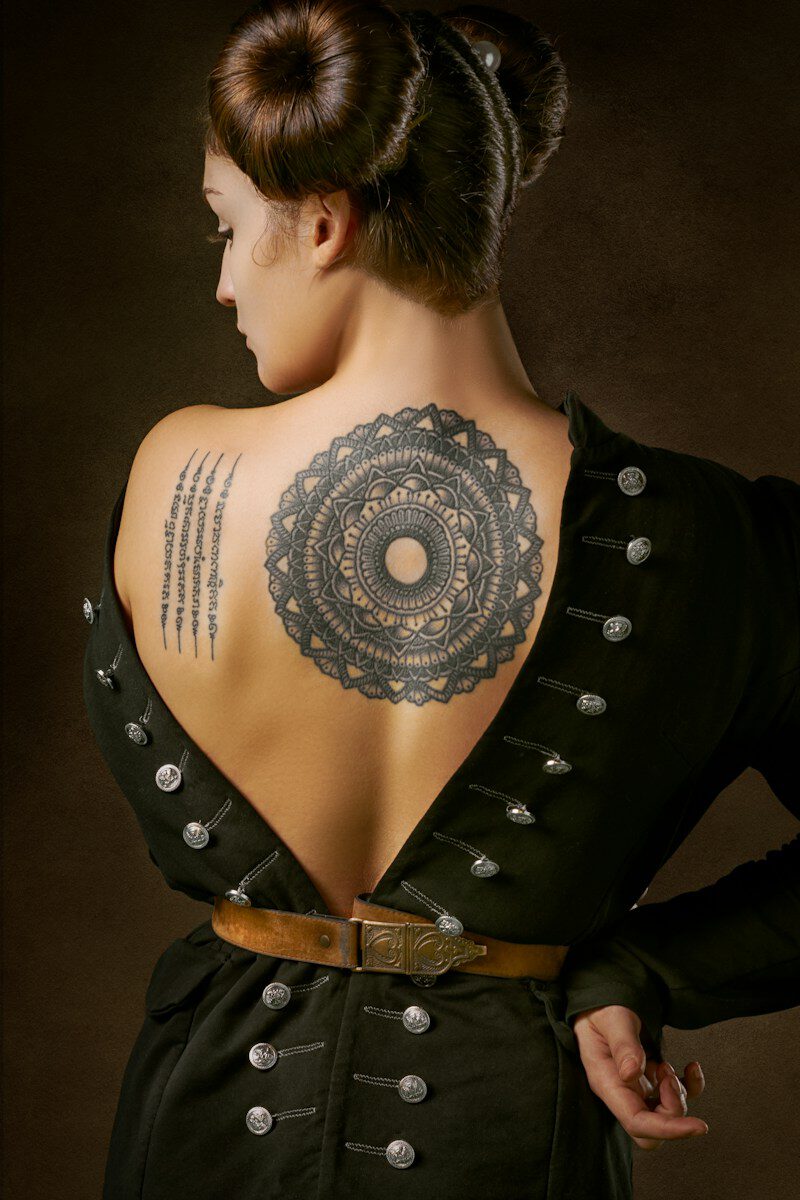
Tattoos and body piercings have been a major part of various tribes and cultures, but in this modern society, they have become popular forms of self-expression, especially in fashion, where individuality and creativity are valued and encouraged. The fashion industry frequently displays body art that reflects its personality and style.
This situation brings forth a fundamental legal question: Can an employer regulate an employee’s appearance, or does it violate the individual’s right to freedom of expression?
The answer depends on the law in each country and the motivation for the restrictions. While no law bans tattoos or piercings in professional settings, international and domestic regulations offer some protection against unfair or discriminatory employment practices.
Employer’s Authority to Govern Appearance.
In many cases, employers can set dress codes and guidelines for employees to promote workplace safety, professionalism, and brand identity. In the fashion industry, the brand image is of great significance and specific looks are required to align with the brand’s requirements or modeling assignments.
FLJ Insider Pro is open: live fashion law jobs and internships, five career guides and two roadmaps. Early bird USD 12/month. See what's inside
But be sure to distinguish between professional necessity and limitations made purely out of personal prejudice. A company’s preference for a particular look does not mean that a person is doing anything wrong, and that should be addressed in equality and anti-discrimination legislation.
Therefore, any ban on tattoos or piercings should be assessed against the laws in place, the employee’s duties, and whether the restriction is justifiable and reasonable.
International Labour Organization Convention No. 111
The Discrimination (Employment and Occupation) Convention, 1958 (No. 111) established by the International Labour Organization seeks to eliminate workplace discrimination. Article 1 mentions the various forms of discrimination, including race, colour, gender, religion, national origin, political beliefs and social status, with additional categories added by various nations.
In Article 1(2), distinctions based on the essential requirements of specific jobs do not necessarily constitute discrimination.
Although the Convention does not include protection for tattoos and piercings, it is a good guide for judging appearances that could be a disadvantage to employees due to their protected attributes. A tattoo associated with someone’s religious or cultural identity, for example, could raise concerns that extend beyond mere personal preference.
The Convention does not inherently make all tattoo prohibitions illegal; rather, enforcement depends on each country’s legal obligations and domestic application.
Universal Declaration of Human Rights, 1948
The Universal Declaration of Human Rights (UDHR) lays down some basic principles of equality as well as human dignity.
Article 1 of the declaration ensures that everybody is born free and has equal rights. Article 2 states the right to exercise these rights without the worry of discrimination. Article 23 ensures that each individual has the right and freedom to choose their employment.
These tenets align with the idea that employment decisions relate to human dignity and equality. However, the UDHR does not have provisions regarding the display of tattoos and piercings in the workplace.
The value is in establishing a basic human rights framework for assessing employment practices and national legislation.
European Convention on Human Rights
Article 8 of the European Convention on Human Rights guarantees the right to privacy to the individual and to family. Personal appearance and bodily autonomy are always concerns for the individual and for private life, yet the Convention does not explicitly specify a right to display tattoos in all work environments.
A legal environment is particularly delicate when an employer’s appearance policies clash with the individual’s sense of personal identity. The resolution of such challenges is a matter of the circumstances, legal frameworks, and competing interests.
The Convention primarily provides for state responsibilities. Therefore, disputes with a private fashion company usually need to be assessed under how applicable state laws protect employees’ rights.
Comparative Legal Approaches
United States
In the United States, federal laws for employment discrimination often do not recognize tattoos and piercings as protected attributes. So employers have the duty to set appearance guidelines that are in conformity with the federal, state, and local laws.
But Title VII of the Civil Rights Act of 1964 prohibits employment discrimination based on religion and other factors. If a tattoo or piercing is essential to an individual’s sincerely held religious beliefs, the employer may be required to provide reasonable accommodations unless such accommodations would be extremely difficult or expensive under legal standards.
According to the U.S. Equal Employment Opportunity Commission, employers cannot deny requests for religious accommodations simply because they conflict with standard dress or grooming policies.
United Kingdom
In the United Kingdom, employers have significant power to control tattoos and piercings through their workplace dress codes. Tattoos and ornamental piercings are not protected characteristics under the Equality Act 2010.
But enforcement of an appearance policy could be a matter of law if it results in discrimination based on a protected characteristic (e.g., religion or gender). And employers must be sure any restrictions they impose are justified and applied consistently.
For example, a rule banning a tattoo that is of religious significance without taking into account the employee’s situation could lead to discrimination issues.
A good overview can be found through the Advisory, Conciliation and Arbitration Service.
France
France provides a distinctive viewpoint since its employment and anti-discrimination laws explicitly recognize physical appearance as a protected characteristic. As a result, these laws protect against certain forms of appearance-related discrimination, including tattoos and piercings.
However, not all restrictions are automatically deemed illegal. Employers may justify specific requirements based on job duties and legitimate workplace needs, as long as they comply with applicable laws.
This legal framework indicates that policies regarding tattoos can vary greatly between different jurisdictions.
Application to the Fashion Industry
The fashion industry is a real challenge because physical appearance is a critical component of the product being marketed, and physical appearance is a big part of the product in the fashion industry. For example, a model can be chosen for a particular campaign according to the details in the creative brief, while designers or fashion journalists are given more freedom in their personal presentation.
For example, a fashion brand would not be able to hire a good designer based on a small visible tattoo, but that tattoo does not affect the designer’s skill. In countries in which appearance is not protected by law, a refusal may be a valid one.
If an employer dismisses an employee because their tattoo is inextricably associated with a deeply held religious belief, that action would violate anti-discrimination laws.
But a fashion company might also have legitimate reasons to ban dangling piercings in production facilities or at a specific garment production site because of real safety reasons. Regulations should be aimed at fixing real hazards, and not putting everybody in danger.
So, it is of great importance to see the difference between individual artistic preference, a legitimate job requirement, and unlawful discrimination.
Legal and Ethical Considerations
Even if there is some limit to appearance in the law, employers will have to consider the wider effect of such policies.
First, strict guidelines can hurt the most creative and experienced people in the fashion industry, where creativity and expertise come into play. Second, one way or another, the application of these rules can make workers feel that they have less. And third, a company’s public stance on diversity and individuality, inclusiveness at its core, and the role of diversity in a company will be questioned.
We suggest that employers put forth clear written guidelines with the professional rationale behind any appearance limitations. They should be open to the less restrictive options that are allowed to cover tattoos for specific campaigns, or remove jewelry only in dangerous environments.
With these strategies, business objectives can be achieved, and employee freedom is respected.
It is my view that it can be considered inappropriate for employers in the fashion sector to enforce universal prohibitions on tattoos and piercings simply because they think it is unprofessional. It is an employer’s right to set the appearance standards, but when it comes to employment and human rights laws, they should be used with care.
The fashion industry is about creativity, individual expression, and changing aesthetic standards. If body art is banned without a solid professional basis, it will only be a hindrance to creativity and the artistic quality of the body and may even lead to a lack of freedom of expression.
A better approach is one that is a balanced policy that puts safety issues and legitimate job requirements in the mix with personal preferences. And if employers follow the law and religious or cultural practices are required, they should take them into account as well.
At the end of the day, a ban on tattoos or piercings does not only determine the legal validity of a dress code but also the laws that will be used and the logic behind the restriction that will be enforced. A well-crafted policy is far more defensible than one that is loosely enforced.
Consequently, employers may limit or ban tattoos and piercings in certain instances, but this power varies from one country to another. Global labor and human rights philosophies have been established, and their principles are based on equality, dignity, and fair employment practices, but they do not give an entire society an entitlement to body art at work.
Fashion industry brands are in the process of reconciling brand image and workplace standards with individual freedom and rights, and with equal opportunities. Clear policies, rationale, and reasonable restrictions can lead to a more equitable approach to it than bans.
FASHION LAW JOURNAL INSIDER
Join designers, brand founders and fashion lawyers who get the biggest brand battles, IP fights and career moves in fashion law, straight to their inbox.