By Celin Manuelian
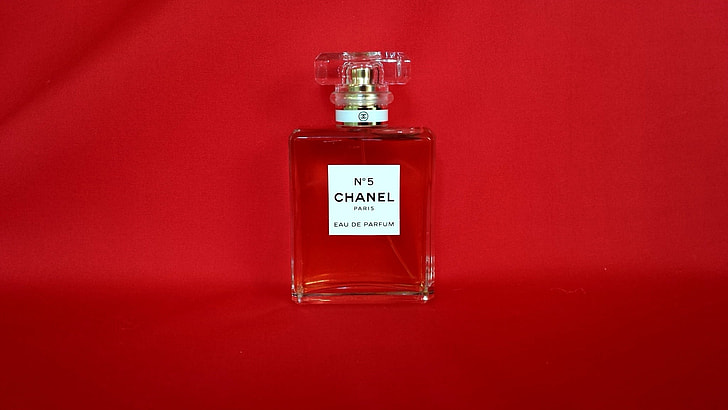
Packaging matters in luxury fashion and beauty, to the point where the packaging itself carries brand recognition and commercial value. Chanel’s No.5 bottle shows how far that can go.
On 9 October 2026, the European Union Intellectual Property Office (EUIPO) Opposition Division upheld Chanel’s opposition (No. B 3 224 328) against a three-dimensional trade mark application filed by Chaos Perfumes Srl, finding that the contested bottle would take unfair advantage of the reputation of Chanel’s earlier three-dimensional mark.
The dispute began on 8 April 2024, when the Romanian fragrance company Chaos Perfumes applied to register a three-dimensional mark depicting a white-and-gold perfume bottle with a label. Chanel opposed it on 23 September 2024, arguing that Chaos Perfumes would benefit from the reputation of Chanel’s protected bottle shape because of the similar features in its design.
FLJ Insider Pro is open: live fashion law jobs and internships, five career guides and two roadmaps. Early bird USD 12/month. See what's inside
Establishing the trade mark rights
The dispute raises an important question: to what extent should trade mark law protect the shape of a luxury product when the competing design is only slightly similar?
The decision is significant because the dispute was not simply about whether the rival had copied Chanel’s branding. It concerned the extent to which the shape of a product, together with Chanel’s reputation and the association customers might make between the bottles, could receive trade mark protection in its own right.
Chanel relied on its French trade mark registration No. 4 286 540, which protects the three-dimensional shape of the bottle and stopper. The EUIPO accepted Chanel’s evidence of genuine use and reputation in France, assessed for the period from 8 April 2019 to 7 April 2024. The evidence reportedly included promotional material, commercial records, press coverage and a consumer survey. According to published accounts of the decision, 72 per cent of 2,438 women surveyed in France in 2016 associated an unbranded image of the bottle with Chanel.
The legal framework: reputation beyond confusion
The Office found only a low degree of visual and conceptual similarity between the two bottles. Both have a compact rectangular body, rounded corners, a short central neck and a broad, flattened stopper, while the colour, label and wording differ. It also noted that Chanel’s bottle has low inherent distinctiveness. Even so, it found that this was enough for consumers to make a mental connection between the two, and that the later design would benefit unfairly from Chanel’s reputation.
The EUIPO upheld the opposition under Article 8(5) of Regulation (EU) 2017/1001, the EU Trade Mark Regulation. Article 8(5) allows an application to be refused where it is identical or similar to an earlier mark with a reputation and its use without due cause would take unfair advantage of, or be detrimental to, the distinctive character or reputation of that earlier mark. Because the opposition succeeded on this ground, the Office did not examine Chanel’s other grounds, and Chaos Perfumes’ application was rejected. Chaos Perfumes was ordered to pay €620 in costs. The decision can still be appealed to the EUIPO Boards of Appeal.
What the decision means
The Chanel No.5 dispute highlights a significant issue in fashion and beauty law: how far trade mark protection can extend from a product’s name to its physical appearance. Applying Article 8(5) to a perfume bottle shows the potential value of three-dimensional marks where packaging has acquired recognition of its own.
However, it can be argued that even if Chanel’s No.5 bottle is well known, or another bottle looks similar, that alone is not enough to prove a legal violation. The legal requirements for protecting a trade mark with a reputation still have to be met, including the link in consumers’ minds and the unfair advantage or detriment.
The broader lesson is that there is a fine balance between protecting famous luxury brands and allowing fair competition. Trade mark law should stop businesses from unfairly exploiting a luxury brand’s reputation, but it should not give that brand excessive control over ordinary product designs.
About the author:

Celin Manuelian is a law graduate with a particular interest in intellectual property law. Through her writing, she aims to explore this field and pursue a career in fashion law.
FASHION LAW JOURNAL INSIDER
Join designers, brand founders and fashion lawyers who get the biggest brand battles, IP fights and career moves in fashion law, straight to their inbox.