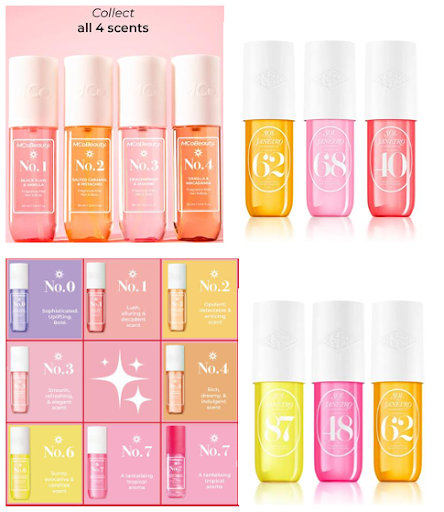
The debate over beauty dupes is no longer limited to price comparisons and viral product recommendations. Sol de Janeiro’s legal battle against Australian beauty brand MCoBeauty highlights a more complicated question for the industry: when does creating an affordable alternative cross the line into copying a competitor’s brand identity?
In a September 2026 ruling, a US federal court dismissed Sol de Janeiro’s trade dress infringement claim, giving the company an opportunity to revise its complaint. However, the decision did not bring the wider dispute to an end. As reported by Beauty Independent, other allegations against MCoBeauty were allowed to proceed, keeping the case relevant to beauty companies navigating the increasingly competitive dupe market.
The Legal Dispute Behind the Products
Sol de Janeiro, known for its Brazilian-inspired fragrances and body-care products, challenged MCoBeauty over products that it alleged resembled its Cheirosa fragrance mists. The dispute centres on the presentation of the products, including their bottles, caps, colours and other visual features.
For Sol de Janeiro, the issue is whether the combination of these elements has become sufficiently associated with its brand to warrant legal protection. MCoBeauty, meanwhile, operates in a market where lower-priced alternatives to popular beauty products have become a major selling point.
FLJ Insider Pro is open: live fashion law jobs and internships, five career guides and two roadmaps. Early bird USD 12/month. See what's inside
The court’s written opinion explains why the distinction between product similarity and legally protected trade dress matters. A company cannot establish infringement simply by pointing to similarities between two products. It must also satisfy the legal requirements for protecting the particular features it claims as its own.
Why the Packaging Claim Faced a Setback
The court’s decision focused on whether Sol de Janeiro had adequately established that the packaging features at issue were nonfunctional. Under US law, trade dress protection may cover a product’s overall appearance, but it cannot ordinarily be used to monopolise features that serve a functional purpose.
The court found the allegations insufficient on this point and dismissed the trade dress claim without prejudice. This gives Sol de Janeiro the opportunity to amend its complaint rather than permanently preventing it from pursuing the claim.
The decision is narrower than a finding that MCoBeauty’s products are lawful copies. It does not establish that the disputed packaging is free from infringement concerns, nor does it settle the wider case. Instead, it demonstrates how a brand seeking to protect its visual identity must define the features it claims and explain why those features qualify for protection.
For beauty companies, that distinction is significant. Packaging can become a recognisable part of a product’s identity, but recognition alone does not automatically give a brand exclusive rights over every design element.
The Dispute Extends Beyond Packaging
The lawsuit also raised concerns about how MCoBeauty presented products to consumers online. Sol de Janeiro alleged that searches for its name on MCoBeauty’s website returned competing products, potentially creating confusion about a relationship between the brands.
The court allowed certain claims relating to unfair trade practices and the website search function to continue, while dismissing other allegations, including aspects of the false advertising claim involving product comparisons. The full court decision sets out the different outcomes rather than treating the lawsuit as a single, all-or-nothing question.
This part of the dispute reflects the importance of online presentation in the beauty industry. Consumers often discover alternatives through search results, product recommendations, and social media comparisons. How a competitor’s brand name is used in these settings can therefore become a legal issue, separate from the appearance of the product itself.
What It Means for Beauty Dupes
The dupe market has grown because consumers want less expensive ways to access products associated with established brands. A lower price, similar scent profile, or comparable product experience can make an alternative attractive. But those similarities do not automatically establish infringement, just as describing a product as a dupe does not automatically make it legally safe.
The challenge for beauty companies is to understand where competition ends, and the misuse of another brand’s protected identity begins. Distinctive packaging, accurate product descriptions and clear brand identification can all matter, depending on the circumstances.
For established brands, the case also illustrates that protecting a product’s visual identity requires more than showing that another company has created something similar. The specific features claimed, their function, and the way products are marketed can affect the outcome.
Sol de Janeiro’s setback is therefore not a final victory for MCoBeauty. The court’s ruling leaves parts of the dispute unresolved and provides an opportunity for the packaging claim to be revised. As the case continues, it could offer further guidance on how US trademark law applies to the increasingly popular business of beauty dupes.
FASHION LAW JOURNAL INSIDER
Join designers, brand founders and fashion lawyers who get the biggest brand battles, IP fights and career moves in fashion law, straight to their inbox.