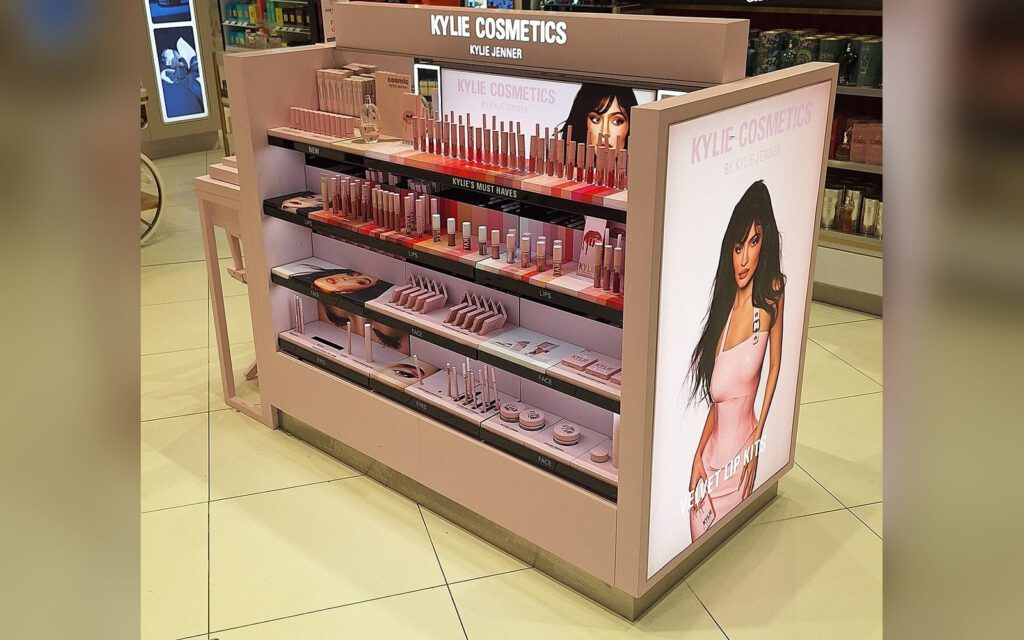



Dupes are now sold openly as dupes, and US courts are being asked how far trade dress, design patents and copyright can go in stopping them. Fashion Law Journal in conversation with Jeffrey Greene, a Partner at Foley & Lardner LLP in New York, and Sarah McGrath of Foley & Lardner on trade dress, dupe marketing, enforcement against high-volume sellers and the cases on the 2026 docket. Read here:


Trade dress is the tool brands reach for first. Where does it genuinely hold up against a dupe, and where does it quietly fail?
Under the Lanham Act, a brand can prevail under a trade dress claim if they meet the following criteria: 1) the design must have acquired distinctiveness, meaning that the design has become associated with a single source identifier in the market, 2) the design must not be functional, and 3) the copy must be likely to confuse consumers. While a trade dress claim may likely hold up for a commonly recognized or well-known design, it often fails in the age of fast-fashion and trends, as new and recently trending products cannot show recognition in the market yet. For example, in Wal-Mart Stores, Inc. v. Samara Brothers, Inc., 529 U.S. 205 (2000), a supplier of Wal-Mart copied Samara’s line of children’s seersucker clothing decorated with appliqués, and the SCOTUS unanimously held that product design can never be inherently distinctive. Instead, the SCOTUS stated that a brand owner must prove that their design has acquired “secondary meaning” (the public associates that design with the source of that design) that caused customer confusion. This may be incredibly difficult for a new or seasonal brand to prove.
Dupes are now marketed openly as dupes. Does that candour help the brand’s case or the copyist’s?
Marketing a product as a “dupe” both helps the copyist and the brand’s case in different ways. In a trade dress claim, where a brand must prove that the copy is likely to confuse consumers, clear labeling of the product as a dupe at the point of sale sometimes avoids or eliminates confusion, thereby potentially undercutting the brand’s trade dress claim. However, on the other hand, this labeling may be evidence of the copyist’s intent to copy the original. Courts frequently treat evidence of deliberate copying as relevant to, though not conclusive of, a likelihood of confusion and a design’s recognition in the market (secondary meaning), particularly where the copy closely imitates a well-known design and the copyist appears to have intended to trade on its reputation. For example, in Gucci America, Inc. v. Guess?, Inc., 868 F. Supp. 2d 207 (S.D.N.Y. 2012), the court found that Guess deliberately copied elements of Gucci’s handbag and accessory designs, including its interlocking “G” pattern, and treated that intentional imitation as evidence of bad faith supporting a likelihood of confusion, including confusion among the public after purchase.
Shein and Temu are fought on volume as much as on design. What changes in enforcement strategy when the infringement is continuous rather than a single product?
When infringement is continuous, brands should consider including evidence of such pattern, and the relief should consider focusing on covering future infringement as well. For example, copying multiple items may serve as evidence of intent to copy or deceive. Brands may want to consider seeking injunctive relief that protects against future products, rather than a single narrow injunction that just covers the current infringing products. Additionally, brands should consider leveraging other forms of IP, such as design patents and copyrights.
FLJ Insider Pro is open: live fashion law jobs and internships, five career guides and two roadmaps. Early bird USD 12/month. See what's inside
What is the most common mistake brands make in the first thirty days after spotting a dupe?
Both acting too quickly and waiting too long to act are mistakes that brands commonly make in the first thirty days after spotting a dupe. Acting too quickly, such as immediately sending a cease-and-desist letter can call attention to the dupe, invite a preemptive lawsuit, and can limit evidence that may have later helped them in a lawsuit. On the other hand, waiting too long can also hurt a brand, as under the Trademark Modernization Act of 2020, a brand that shows a likely win is presumed to suffer irreparable harm. This presumption can be rebutted, often by an unexplained delay. In the first 30 days of spotting a dupe, brands should record and preserve evidence (ads, social media posts, consumer reviews, etc.), collect the brand’s true intellectual property, narrowly define the product, and carefully decide on a strategy.
Design patents, copyright, trade dress: for a brand with a limited budget, where is the money best spent before a product launches?
Since a trade dress claim cannot be brought before a product is actually launched, design patents and copyrights help establish rights prior to a product launching. A design patent does not require proof of consumer recognition, making it an attractive option for newer brands. Additionally, the remedy for a design patent infringement could be the infringer’s total profit on the copied product. Brands should also register copyrights for original prints, patterns, and design.
Of the cases on the 2026 docket, which do you expect to matter most in five years, and why is it not the one getting the headlines?
Sol de Janeiro v. MCoBeauty is a trade dress claim brought in the Southern District of New York. Sol de Janeiro sued MCoBeauty in 2024, alleging that MCoBeauty’s fragrance mist infringed on the trade dress of Sol de Janeiro’s fragrance mist packaging. This case will likely have a longstanding impact, as it is an example of using the “dupe” label hurting the copyist, as MCoBeauty advertised their fragrance mist as offering “comparable aesthetics.” The court found that advertising this product with the terms “comparable aesthetics” undermined MCoBeauty’s argument that the products looked dissimilar. In a world where brands are proudly advertising their products as “dupes” of popular, more expensive products, this case may serve as an important precedent that may change advertising and use strategies.
If US fashion were given one piece of design protection it does not have today, what should it be?
United States fashion and IP law should take a page out of the EU’s book and incorporate short-term design rights as a protection option. In the EU, product designs can be protected through either an automatic unregistered right that lasts three years, or a registered right that lasts up to 25 years. The unregistered design is obtained automatically once the design is first made available to the public. This may fill in major gaps in the US fashion and IP law, as current design protection often occurs too late and can be too costly.
About the interviewees
Jeffrey Greene is a Partner at Foley & Lardner LLP, based in the firm’s New York office. View his firm profile.
Sarah McGrath is with Foley & Lardner LLP and worked with Jeffrey Greene on these responses.
For more conversations with the people shaping the business of fashion, read our interviews.
FASHION LAW JOURNAL INSIDER
Join designers, brand founders and fashion lawyers who get the biggest brand battles, IP fights and career moves in fashion law, straight to their inbox.