

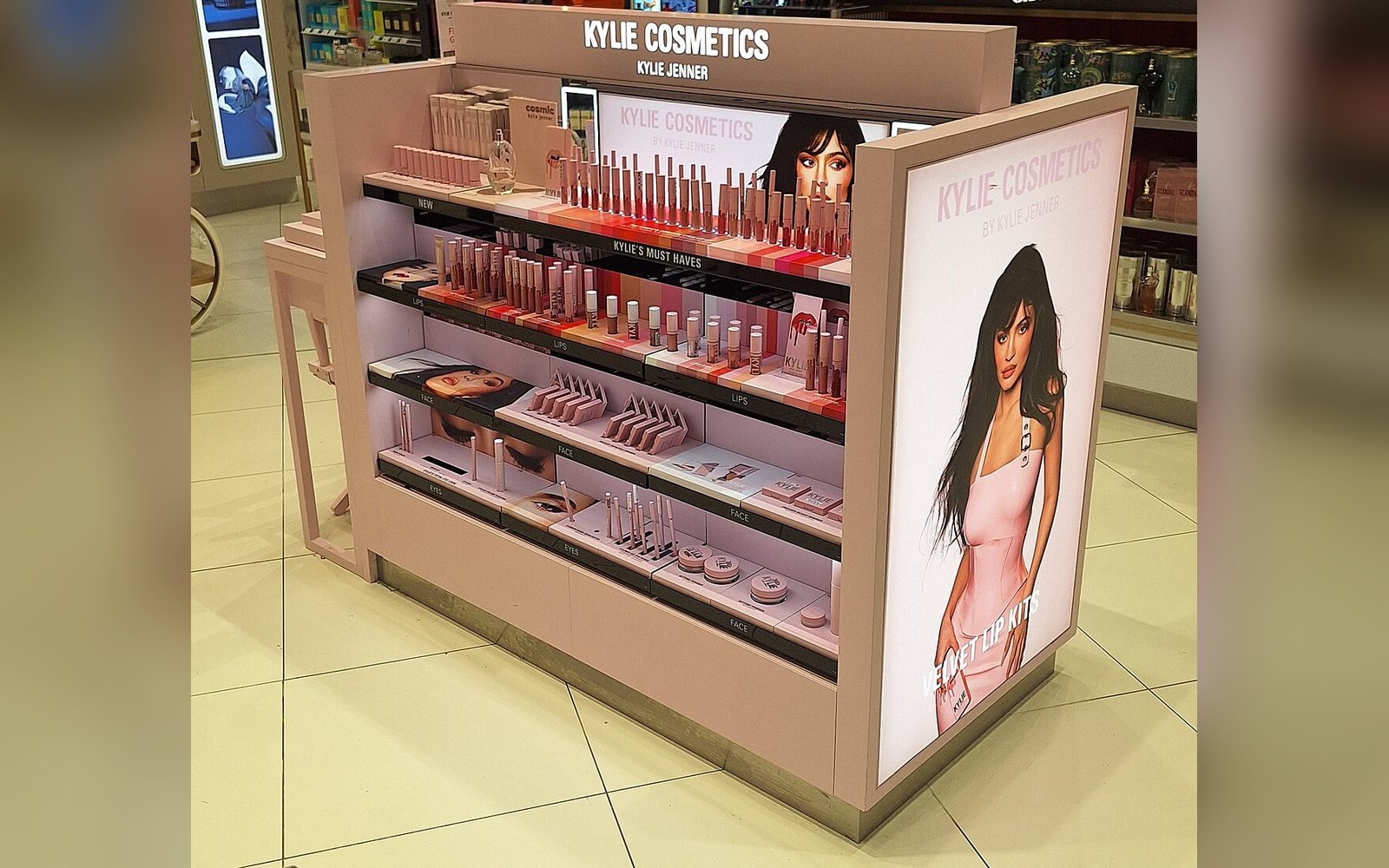
Kylie Cosmetics still carries Kylie Jenner’s name, face and social media reach, but she has not controlled it since January 2020. That month Coty, the New York-listed owner of brands such as CoverGirl, Rimmel and Burberry fragrances under licence, paid $600 million in cash for 51% of the company behind it. The deal made headlines twice: first as proof that a celebrity beauty brand could be worth more than a billion dollars, and again six months later when Forbes used Coty’s own filings to argue the business was far smaller than the Jenners had claimed. Nearly seven years on, the brand sits inside a Coty that is shrinking, reviewing and selling parts of itself. This guide sets out who owns Kylie Cosmetics as of 17 November 2026, what the 2020 deal actually bought, and how it compares with the other big celebrity beauty deals.
Short answer: Coty Inc. owns 51% of Kylie Cosmetics through its stake in King Kylie, LLC, bought for $600 million in a deal announced on 18 November 2019 and completed on 6 January 2020. The remaining 49% stayed with the sellers, Kylie Jenner’s companies and a family trust. Forbes estimates Jenner personally owns about 44%. No sale of either stake has been announced.
Key takeaways
- Coty acquired 51% of the equity in King Kylie, LLC on 6 January 2020 for a base price of $600 million in cash, valuing the business at about $1.2 billion.
- Kylie Cosmetics had about $177 million of net sales in the 12 months before the deal, which Forbes later used to revise Jenner’s fortune to “just under $900 million”.
- Coty’s strategic review, launched in September 2025, covers its mass colour cosmetics and Brazil businesses, not Kylie Cosmetics, which Coty reports in its Prestige division.
- Among other celebrity brands, e.l.f. bought all of Rhode in 2025, Coty sold its SKKN stake at a loss, and LVMH’s half of Fenty Beauty has been reported to be for sale.
Who owns Kylie Cosmetics today?
Coty Inc. is the majority owner. Its stake is held through King Kylie, LLC, the Delaware company that owns the Kylie Cosmetics business, and Coty consolidates the brand in its accounts, reporting it within its Prestige segment alongside fragrance licences such as Burberry, Hugo Boss and Marc Jacobs. The other 49% belongs to the sellers named in the November 2019 purchase agreement: King Kylie Holdings, LLC, Kylie Jenner Inc. and the KMJ 2018 Irrevocable Trust. Forbes has said it estimates Jenner’s own share at about 44%, because it assumes a trust linked to her mother, Kris Jenner, holds part of the remaining interest.
One detail in Coty’s 2025 annual report shows how the arrangement works legally. Coty lists “Kylie Cosmetics by Kylie Jenner” among its prestige brands but does not mark it as one of its owned brands. That fits the structure set up in 2020: King Kylie owns or licenses the intellectual property, and Coty uses it under a collaboration agreement and a licence agreement in return for marketing and licence fees. Jenner’s name is the brand, and it was never simply handed over. FLJ’s piece on why the fashion brand is not the business explains why buyers often pay for contracts and licences rather than for a name outright.
FLJ Insider Pro is open: live fashion law jobs and internships, five career guides and two roadmaps. Early bird USD 12/month. See what's inside
What did Coty buy in the 2019 to 2020 deal?
Coty announced the deal on 18 November 2019. It agreed to pay $600 million for 51% of Jenner’s beauty business, covering both Kylie Cosmetics and Kylie Skin, which BeautyMatter reported valued the brand at about $1.2 billion on net sales of about $177 million over the previous 12 months. Coty said it would take charge of research, product development, manufacturing, distribution and international expansion, and would act as licensee for skincare, fragrance and nail products. Jenner and her team kept the lead on creative work for products and communications.
The deal closed on 6 January 2020. Coty’s annual report for the year to 30 June 2020 sets out what the $600 million was allocated to. Most of the value sat in contracts, not in stock or factories: $369 million for the collaboration agreement, $280 million for the licence agreement, about $129 million of goodwill, and only small amounts for cash, inventory and equipment. Against that, Coty recorded a $212.9 million noncontrolling interest for the 49% it did not buy. In its first six months inside Coty, the business contributed $52 million of revenue and an $11.7 million net loss.
| Deal term | Detail |
|---|---|
| Agreement signed | 18 November 2019 |
| Completed | 6 January 2020 |
| Stake bought | 51% of the equity in King Kylie, LLC |
| Price | $600 million base price, in cash |
| Implied value of whole business | About $1.2 billion |
| Sales before the deal | About $177 million in the previous 12 months |
| Largest assets recorded | Collaboration agreement ($369m) and licence agreement ($280m) |
| Sellers keeping 49% | King Kylie Holdings, Kylie Jenner Inc. and the KMJ 2018 Irrevocable Trust |
Sources: Coty annual reports for fiscal 2020 and 2025, BeautyMatter.
How did the deal change Forbes’ view of Kylie Jenner’s wealth?
Forbes had put Jenner on its cover in July 2018 and declared her a billionaire in March 2019, at 21. The Coty deal gave it audited numbers for the first time. On 29 May 2020 Forbes published “Inside Kylie Jenner’s Web Of Lies, And Why She’s No Longer A Billionaire”. Using Coty’s filings, it calculated that sales had grown 40% from 2018 to reach $177 million, which put 2018 revenue at about $125 million rather than the roughly $360 million the family had suggested. It also said Kylie Skin was on track for about $25 million of sales in 2019.
Forbes revised her fortune to “just under $900 million”, made up largely of the remaining stake and an estimated $340 million of after-tax cash from the sale. Jenner rejected the article on social media, calling it full of “inaccurate statements and unproven assumptions”. Forbes’ current profile puts her net worth at $670 million as of June 2025 and says she received about $540 million before tax from Coty.
The legal point is a simple one. Private companies can say what they like about their revenue to journalists. Once a public company buys in, the figures go into securities filings that carry legal liability, and the story changes.
Has anything changed since Coty bought in?
The ownership split has not changed, but there has been pressure on both sides. In August 2023 Bloomberg reported that Jenner had explored buying back control of Kylie Cosmetics, with informal talks stalling over price, and that Kim Kardashian was in talks to buy back Coty’s 20% stake in her SKKN by Kim skincare line. Fortune’s republication of that report notes that Coty declined to comment. No buyback of Kylie Cosmetics followed.
Kardashian’s exit did happen. In March 2025 Skims bought both Coty’s 20% and Kardashian’s 80% of SKKN, and Coty booked a $71.1 million loss on the stake it had bought for $200 million in 2021.
Coty itself has been restructuring. On 30 September 2025 it announced a strategic review of its mass colour cosmetics business (CoverGirl, Rimmel, Sally Hansen and Max Factor, about $1.2 billion of revenue) and its Brazil business, with options including sales and spin-offs. Kylie Cosmetics was not named. Coty’s fiscal 2025 report blamed a fall in Kylie makeup sales on fewer launches and a weaker category, but on its earnings call on 5 November 2026 Coty’s executive chairman and interim chief executive, Markus Strobel, named Kylie Cosmetics among the brands driving 5% like-for-like growth in its six core prestige brands. He said the review remained on track to finish by the end of calendar 2026. As of 17 November 2026, no deal involving Kylie Cosmetics or Jenner’s stake has been announced.
How does Kylie Cosmetics compare with other celebrity beauty deals?
The Coty deal set the template many celebrity brands have since been measured against. The table shows where the best-known names stand.
| Brand (founder) | Who owns it | Key deal | Position at November 2026 |
|---|---|---|---|
| Kylie Cosmetics (Kylie Jenner) | Coty 51%; Jenner companies and trust 49% | $600m for 51%, completed 6 January 2020 | Coty majority owner; no sale announced |
| SKKN by Kim (Kim Kardashian) | Skims | Coty paid $200m for 20% in 2021; sold to Skims in March 2025 | Coty booked a $71.1m loss |
| Rhode (Hailey Bieber) | e.l.f. Beauty, 100% | Up to $1bn: $800m at closing plus up to $200m earnout; completed 5 August 2025 | Bieber stays as chief creative officer |
| Fenty Beauty (Rihanna) | Rihanna 50%; LVMH 50% through Kendo | LVMH reported to be exploring a sale of its half since October 2025 | MarcyPen Capital Partners reported in talks; no deal announced |
| Rare Beauty (Selena Gomez) | Privately held | Reports in 2024 that advisers were exploring a sale at about $2bn | Chief executive said in July 2025 no decisions had been made |
Sources: Coty filings, e.l.f. Beauty, Cosmetics Business, Forbes via CBS News, WWD via TheIndustry.beauty.
Rhode is the clearest contrast. When e.l.f. Beauty agreed to buy it on 28 May 2025, it bought the whole company: $600 million in cash and $200 million in e.l.f. shares at closing, plus up to $200 million more depending on Rhode’s growth over three years. That price was about 3.8 times Rhode’s $212 million of sales in the year to March 2025, against roughly 6.8 times trailing sales for Kylie Cosmetics in 2019. The earnout ties part of the price to results, which Coty’s deal did not. FLJ covered the Rhode deal in e.l.f. Beauty’s billion-dollar Rhode acquisition.
Fenty Beauty sits at the other end. Rihanna launched it in 2017 with Kendo, LVMH’s beauty incubator, and Forbes reported in 2021 that she owned half the brand, with LVMH holding the rest. Reuters reported in October 2025 that LVMH was exploring a sale of its 50%, and in June 2026 Cosmetics Business reported that MarcyPen Capital Partners, the investment firm co-founded by Jay-Z, was in talks to buy it. FLJ’s guide to every brand LVMH owns shows where Fenty sits in the group.
What do these deals show about celebrity beauty ownership?
- The name is licensed, not sold. In the Coty deal the most valuable assets were the collaboration and licence agreements. A buyer that cannot own a person’s name outright buys long-term rights to use it.
- Creative control is a contract term. Jenner kept the lead on product and communications. Bieber became Rhode’s chief creative officer. These roles are written into the deal documents, along with what happens if the founder steps back.
- Minority and majority stakes behave differently. Coty’s 20% in SKKN gave it little control and ended in a loss. Its 51% in Kylie Cosmetics lets it consolidate the brand and run the supply chain.
- Earnouts shift risk. e.l.f.’s structure pays more only if Rhode keeps growing, which protects the buyer if a founder’s popularity fades.
FLJ’s guide to celebrity fashion brands, contracts and licensing looks at these clauses in more depth. Readers who want more ownership stories set out the same way can use FashionLawyer.co’s Brand Case Study Pack, which covers 13 fashion and luxury brands and the legal moves behind them.
This article is general information about company ownership as of 17 November 2026, based on public filings and reports. It is not legal or investment advice.
Frequently asked questions
Does Kylie Jenner still own Kylie Cosmetics?
She owns part of it. Coty holds 51%, and the remaining 49% is held by the sellers, which are Jenner’s companies and a family trust. Forbes estimates her personal stake at about 44%.
How much did Coty pay for Kylie Cosmetics?
Coty paid a base price of $600 million in cash for 51% of King Kylie, LLC. The deal was announced on 18 November 2019 and completed on 6 January 2020, valuing the business at about $1.2 billion.
Why did Forbes say Kylie Jenner was not a billionaire?
In May 2020 Forbes said Coty’s filings showed Kylie Cosmetics was much smaller than the family had claimed, with about $125 million of sales in 2018. It cut her estimated fortune to just under $900 million.
Is Coty selling Kylie Cosmetics?
No sale has been announced. Coty’s strategic review covers its mass colour cosmetics and Brazil businesses, and Coty named Kylie Cosmetics as a growth driver in its prestige division in November 2026.
Who owns Kylie Skin?
Kylie Skin was part of the same business Coty bought into in 2020. The 51% stake covered both the make-up and skincare lines, so the same ownership split applies.
Which celebrity beauty brands have been sold outright?
Hailey Bieber’s Rhode is the main example. e.l.f. Beauty bought all of it in a deal worth up to $1 billion that completed on 5 August 2025. Fenty Beauty and Kylie Cosmetics remain partly owned by their founders.
Featured image: Photo: Pear285 via Wikimedia Commons, CC0 (adapted)
FASHION LAW JOURNAL INSIDER
Join designers, brand founders and fashion lawyers who get the biggest brand battles, IP fights and career moves in fashion law, straight to their inbox.