

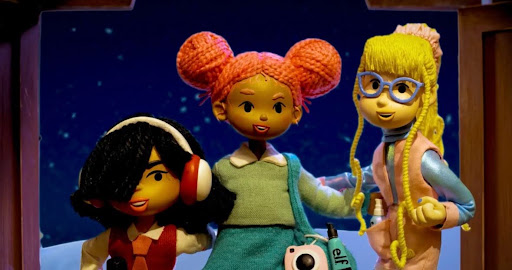
As beauty brands increasingly experiment with AI-generated advertising, e.l.f. Beauty has taken a more traditional route for its 2026 holiday campaign. Its latest film, e.l.f. Made to Stand Out, uses handmade stop-motion animation to tell a story about individuality, bringing the people and craftsmanship behind the production into focus.
Released on November 2, the 60-second film follows three friends, Kit, Echo and Cleo, who return to their hometown for the holidays. Their preparations for a night out become a story about accepting the qualities that make each of them different. Actor Alan Cumming narrates the campaign.
Choosing Craftsmanship Over Digital Shortcuts
The campaign’s most distinctive feature is its production technique. Instead of relying on digitally generated characters, the film uses physical puppets, individually moulded figures and miniature sets. Each movement is photographed frame by frame to create the final animation.
Directed by Cami Kwan, co-founder of Apartment D Films, the production was developed with creative agency SHADOW. As Cosmetics Business reports, the decision to use stop-motion was a deliberate alternative to generative AI, with the brand choosing a production process that foregrounds traditional animation and human creativity.
FLJ Insider Pro is open: live fashion law jobs and internships, five career guides and two roadmaps. Early bird USD 12/month. See what's inside
The production also had a notable gender representation component: women made up 90% of the puppet team and the entire animation team, according to e.l.f. Beauty’s official campaign announcement.
Products Become Part of the Narrative
Rather than presenting the advertisement as a conventional product showcase, e.l.f. incorporates its beauty range into the characters’ preparations. Kit uses the Power Grip Primer, Echo wears the Glow Reviver Lip Oil, while Cleo gets ready with the Thirst Burst Drops.
The products appear as part of the characters’ individual routines, allowing the brand to feature its range without taking the focus away from the storyline. This approach also supports the campaign’s wider message that beauty can be an expression of personality rather than a uniform standard.
The Marketing Value of Nostalgia
The film draws on familiar holiday storytelling, using friendship, a return home and the prospect of an awkward night out to build an emotional connection with viewers. Nostalgia is also part of the campaign’s commercial rationale.
According to research cited by e.l.f., 72% of Americans say nostalgic memories inspire them when life feels complicated, while 68% of US adults say nostalgia influences their purchasing decisions. The first statistic comes from the Archbridge Institute’s research on nostalgia, while the second is attributed to CivicScience’s 2026 research.
The film is being distributed across e.l.f.’s digital and social platforms. The campaign will also extend into retail, with television-section takeovers at Best Buy and Target stores during the holiday shopping season.
Is Handmade Advertising Becoming a Differentiator?
e.l.f.’s campaign is part of a wider conversation about the place of human creativity in advertising. As AI-generated visuals become more common, some brands are looking towards techniques that make the production process itself visible to audiences.
Adweek’s coverage of the campaign highlights the use of claymation and nostalgic storytelling to connect with younger consumers. Meanwhile, Animation World Network’s production report offers further details about the animation, the studio and the creative team behind the film.
For e.l.f., the choice of animation is closely connected to the story it wants to tell. A campaign about embracing individuality is presented through characters that have been physically made, with the time and effort involved in their creation becoming part of the viewing experience.
The campaign does not establish a wider rejection of AI by the beauty industry. Instead, it highlights how traditional creative techniques can still offer brands a distinctive way to connect with audiences. In an advertising landscape increasingly shaped by automation, e.l.f. is making the case for the value of work that audiences can recognise as handmade.
FASHION LAW JOURNAL INSIDER
Join designers, brand founders and fashion lawyers who get the biggest brand battles, IP fights and career moves in fashion law, straight to their inbox.