Getting signed feels like the finish line, but the contract that follows decides how the next few years will go. A model’s agreement sets the commission, the length of representation, the rules for renewal and the way the agency handles money that belongs to the model. In New York, a statute now dictates several of those terms. This guide walks through the path from first meeting to signature, and it explains what the contract should say at each stage.
Before the Meeting: Check the Agency
An agency that wants to represent a model in New York must register with the state Department of Labor. The Department’s responsibilities page for model management companies requires registration for businesses that represent models in New York or are based there, and it requires the registration number to appear in any advertisement seeking models, including social media profiles, and in every contract with a model or client. Registration became mandatory on 21 December 2025, after the Fashion Workers Act took effect on 19 June 2025.
Before attending an open call or sending photographs, a model should search the Department’s registry for the agency’s legal name, which can differ from its brand name. An agency that cannot show a registration number has a problem before any contract exists. FLJ’s guide to model contracts covers the other warning signs that should prompt a check.
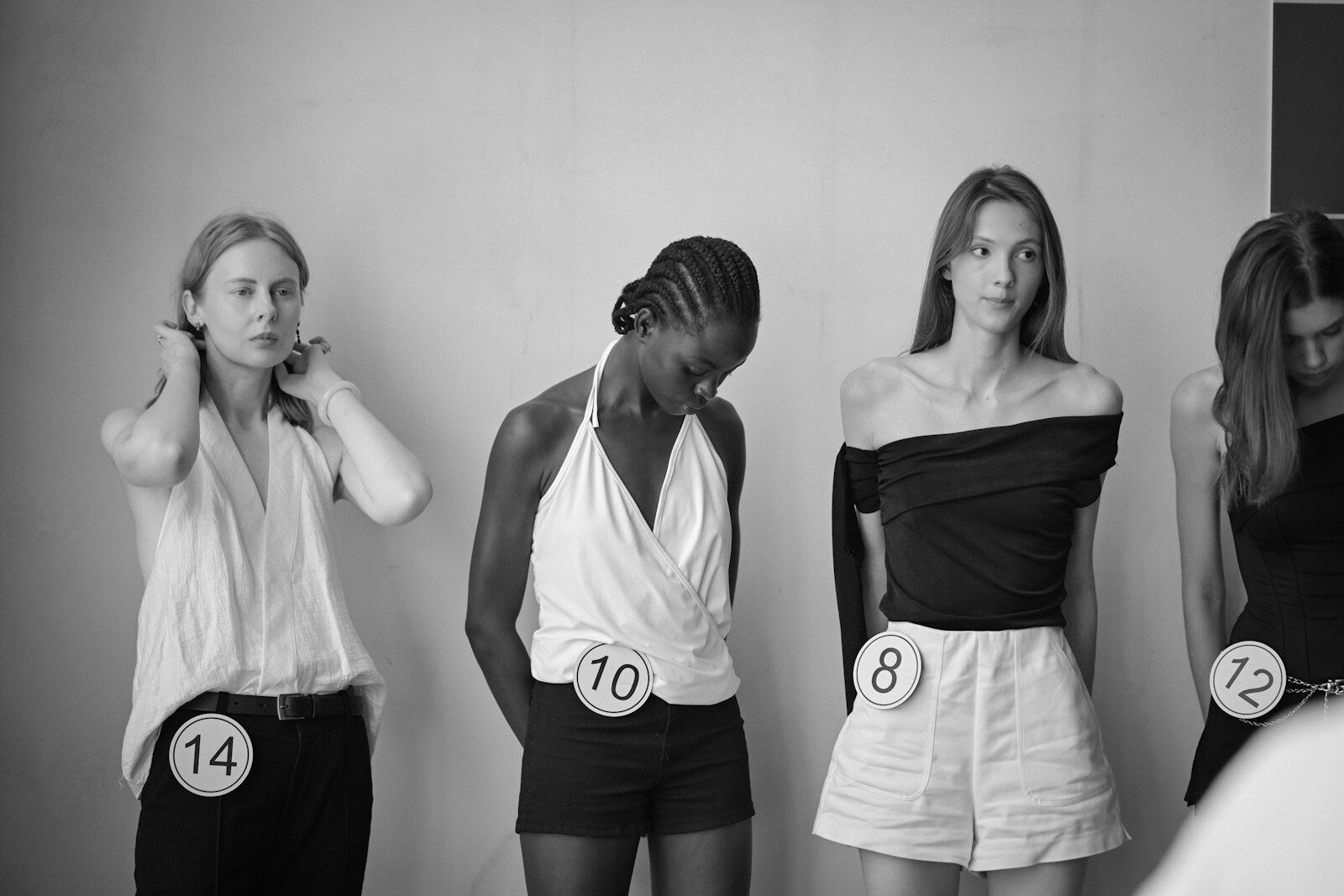
The Meeting and the Offer
Agencies normally sign models after reviewing a portfolio, a composite card and a short interview. The offer itself carries the first important term, which is the commission. Under the Fashion Workers Act, a management company cannot charge a commission greater than 20 percent of a model’s total pay. A model should check whether the figure applies to gross pay or net pay, and whether the agency deducts expenses before calculating the commission.
FLJ Insider Pro is open: live fashion law jobs and internships, five career guides and two roadmaps. Early bird USD 12/month. See what's inside
The Act also prohibits certain upfront charges. The Clark Hill analysis of the Act notes that agencies may no longer collect deposits in advance. A model who is asked to pay for a test shoot, a portfolio package or a registration fee should treat that request as a red flag, since the statute bars such payments as a condition of representation.
What the Contract Must Say
The representation agreement should name the parties clearly and state the registration number. Under the Act, a company cannot require a model to sign a contract that lasts more than three years, and it cannot require a model to accept automatic renewal without written approval. OnLabor’s summary of the Act confirms both limits, and it notes that the Act’s fiduciary duties require the agency to act in the model’s interests in financial and contractual matters.
The contract should also address the commission in plain terms. Commentators report that the Act requires a company to disclose in writing every item it pays first and later deducts from the model’s pay, along with an itemised explanation of how each deduction is calculated. A model should ask for that schedule before signing.
Exclusivity deserves close reading. Some agreements restrict a model from working with other agencies in a region or a category, while others allow freelance bookings. The clause should state the territory, the categories covered and whether the exclusivity survives termination. A vague exclusivity term can give an agency a claim to bookings the model arranged independently.
The termination clause matters as much as the term. A model should know how to end the relationship, what notice the agency must give and whether any commissions continue after the contract ends. The Act requires agencies to notify former models in writing about royalties that the company receives after representation has ended, which means the contract should record how those royalties will be paid.
Deal Memos: The Booking Terms
The representation agreement sets the relationship, and the deal memo sets each job. The Department requires agencies to provide a written deal memo before work begins. The memo must state the model’s total compensation and the payment term, and it must cover the scope of the work. The Department’s guidance makes the deal memo a condition of lawful booking, so a model should refuse to start a job without one.
Several sources describe the timing of the deal memo differently. Some describe a 24-hour rule before work begins, while the Department’s own guidance requires the memo before work begins. A model should ask for the memo as early as possible, and the agency’s contract should commit to the earliest date the law allows. Payment timing has also been reported differently across commentaries, so a model should check the current statute and insist on a written payment date in each memo.
Digital Replicas and Images
The Act also addresses artificial intelligence and digital manipulation. Commentators summarising the statute report that agencies and clients must obtain written approval before creating or using a model’s digital replica. A model should confirm that the contract requires that consent separately from any general approval for the booking, and should check whether the agency can license the model’s images for training data or AI tools.
Images created during the representation raise separate questions about ownership and use. The contract should state who owns the portfolio images, who may use them after termination and whether the model may take the photographs to another agency. FLJ’s analysis of the rights of fashion models explains the copyright and publicity rules that govern those questions.
Expenses and Money Flows
Models often pay for travel, digitals, test shoots and printing. The contract should say which costs the agency pays first, which it recovers from the model and how it will itemise them. Commentators report that the Act requires agencies to disclose any items initially paid by the company that will later be deducted from the model’s compensation, along with the method of calculation. A model should compare each statement with the deal memo to confirm the arithmetic.
Signing Well
Before signing, a model should read the entire agreement, ask for an explanation of anything unclear and request a copy in a language the model understands. The Act gives models the right to receive agreements and deal memos in their preferred language, and an agency that resists that request is telling the model something important about the relationship.
A model should also keep copies of every signed document and every statement, and should calendar the renewal and termination dates. Those records make a dispute easier to resolve, whether the issue involves a late payment, a disputed deduction or an unwanted renewal.
Getting signed is the start of a working relationship, and the contract is the document that governs it. A model who reads the commission clause, the term, the renewal rules and the deal memo requirements before signing will enter that relationship with a clear view of what the agency owes.
FASHION LAW JOURNAL INSIDER
Join designers, brand founders and fashion lawyers who get the biggest brand battles, IP fights and career moves in fashion law, straight to their inbox.