

A video essay about a vocabulary war on BookTok kept me up later than I want to admit, and it left me asking a question that has made my brain heavy: readers and audiences keep asking books and film to make themselves easier, so is anti-intellectualism showing up in fashion too, or is the industry just quiet about it?
I was three video essays deep on a Tuesday night; the scroll started as research and ended as something closer to dread when I landed on the one about the “big words” fight. The whole argument had started over a single word, scrying, posted on Threads by a reader alongside a request: “authors, please use easier words“. When other readers pushed back, a defender reframed the pushback itself as the problem, telling critics to check their ableism: “authors who use big words are ableist.” No, I’m not kidding. One video essay responding to the fallout took the claim apart piece by piece, arguing that the real issue was not ableism but what she called the infantilizing of readers, and named the pattern outright as evidence of “a huge problem with anti-intellectualism in our country right now.” She reached for an analogy that has made my brain feel heavy: a building can install a ramp beside the staircase without tearing the staircase out the same way a book can exist for readers who want a simpler vocabulary without anyone asking every other book to lower itself to meet them. I closed my iPad that night with a feeling I’ve carried into every fashion story I have written since.
I work in an industry that talks about culture constantly. I wanted to know if we are actually part of it, or just watching it happen to someone else.
BookTok’s Fight Over “Big Words” and What Counts as Reading

The vocabulary fight was not an isolated flare-up. A separate video making the rounds way before showed a reader working through a fantasy novel and stopping to ask, more or less, why the pages were so filled with so many words in the first place, a moment that went on to rack up tens of millions of views on X and split the conversation in two, with one camp asking why anyone would be surprised that a book has words on its pages and another arguing she was simply a reader who tried a genre that was not built for her, according to reporting from the Independent and Unilad. It sat inside a longer pattern BookTok has been having with itself for a while now, one where a growing number of readers admit, without much shame, that they skip the parts of a book that are not dialogue. BuzzFeed reported on readers logging thirty or more books a year by reading only the conversations and cutting everything else, the description and the sentences doing the quiet work of building a world before anyone speaks in it, and the response split the community in two, with defenders calling it a valid way to read and critics asking what a reader can honestly call finished when half the book goes unread. One commenter said the practice made her want to put her head through a door.
I do not bring this up to make fun of anyone’s reading habits, because I read a lot, and I live inside this space enough to know the discourse is rarely as simple as either side wants it to be. What strikes me is the shape of the argument itself. The complaint was never really about one word or one dense paragraph. It was about the demand a book makes on a reader’s attention, and a growing appetite to negotiate that demand down. The literacy researchers behind that instinct are not wrong to worry either. About 21% of American adults score at or below the lowest tier of English literacy, according to the National Center for Education Statistics, and a reader who struggles with a page has every reason to want a book meant for her. The argument was never about whether those books should exist. It was about whether every other book owes her the same accommodation. As a writer, should I also change my writing tone?
Why Critics Praised The Odyssey for Refusing to Explain Itself
I noticed the same shape of complaint showing up around film, just aimed the other direction. Christopher Nolan’s The Odyssey opened this summer to a 94% critics’ score and a 97% audience score on Rotten Tomatoes, and the praise kept circling back to the same idea: this film refuses to hold your hand. Forbes called it ambitious and moody, and admitted the film asks you to sit with it, maybe even watch it twice, before you fully catch what Nolan built. Nobody asked for the nearly three-hour runtime to be trimmed down. People kept describing that demand as a relief. Somewhere along the way, a script that trusts its audience to keep up became the exception worth celebrating rather than the baseline anyone expected, and that tells you something about every script that came before it, the ones that explain a character’s motive out loud in case you missed the look on their face, the ones that narrate a twist before it lands so nobody has to sit in confusion for even a second.
Skimming a book for dialogue and praising a film for refusing to explain itself sound like opposite instincts, but they answer the same complaint. Something in us has gotten less willing to sit inside difficulty and wait for it to pay off.
What Attention Span Research Reveals About Why We Skim

None of this lives only in vibes. Gloria Mark, a researcher at UC Irvine who has spent two decades tracking how long people stay focused on a single screen, found that the average attention span on one task dropped from about two and a half minutes in 2004 to roughly 47 seconds by the late 2010s, with half of all those stretches lasting 40 seconds or less, according to her research summarised by Silicon Canals. Mark is careful to say this is not proof that human brains have broken. It is proof that the environment asking for our attention has changed shape faster than we have adapted to it, notification by notification, tab by tab, until switching became the default and staying became the effort.
That is the part that makes the BookTok fight and the Nolan praise make sense together. A reader who has spent the day fragmenting attention across a dozen screens is not lazy for wanting a book that asks less of her. She is responding rationally to a nervous system that a full day of screens has trained, hour after hour, to expect the next thing in seconds rather than minutes.
Is Fashion Anti-Intellectual Too, or Just Quiet About It?
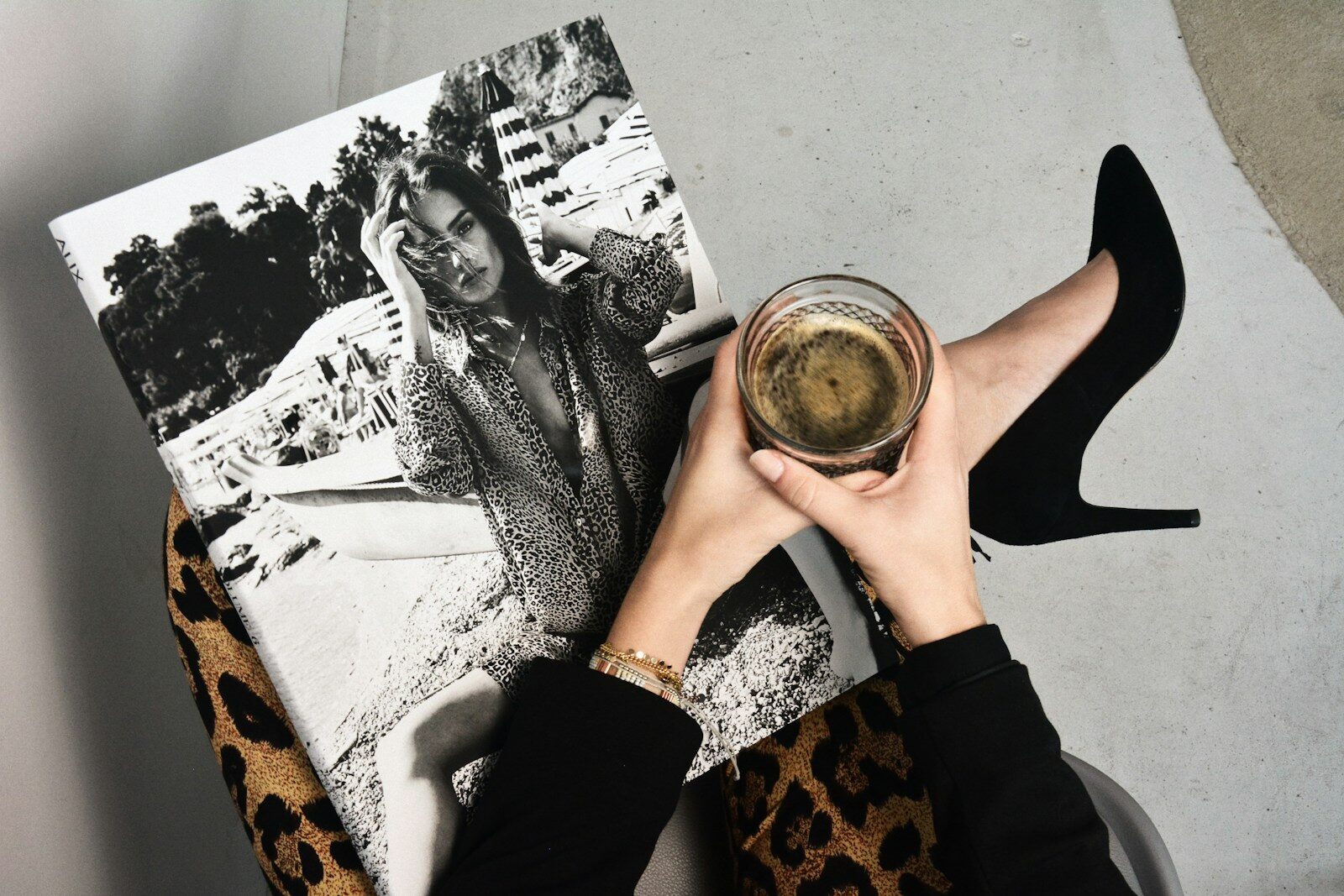
Now here is the part I cannot stop turning over. Fashion sits inside the exact same attention economy as books and film, scrolled through on the same thumb, competing for the same 47 seconds, and yet fashion rarely produces this kind of open argument about itself. We do not really have a fashion equivalent of the big words debate, a public fight over whether a look asks too much of the person wearing it, whether an outfit should have to be explained or defended the way a paragraph does. When fashion does turn self-critical, it is almost always because a story has crossed into something the culture at large is already fighting about: appropriation, labour, size, money. The industry rarely turns that same lens on its own trend cycle and asks whether the cycle itself has gotten too easy to just go along with.
I do not think that silence means fashion is exempt. I think it might mean the appetite for the easy version is moving through fashion in a way that never has to say its own name, because nobody needs to defend a purchase the way a reader has to defend a book they claim to have finished.
Inside the Speed of Today’s Fashion Trend Cycle
The clearest evidence sits in how fast a trend now lives and dies. A microtrend today can rise and disappear within a handful of weeks, sometimes a single season, and the same platforms that host the BookTok arguments now drive that speed. The office siren aesthetic and brat summer each burn through their moment faster than the one before it. An influencer can wear something once and watch the search volume spike within hours. None of that leaves much room for a person to sit with a look, try it on in their head, and decide whether it actually says anything about them before the next trend has already taken its place.
Layered underneath that speed is a forecasting apparatus that increasingly runs on AI rather than instinct. Firms like Heuritech and WGSN now feed runway footage and social activity into algorithms that cross-check the results against purchase data, flagging a trend months before it reaches a mainstream feed, work that used to belong to editors sitting front row and trusting their own eye. Heuritech’s Noémie Voyer described catching “early signals of trends” long before shoppers ever see them coming. That is not really a person deciding what they like. That is a person being shown, with mounting precision, what they are statistically about to want.
I keep coming back to the same fork in that idea, and I am genuinely unsure which side of it is true. An influencer chasing a trend at that speed has an obvious, almost forgivable reason: staying visible is the job, and the algorithm rewards speed over reflection. But most people buying into a look within days of seeing it are not being paid to keep up. So what is their reason? Is it the same reflex that makes a reader skip to the dialogue, the same fatigue that makes a slow film feel like a chore instead of a gift, showing up in a closet instead of a bookshelf? Or is getting dressed simply a different kind of decision than reading a novel, one that was never supposed to demand the same kind of sustained attention in the first place?
The Digital Detox Trend That Complicates This Theory
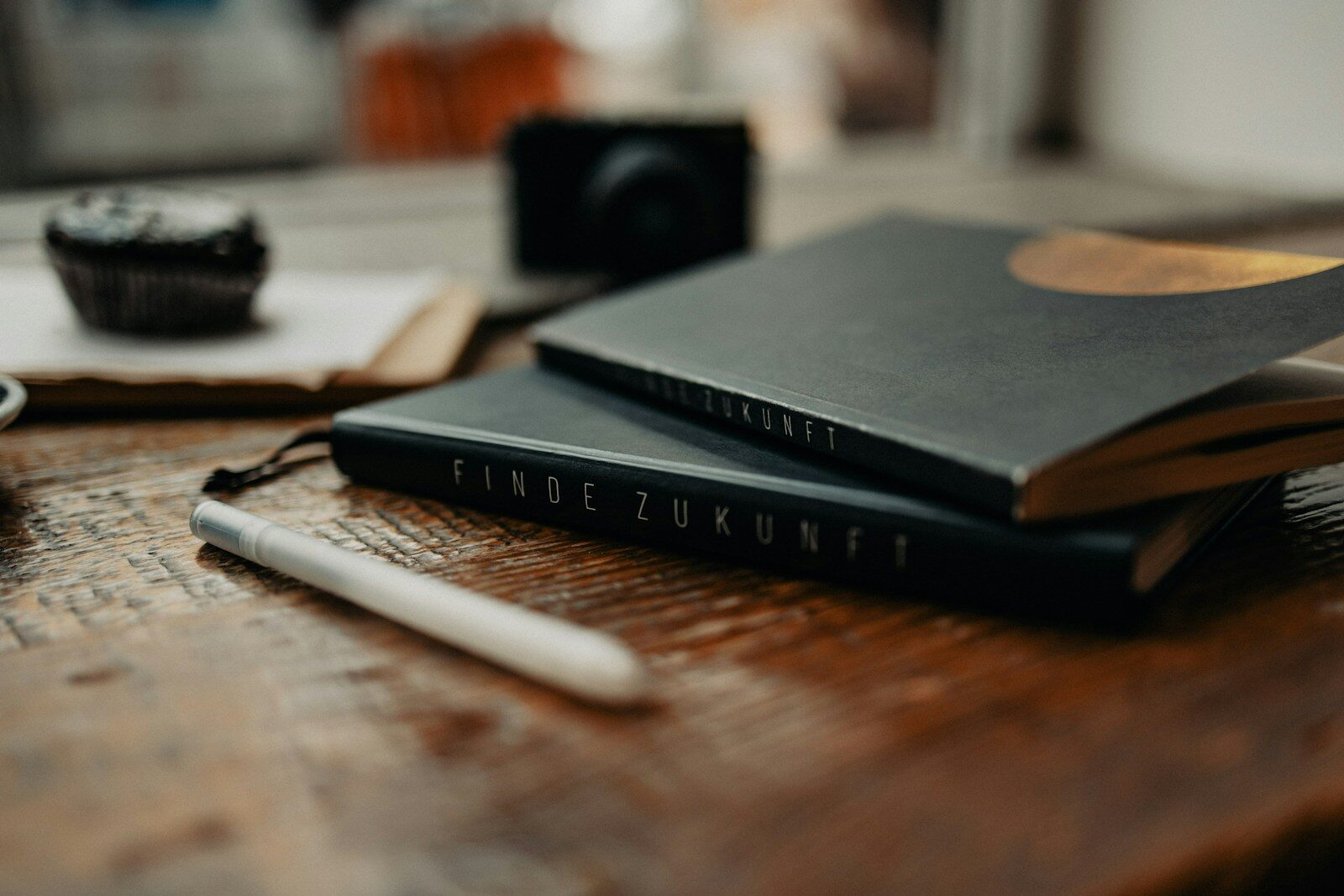
There is a complication I do not want to leave out, because it cuts against my own worry. Daily social media use across wealthier markets has actually dropped to around two hours and twenty minutes, nearly 10% below its 2022 peak, and researchers at Ofcom found that 48% of young adults believe they spend too much time online, with 68% actively trying to cut back. People are buying film cameras again. Paperbacks are outselling e-readers in some markets. Journals and phone-free meetups keep showing up as the thing people say they want more of. If an appetite for something slower and harder is genuinely returning, fashion would be a strange place for it to stop.
I do not have fashion’s own version of the vocabulary fight or the three-hour runtime to point to as clear evidence either way, not yet. What I have is a habit I noticed in myself after that video essay, the instinct to open an app and let it tell me what is worth wanting before I have asked myself the question first. I still do not know if that is anti-intellectualism wearing a new outfit, or something else entirely that just happens to look the same from this angle. I only know I have started paying attention to the seconds it takes me to decide I want something I saw for the first time an hour ago, and I am not sure I like what I am timing.
The Death of Trends: Has Individual Style Finally Triumphed?
Sources
Unilad: People think ‘BookTok’ is killing literature
National Center for Education Statistics: Adult Literacy in the United States
Unexpected Paths: The “Big Words” Controversy
BuzzFeed: The Internet Rages Over New “Dialogue Only” Readers
Rotten Tomatoes: The Odyssey (2026)
Silicon Canals: Gloria Mark’s attention span research
Fashion Law Journal: Is This the End for Microtrends?
NPR: How the fashion industry is using AI to predict the next big trend
Unplugged: 2026 Is The Year Of Analogue and Offline
FASHION LAW JOURNAL INSIDER
Join designers, brand founders and fashion lawyers who get the biggest brand battles, IP fights and career moves in fashion law, straight to their inbox.