

When Jasmine Müller stepped out of the 2026 Love Island UK villa as a style icon, her viral looks were entirely pre-loved.

Since 2022, eBay has replaced the fast-fashion sponsorships that once defined the series, supplying Islanders with a shared wardrobe of pre-loved pieces curated by stylist Amy Bannerman. This partnership proved remarkably effective, with searches for “pre-loved fashion” increasing by 7,000 per cent in its launch year alone.
When the right garment lands on the right person in front of millions of viewers, an ordinary second-hand item can acquire extraordinary desirability overnight. eBay is not simply dressing Islanders. It is turning them into engines of resale demand.

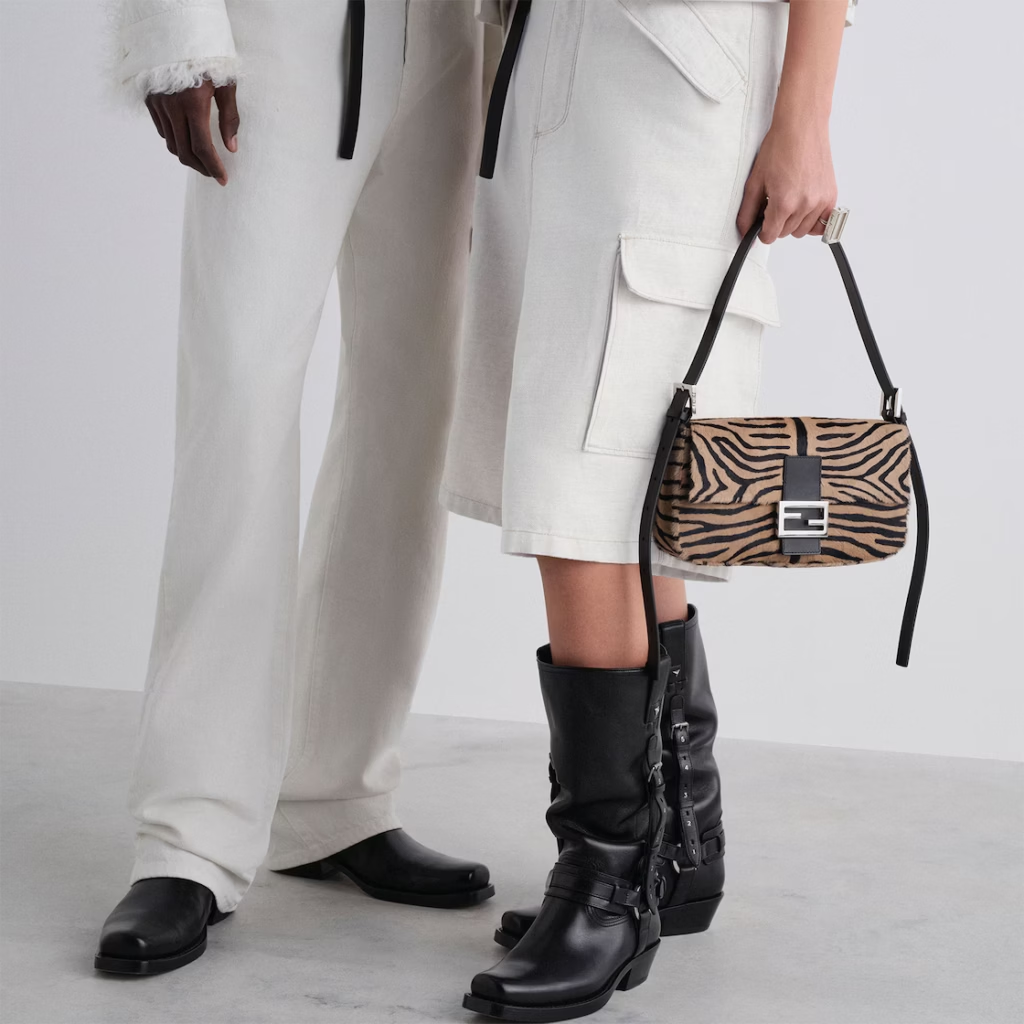
Take Ellie Chadwick’s Prada wicker bag from the 2026 season, valued at approximately £2,000. It had already appeared on a previous season, worn by a different contestant. It still became a recurring talking point not because it was new, but because it was seen with a popular contestant.
That distinction raises a question fashion has never properly answered. When someone else’s visibility creates new value in a garment, who gets to capture it?
Economics Behind a Viral Listing
Strip away the reality television setting, and a moment like Chadwick’s bag becomes a simple chain of value.
A designer sells a garment. A consumer buys it. Years later, it is listed for resale. It is seen on television, demand follows, and the listing sells for many times its original price. The platform captures whatever value the moment creates, and the buyer pays for it.
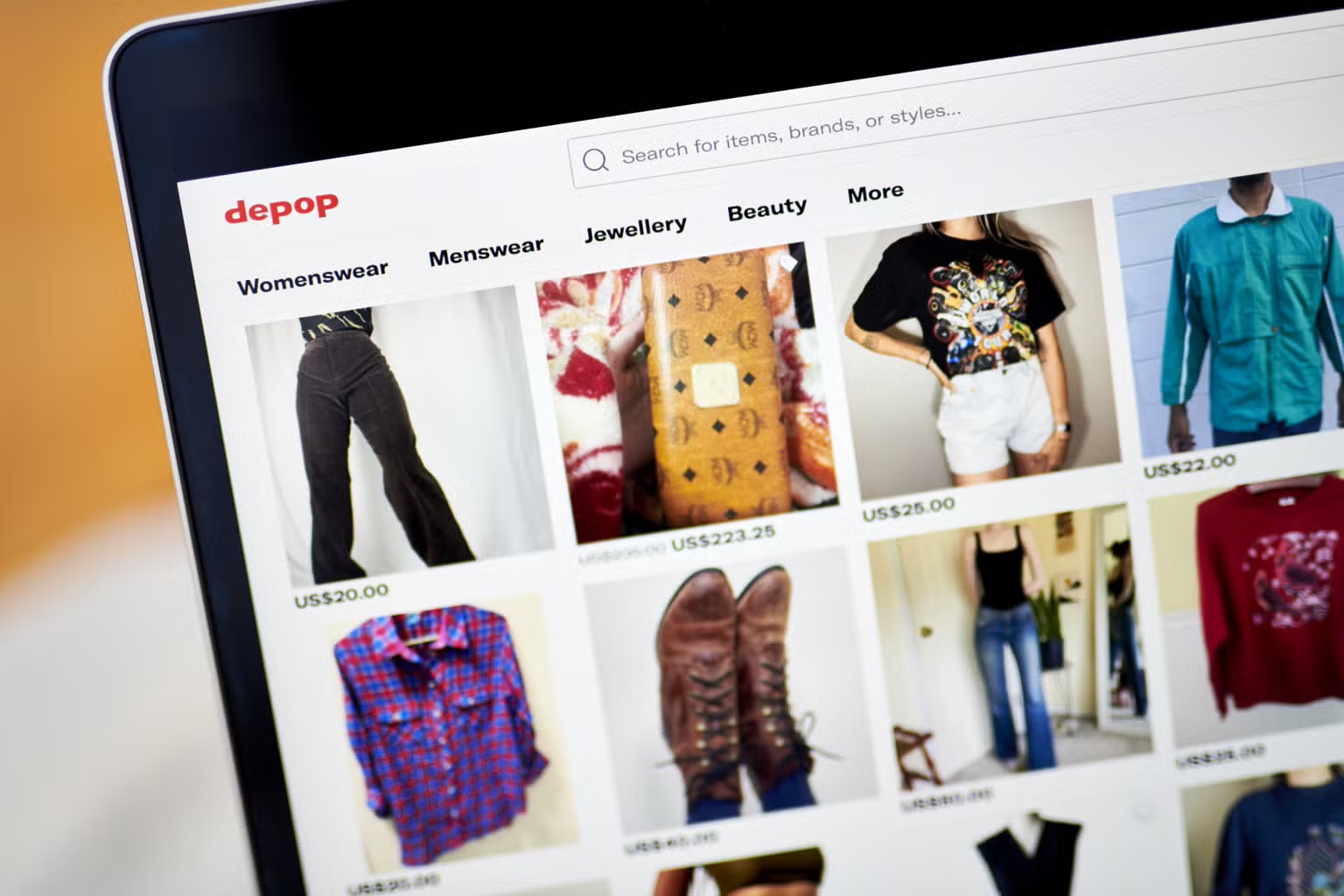
The gaps in this chain are obvious. The buyer-turned-seller pockets the appreciation. The platform benefits regardless. For example, private sellers on eBay UK no longer have to pay a final value fee in most categories, so the entire uplift goes to whoever happens to be holding the item when the moment hits. Despite arguably creating the desirability in the first place, the designer and the brand see none of it.
This problem is no longer niche. The global second-hand apparel market is expected to reach US$393 billion by 2030. Yet, major platforms like eBay, Depop, and Poshmark offer no general mechanism for creators to participate in subsequent resale gains.
A Precedent That Exists, Just Not in Fashion
Fashion is not the first creative industry to face this problem. Visual art solved a version of it decades ago and did so almost by accident.
Robert Rauschenberg discovered in the 1970s that a work he had sold for $900 had resold at auction for $85,000, but none of that appreciation returned to him. The resulting outrage helped drive the American push for a resale royalty, despite Europe having arrived at a version of this right back in the 1920s. The principle was eventually harmonised across the EU through Directive 2001/84/EC as droit de suite, the Artist’s Resale Right, now recognised in some form by around 80 countries.
The right applies to qualifying original works of graphic or plastic art, is generally triggered by the involvement of art market professionals and pays the creator a percentage of qualifying subsequent sales. Crucially, it does not give the artist ongoing ownership of the work. Instead, it creates a separate, statutory economic interest that follows the artwork independently of who holds the title.
The contrast with fashion is striking. An artist who sells a painting for £5,000 is entitled to a royalty even decades later, no matter how many times it has changed hands since. A fashion designer who sells a dress for the same amount has no equivalent claim, even if that same dress later becomes a resale phenomenon.
However, even the art world’s version of this right has not travelled easily. The United States never adopted a federal equivalent. California tried to build its own through the Resale Royalties Act. Still, the courts in Close v Sotheby’s held that it was expressly preempted because the royalty right it created was equivalent to rights within the general scope of federal copyright. It is a fitting irony that eBay itself was the defendant arguing against the idea that creators should share in the value generated by secondary sales. The American Royalties Too Act also proposes a federal resale royalty for visual art, but no version has advanced beyond committee. If the United States has struggled for fifty years to compensate the creators of unique artworks, doing the same for mass-produced fashion looks considerably harder.
So Why Not Invite Fashion To The Table?
What worked for paintings runs into trouble the moment you try it on clothes.
Droit de suite applies to original or limited-edition artworks. These are typically unique objects with a documented chain of ownership. A garment is often one of thousands of identical pieces, making provenance far harder to establish. The art market also already has the infrastructure for this kind of tracking, such as through auction houses and galleries. A garment, by contrast, can pass through several owners and platforms with nobody keeping score.

Fashion’s notoriously weaker legal footing compounds the problem. For example, in the United States, the useful articles doctrine limits copyright protection to whatever can be physically or conceptually separated from a garment’s function. If the underlying design barely qualifies for protection, any royalty layered on top of it has very little to attach to.
And then there is the harder, more philosophical issue. Droit de suite was built to reward the creator. This is not straightforward in fashion. A designer creates the garment. A brand builds its reputation. This is a conceptual mismatch that droit de suite was never built to accommodate.
The Uncompensated Party
None of this makes the Love Island partnership inherently problematic. It has made pre-loved fashion culturally desirable at a scale that traditional sustainability campaigns rarely achieve.
But its success depends on somebody not getting paid. Every viral resale relies on a designer’s craftsmanship and a brand’s cultivated image, and the resale chain requires no compensation. The windfall belongs, by default, to whoever is holding the item when the cameras find it, not to whoever made it worth finding.
Rauschenberg’s reckoning eventually reshaped an entire industry’s relationship with resale. Fashion has not yet had its own version of that moment.
Could Viral Fashion Build the Case for Reform?
The barriers to a participation mechanism are eroding, narrowing the conceptual gap that has made a fashion resale royalty seem impractical.
The EU’s forthcoming Digital Product Passport is expected to require garments to carry a digital record of their material origin and supply chain. In principle, this infrastructure could also track resale history, without turning every £20 eBay transaction into a legal accounting exercise. Platform algorithms already distinguish items listed before a viral moment from those listed after. The technical capability to identify the moment value shifts already exists. What is missing is the legal mechanism to act on it.
A fashion droit de suite is unlikely to arrive tomorrow. But a narrower right for authenticated couture or limited-edition designs is increasingly imaginable.
The next time Jasmine Müller steps out in a viral look that has her followers reaching for their phones, it may be worth asking not just where I can buy that, but who benefits when I do?
Author: Ishita Arora

Ishita Arora is a Sydney-based law graduate with a longstanding interest in the intersection of law and fashion. Her background spans fashion PR, marketing and creative writing. She is particularly interested in the ways fashion shows up everywhere, from courtrooms and runways to viral moments, and the legal questions hiding underneath it all.
The Luxury Resale Boom is Good for Brands, Whether They Like It or Not
FASHION LAW JOURNAL INSIDER
Join designers, brand founders and fashion lawyers who get the biggest brand battles, IP fights and career moves in fashion law, straight to their inbox.