
The wellness internet has a new fixation, and its name is “Lakshmi maxxing.”
Borrowing its language from the internet’s obsession with “maxxing” or optimising different aspects of life, the trend draws from the symbolism and practices associated with Goddess Lakshmi, the Hindu deity traditionally associated with wealth, prosperity, abundance and auspiciousness.
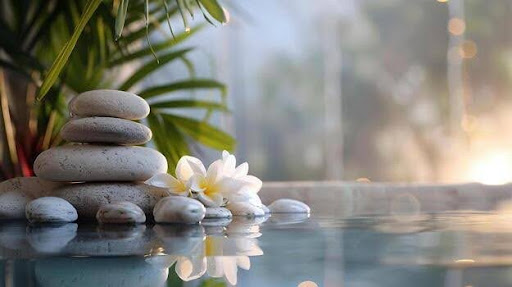
On social media, however, Lakshmi maxxing has emerged less as a religious practice and more as a lifestyle philosophy. Content surrounding the trend encourages rituals such as waking during Brahma Muhurat, practising abhyanga, drinking water from a copper vessel, chanting Lakshmi mantras, offering flowers and creating intentional morning and self-care routines.
Presented through the familiar visual language of contemporary wellness content, these practices can look remarkably similar to the rituals that dominate the internet’s morning-routine and “high-vibrational” lifestyle culture.
The aesthetics of abundance
At its heart, Lakshmi maxxing appears to translate the idea of abundance into a modern lifestyle vocabulary. Beauty, femininity, self-care, prosperity and intentionality become interconnected, with Lakshmi serving as the symbolic centre of that world.
There is an obvious appeal to this framing. Social media has increasingly transformed wellness into an aesthetic, where rituals are not simply things one does but things one documents. Morning routines, oils, flowers, traditional clothing, jewellery, skincare and spiritual practices can all become part of a carefully constructed visual identity.
For a fashion and lifestyle audience, this intersection is particularly interesting. The trend does not simply borrow individual practices. It packages a cultural idea into an aspirational lifestyle, one that can be photographed, styled and consumed. However, Lakshmi is not merely an aesthetic symbol.
Where the criticism comes from
For many Indians, particularly those familiar with Lakshmi through religious and family traditions, the trend raises questions about cultural context.
Lakshmi is a deity who is actively worshipped by millions of Hindus. Her association with prosperity does not exist independently of a larger religious and cultural tradition. Consequently, reducing her to concepts such as beauty, luxury or “manifesting abundance” can feel like a significant simplification. The criticism surrounding Lakshmi maxxing therefore centres largely on cultural appropriation: the concern that practices rooted in Indian traditions can be removed from their original context, given contemporary terminology and subsequently marketed as a new wellness discovery. The issue becomes even more sensitive when religious symbols are involved. For some, an ancient practice being adopted by a global audience can be a positive form of cultural exchange. For others, the transformation of a sacred tradition into an aesthetic trend risks stripping it of the meaning that made it significant in the first place.
The yoga parallel
This debate is not entirely unfamiliar, as Yoga has undergone a similar transformation as it travelled from India to the global wellness industry. Today, yoga can mean anything from a spiritual discipline to a fitness class, a fashion category or a social media aesthetic.
That evolution does not automatically make its global adoption inappropriate. Cultures have always influenced one another, and traditions naturally change when they move between communities. The more difficult question is what gets retained and what gets removed.
When a practice is separated from its history, philosophy or cultural context and presented primarily as a product or lifestyle hack, the conversation shifts from cultural exchange towards cultural commodification. Lakshmi maxxing has consequently become another example of a much larger conversation about how Indian culture travels through the global fashion and wellness industries.
Beyond the trend cycle of Laxmi Maxxing
There is also a certain irony in seeing centuries-old Indian traditions enter an internet culture built around constantly changing trends.
What is traditional is often considered ordinary by the people who grow up with it. What is ordinary can then become “new” when it enters a different cultural market. This has happened repeatedly with Indian food, textiles, beauty rituals, wellness practices and spiritual traditions. The response to Lakshmi maxxing, however, need not be reduced to a simple appreciation-versus-appropriation binary.
There is a meaningful difference between learning about a culture, respectfully adopting a practice, commercially repackaging it and using a sacred symbol without understanding its significance. These distinctions matter, particularly when the trend enters industries where culture and commerce are already closely intertwined. Whether Lakshmi maxxing remains another fleeting social media phenomenon or develops into a lasting wellness movement is difficult to predict. What is more certain is that its popularity has reopened an important conversation about cultural ownership, context and the way ancient traditions are transformed when they enter the global trend cycle.
Perhaps the real question is not whether Indian traditions can be shared. It is whether, in the process of making them fashionable, we remember where they came from.
Is This the End for Microtrends? A Deep Dive into Fashion’s Ever-Changing Trend Cycle
FASHION LAW JOURNAL INSIDER
Join designers, brand founders and fashion lawyers who get the biggest brand battles, IP fights and career moves in fashion law, straight to their inbox.