SERVING LOOKS & LATTES
The language of luxury used to be spoken entirely in textiles and tailoring; in the drape of a jacket, the gleam of a buckle, and the quiet authority of a perfectly fitted silhouette. Today, that vocabulary has expanded far beyond the wardrobe. In the world’s most fashionable capitals, the same careful deliberation once reserved for a couture gown is now being poured into the curve of a coffee cup, the crumb of a pastry, and the arrangement of a three-course lunch. Houses like Ralph Lauren, Prada, Armani, Dior, and Gucci have turned their attention to the dining table, not merely to diversify their portfolios, but to build immersive worlds where the brand is not just seen; it is tasted, breathed, and inhabited.
These establishments are not retail extensions disguised as restaurants. They are experiential narratives, meticulously designed to engage every human sense. Fashion traditionally touches only two: sight and touch. A café, however, introduces scent, sound, and taste, creating a remarkably intimate form of brand engagement. The price of entry is also deliberately lowered; a coffee at Ralph’s Coffee costs a fraction of a handbag, yet it buys the same atmospheric immersion. This is aspirational accessibility; a way for consumers to step inside a luxury universe without the implicit pressure of a purchase, transforming a mundane morning ritual into a quiet, branded moment of exclusivity.
More importantly, the menu itself becomes a reflection of cultural heritage. An Italian fashion house like Prada or Armani builds its offerings around the rhythmic cadence of the Italian day: espresso at dawn, a light pasta for lunch, and a bitter-sweet aperitivo at dusk. Ralph Lauren, by contrast, invokes the classic American diner with deliberate nostalgia, while Dior translates the exacting precision of French couture into the pristine artistry of pâtisserie. A dish, in this world, is never just a dish; it is a linguistic gesture that communicates the brand’s DNA as effectively as any spring collection.
The physical realization of these concepts demands the same architectural rigor as a flagship boutique, blurring the boundaries between retail floor and dining room. Walls carry signature palettes, chairs echo the curvatures of iconic handbags, and lighting is calibrated to flatter both the diner and the brand’s visual codes. But it is upon the table itself that the story becomes most intimate. Everything is a deliberate artifact: the weight of the cutlery, the matte finish of a saucer, the specific shade of blue on a takeaway bag; ensuring the experience does not end when the meal is finished, but travels home in the consumer’s hands. Ultimately, this culinary pivot represents a fundamental evolution of luxury. It no longer relies solely on ownership; it demands duration. By offering a place to linger, to return, and to simply be, these fashion houses are no longer just selling clothes. They are selling a fully realized lifestyle; one that begins the moment you sit down.
WHAT DOES FASHION TASTE LIKE?
A look inside the menus of the world’s most recognisable fashion cafés
If the café is an extension of the fashion house, the menu is where that identity becomes edible. A coffee, pastry or carefully composed dish may seem far removed from a runway collection, yet the choices made on a menu can reveal as much about a brand as its choice of fabric or silhouette.
The important question is not simply what these fashion houses serve. It is why do they serve it? The cuisine, ingredients, presentation and even the manner in which food is consumed can reflect a house’s cultural origins, aesthetic values and understanding of luxury.
From American coffee culture to Italian aperitivo and French pâtisserie, each house approaches hospitality differently. Together, these menus demonstrate how fashion brands are finding another medium through which to express who they are.
Ralph Lauren: The Taste of an American Dream
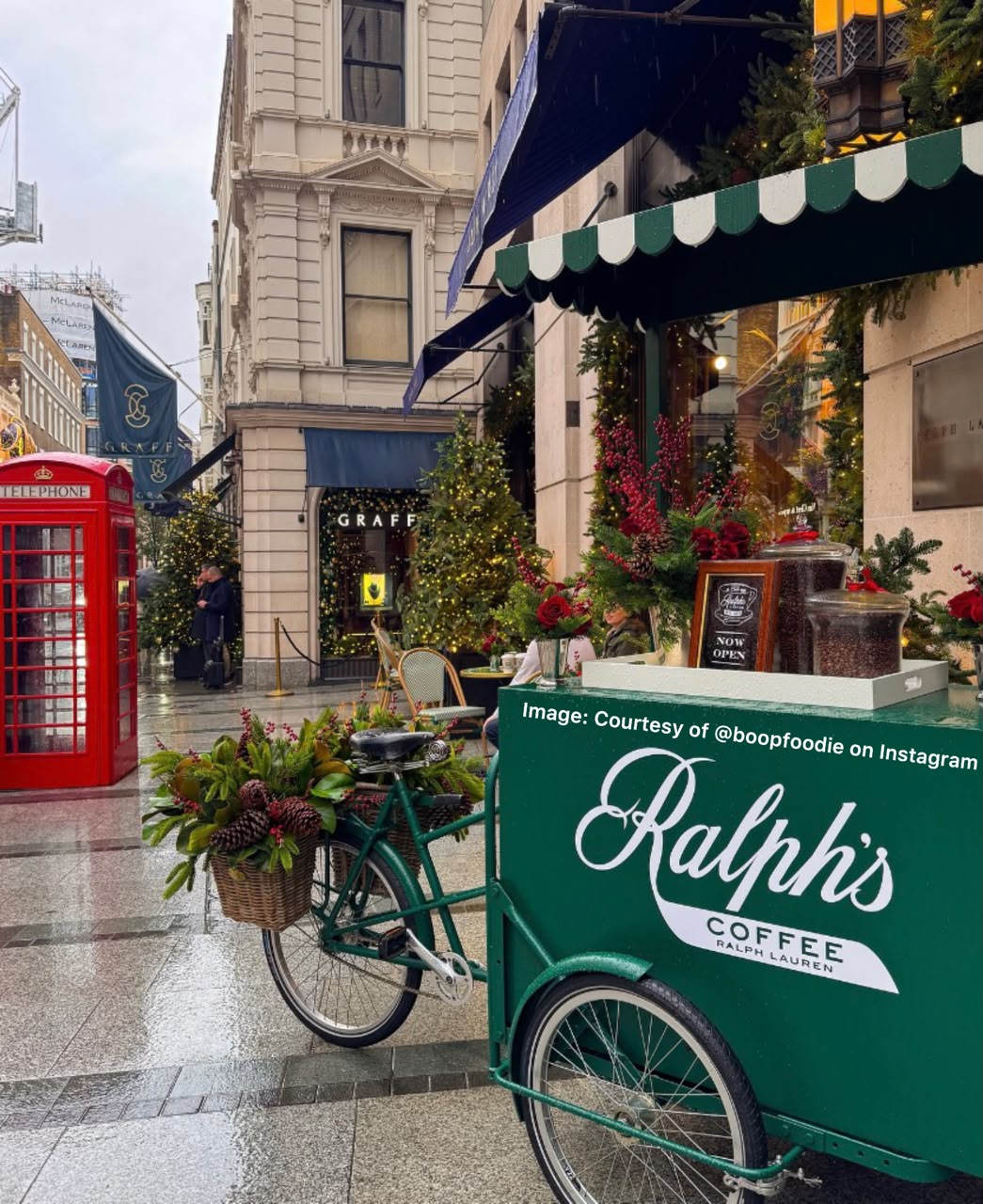
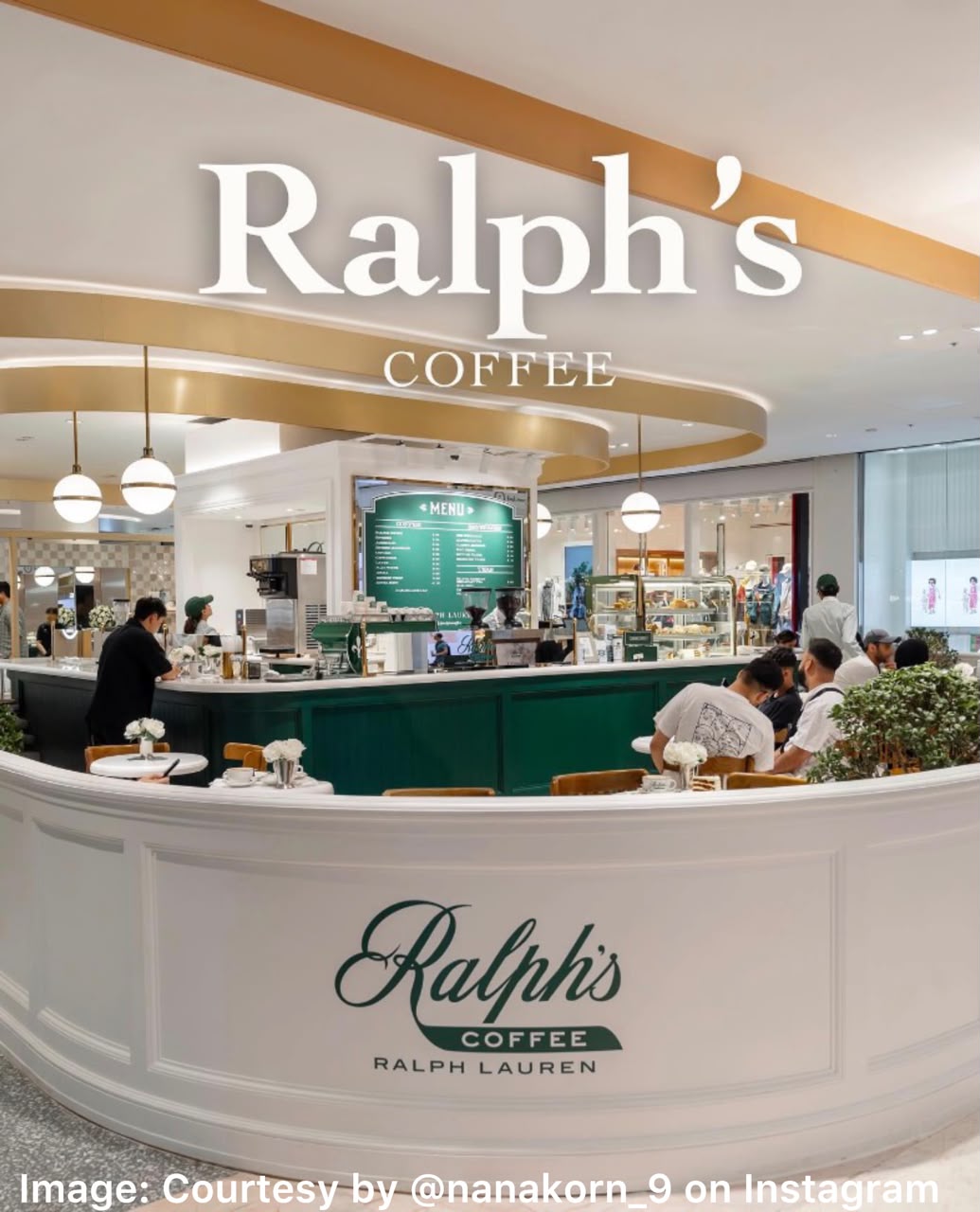
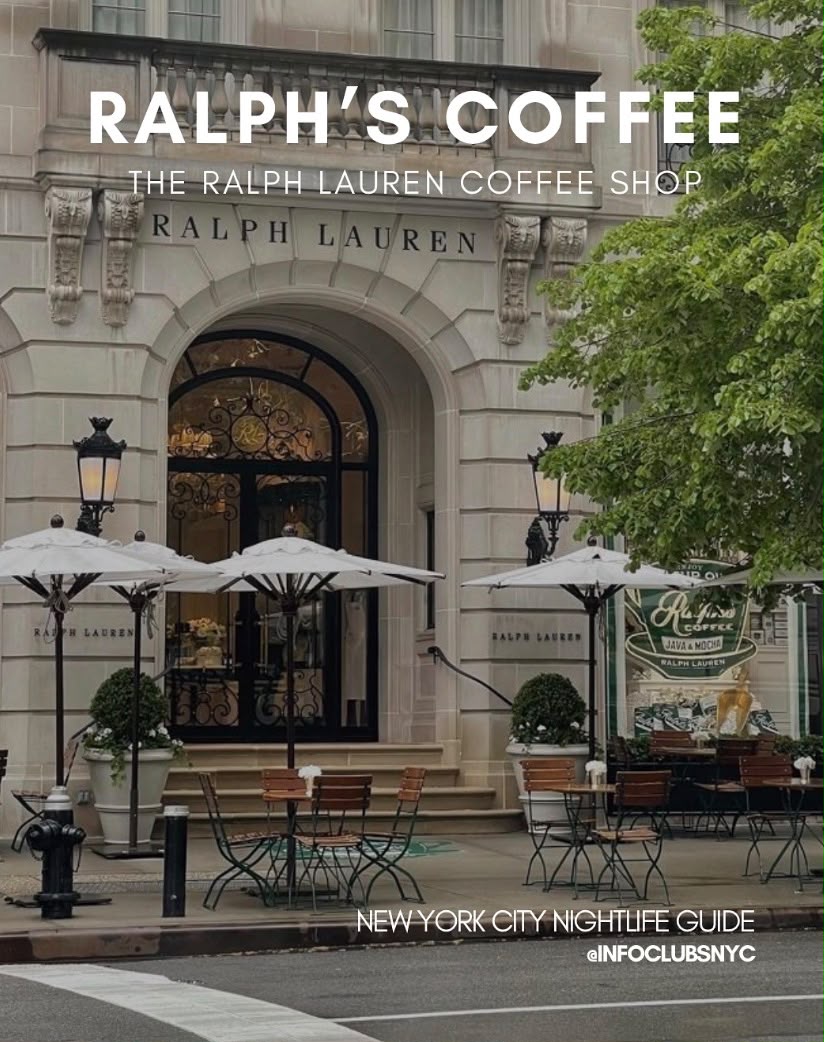
Ralph’s Coffee
Ralph Lauren’s approach to hospitality begins with something deliberately familiar: the American coffeehouse.
Ralph’s Coffee grew from the wider Ralph Lauren lifestyle, drawing on the same world of classic American style that informs the brand’s clothing, stores and campaigns. Rather than attempting to turn coffee into an elaborate luxury product, the concept places an everyday ritual inside the Ralph Lauren universe.
On the Menu
Coffee naturally occupies the centre of the experience, with espresso-based drinks and brewed coffee forming the foundation. Tea and other beverages complement the drinks menu, while pastries and baked goods provide the familiar accompaniment to a morning coffee or afternoon stop.
Depending on the location, the offering extends into breakfast and lighter meals, with sandwiches and other casual American fare. Desserts and sweet treats add another layer to the café experience, while packaged Ralph’s Coffee allows customers to take a part of the concept home.
The menu is therefore intentionally approachable. Its appeal lies less in culinary complexity than in the atmosphere surrounding familiar food.
The Ralph Lauren Approach
That simplicity is significant.
Ralph Lauren has spent decades constructing an image of an idealised American lifestyle; classic, relaxed and aspirational. Ralph’s Coffee translates that same idea into hospitality. The coffee does not need to be exotic to feel luxurious; the luxury comes from the world in which it is served.
The café transforms ordinary American coffee culture into a branded lifestyle experience, allowing customers to participate in the Ralph Lauren aesthetic through something as simple as a morning coffee.
Ralph’s Coffee is therefore less about reinventing coffee than about giving coffee a distinctly Ralph Lauren setting.
Prada; Italian Tradition, Reimagined
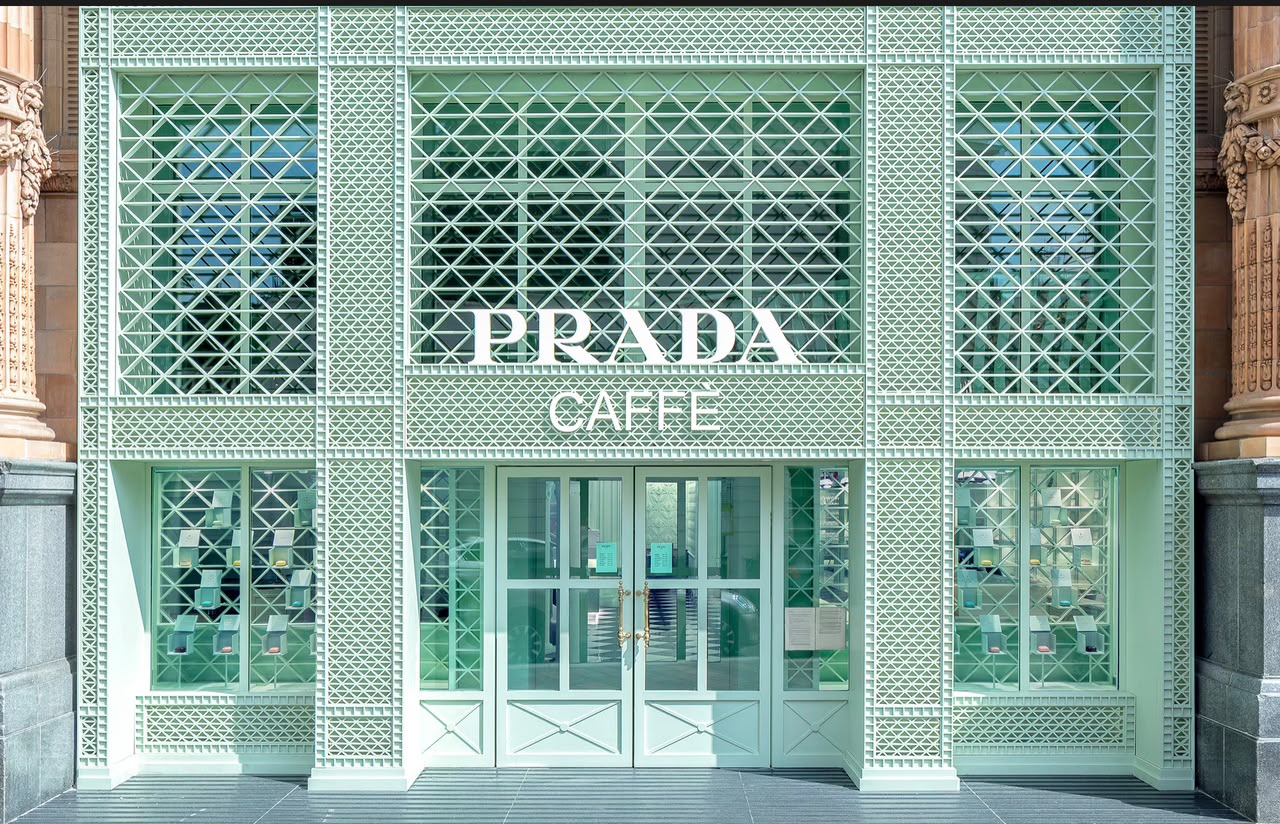
Prada Caffè
Where Ralph’s Coffee draws upon American café culture, Prada Caffè places itself firmly within the traditions of Italian dining while filtering them through Prada’s distinctive design sensibility.
The concept reflects an aspect of Prada that extends beyond its reputation for avant-garde fashion: its connection to Milan and to Italian culture. The result is a café where the menu and surroundings work together rather than functioning as separate experiences.
On the Menu
Coffee and Italian breakfast traditions provide the starting point, with espresso-based drinks and pastries forming a central part of the offering.
The menu then moves into savoury Italian dishes, including classics and lighter preparations suitable for lunch or an afternoon meal. Pasta and other Italian favourites are complemented by a selection of desserts and pâtisserie, allowing the café to move naturally from breakfast through lunch and into the afternoon.
Drinks can extend beyond coffee into wines, aperitivo and cocktails, giving the space a distinctly Italian rhythm as the day progresses.
The Prada Approach
What makes Prada Caffè particularly interesting is the relationship between the familiarity of the food and the distinctiveness of the environment.
Italian cuisine already possesses a strong cultural identity. Prada does not need to reinvent that identity; instead, it places familiar Italian culinary traditions within a highly controlled visual environment.
The result is recognisably Italian, but also recognisably Prada.
The café demonstrates how a fashion house can take an established culinary tradition and reinterpret it through its own aesthetic language.
2.3 Armani: Italian Elegance, Served All Day
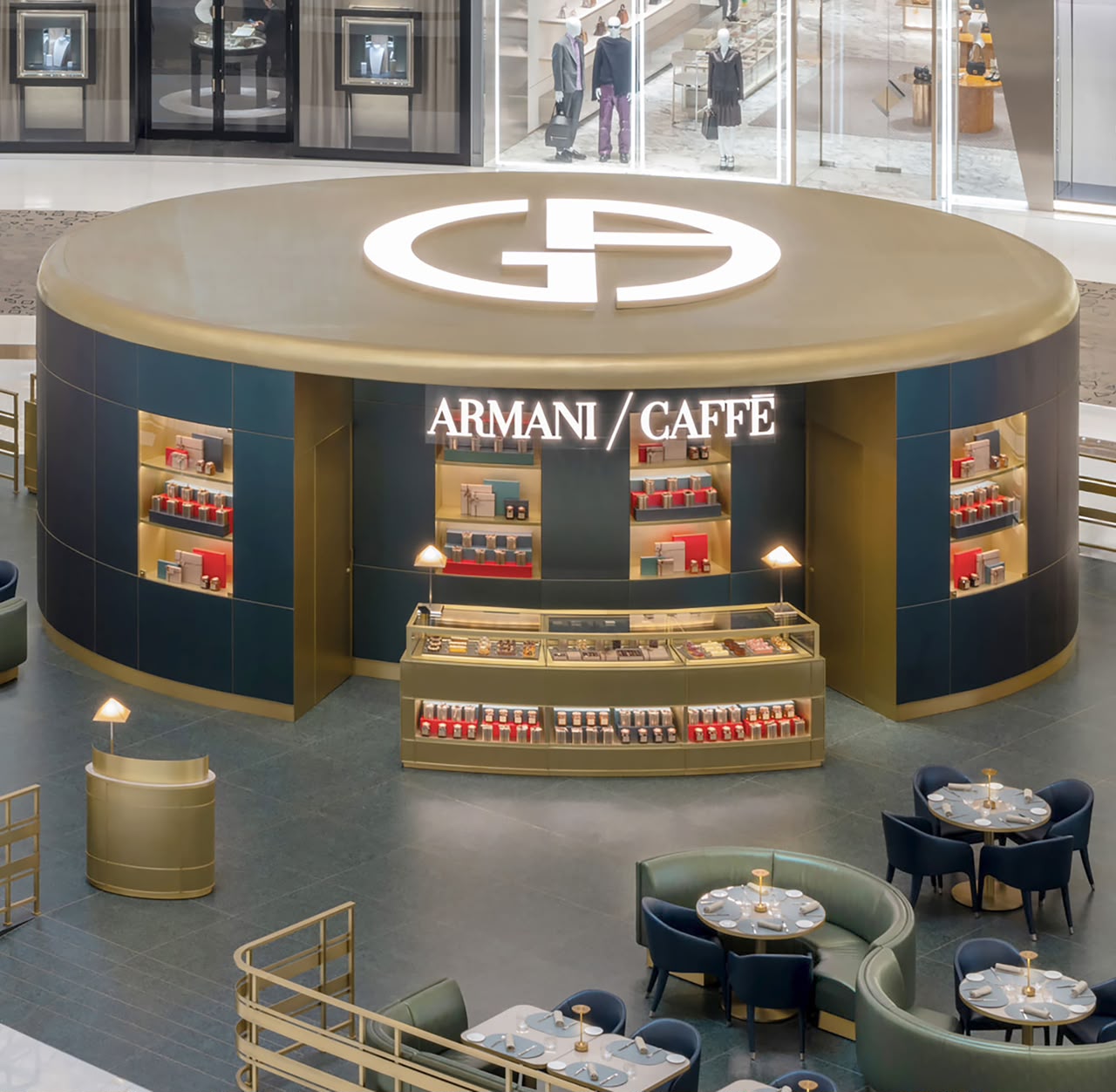

 Armani/Caffè
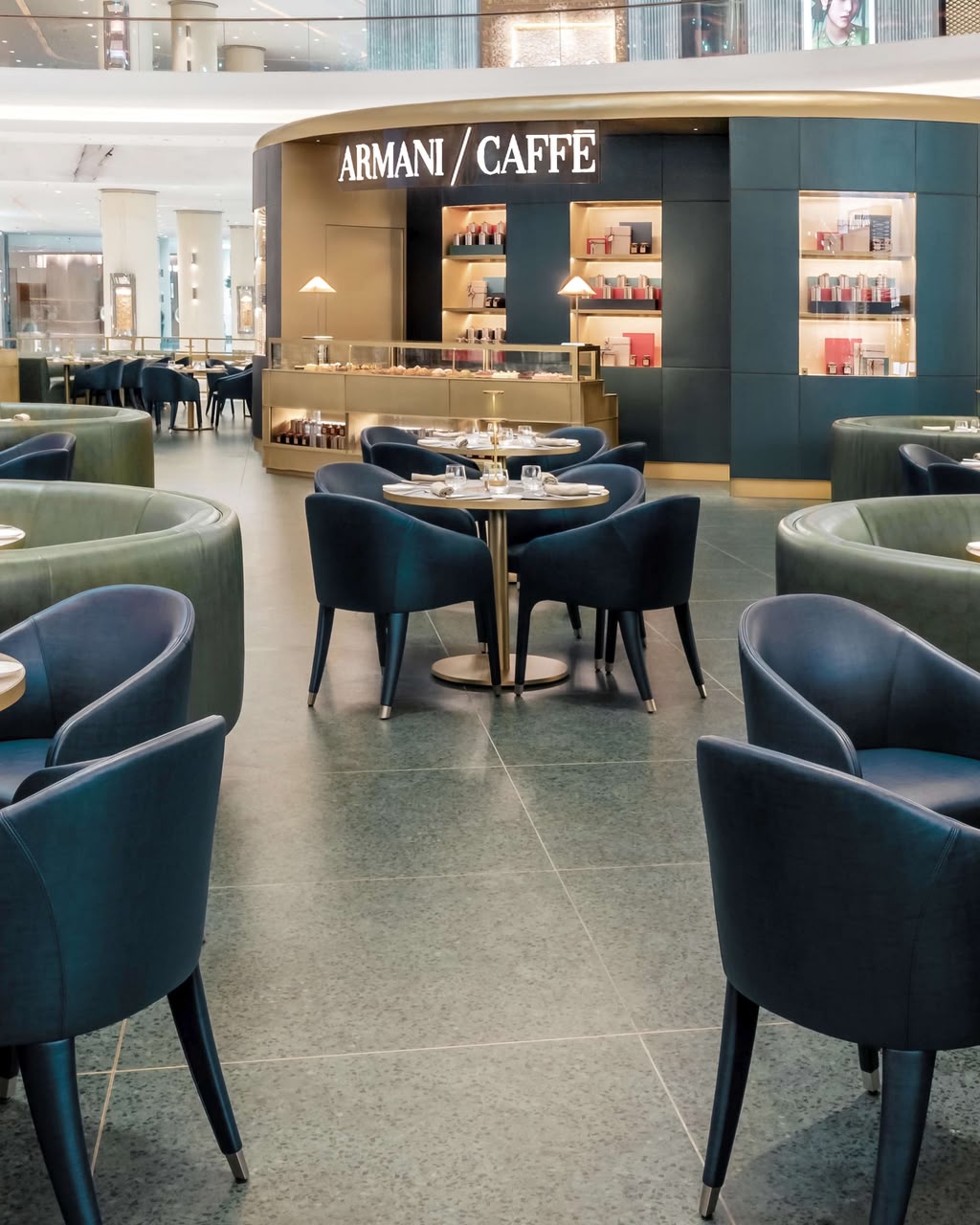 Armani/Caffè
For Giorgio Armani, hospitality forms part of a much broader lifestyle philosophy. The same understated elegance associated with Armani’s fashion extends into its cafés, where Italian food is presented through a deliberately refined and restrained lens.
From Morning to Aperitivo
The day begins with coffee, breakfast and pastries before moving into lighter Italian fare. Panini, salads and pasta provide options for lunch, while desserts bring the meal back towards the sweeter side of Italian cuisine.
As the day progresses, Armani/Caffè can transition into the distinctly Italian ritual of aperitivo, with wine and cocktails complementing the food.
This progression is important because it makes the café more than a breakfast or coffee destination. It becomes a space that can accompany different parts of the day.
Armani in Mumbai.
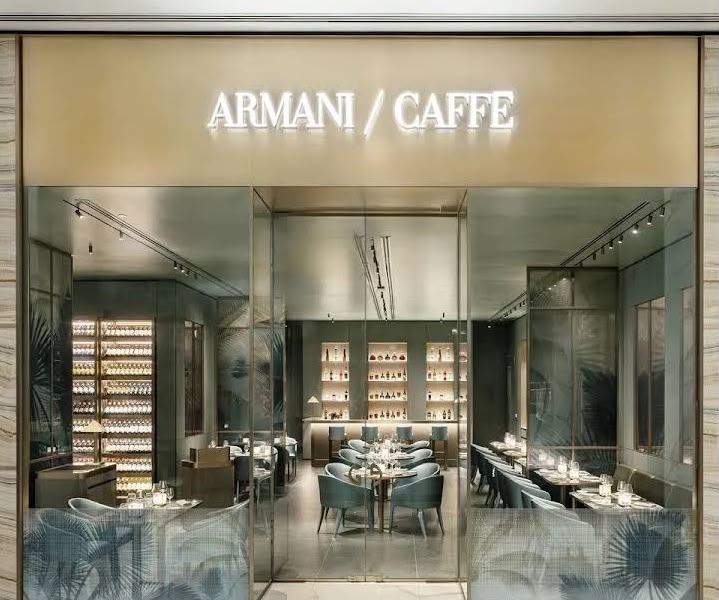
Armani/Caffè’s presence in Mumbai adds another dimension to the concept. The establishment brings an Italian luxury-hospitality format into one of India’s most important luxury markets, placing Armani’s food and lifestyle proposition alongside its fashion presence.
It also raises a broader question about international luxury hospitality: how does a fashion house preserve its cultural identity while speaking to consumers in a completely different market?
The Armani Approach
The answer, in Armani’s case, lies largely in consistency. The food remains rooted in Italian culinary culture, while the surroundings reflect the house’s preference for clean design and understated sophistication.
Armani/Caffè is Italian food presented with the same restraint that defines Armani’s approach to fashion.
Dior: From Couture to Cuisine
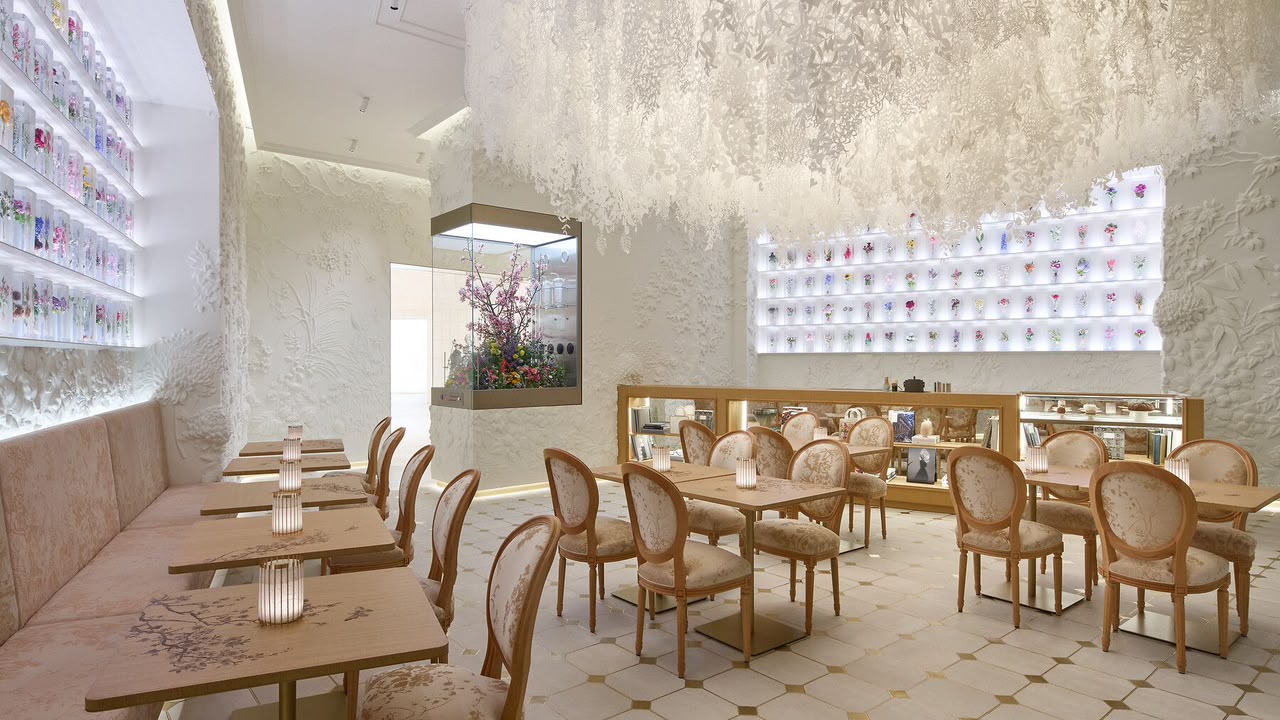
Café Dior and Monsieur Dior
Few fashion houses have a more natural cultural connection to gastronomy than Dior. Its hospitality spaces draw upon the same French traditions of craftsmanship, refinement and presentation that underpin the house’s couture heritage.
At Café Dior, the experience centres around coffee, tea, French pastries, desserts and lighter dining. The emphasis is as much on presentation as on the food itself, creating a setting in which pâtisserie becomes part of the visual experience.
The concept expands considerably at Monsieur Dior, where the experience moves into fine dining and French gastronomy.
When Haute Couture Meets Haute Cuisine
The connection between couture and gastronomy is particularly visible in the attention paid to detail.
A couture garment is constructed through precision, proportion, material and craftsmanship. Fine dining operates through many of the same principles: ingredients are selected carefully, dishes are composed rather than simply assembled, and presentation becomes part of the final creation.
Dior’s hospitality therefore allows the house’s couture philosophy to enter another creative discipline.
French cuisine provides the cultural foundation, while Dior’s archives, floral references and aesthetic vocabulary provide additional inspiration.
At Dior, the transition from couture to cuisine feels less like a departure from fashion than an expansion of the same creative language.
Louis Vuitton: A Menu That Travels
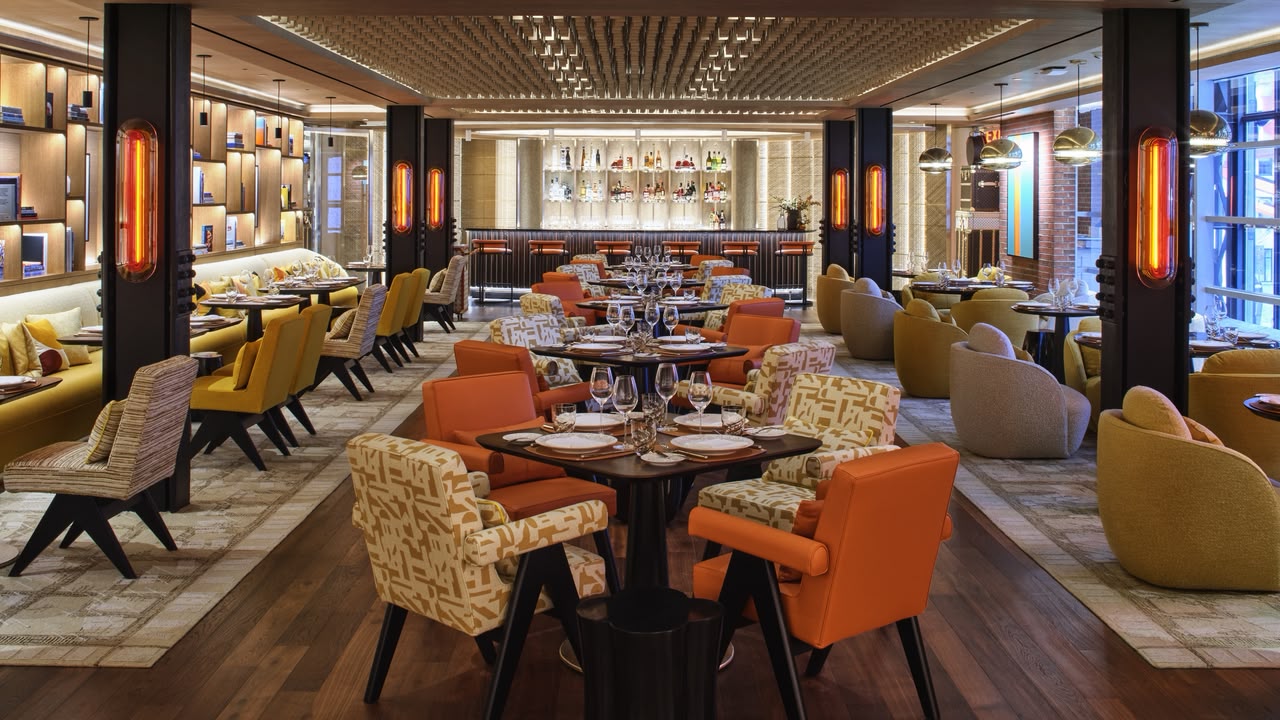
Le Café Louis Vuitton
Louis Vuitton approaches hospitality from a different starting point: travel.
The house’s history is deeply connected to movement, trunks and the culture of travel, making food and hospitality a particularly natural extension of its identity.
At Le Café Louis Vuitton, coffee, pastries, desserts and savoury dishes create a culinary experience that sits alongside the brand’s retail and cultural spaces.
When the Destination Joins the Menu
The more interesting aspect of Louis Vuitton’s hospitality strategy is its willingness to engage with local culinary cultures.
Rather than treating every international location as an identical replica of the original concept, the house can incorporate regional ingredients and culinary influences into its offering.
This becomes particularly significant in larger destinations such as LV The Place Bangkok, where retail, architecture, culture and gastronomy are brought together.
The result reflects an important part of the Louis Vuitton philosophy: travel is not simply about moving from one place to another; it is about encountering different cultures along the way.
The menu, like the brand itself, is allowed to travel.
Gucci: From Espresso to Fine Dining
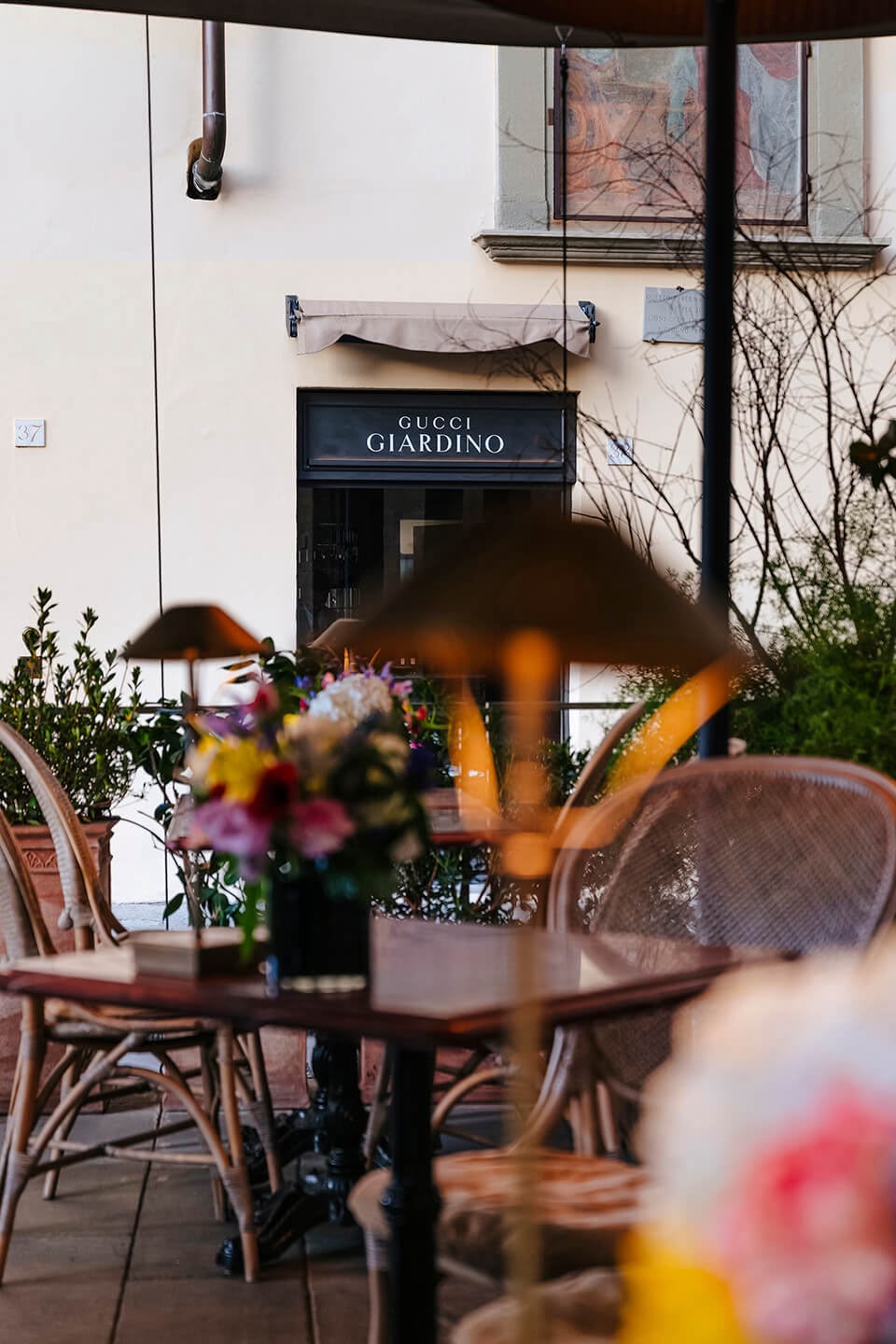
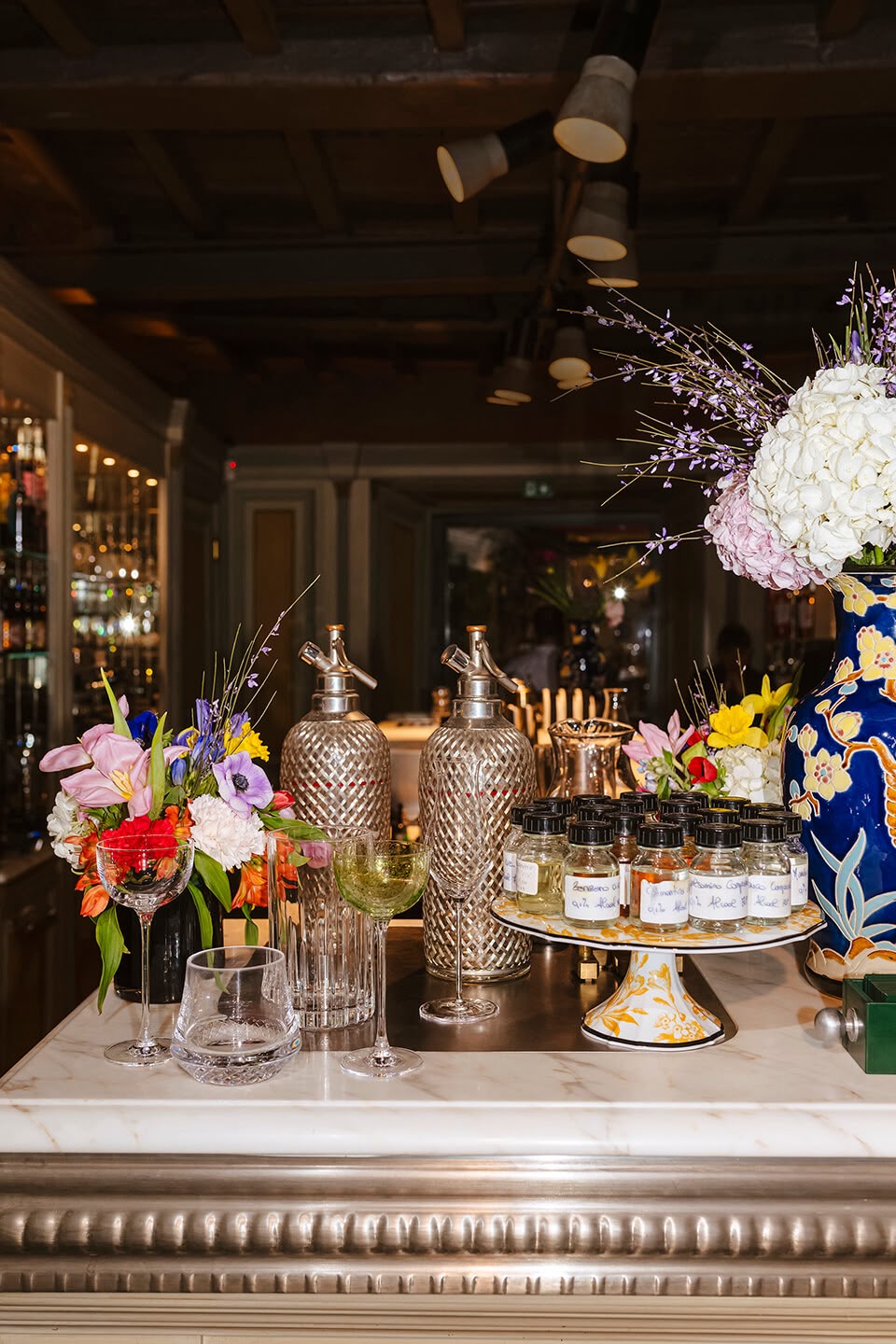
Gucci Giardino 25
Gucci offers perhaps the clearest demonstration of how widely a fashion house can stretch its culinary identity.
At Gucci Giardino 25 in Florence, the experience begins with the familiar rituals of café culture: coffee, breakfast and pastries.
The menu extends into light meals, Italian dishes, desserts and aperitivo, with cocktails adding an evening dimension.
The Florentine setting is essential to the experience. This is not simply Gucci opening a generic international café; it is a hospitality concept rooted in the city in which the house was born.
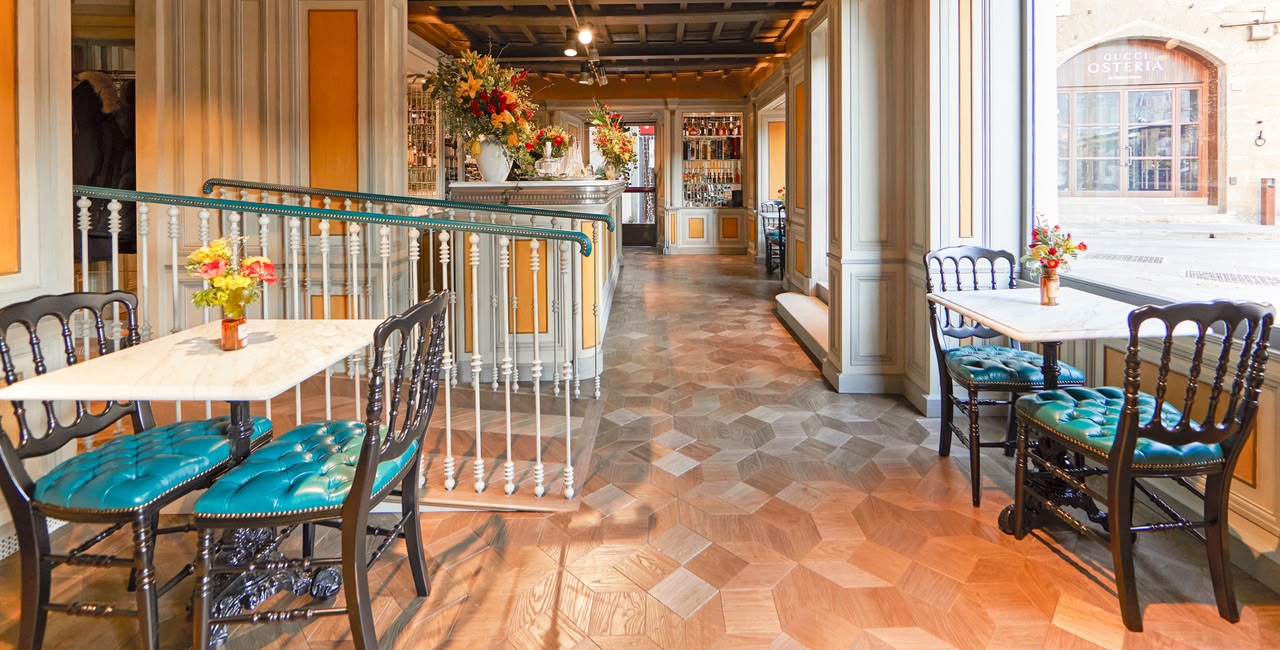
Gucci Osteria
Gucci’s culinary story becomes considerably more ambitious at Gucci Osteria.
Here, the casual café gives way to fine dining, with Italian ingredients, seasonal produce and contemporary culinary techniques taking centre stage.
The contrast between Giardino 25 and Gucci Osteria is revealing. One offers a relatively approachable way to encounter the brand, while the other places Gucci within the world of high gastronomy.
Yet both remain connected through their Italian heritage and creative approach.
Gucci demonstrates that a single fashion identity can accommodate both an everyday espresso and an elaborate fine-dining experience.
Tiffany & Co.; Breakfast at Tiffany’s, Literally
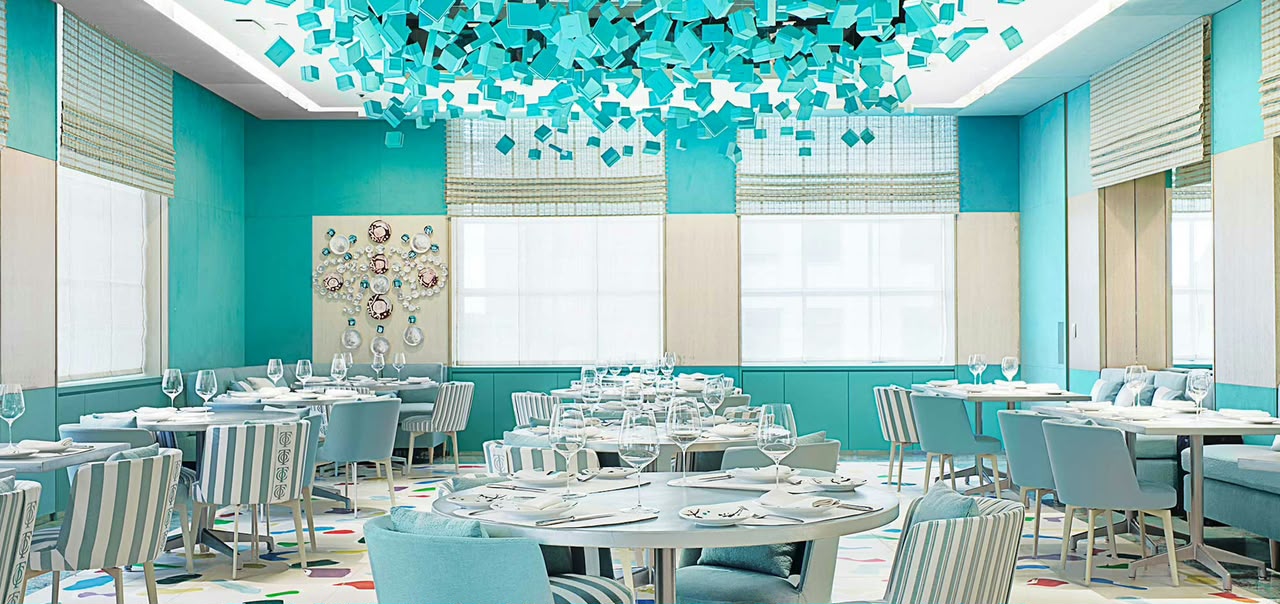
The Blue Box Café
Tiffany & Co. occupies a slightly different position in this story. It is primarily a jewellery house, but its Blue Box Café is one of the clearest examples of how a luxury brand can transform an iconic visual identity into hospitality.
The concept draws obvious cultural power from the phrase “Breakfast at Tiffany’s,” turning a piece of popular culture into a physical experience.
On the Menu
Breakfast and brunch form the heart of the concept, while afternoon tea introduces a more traditional luxury-hospitality ritual. Pastries, desserts and beverages complete the experience.
The food itself, however, is only one part of the attraction.
When a Colour Becomes a Place
The defining feature is Tiffany’s unmistakable blue.
The colour that consumers traditionally encountered on a jewellery box is transformed into an environment through interiors, tableware, packaging and presentation.
The result is particularly effective because the visual identity is immediately recognisable. The customer does not simply visit a café; they step into a physical interpretation of the Tiffany brand.
The Blue Box Café demonstrates perhaps most clearly that luxury branding can turn even a colour into an experience.
Beyond the Menu
When hospitality becomes part of the fashion business
A fashion house may enter hospitality with a menu, but what it is really building is a deeper relationship with its consumer. A café offers what a boutique cannot: a reason to visit without the pressure to buy, allowing guests to arrive for coffee, stay for lunch, and return for tea, turning a dining experience into a recurring point of contact with the brand. Crucially, this creates a controlled form of accessibility; someone who may never purchase a handbag can still sit within the brand’s universe, experiencing its aesthetic at the price of a pastry. While designer garments are occasional purchases, coffee is a daily ritual; repeated visits build familiarity and routine rather than transactional intent. This physical space also lives on digitally, as branded cups, intricate desserts, and distinct interiors become shareable content that broadcasts the brand to wider audiences. Ultimately, the commercial value of hospitality cannot be measured by the bill alone, but by the additional footfall, time spent, repeat engagement, and sheer visibility it generates; proving that while the menu may bring customers to the table, the brand is what keeps them there.
The New Architecture of Desire
Ultimately, the rise of the fashion café signals a profound redefinition of what luxury actually means. It is no longer strictly defined by what we own, but by where we are allowed to simply be. A handbag signals status; a perfectly brewed espresso in a branded space signals belonging. By inviting consumers into their physical environments, fashion houses are quietly moving away from the transactional and toward the relational. The runway will always command attention, but the dining table commands something far scarcer: time. And in a world accelerating toward the purely digital, the taste of a meticulously crafted pastry inside an impeccably designed room offers a tangible, sensory anchor that no e-commerce platform can replicate. Fashion no longer ends at the edge of a garment. It lives in the air we breathe, the marble beneath our feet, and the quiet, lingering memory of a moment spent inside its universe.
References & Further Reading
- Ralph Lauren. Ralph’s Coffee. ralphlauren.com/ralphs-coffee.
- Prada Group. Prada Caffè (Harrods, London). prada.com
- Giorgio Armani. Armani/Caffè (Global locations including Mumbai). armani.com
- Dior. Café Dior and Monsieur Dior (30 Montaigne, Paris). dior.com
- Louis Vuitton. Le Café Louis Vuitton and LV The Place Bangkok. louisvuitton.com
- Gucci. Gucci Giardino 25 (Florence) and Gucci Osteria (Michelin-starred locations). gucci.com
- Tiffany & Co. The Blue Box Café™ (New York, London, Shanghai). tiffany.com
- Kapferer, J.N., & Bastien, V. (2012). The Luxury Strategy: Break the Rules of Marketing to Build Luxury Brands. Kogan Page. (For the concept of moving from product to lifestyle)
- Bain & Company. (2024). Global Luxury Market Report. (For data on experiential luxury spending trends)
- The Business of Fashion. (2023). How Fashion Houses Are Betting on Food and Beverage. businessoffashion.com
- United States Patent and Trademark Office (USPTO). Registration No. 2,370,210 – Tiffany Blue® (Registered color trademark for Tiffany & Co. since 1998).
- McCarthy, J.T. (2019). McCarthy on Trademarks and Unfair Competition (Vol. 2). (For the legal distinction between trade dress, functional design, and source-identifying features)
FASHION LAW JOURNAL INSIDER
Join designers, brand founders and fashion lawyers who get the biggest brand battles, IP fights and career moves in fashion law, straight to their inbox.