

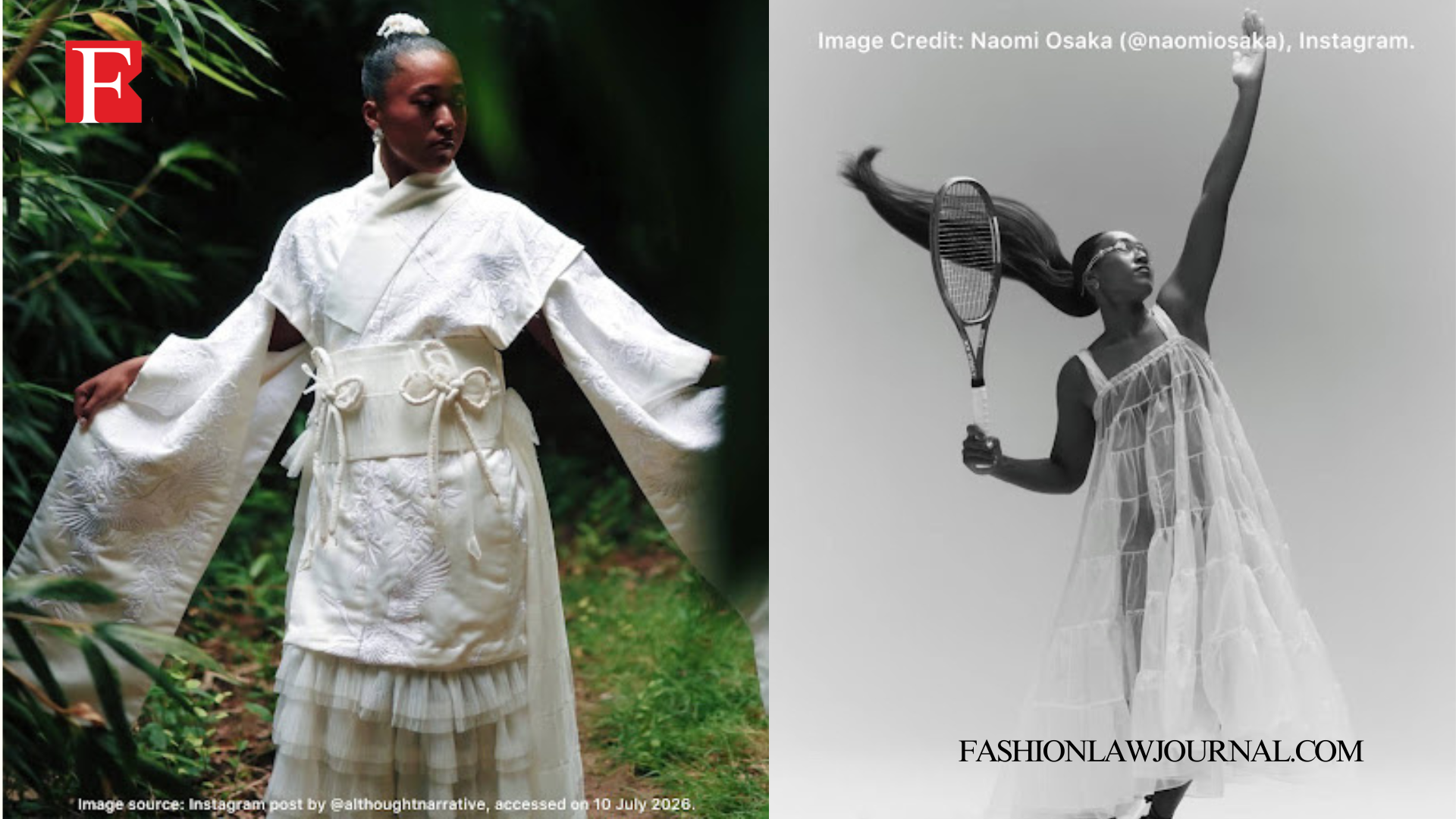
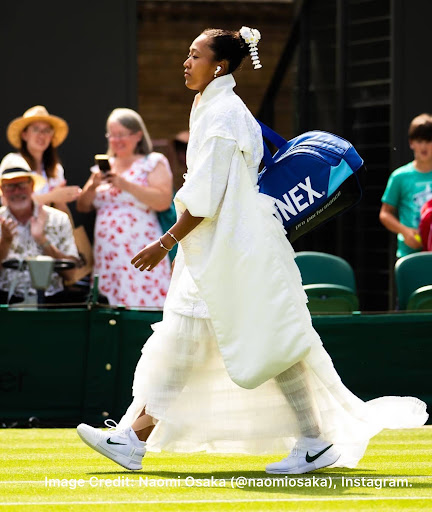
Naomi Osaka did not just arrive at Wimbledon. She made an entry that looked like a mix of runway, tribute, and a legal case study. Her kimono-inspired look immediately stood out because it was elegant, symbolic, and carefully aligned with Wimbledon’s famous all-white clothing rules. The dress was also widely described as a tribute to Japanese ancestry, with Osaka herself relating it to her cultural roots as
well as the iconic image of O-Ren Ishii from Kill Bill. Osaka’s Wimbledon entrance opens up a sharper legal question: when clothing becomes both cultural expression and commercial asset, who really gets to tell the story; the athlete, the sponsor, or the law?
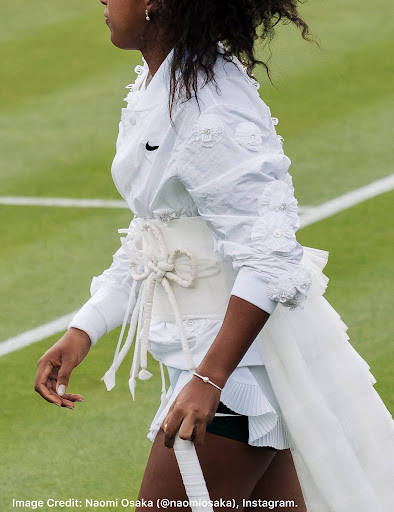
Naomi Osaka’s Wimbledon look shows that cultural fashion can carry a legal edge. The kimono-inspired outer layer made the statement, while the Nike performance outfit underneath still sat inside the sponsor’s brand world, shaping how the look was ultimately read in public. That’s what makes the outfit more than a style moment; it becomes a revealing lens on image rights, endorsement power, brand control, and the limits of commercial influence over athlete identity.
In modern sport, clothing can carry meaning far beyond the court. Osaka’s kimono-inspired look shows how tradition can be reworked into fashion without losing emotional force, while also revealing how corporate interests can shape that expression. Her entrance outfit is not just a striking visual; it is a clear example of how culture, sponsorship, and the law now intersect in professional sports.
As a result, this article will look at three different topics. Firstly, it will look at how Osaka used fashion to express cultural identity. Secondly, it will look into how sponsorship and brand agreements influence an athlete’s public image. Thirdly, it will discuss the implications for fashion law, particularly in terms of image rights, endorsement authority, and appearance ownership. In the end, the outfit is more than a style moment. It serves as a reminder that fashion, culture, and law now coexist in elite athletics.
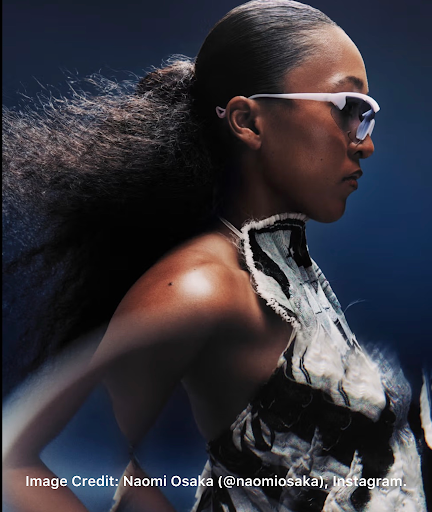
Naomi Osaka: Fashion, Identity, and Expression.
Naomi Osaka’s fashion story begins with identity. Born to a Japanese mother and a Haitian father and raised between Japan and the United States, she has often treated that background as a source of strength. Her clothing choices reflect that mix of heritage and self-expression, turning fashion into a way of carrying culture into the present. Naomi Osaka has built a fashion identity that is nearly as recognizable as her tennis. She has long described fashion as self-expression, something she wears to communicate rather than simply decorate herself. That instinct seems to go back to an early trip to Japan at 13, which she has said opened her eyes to a culture where clothing could be used more freely as a form of expression. She has also spoken about admiring Maria Sharapova, Venus Williams, and Serena Williams, showing that personality and presence have always mattered to her as much as the outfit itself.
That background helps explain why Osaka’s fashion feels so distinct. Across Grand Slams, she has used clothing to tell different visual stories, from butterfly and jellyfish imagery to Japanese-inspired references and couture-like silhouettes. She has said that each look tells a story, whether that story is about memory, emotion, or identity. Osaka has also spoken about feeling different on and off the court, which points less to some mysterious transformation and more to a conscious shift in public self-presentation. That distinction matters, because the real story here is how identity is performed when sport, clothing, and visibility all meet in the same space.
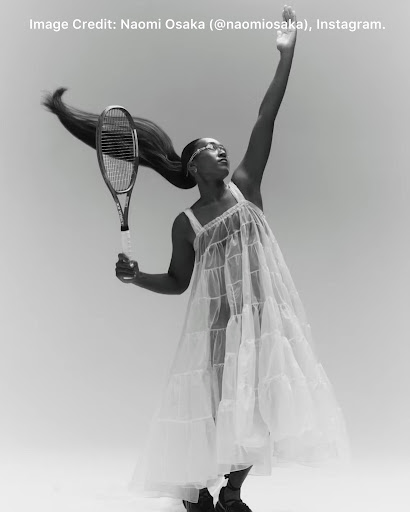 That is why Osaka’s fashion identity matters in this piece. Her Wimbledon kimono-inspired ensemble is not just a striking outfit; it sits inside a larger narrative built on tradition, self-expression, and visual storytelling. The legal significance comes in once that style becomes part of her public persona, because fashion then starts to overlap with branding, sponsorship, and image rights as much as personal taste.
The Wimbledon Kimono-Inspired Ensemble
To understand why Naomi Osaka’s Wimbledon costume matters, it helps to begin with the environment. Wimbledon is famous not just for tennis, but also for its strict visual tradition: tennis players must wear attire that is almost all white. That constraint can easily limit experimentation, which is why Osaka’s entrance received so much attention. She arrived in something that seemed ceremonial, intimate, and distinctly distinctive while still adhering to Wimbledon’s dress rules, according to BBC Sport.
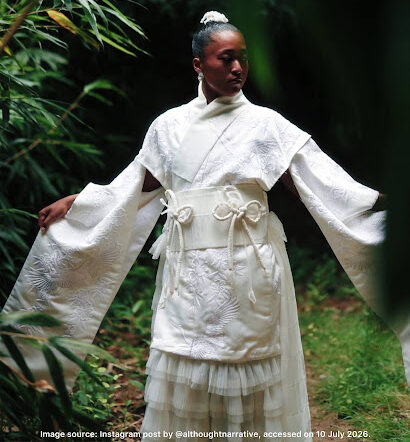
The outfit was never meant to be a straight-up traditional kimono. Instead, Hana Yagi and Osaka’s team crafted a modern reinterpretation, a kimono-inspired walk-on look called “Evolving Ceremony.” What makes it work is the tension: it draws from Japanese ceremonial dress, but reimagines it for a global sporting stage, landing somewhere between heritage and performance.
The design elements help to illustrate the equilibrium. The clothing is described as having a kimono-like neckline, longer sleeves, an obi-style sash, and beautiful all-white embroidery of cranes and cherry blossoms. These were not just random decorative choices. Cherry blossoms and cranes have significant value in Japanese visual culture, and their presence made the outfit feel less like a costume and more like a conscious cultural reference. At the same time, the overall design remained white, allowing it to follow Wimbledon’s tight guidelines while also standing out visually.
The materials themselves tell a part of the story. According to multiple sources, the attire was made of repurposed textiles such as old kimonos, a traditional shiromuku bridal dress, and deconstructed wedding clothing. This is significant because it demonstrates that the outfit was created using ceremonial and historical precedents, rather than merely being stylised to “look Japanese.” The designer noted that the goal was not to replicate a traditional kimono perfectly, but to create a unique expression while remaining true to history. That explanation explains why the clothing was regarded not only as fashion, but also as an interpretation of cultural wear in a modern commercial context.
Under the kimono-inspired outerwear, Osaka wore a custom Nike performance dress made for play. This shift is significant since it visibly separated the outfit into two sections: the ceremonial entrance and the sponsor-supported competitive persona. The transition from heritage-inspired outerwear to branded performance gear is precisely where the legal and commercial issues arise. It demonstrates in a logical process how Osaka’s appearance evolved from cultural symbols to the structured realm of sports branding.
Osaka herself attributed the outfit to both her Japanese heritage and pop-cultural inspiration, specifically Lucy Liu’s white kimono attire in Kill Bill. That combination holds significance because it inhibits the reader from viewing the costume as a strictly traditional thing. It wasn’t just about heritage. It also addressed reinterpretation, memory, cinema, style, and performance. That complex meaning is what makes the ensemble such an effective case study. The dress is easy to admire for its beauty, but the article also shows its legal and cultural importance.
To put it briefly, the Wimbledon ensemble succeeded because it presented a narrative in phases. It first presented Osaka as a fashion and cultural icon who purposefully entered the court. Once play started, it changed into a useful, sponsor-linked sports persona. That transition from entrance look to match gear leads naturally into the larger question of who gets to define, authorise, and ultimately own the cultural message conveyed through fashion in a highly commercialised sporting setting.
Heritage, Symbolism and Self Expression
Naomi Osaka’s fashion story begins with her identity. Born to a Japanese mother and a Haitian father and raised in Japan and the United States, she has frequently portrayed her upbringing as a source of strength rather than conflict. Her multicultural upbringing influences how she wears, discusses style, and portrays herself in public. For Osaka, fashion is more than just aesthetics; it’s a means of bringing heritage into the present.
That is why her looks frequently feature symbols rather than just trends. The Wimbledon kimono-inspired attire linked Japanese ceremonial wear, a white all-English look, and connections to her own cultural memory. Earlier fashion moments also incorporated imagery tied to butterflies, jellyfish, and couture-like silhouettes, suggesting that each garment is constructed as a visual statement rather than a basic styling choice. The end product is a style language that highlights heritage without turning it into a costume.
Self-expression is the thread that binds everything together. Osaka has stated that fashion allows her to express who she is, and recent interviews have defined her style as a tool to tell a tale about personality, roots, and evolution. That is also why her apparel feels intentional on the court: it becomes part of the act rather than a separate layer added later. In short, Osaka employs fashion to transform private identity into public form.
Sponsorship and Brand Visibility
Osaka has a commercial aspect to her fashion identity. When her on-court style became well-known, it did more than just draw attention; it also increased her visibility to advertisers and helped make her apparel into a part of her brand identity. That visibility is crucial because fashion in sports may function as advertising without feeling like a traditional ad campaign. Osaka’s appearance thus serves two functions: it expresses identity while also strengthening brand recognition.
Over time, Osaka’s brand partnerships have done more than pad her résumé; they have turned her into one of sport’s most compelling commercial figures. Nike, Louis Vuitton, TAG Heuer, Nissan, Shiseido, Panasonic, and Yonex are not just buying an athlete with trophies. They are buying into a personality that feels modern, global, and culturally fluent; someone who can move from the court to the runway without losing credibility. That kind of reach is rare, and it is exactly why Osaka stands out.
What these partnerships reveal is that Osaka’s value has never been limited to winning matches. Her real power lies in how she makes image feel meaningful. A Wimbledon entrance or a French Open look is not just a style moment; it is brand theatre, cultural messaging, and commercial strategy rolled into one. For brands, that is gold. For Osaka, it means her presence carries influence far beyond tennis.
The Wimbledon kimono-inspired attire exemplifies this. Even while the style was founded in tradition, it fit into a larger commercial framework because it was matched with performance gear and debuted at a high-profile global event attended by sponsors, media, and fashion fans. In that way, brand presence strengthens rather than dilutes the cultural message. Osaka’s apparel now serves as both a personal statement and a market signal, which is why it matters in a legal debate over image rights and athlete branding.
 Athlete image and commercial control.
Naomi Osaka’s fashion story also brings up a larger legal question: who owns an athlete’s image once it becomes economically lucrative? When an athlete’s attire, look, and public persona are continually linked to sponsorships, media attention, and commercial collaborations, the distinction between self-expression and marketable image becomes important. Osaka’s wardrobe choices at key tournaments demonstrate that her image is deliberate, recognised, and valuable.
That matters because commercial control involves more than just who pays for the outfit. It is also about who benefits from the attention it attracts, how much control the athlete has over that attention, and how much sponsors can affect what is viewed publicly. Osaka’s looks serve as part of her own brand, but they are also embedded in a network of contracts, endorsements, and media rights. That makes her a prime illustration of how an athlete’s image can be both self-created and commercially marketed.
In the legal environment, this tension is the point. Osaka’s fashion persona demonstrates how an athlete may use apparel to showcase lineage and individuality while simultaneously becoming a tightly regulated commercial asset. The more recognisable the image, the more pressing the issues of permission, branding, and ownership become.
The Legal Framework: Image rights and endorsement powers.
Osaka’s fashion choices sit within a legal framework built around image rights and endorsement value. In simple terms, image rights cover the commercial use of a person’s identity—look, persona, and brand; which is why athletes can profit from public visibility through licensing and sponsorship. But Osaka’s case raises a sharper question: if a sponsor benefits from her heritage-driven image, how much control does she still have over how that image is used, shaped, or packaged? That tension is what makes her such a compelling case. Her outfits strengthen her personal brand by making her instantly recognizable, but they also sit inside a sponsor ecosystem that wants consistency, visibility, and marketability. The more distinctive her fashion becomes, the more valuable it is; and the more exposed it becomes to commercial influence. Image rights are meant to protect an athlete’s control over her identity, yet endorsement contracts often give brands a strong say over presentation. So the real issue is not whether Osaka can be styled; it is how much of her cultural narrative remains hers once it begins to generate commercial value.
Endorsement power is effective because images may be monetised repeatedly. Once an athlete is visually identifiable, each appearance, costume, and public event can strengthen a sponsor connection and increase commercial leverage. Osaka’s deal history clearly demonstrates this: her image has been associated with brands in the sports, luxury, and consumer goods industries, including Nike, Nissan, Panasonic, Shiseido, Louis Vuitton, TAG Heuer, and Yonex. In practice, this implies that her attire contributes to her commercial power rather than detracting from it.
The legal and corporate environment in Japan emphasises the point even more. Sports marketing and sponsorship in Japan are controlled by contract, advertising, and competition laws; thus, image use is not free-form even when a star athlete is globally known. That is why Osaka’s carefully curated public image is crucial: the more her identity is linked to fashion and heritage, the more important it is to understand who can use that image, where, and for what purpose. Her case demonstrates how endorsement power and legal control work together.
Cultural Fashion in Global Support.
Naomi Osaka’s style is significant because it places cultural wear on one of the most worldwide stages in sports. Instead of using fashion as decoration, she incorporates Japanese influences, ceremonial nuances, and personal memories into competitions broadcast around the world. This makes her attire feel more like a type of cross-cultural communication than a single fashion moment. In Osaka’s case, a global sport serves as a forum for seeing, interpreting, and discussing heritage on a worldwide scale.
This is not the same as ordinary “trend” clothing. Her looks do not merely adhere to tennis fashion; they transfer cultural identity into a format that can function inside a worldwide commercial event. Wimbledon’s all-white tradition, for example, presented a strict visual setting, whereas Osaka managed to incorporate Japanese iconography through silhouette, texture, and meaning. That balance is what makes her important in both legal and cultural discussions. The clothing pays homage to tradition while also functioning in an international sports brand setting.
Osaka also demonstrates how cultural fashion can expand outside a single national framework. Her public image is moulded by Japanese, Haitian, and American inspirations, giving her apparel a rich meaning that can be understood across multiple audiences. That is why her appearance has sparked interest not only in tennis coverage, but also in broader questions about identity, representation, and athlete branding. In worldwide sports, Osaka’s attire serves as both cultural expression and public communication.
Implications for Athletes and Brands

Osaka’s case demonstrates that modern athletes are appreciated not only for their performance, but also for the narrative they can carry in public. When fashion, legacy, activism, and performance combine, the athlete becomes a competitor as well as a media brand. This provides athletes greater influence over how they are perceived, but it also raises the stakes because each appearance can impact reputation, sponsor interest, and legal right.
For brands, the lesson is that authenticity is now just as important as visibility. Sponsors are not just buying logos on kits; they are purchasing association with a person’s identity, ideals, and public narrative. Osaka’s support from large corporations during times of vulnerability demonstrated that brands increasingly value long-term trust over short-term image control (brand equity). In other words, the partnership thrives when the athlete’s public persona and the brand’s message do not conflict.
The broader implication is that fashion in sports can be a strategic advantage. Osaka’s cultural dressing highlights how an athlete may use apparel to enhance meaning, broaden worldwide appeal, and increase commercial leverage all at the same time. For athletes, this implies more opportunities and greater control. For brands, it implies increased exposure, but also a greater responsibility to respect the athlete’s voice, as that voice is part of the value being offered.
Conclusion
Naomi Osaka’s fashion story points toward a future in which athlete identity is treated as both cultural expression and commercial property. In modern sport, the image a player projects may matter almost as much as the performance itself, which means the legal questions around control, consent, and ownership will only grow sharper. Osaka’s example suggests that athlete branding is moving into a space where style is no longer secondary to sport; it is part of the sport’s public meaning.
That shift matters because it changes what power looks like in athletics. The athlete is no longer just someone who wears a sponsor’s brand; she can also help shape the value of that brand through identity, symbolism, and public narrative. But the more influential that image becomes, the more important it is to ask who gets to direct it and who benefits from it.
For sports law, this is where the real challenge begins. As athletes become cultural figures as well as competitors, the law will have to keep up with a world where clothing can communicate heritage, build brand value, and create legal tension all at once. Osaka’s example does not close the debate; it opens the next one.
FASHION LAW JOURNAL INSIDER
Join designers, brand founders and fashion lawyers who get the biggest brand battles, IP fights and career moves in fashion law, straight to their inbox.



Unfortunately Naomi’s kimono is not Japanese. It more like a combination of Korean and Chinese.
Here come another Michael the historian.
Naomie your look good
Beautiful
What an excellent article, a real eye opener.
Naomi is an intelligent woman ,a Mother, an athlete and an influencer. She teaches through her amazing cultural interpretation of life experiences in her clothing choices. I admire her strength to exhibit these choices no matter the negative comments. Keep styling Naomi we are watching and admiring.
Does it matter what she wears since she literally never smiles? She always looks like someone put a plate, full of shit, under her nose. She is grotesque and a terrible role model/person hope she goes away soon.
You’re a sick englishman….very much expected…Go Naomi….You’re a beautiful person….playing great tennis..
Sorry…message was meant for john
That 100% right
I enjoyed the article. I really think Osaka is a lovely young lady and is very gifted. I wish her and her family the very best in the future. May God bless continue to bless her and keep her humble.
It just tennis
It’s just tennis
What a hater! Naomi Osaka is one of the most beautiful people on the planet. We are so fortunate as true tennis fans to experience her talent on and off the court. Of course she doesn’t smile a lot on the court because that gives her an advantage against he opponents. Smiling inside is the most important thing. Parents should be the role models ultimately and as I was taught if you don’t have anything positive to say then keep it to yourself.
Gail G