
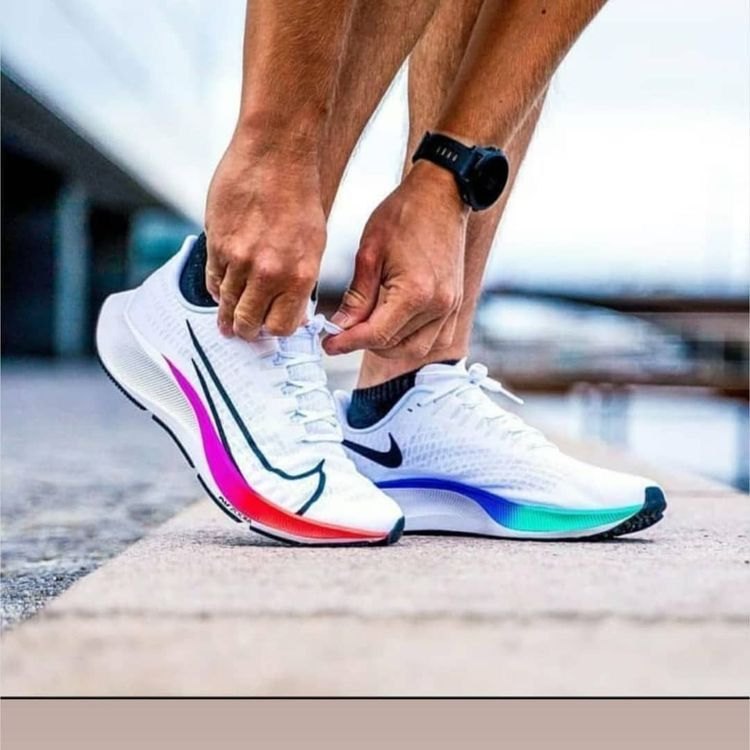
In the highly competitive world of athletic footwear and apparel, Nike is known for blending aesthetics and technology, resulting in cutting-edge designs that are innovative and trending. Renowned not only for innovations but also for its fierce method of safeguarding intellectual property rights, Nike has been leading the sports manufacturing industry. However, the brand recently suffered a setback in its attempt to register the term “footware” which sparked controversy. This move has ended up in legal tussles between Nike and other leading sports manufacturing players like San Antonio Shoes and Puma. This dispute has unfolded the need for a balance between intellectual property protection and fair competition in the industry.
STORY SO FAR
The story starts in March 2019, when Nike filed with the U.S. Patent and Trademark Office (USPTO), seeking to register “FOOTWARE” as a word mark. Nike said it planned to use the name for internet-connected products, such as shoes and apparel with built-in technology, and the application listed a broad range of related hardware, software and services. The filing spans classes 9, 38 and 42, covering hardware and software that receive, process and transmit data within the Internet of Things (‘IoT’), electronic devices, telecommunication services and software services that help devices work together and connect to networks and the IoT. Nike made the filing while it was working to grow its range of smart footwear.
The journey took an unexpected turn when the San Antonio Shoes filed its initial opposition in July 2020. This move has led to the rejection of Nike’s application by the Trademark Trial and Appeal Board (TTAB). San Antonio Shoes contended that the term “ footware” was often used interchangeably with the term “footwear” to denote foot-worn wearable technology. The combination of foot and ware did not create a distinct word, but rather, it gives the word merely a descriptive feature under Trademark Act Section 2(e)(1) 15 USC 1052(e)(1) and is not capable of acquiring distinctiveness under Section 2(f), 15 U S C 1052(f). Hence it was contended that S 2 (e)(1) prohibits the registration of the term. Furthermore, it was contended that rearranging the letters did not remove the inherent meaning ascribed to them and that giving registration for the term would prevent the other competitors from using the term in commerce.
MERELY DESCRIPTIVE?
The Board accepted the arguments made forward by the SAS and held that the terms “foot” and “ware” do not create a separate and distinctive word; rather, this combination is just a merely descriptive term. The Board further held that despite Nike being the first user of this term, it doesn’t remove the fact that it is merely a descriptive term and does not attribute new meaning to it. Hence, the application was rejected. This decision mirrors the intention of the Board to prevent any single brand from monopolising a term that has widespread relevance, considering the evolving nature of the technology in footwear.
Nike has the option to appeal the decision rendered by the Board. The outcome of such an appeal will have a far-reaching impact on how the jurisprudence perceives the trademarking of words like footware, which merely has a descriptive meaning. This also outlines the determination of the brand to secure exclusive rights over this term as they are on the verge of expanding their smart sneakers collection
The US case is only one front in a wider fight over “footware”. Nike also secured an EU trade mark for the term in 2019 through the EU’s trade mark office, the EUIPO, and German sportswear company Puma applied to have it declared invalid in 2020. On 9 January 2023, the EUIPO’s Board of Appeal held that the mark was descriptive, and the EU General Court upheld that ruling in June 2024 (Case T-130/23). Puma has also challenged Nike’s applications in the US and the UK, although in the UK its opposition was dismissed in November 2020.
CONCLUSION
The legal battle for the term “footware” underscores the fight between companies in protecting their innovation through IPR as well as the need to prevent the monopolisation of terms that would result in unfair competition. This case highlights the balance that must be created in a market to prevent monopolisation and, at the same time encouraging innovations. As the distinction between fashion and technology is getting blurred out, the legal dispute underscores the need for a standardised system to take care of such trademark conflicts. A clear boundaries and guidelines must be established to protect the innovation while preventing monopolisation.
Author: Meghana S S, a student at NUALS
FASHION LAW JOURNAL INSIDER
Join designers, brand founders and fashion lawyers who get the biggest brand battles, IP fights and career moves in fashion law, straight to their inbox.