

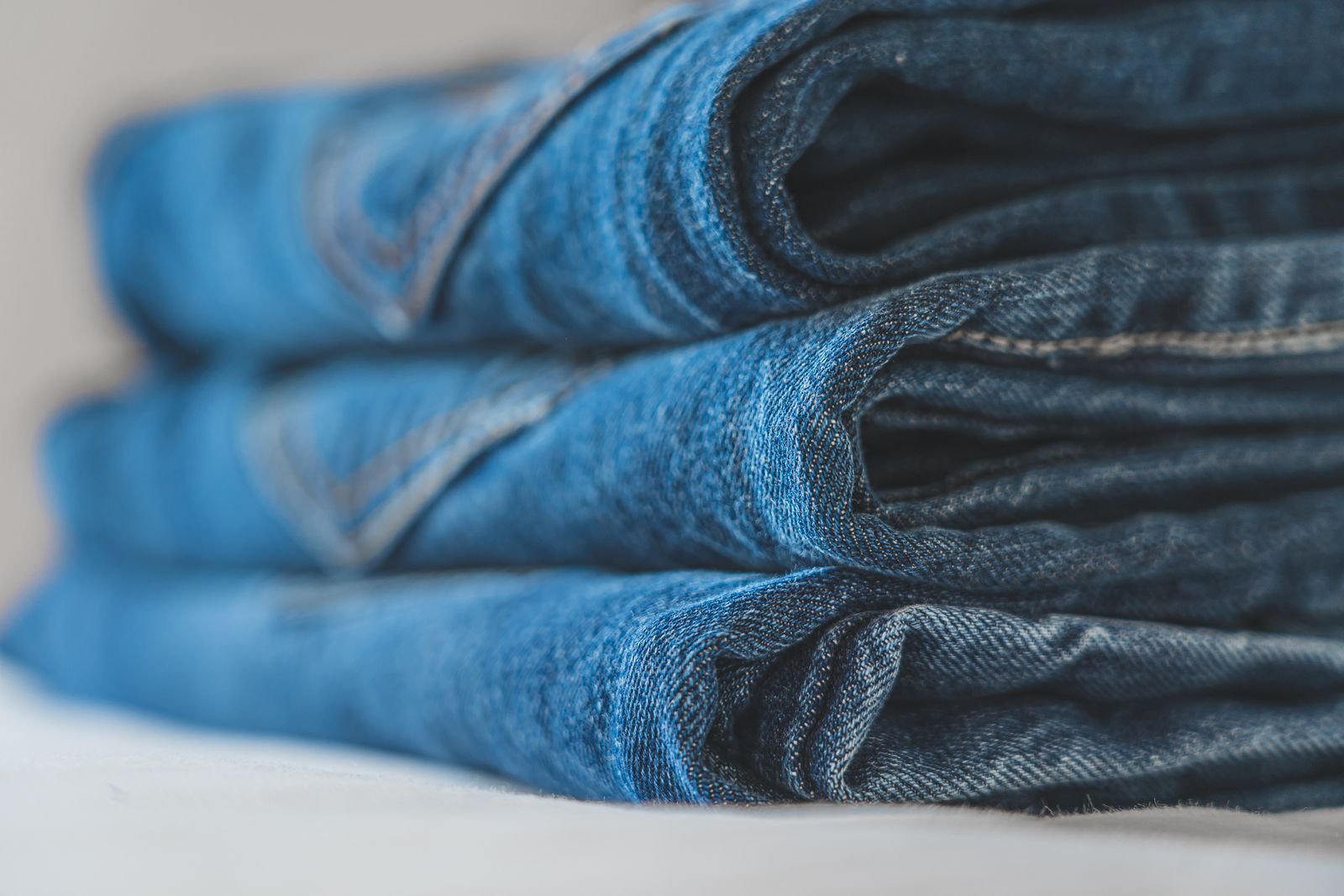
Denim may carry more green claims per square metre than any other fabric. Jeans are cotton-heavy, dyed with indigo and washed, faded and abraded to look worn, and each of those stages has produced its own marketing line: “water-saving”, “recycled cotton”, “organic”, “Tencel blend”, “laser finished”, “low impact”. Some of those claims are specific and provable. Others are the kind of broad wording that regulators on both sides of the Atlantic have been ruling against since 2025. This guide takes each common sustainable denim claim in turn and sets out what a brand needs to prove before using it, under EU, UK and US rules as of 16 November 2026.
Short answer: Sustainable denim claims hold up when they are specific, measured and limited to what is true: “made with 30% recycled cotton”, “uses 40% less water in finishing than our 2024 process”, “GOTS certified organic cotton”. Calling jeans “sustainable”, “low impact” or “eco” without that detail is risky in the EU since 27 September 2026, and UK and US regulators treat unexplained claims as absolute.
Key takeaways
- A water-saving claim is a comparison, so the baseline and the stage measured must be stated and backed by the brand’s own data.
- Recycled cotton made up only about 1% of cotton in 2024, so “recycled denim” almost always means a blend, and the percentage must be shown.
- “Tencel” is a Lenzing trademark used under licence; the fibre content label must say lyocell.
- In June 2026 the UK ASA ruled that “Recycled Materials” in a short search ad meant 100% recycled to shoppers, and upheld complaints against Uniqlo, Adidas and Calvin Klein.
Why is denim such a target for green claims?
Because its footprint is easy to dramatise. UN News reported in March 2019 that it takes around 7,500 litres of water to make a single pair of jeans, a figure that runs from growing the cotton to the finished product. That matters for claims: a brand that cuts water in the laundry has changed one stage of a long chain, not the whole footprint.
That gap between one stage and the whole product is where the law now bites. The EU’s Empowering Consumers for the Green Transition Directive (EU) 2024/825, applied since 27 September 2026, bans environmental claims about an entire product when they concern only one aspect of it. It also bans generic claims such as “eco-friendly” or “green” without recognised excellent environmental performance, and sustainability labels not based on a certification scheme or public authority. FLJ’s article on sustainable activewear and recycled polyester claims shows the same rules applied to synthetics.
FLJ Insider Pro is open: live fashion law jobs and internships, five career guides and two roadmaps. Early bird USD 12/month. See what's inside
Can a brand say its jeans “save water”?
Yes, if it can say compared with what. A water-saving claim is a comparative claim. The US FTC Green Guides, at 16 CFR 260.3(d), say comparative environmental claims “should be clear to avoid consumer confusion about the comparison” and need substantiation for the comparison itself. The CMA’s Green Claims Code says comparisons must be fair and meaningful, and the ASA asks for the basis of a claim to appear in the ad, not behind a link.
In practice, “uses up to 80% less water” invites three questions: less than which process, at which stage, and measured by whom. Finishing technologies are a good example. A 2025 review of sustainable wet processing in the journal Sustainability found that laser finishing can sharply reduce water and chemicals compared with stone washing, enzyme washing and chemical bleaching, and reported ozone treatment cutting water use by 72% in one study. It also warned that an “up to 80%” water figure for one laser system was a manufacturer claim and that much of the industrial data came from company websites. A brand repeating a machine supplier’s headline number is making that claim its own.
A defensible version reads something like “Finished with laser and ozone, using 40% less water in finishing than our 2024 stone wash, measured at our Tier 1 laundry”. The claim names the stage, the baseline and the evidence. It does not say the jeans are water-friendly overall.
What does “recycled cotton” denim have to prove?
First, that the material really came from waste. The FTC’s rule at 16 CFR 260.13 says recycled content means material recovered or diverted from the waste stream, either during manufacturing (pre-consumer) or after consumer use (post-consumer). For pre-consumer material, such as cutting-room offcuts, the marketer should be able to show it would otherwise have been thrown away. An unqualified “recycled” claim is appropriate only when the whole product, apart from minor components, is recycled; otherwise the share by weight should be stated.
Second, the share. Recycled cotton is still a small input: Textile Exchange estimated its market share at roughly 1% of cotton in 2024. Recycled cotton denim is therefore usually a blend, and both UK and EU rules expect the percentage to be clear. In March 2024 ASOS, Boohoo and George at Asda gave the CMA undertakings to display recycled fibre percentages clearly and to make “recycled” filters show only products made predominantly from recycled materials. The CMA’s January 2026 supply chain guidance adds an example of trainers sold as “100% recycled” when only the sole was, and says fashion evidence usually means scope certificates and transaction certificates.
Third, the wording of short ads. On 24 June 2026 the ASA upheld complaints against paid search ads by Uniqlo (“Recycled Materials” for fleece jackets), Adidas (“Recycled Running Shoes”) and Calvin Klein. In the Uniqlo ruling the ASA accepted that each product contained some recycled material, but found that shoppers would read the claim as absolute and expect the items to be made entirely from recycled materials. The same logic applies to a search ad for “recycled jeans”.
Is “organic cotton denim” a safe claim?
It is one of the safer claims, provided it is certified and limited to the cotton. Organic farming law covers raw cotton, not finished jeans, so brands rely on schemes such as the Global Organic Textile Standard, which needs at least 70% certified organic fibre, or Textile Exchange’s Organic Content Standard, which tracks organic content from 5%. Stretch denim often contains elastane, and the ASA’s advice on organic claims says marketers must specify which element of a product is organic. “Jeans made with 92% organic cotton (GOTS)” is safer than “organic jeans”. FLJ’s checklist on whether sustainable fashion claims hold up legally walks through the certificates to ask for.
How should Tencel or lyocell denim be labelled?
Lyocell is a regenerated cellulose fibre made by dissolving cellulose in an organic solvent and spinning it into fibre. It is a recognised generic fibre name in the EU Textile Labelling Regulation (EU) No 1007/2011, and in the US the FTC’s textile rules at 16 CFR 303.7(d) allow “lyocell” as a generic description within the rayon category. TENCEL is a registered trademark of Lenzing AG. Brands need a licence to use it, the fibre content label must still give the generic name, and under FTC guidance a fibre trademark may appear on a content label only next to the generic name, in equally conspicuous type of the same size.
The labelling rule is the easy part. Environmental claims about lyocell, such as “closed loop” or “made from sustainably sourced wood”, are separate claims that need their own evidence from the fibre producer, specific to the fibre actually used. FLJ’s piece on why “bamboo” labels get brands fined by the FTC shows what happens when a regenerated cellulose fibre is marketed by its plant source rather than its generic name.
Do “laser finished” and “low impact” claims pass?
“Laser finished” on its own is a description of a process and is low risk if true. The trouble starts when it is used to imply an overall benefit, such as “laser finished for a cleaner planet”, which needs the kind of comparative data discussed above.
“Low impact” is harder. The EU directive’s recitals list examples of banned generic claims, including “environmentally friendly”, “eco-friendly”, “green”, “climate friendly” and “gentle on the environment”, and say that a claim is not generic if its specification appears in clear and prominent terms on the same medium. In FLJ’s view “low impact denim” with no explanation is likely to be treated the same way. The UK ASA’s December 2025 rulings against Nike, Superdry and Lacoste found that unqualified “sustainable” wording in search ads could be read as meaning no harmful effect across the whole life cycle. A brand that wants to say “low impact” should say what the impact is lower in, by how much and compared with what, in the same place as the claim.
What evidence does each denim claim need?
| Claim | What you need to prove it | Main legal risk |
|---|---|---|
| “Uses X% less water” | Stated baseline (own previous process or industry average), stage covered, measured data from the laundry or mill | Unclear comparison; implying whole life cycle saving |
| “Made with 30% recycled cotton” | Scope and transaction certificates (for example RCS or GRS), pre or post-consumer source, weight calculation | Omitting the percentage; calling the jeans “recycled” |
| “Organic cotton jeans” | GOTS or OCS certificates for each shipment; organic share by weight | Whole product claim when elastane or other fibres present |
| “TENCEL lyocell blend” | Lenzing licence and certification number; generic name on content label | Trademark misuse; missing generic name |
| “Laser finished” | Evidence that laser finishing was used | Low, unless used to imply an overall benefit |
| “Low impact” or “eco” denim | Recognised excellent environmental performance (for example EU Ecolabel), or a specific claim stated next to it | Banned generic claim in the EU since 27 September 2026 |
| “Sustainable denim” | Full life cycle evidence; in practice very hard to support | ASA rulings December 2025; EU recitals warn against “sustainable” |
Sources: Directive (EU) 2024/825, FTC Green Guides (16 CFR Part 260), 16 CFR 303.7, CMA guidance, ASA rulings. Risk assessments are FLJ’s own. For the general rules on what fashion brands may say, see FLJ’s guide to what fashion brands can and can’t say about sustainability.
What is coming next for denim claims?
Two EU measures will turn some marketing claims into regulated data. The Commission has named apparel as a priority for ecodesign rules and a Digital Product Passport, with 2027 as the indicative year for adopting the textile rules, and EU textile producer responsibility schemes due by 17 April 2028 will set fees using criteria such as durability and recyclability. Once a passport records fibre content and durability, a marketing claim that contradicts it will be easy to spot. Durable, repairable jeans may also end up paying lower fees, which is a better commercial reason to invest in them than a slogan. FLJ’s guide to circular fashion and the rules pushing brands there covers those changes.
This article is general information about the law as of 16 November 2026, not legal advice. National rules implementing the EU directive differ, so check local law before relying on a claim.
Frequently asked questions
Is sustainable denim a legal term?
No. There is no legal definition of sustainable denim. Regulators treat “sustainable” as a broad claim about the whole life cycle, which is very hard to prove, so specific statements are much safer.
How much water does a pair of jeans use?
UN News reported in 2019 that it takes around 7,500 litres to make a pair of jeans, counting everything from growing the cotton to the finished product.
Can jeans be called recycled if only some of the cotton is recycled?
Only if the share is stated, for example “made with 20% recycled cotton”. The FTC, CMA and ASA all treat an unqualified “recycled” claim as meaning the whole product.
Can I write Tencel on my jeans label?
Only with a licence from Lenzing, which owns the TENCEL trademark, and only alongside the generic fibre name lyocell on the content label.
Is “low impact denim” banned in the EU?
Without explanation it is likely to count as a generic environmental claim, banned since 27 September 2026 unless backed by recognised excellent performance. Stating exactly what is lower, by how much, next to the claim is safer.
Does laser finishing make jeans sustainable?
It can reduce water and chemicals in the finishing stage, but that is one stage of the product’s life. A claim should describe that stage and its measured saving, not the whole pair of jeans.
FASHION LAW JOURNAL INSIDER
Join designers, brand founders and fashion lawyers who get the biggest brand battles, IP fights and career moves in fashion law, straight to their inbox.