

Let’s be honest: the Empire Waistline is a total question mark for a lot of people. Is the Empire State Building of waistlines, or what? Or maybe was I the only one with that question? If you asked the 15-year-old me, it would definitely be my answer.
Looking back at my childhood wardrobe, I had many dresses with an empire waist. I always thought it was the ‘Barbie’ design, but I was completely wrong. But when the Bridgerton series aired, it had me hooked on the costume designs. Super high waist, along with beautiful puffed sleeves. But that waist was just an eye- catching view. That was when I whipped out my research skills and discovered it was called the Empire Waistline and that my childhood closet was filled with such designs.
There was a time in history when the empire waistline was all the rage and a huge trend for people of that era. The uniqueness of fashion history is that each obvious trend in your clothing was definitely popularised by a person in power or status. So, in terms of the empire waistline, who popularised it and who made it a statement in the fashion era back then?
Who popularised the Empire Waist?
It makes so much sense for Empress Josephine de Beauharnais, the former wife of Napoleon Bonaparte, to popularise the empire waist.
FLJ Insider Pro is open: live fashion law jobs and internships, five career guides and two roadmaps. Early bird USD 12/month. See what's inside
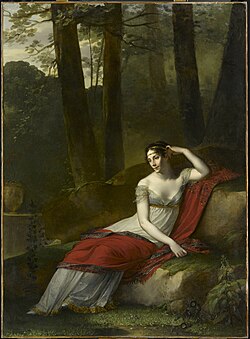
Just a little something about Josephine: Josephine was the first wife of Emperor Napoleon I. She was the daughter of Joseph Gaspard Tascher de La Pagerie and Rose Claire des Vergers de Sannois. She was the Empress of France from 1804 until their marriage was annulled in 1810. Her marriage to Napoleon Bonaparte was her second. Her first husband was Alexander, the Viscount of Beauharna.
Fashion meant everything to Josephine. It was her way of making a statement in the French Court. She abandoned the old ways of her predecessors. She did away with the old extravagant gowns and moved on to a more flowy silhouette.
The Empire Waist: What is it exactly?
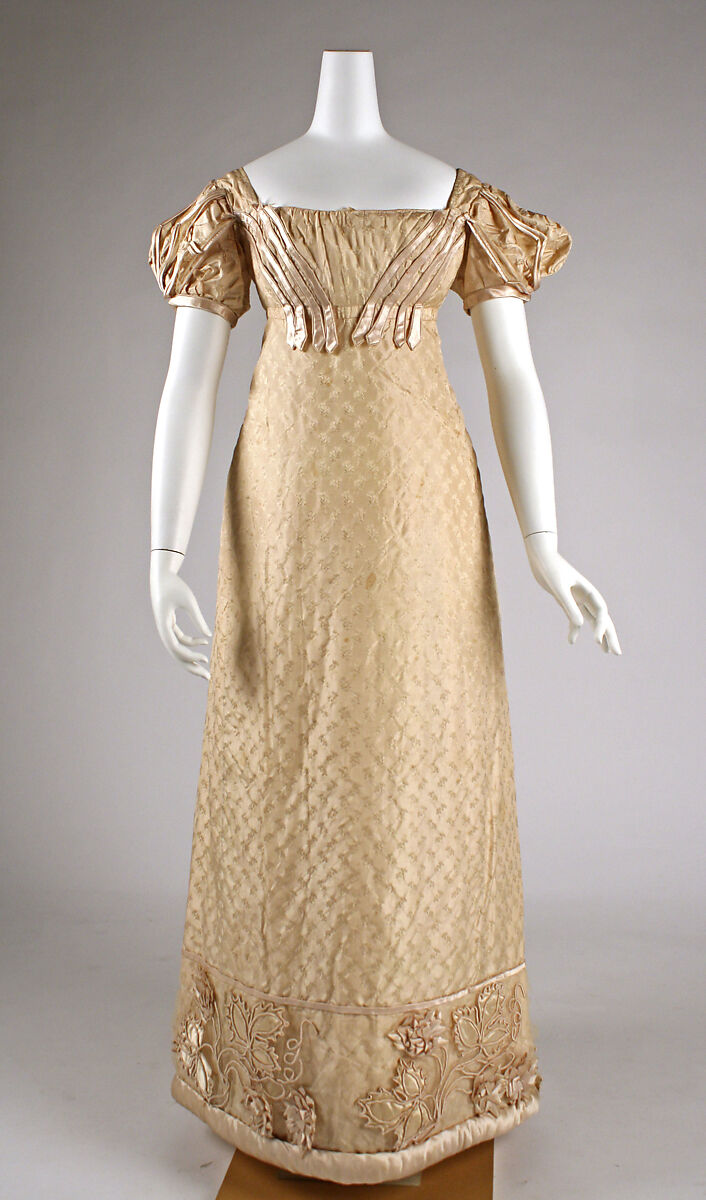
The high-waist silhouette was called the empire waist. The dress had a fitted bodice ending just below the bust area. It is a long dress with a loosely flowing skirt. This is what gives the dress its Empire style. These dresses are made with light fabrics, like silk and batiste. For formal occasions, velvet was an option for women. This style was fashionable during the 18th and early 19th centuries. It presented a more natural look with hints of neo-classical ideas from Ancient Greece and Roman art. They were depicted wearing draped garments.
The word “Empire’ did not make its mark until the 20th century, and it was popularly called that as it was birthed during the first French Empire.
Empress Josephine: Her Style
After the French Revolution, Napoleon wanted to secure France as a fashion hub and restore French luxury fashion, and it was crazily on Josephine’s radar.
Josephine’s way of styling the empire waist dress was pretty sophisticated.
Josephine wore basic undergarments under her gowns. A cotton chemise, which was also used as a nightgown. She also layered a bodice and a sleeveless petticoat decorated with an embroidered hem. The dress went on after the undergarments. The dresses had a muted and toned colour palette, including soft pastels, creams and whites. Soft tones marked purity and innocence.
She changes her outfits throughout the day. She moves on from an informal or undressed look to a semi-formal one, which was also called the ‘half- dress’, and would end her dressing-up journey with the formal or ‘full dress’ look. Most of her formal looks had a train. It was mostly pinned up for dancing.
She wore a lot more white than usual. This was because her man, Napoleon, loved her in white, and she draped herself in extravagant jewels of Chaumet, by Marie-Étienne Nitot.
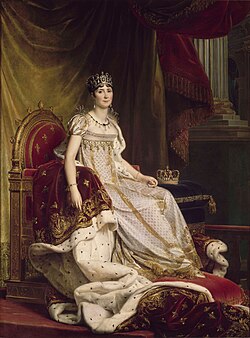
Her coronation was her time to shine and set the path for the women in Europe. Her gown was designed by Jean- Baptiste Isabey and Louis Hippolyte LeRoy. Her gown had the signature silhouette, the empire waist with slim features; it had silver and gold embellishments, and embroidery and gemstones on French silk. Her dress also had puffed sleeves along the shoulder, which got tighter along the arm. A collar was also sewn as part of the ensemble. It was attached to the shoulders and was worn behind her neck and head. A beautiful detail that was added to her gown was the Empire’s bee motif, which was actually a part of the Emperor’s coat of arms. The gown itself had a 22-meter crimson velvet train. It was lined with fur along the edges. It was also embroidered with gold and symbols of the Emperor.
Beyond the Walls of the Empire
The Empire waist went beyond the walls of the French court. The style inspired the European countries and led them to change their style from the heavy look to a more sophisticated and elegant ensemble, with the idea of being able to sit and walk through doors, something their predecessors could barely do.
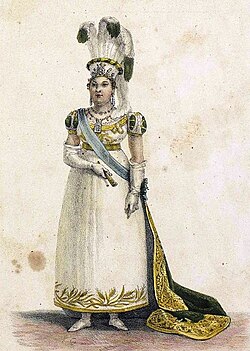
The Regency women were heavily inspired by the fashion of the French Empire. The whole look came to light in the 19th century, and the English were quick to hop on that train. The trend also reached the Americas, Brazil and other European countries as well. Maria Leopoldina, the Empress of Brazil, was also draped in a gown with an empire waist. This shows the huge influence it had on the world’s societies.
In the Fall 2016 Couture, the empire silhouette echoed still. Designers like John Galliano. Alexander McQueen, Giambattista Valli, and Dior.
Empire Waist On- Screen.
Jane Austen’s characters were also draped in the empire-waist gowns, and for true fans, that is the first thing that pops into their head when they think about the costumes. All the characters in Pride and Prejudice, Sense and Sensibility and Emma brought the empire waist to life.
The whole Bridgerton women’s cast was draped in empire-waist gowns with various designs, colours and embroidery.
The whole idea of the empire waist was about the change in the silhouette and the angle from which people perceive you. The higher waistlines emphasise the bust rather than the waist of the individual.
The Waist’s Legacy
There are hints of modern fashion that have bits and pieces of the empire waist. Though the traditional necklines of the dress may not be as prominent as they were during Josephine’s time, the silhouette of the dress, on the other hand, still sparkles through it all. In the modern era, twists and remakes have been super obvious and more of our take on fashion. But the most important takeaway from this is the honour and acknowledgement we need to give Josephine and her take on fashion and establishing her name within the French Empire and world fashion. She was bold and remarkably draped, and worn with beauty and flow. It was not about the different gowns or the colours of her gowns in her wardrobe, but the silhouette she popularised. She may not have sat on the throne alongside Napoleon that long, but she sure did make her mark in history that inspired the whole world to follow what he had started.
FASHION LAW JOURNAL INSIDER
Join designers, brand founders and fashion lawyers who get the biggest brand battles, IP fights and career moves in fashion law, straight to their inbox.