

Getting a souvenir from an overseas trip is a tradition most people partake in. However, sometimes that souvenir outlives its usefulness and needs to be given away. Online markets like eBay provide a way to make back some of the money spent on the item, or even throw the item directly into the trash.
Because the buyer of the product owns it, they have the right to do whatever they want with it. However, that is the rule when the item is bought on American soil. If the item was bought on vacation, do those same laws hold up?
An item that is already owned means that the copyright owner’s ability to control it ends. Now that the product is outside of the copyright owner’s region, do they get a say in what happens to the product?
This lies at the center of Kirstaeng v. John Wiley & Sons (2013). Who has control over the selling across the market?
FLJ Insider Pro is open: live fashion law jobs and internships, five career guides and two roadmaps. Early bird USD 12/month. See what's inside
For The Fashion Industry
While the case itself focuses on textbooks, the core of the issue can relate to all industries, including that of the fashion industry.
The first sale doctrine is evaluated throughout the life of this case, which is why websites like eBay and TheRealReal can operate. They run on other people selling the goods they purchased and have ownership of what to do with them.
Before, the world was separated into different regions, where each region would get its own products for manufacture and selling. When those items from a different region were brought into the United States, after being lawfully bought, they became known as gray market goods. This ruling means these goods are completely legal if they are resold.
This case would be a deciding factor in how the fashion industry distributes and manufactures its goods in the future, as well as what brands can control in their global product. Brands would have a clear path to follow when someone buys their product overseas and then resells it in the United States.
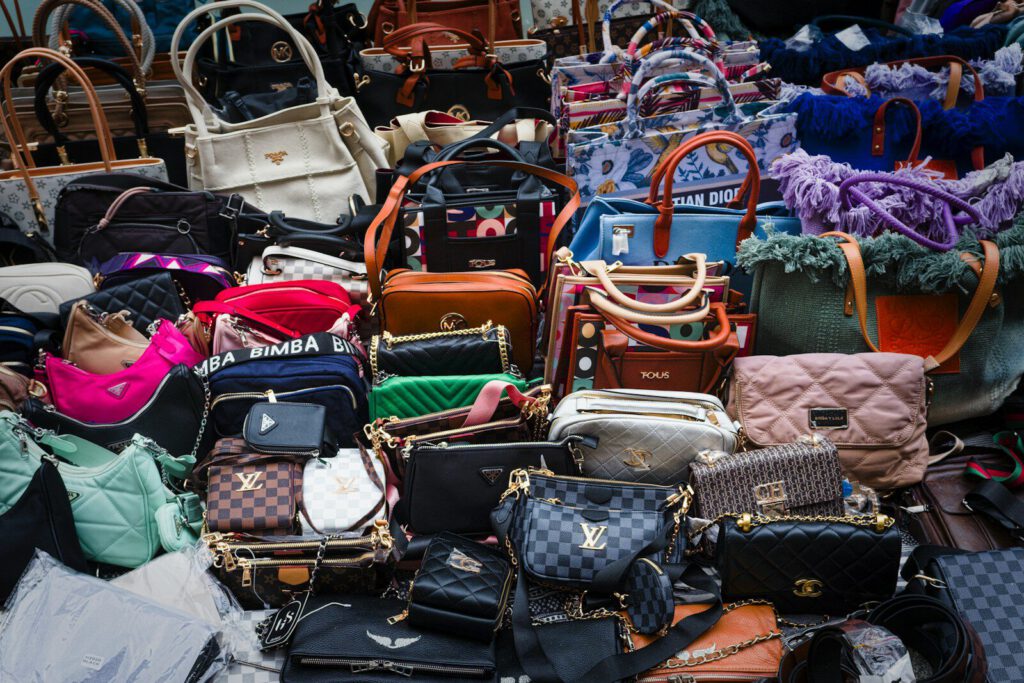
Similar to that of the souvenir example, if someone bought a bag on their trip and then resold it later in the United States, Kirtsaeng v. John Wiley & Sons outlines that process.
Kirtsaeng v. John Wiley & Sons: What Happened?
Sunap Kirtsaeng is a Thai-born citizen who moved to the United States for higher education. During his schooling, he asked family and friends to buy textbooks and send them over to him, which they would be reimbursed for. He would sell these books on resale markets for profit, and still reimburse his family for the original cost.
John Wiley & Sons, an American publisher who made some of the textbooks Kirtsaeng was selling, found out about this sale. In 2008, Wiley sued Kirtsaeng for copyright infringement, claiming that he did not have the right to sell textbooks that he bought overseas, because they were explicitly stated not to be taken into the United States.
The United States District Court for the Southern District of New York, or the Trial Court, ruled in favor of Wiley. Kirtsaeng appealed to the Second Circuit Court of Appeals, which also ruled in favor of Wiley, stating that the First Sale Doctrine does not apply to foreign-made products. Kirtsaeng then appealed to the Supreme Court, getting the case picked up.
The Question
Once the case went to the Supreme Court, they needed to decide if the First Sale Doctrine applied to goods sold outside of the United States and then resold inside the United States.
The First Sale Doctrine, as described by the Fashion Law Journal, is Section 109 of the Copyright Act. This ensures that once a consumer purchases goods, they are in their possession and do not need permission to sell or dispose of them.
With the First Sale Doctrine in effect, it allows for any resale or consignment shops to exist in both e-commerce and in-person. Websites like eBay are able to run because everyone who sells their items on the site has owned them and has the right to do what they want.
Kirtsaeng used this doctrine as his defense, stating that he had rightfully purchased all the textbooks he sold, and had the right to do whatever he wanted with them.
The other part of what the Supreme Court had to consider comes from Section 602 of the Copyright Act as well. This prohibits the importation of unauthorized copyrighted works.
The Conclusion
In a 6-3 decision, the Supreme Court ruled in favor of Kirtsaeng, stating that the geographical location of the purchase does not mean it cannot be resold in the United States. Writing for the majority opinion was Justice Stephen Breyer, who wrote that the doctrine works along with the Copyright Act.
His opinion notes that Congress had previously put geographical limitations on the Copyright Act, but they had been phased out.
If the court were to decide that the place where the product was made and sold mattered, it would impact multiple different industries. The right to loan out any product that was made outside of the United States would be impossible. Libraries would not be able to lend copies of books that were printed overseas, and museums would not be able to display any work that is from overseas.
All of this went into the court’s decision, where they decided that the importance of someone legally selling their item was more important than where it was purchased.
Writing for the dissent, or disagreeing opinion, was Justice Ruth Bader Ginsburg, who argued that the vagueness of the First Sale Doctrine was on purpose so the Court could decide on a case-by-case basis.
Ginsburg explains that if Congress wanted to have a clear objective for goods across borders, it would have tailored the language to fit such a purpose. In Section 602, there is a rule that a library may not import more than five copies for its lending or archive. Ginsberg then asks why this would be written into the Copyright Act if the first sale doctrine was not to apply only to United States goods.
In the issue of geographical limitation, Ginsberg says that without it, copyright owners will not be able to separate the market and could lead to international exhaustion. The dissenting opinion does understand the concerns of libraries and museums, but feels as though the majority opinion was not the correct way to go about it.
The Aftermath
After Kirtsaeng won the case, he requested more than $2 million in attorney fees. Claiming that it was under Section 505 of the Copyright Act, but the district court and Second Circuit denied the motion. This was denied because both felt as though Wiley had a reasonable defense, and attorney fees can only be granted if the claim was unreasonable.
It was, once again, taken to the Supreme Court, where they sent it back to the district court. In a unanimous decision, they said that reasonableness is important, but there are other factors like motivation or bad faith that can impact the granting of attorney fees.
Once back at the district court, the motion was denied again, even following the Supreme Court’s guidelines.
The Affect of Kirtsaeng v. John Wiley & Sons
This ruling gives a lot of power to the reseller but not complete free will to do whatever they want. It also reshaped how the fashion industry would distribute, manufacture and resell its products.
So, a luxury bag made in France, sold in Japan and then resold in New York City, is completely legal.
However, this means that pricing across the world has to be similar to eliminate the threat of overseas goods filling the market. For example, in 2014, luxury brands were having trouble selling in Europe and China because of the high tariffs. To combat this problem and eliminate international reselling, brands decided to increase the price of goods in Europe and decrease them in China.
This works the same way in the United States; items will be readjusted to work within the laws for each country, but not so that there is a reason for them to be sold in reselling markets. With the luxury bag example, it can be resold in New York City, but not because it’s cheaper to buy in Japan, because the prices have been adjusted to be the same to negate that possibility.
Kirtsaeng v. John Wiley & Sons is a landmark case for distribution and overseas products. The Supreme Court’s decision protected resellers’ rights to use the products they buy as they want, but it also changed distribution across many industries.
Author: Olivia Russo
Olivia Russo is a recent graduate of the University of La Verne, in La Verne, California, where she received a B.A. in Journalism. During her time at school, she wrote for her college newspaper, Campus Times, where she was able to explore her interest in fashion through writing.
FASHION LAW JOURNAL INSIDER
Join designers, brand founders and fashion lawyers who get the biggest brand battles, IP fights and career moves in fashion law, straight to their inbox.