


Your interview clothes have one job: to stop anyone thinking about them. That holds whether you are walking into a Manhattan office, sitting a group exercise in London or logging on from a shared flat. Law careers advisers on both sides of the Atlantic say much the same thing, and the short version is to dress more formally than you think you need to. This guide sets out what to wear to a law firm interview in 2026, by setting, for candidates of any gender, with a section on faith, disability, hair and budget.
Short answer: Wear a dark, well-fitted suit or matching tailored outfit in navy, charcoal or black, with a plain light top, closed low-heeled shoes and little jewellery. Do this even if the firm looks relaxed, and keep the same standard on video. A boutique or in-house interview may allow a blazer with trousers, a skirt or a dress, but check first.
Key takeaways
- Business formal is the safe default for US firms and UK training contract or vacation scheme interviews, even where the office culture is casual.
- The same advice applies to every gender: a matching suit with trousers, a skirt or a dress all works, and skirts should reach the knee.
- On video, wear the whole outfit, sit at a desk or table and treat your background as part of the interview.
- Religious dress, hairstyle and disability can all be protected, so you should not have to give up any of them to look “professional”.
What should you wear to a law firm interview?
The clearest published standard we found is Berkeley Law’s dress guidelines, posted in 2023 and written for all students. It asks for business formal, even at firms with casual cultures, and for an outfit that is “client-ready” rather than trendy. In practice that means:
- Suit: a two-piece in matching fabric, in a dark solid such as navy, black or charcoal. The jacket should be single-breasted. Trousers, a skirt or a sheath dress all work, and skirts or dresses should be at least knee-length.
- Top: a collared button-up or a shell in a solid light colour, traditionally white or light blue, tucked in.
- Shoes: closed toe and low heel, in a neutral colour. Loafers, oxfords, low pumps and slingbacks are all named.
- Tie and belt: Berkeley says ties are still expected with suits, and a belt with trousers. Skip the tie if your outfit does not call for one, such as a dress or a shell under a jacket.
- Extras: simple jewellery, a small watch with notifications off, and a plain structured bag with discreet logos, if you carry one at all.
Test the fit before the day by sitting, bending and walking in it. If you want specific pieces, FLJ’s picks for women’s interview outfits and men’s interview outfits list them, and those pages carry affiliate links. This guide does not.
FLJ Insider Pro is open: live fashion law jobs and internships, five career guides and two roadmaps. Early bird USD 12/month. See what's inside
How does law firm interview attire change by setting?
The table is our reading of careers guidance from law schools and UK legal careers sites. It is not any firm’s own rule. We could not confirm a dress code from a firm’s own page, so we name none, and you should follow whatever a recruiter tells you.
| Setting | Wear | Worth knowing |
|---|---|---|
| US BigLaw on-campus interview or OCI | Matching dark suit, light top, closed low shoes | Many first rounds now run by video, so expect the video rules below |
| US BigLaw callback at the office | Same suit, fresh top; bring a spare if it is a long day | Lunch or drinks with associates is still part of the interview |
| UK vacation scheme or training contract interview | Suit, or a blazer with a shirt and trousers or skirt, or a suit dress | Formal even if the firm seems relaxed |
| UK assessment centre | As above, with shoes you can stand in all day | Can run from an afternoon to two days |
| Boutique firm | Suit by default; a blazer and tailored separates if a recruiter says so | Ask. A small firm’s norm may not be online |
| In-house legal team | Suit or tailored separates, in a colour you trust | Corporate offices vary, so ask the recruiter or HR contact |
| Video, any employer | The same as in person, top and bottom | Sit at a desk or table with the camera at eye level |
What should you wear to a UK vacation scheme interview or assessment centre?
LawCareers.Net tells candidates to err on the side of formal, and says underdressing is the most common mistake. It suggests a suit or an equivalent such as a blazer with a shirt and trousers or skirt, or a suit dress, and says that if a firm turns out to be more casual than you expected, you should still dress smartly. Prospects calls business professional attire the safest choice for law.
Assessment centres add a practical problem. Prospects says they can last from an afternoon to two days, with one example day running from 09.00 to 17.30 and mixing group exercises, presentations, interviews and sometimes social events. Choose shoes you can walk and stand in, and a jacket you can keep on all day. If an invitation says smart casual, or says nothing at all, AllAboutLaw’s open day advice applies here too: email the graduate recruitment team, which is a normal question to ask, and remember that you can always take a jacket off.
Can you dress down for a boutique or in-house interview?
Sometimes, but let the employer tell you. Harvard Law School’s professionalism guide for public interest work says dress standards there are less uniform than in the private sector. For those employers it suggests business attire, such as a blazer with trousers, a skirt or a dress, and says a suit is useful but not required in most cases. It also warns against assuming you can dress down. We would apply that to a boutique too. If you are the only person in a suit, you can take the jacket off. If you are the only person without one, you cannot fix it.
We found no published guidance on dressing for the legal team of a fashion brand, so what follows is our own view. You can show a little more personality in colour or cut there, but the interviewer is still a lawyer judging your judgement. Do not wear a large logo, and never wear anything that might be a counterfeit to an interview about protecting brands. Wearing the employer’s own product is a gamble: it can read as flattery, or as a poor guess at their current collection. For a sense of how dress differs across the profession, FLJ’s lawyer starter kit goes through seven practice areas, and our guide on how to become a fashion lawyer explains what these employers look for beyond the outfit.
What should you wear to a video interview?
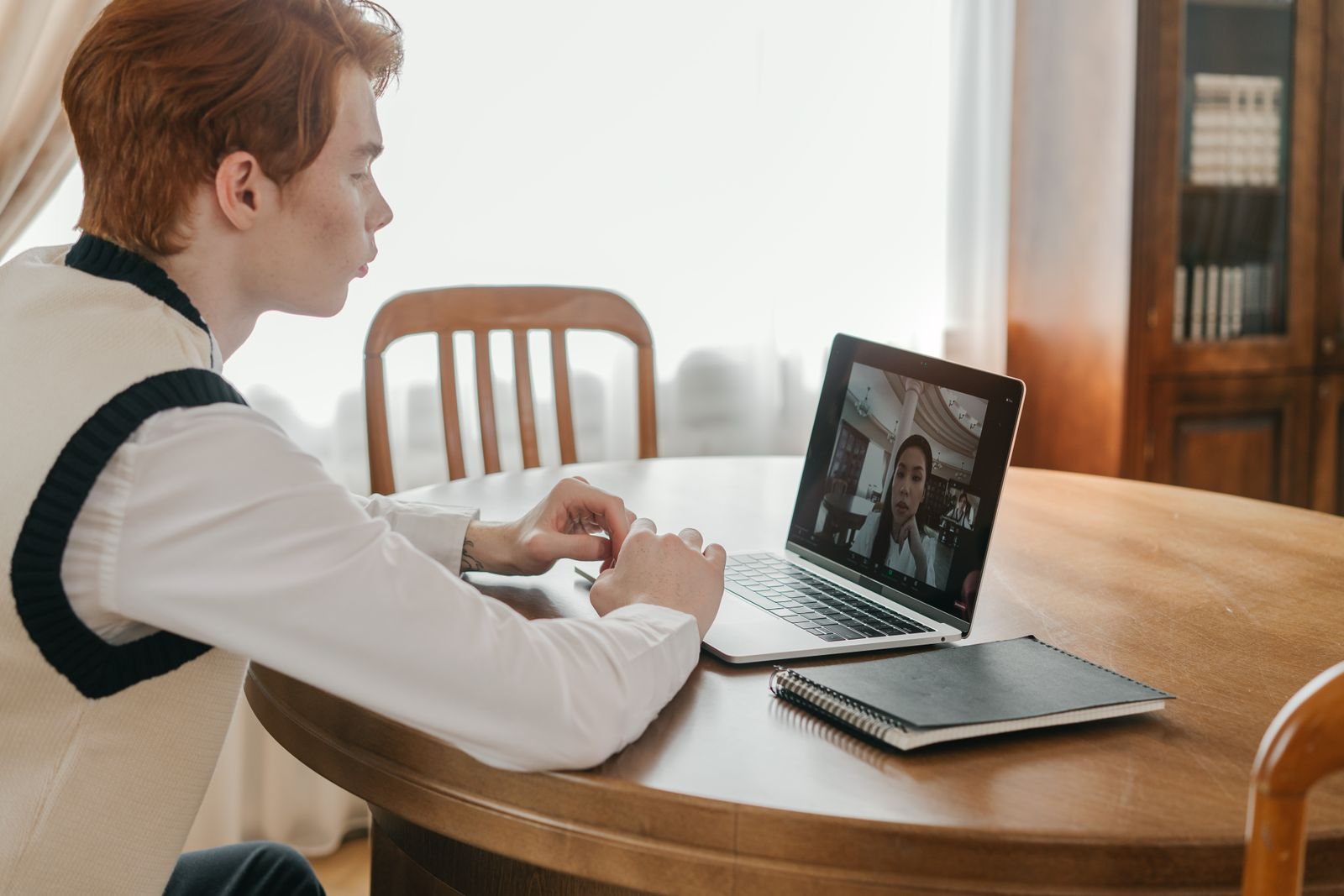
Exactly what you would wear in person. Harvard’s guide says to wear both the top and bottom of your outfit and to treat the background as part of your presentation. Berkeley agrees, in case you have to stand up on camera. It adds some sensible set-up advice: a clean, quiet, private room, good light, a desk or table in place of a sofa or bed, and the camera at or near eye level.
Do a test call in the full outfit the day before. It will show you whether your top blends into the wall, whether the room is too dark, and whether a pattern looks odd on screen. Turn off smartwatch alerts too.
What if a dress norm clashes with your faith, gender, disability or hair?
You have more protection than interview folklore suggests, and that protection can reach applicants as well as staff. In the UK, the Government Equalities Office’s 2018 guidance on dress codes is written for employers, employees and job applicants. It says a requirement for women to wear high heels is likely to be unlawful. It says employers should be flexible on religious symbols that do not interfere with the job, that transgender staff should be able to follow a dress code in line with their gender identity, and that reasonable adjustments may be needed for disabled people.
In the US, the EEOC says religious dress and grooming, including head coverings, generally have to be accommodated unless that would cause undue hardship, and that employers may not turn away an applicant because of an accommodation they could provide. On hair, the Economic Policy Institute counts 30 states plus Washington, DC, with some version of the CROWN Act against race-based hair discrimination, though the Kentucky and Missouri laws are limited and no federal version has had a vote.
In practice, wear the version of formal that is yours. LawCareers.Net treats headscarves and ties as equally ordinary accessories, and suggests neutral or complementary shades for a hijab. Berkeley’s suit advice is not split by gender, so nothing stops anyone from choosing trousers, a skirt or a dress. LawCareers.Net asks only that hair looks tidy, and natural and protective styles meet that standard. If you need an adjustment, such as flat shoes, ask the recruiter early.
How can you dress well on a student budget?
You do not need expensive clothes, and no adviser we read says otherwise. LawCareers.Net points to the high street, charity shops and resale sites such as Vinted, and AllAboutLaw adds supermarkets. Spend what you can on fit: Berkeley notes that tailors can shorten or take in a garment but cannot easily add length, so buy slightly large and alter. One good jacket and trousers or a skirt, plus two light tops, will cover a full recruiting season.
Ask your careers office about help as well. Harvard says funding may be available for its students’ professional attire, and other schools may have their own schemes. In the UK, the charities Smart Works, for unemployed women and some non-binary people, and Suited & Booted, for unemployed or low-income men in London, give out interview clothes. Both work by referral, so check whether you qualify. Once you land the role, the same wardrobe will take you through an internship too.
Frequently asked questions
Do you have to wear a suit to a law firm interview?
For a US BigLaw or UK commercial firm interview, treat a suit or a matching tailored equivalent as the default. LawCareers.Net accepts a blazer with a shirt and trousers or skirt, or a suit dress. A separates outfit is more likely to be fine at a boutique or public interest employer, but check first.
What colour suit is best for a law firm interview?
Navy, charcoal and black are the classic choices named by Berkeley Law’s guidelines, all in a dark solid fabric. Pair them with a plain light top, traditionally white or light blue. Save bold colours and large patterns for after you have seen how the office dresses.
Can women wear trousers to a law firm interview?
Yes. Berkeley’s guidelines treat trousers, a skirt and a sheath dress as equal options for all students, and LawCareers.Net says the same. Any skirt or dress should reach the knee. In the UK, the Government Equalities Office says gender-specific demands such as skirts are likely to be a problem unless there is an equivalent for men.
Do you need to wear a tie?
If you are wearing a shirt and suit at a US firm, Berkeley says a tie is still expected, in a classic colour or a simple print. LawCareers.Net lists ties among accessories rather than as a rule. If your outfit is a dress, or a shell under a jacket, you do not need one.
What if the firm says smart casual?
Follow it, but stay at the smart end: tailored trousers or a skirt, a jacket and a proper shoe. If you are unsure, ask the graduate recruitment or recruiting team. Both LawCareers.Net and AllAboutLaw advise going more formal when in doubt, since a jacket can come off once you arrive.
Should you wear a suit for a video interview?
Yes. Harvard and Berkeley both say to dress as you would in person, and to wear the full outfit, not only the top half. You may need to stand up, and it will also put you in the right frame of mind. Check your lighting and background with a test call.
This article is general information, not legal or career advice. The discrimination rules mentioned vary by state and country and depend on the facts. Guidance was read on 5 November 2026. Follow any instructions from the employer you are meeting.
FASHION LAW JOURNAL INSIDER
Join designers, brand founders and fashion lawyers who get the biggest brand battles, IP fights and career moves in fashion law, straight to their inbox.