
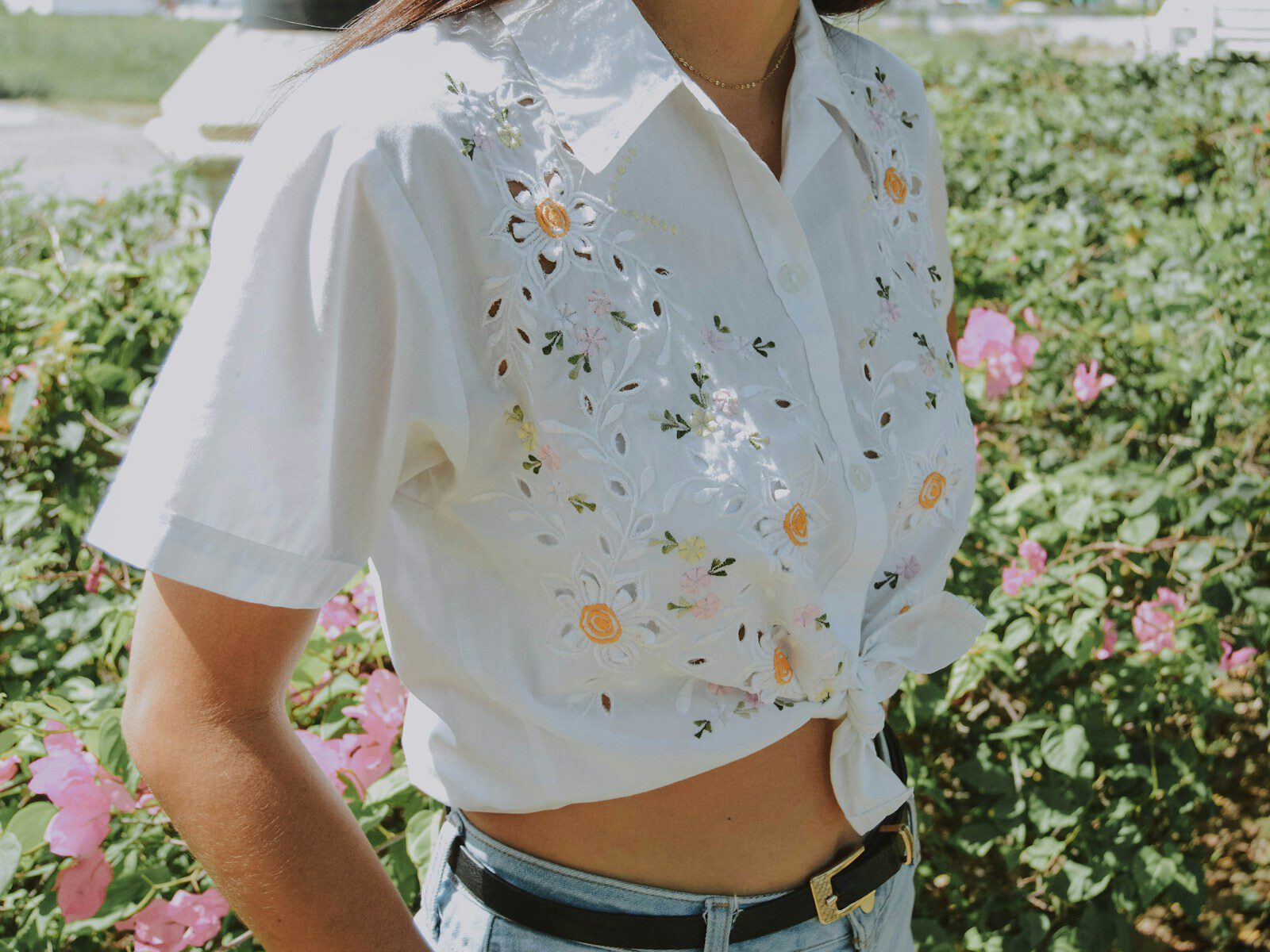
One evening, I was lying in bed scrolling through TikTok. I saw a woman wearing a soft, romantic summer top. I liked her video, scrolled past it, and a few minutes later decided that I needed new clothes. I opened Safari and typed: “whimsical summer top.”
A few results in, I realised that I hadn’t searched for a pink cotton top, a particular shape or even a brand. I had searched for whimsy and trusted the internet to work out the rest. Somewhere between TikTok and Safari, I had stopped shopping for a top and started shopping for the world around it.
Mood aesthetics are becoming a new language for fashion discovery. They can make a label relevant overnight, but they can also reduce a much bigger identity to the part that fits the mood. If I remember whimsy but not who made the top, did I discover the brand, or just somewhere to buy the feeling?
When the Mood Comes Before the Brand
Before whimsy could lead me to a brand, it first had to become a word I recognised.
Moods bring their own moment in history. They can give visible form to what a cultural moment lacks, fears or desires. A study of Gen Z’s engagement with micro-cores examines how young people use these aesthetics to escape, express and construct identity.
After the pandemic, clean girl seemed to offer the comfort of control. As prices rose and economic certainty faded, quiet luxury and old money offered the appearance of stability. Mob wife then arrived in fur, leopard print and gold jewellery, reading almost like a loud reaction to all that restraint. Now, whimsy offers softness, romance and escape at a moment when the world can feel politically and morally difficult.
In The Devil Wears Prada, Miranda Priestly traces Andy’s cerulean sweater from the runway to a clearance bin. I had always imagined myself as Miranda. Had I somehow become Andy? I thought I had independently decided to tap into my “divine feminine”, even though only weeks earlier I had been searching for “femme fatale make-up for brown eyes”. Was whimsy really my taste, or simply my generation’s cerulean sweater? Perhaps not having a single Miranda is precisely what made me so sure I wasn’t Andy.
Amy Bannerman, eBay’s Pre-Loved Style Director, told British Vogue that she had noticed a rise in searches for “whimsical pieces”. Once a mood becomes searchable and starts behaving like a product category, the question shifts from “Which brand do I want?” to “Which brand can give me whimsy?”
The Mood Got a Name. The Brands Already Had the Look.
That night, I could have described the top perfectly to a friend, but if she had asked which brand made it, I would have had to reopen my tabs. Some brands are harder to forget. Ralph Lauren is one of them.
When GQ examined Gen Z’s fascination with the “Old Money” aesthetic, vintage Ralph Lauren advertisements appeared among its defining images. The connection is now strong enough that the brand has become shorthand for the aesthetic. In this case, the mood gives a new name to an identity the house has spent decades building.
But even a useful label can reduce a brand. If “old money” makes Ralph Lauren easier to recognise, what does “whimsy” do to Cecilie Bahnsen, Simone Rocha and Molly Goddard? The word captures their shared romance but leaves out Bahnsen’s couture-like craft and Scandinavian functionality, Rocha’s darker romanticism and Irish-Chinese references, and Goddard’s rebellious, almost punk spirit.
Whimsy showed me what connected them while hiding what made each one distinct. Had it introduced the brands, or spoken for them before they had the chance to introduce themselves?
From Cecilie Bahnsen to Zara, Whimsy Shops Around
What whimsy leaves out is only part of the problem. It is also what it places beside.
Chloé would rarely share a rack with Zara, H&M and Uniqlo. Yet British Vogue’s “Whimsical Summer” edit places them side by side, with Dôen, Posse and vintage in between, as different ways to satisfy the same desire.
A brand doesn’t need to call itself “whimsical” to enter that line-up. Leave it to the media, creators, retailers and platforms to make the connection on its behalf and place it inside a category it neither created nor fully controls.
As a consumer, I may know exactly who I want to become while being surprisingly open about who dresses me. At first glance, I am not comparing the history of each house or the quality of its garments. I am asking which image most closely matches the world I want to enter. For those few seconds, heritage, craftsmanship and price sit behind the thumbnail, and a £720 designer top competes with a £28 high-street one for the same click.
If I visit Cecilie Bahnsen’s website, those differences come back into focus. I may discover the handmade textiles, careful construction and idea of “everyday couture” behind the clothes. But if I never click, whimsy has made the brand visible while deciding which part of it I see.
According to McKinsey, half of US Gen Z consumers prefer exploring and shopping from new brands, compared with one-third of shoppers aged 50 and over. On average, 29% of Gen Z consumers’ wardrobes came from the same brand, compared with 52% of older consumers. These figures do not prove that mood-led discovery causes lower loyalty, but they show how comfortable younger consumers already are moving between labels.
I can find a new label at 11 p.m., save three of its tops, send one to a friend and still forget its name by the next morning. A mood can give a brand its first moment of relevance. The harder question is whether it becomes recognisable before my desire moves on to something new.
I Remember the Whimsy. Do I Remember the Brand?
The strongest brands have always made recognition effortless, making a shared aesthetic feel unmistakably their own.
Ralph Lauren gives “old money” somewhere to land. The mood points back to a world the house has spent decades building. But when a label adds bows, lace, or pastel colours for one season, whimsy may become the only thing I remember. Once the bows disappear and the mood moves on, what leads me back?
Not every brand has decades of heritage or a famous silhouette behind it. Being part of an aesthetic can still be a gift for an emerging label. Whimsy can introduce an unfamiliar name by placing it inside a world I already understand, but it’s only a borrowed language until the brand gives me a reason to remember its name.
My search began with “whimsical summer top”. The next time I want that feeling, the words I type will reveal what actually stayed. If I search for whimsy again, then the mood stayed with me. If I search for the brand by name, the brand did.
Author: Mia Abi Khattar

Mia Abi Khattar is a Paris-based Brand Manager working at the intersection of luxury, wellbeing and business. With a background in law and an MBA in Luxury Management, her work spans brand strategy, image, communications and development. Her experience includes projects and collaborations across fashion, media and hospitality, involving names such as Vogue Italia, La DoubleJ and Accor. She writes about fashion through the lens of branding, consumer behaviour and culture, with an interest in the ideas and shifts shaping both the industry and the way we engage with it.
FASHION LAW JOURNAL INSIDER
Join designers, brand founders and fashion lawyers who get the biggest brand battles, IP fights and career moves in fashion law, straight to their inbox.